



Advantages of Transparent PE Cling Film in Retail Food Display
In retail food environments, packaging directly influences purchasing decisions. Transparent PE Cling Film stands out as a superior solution for food display, offering exceptional visibility, preservation, and safety. Made from food-grade polyethylene, this versatile wrapping material protects products while showcasing their freshness and quality to consumers. Its crystal-clear transparency, combined with strong moisture barriers and ease of use, makes it the preferred choice for supermarkets, food processors, and catering operations seeking reliable, cost-effective packaging solutions that comply with stringent safety standards.
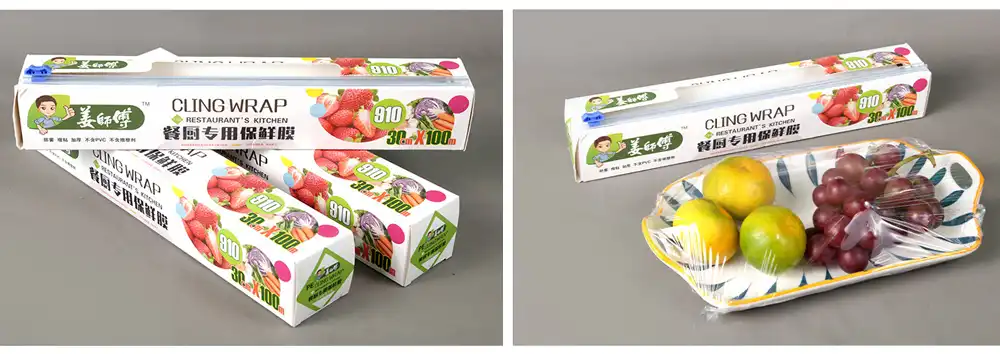
Understanding Transparent PE Cling Film and Its Role in Retail Food Display
What Makes PE Cling Film Unique?
An innovative option to standard PVC materials is food-safe plastic wrap made from low-density polyethylene. Polyethylene-based films are flexible because of the way their molecules are structured, which is different from older wrapping methods that use chemical plasticizers. Because of this basic difference, there are no longer any migration risks with phthalates, which are a problem when they come into contact with fatty foods. The material's natural features let it stretch and stick to itself without any dangerous additives. This meets important safety standards for business food handling.
The Importance of Transparency in Food Retail
Consumers are more likely to buy something when they can see it clearly. Shoppers make smart decisions based on visual quality assessment when they can look at meat cuts, fresh vegetables, or ready-made meals without having to open them. Transparent PE Cling Film keeps the attractive look that's needed for impulse sales while reducing infection during handling. Studies have shown that goods displayed in clear packaging have higher shift rates than those displayed in opaque packaging. This has a direct effect on how much money stores make.
Compliance with Food Safety Standards
Regulatory compliance is a must for things that come into touch with food. Direct food contact safety is guaranteed by polyethylene film made according to FDA 21 CFR 177.1520 and GB 4806.7 standards. Our products are certified by ISO, CE, and FDA at Shandong Honghe Plastics Co., Ltd., which means that our production methods meet international standards. These badges make it easier for procurement managers to find suppliers by giving them the proof they need for audit trails and quality assurance standards.
Core Advantages of Transparent PE Cling Film in Food Retail Environments
Polyethylene wrapping has more uses than just covering things; it can also help with operating speed and keeping the quality of the product at the same time.
Superior Food Preservation Capabilities
Controlling moisture is what makes fragile things last longer on the shelf. Transparent PE Cling Film makes a good barrier that keeps things from drying out and controls condensation by adjusting the rates at which water vapor moves through it. This balanced permeability stops both drying out the product and too much moisture buildup, which speeds up spoilage. This controlled environment keeps the texture and appearance of fresh meat, seafood, and ready-to-eat foods the same throughout the cold chain. This lowers shrinkage losses that cut into profits.
Oxygen transmission properties make preservation even better. Complete barrier films trap metabolic gases, but PE wrapping lets new food breathe in a controlled way. This selective permeability stops anaerobic conditions that make tastes go bad while slowing down the aging process. This gas exchange is especially good for vegetables like broccoli and mushrooms because it keeps their marketable quality during the time they are being shipped and displayed.
Ease of Application and Operational Efficiency
The ability to stretch has a direct effect on the speed and cost of packaging labor. Our film has an elongation at break of more than 300%, which means that packaging staff can securely wrap odd shapes without tearing them. This mechanical property cuts down on the waste of materials from broken wraps and the time it takes to train new employees. The tensile strength of the film is at least 15 MPa, which means it will last through handling without getting punctured by bone edges or container corners.
Another important benefit is that it works with automated wrapping equipment. In supermarket delis, high-speed packaging lines need films with precise slip characteristics—enough to keep hermetic seals while preventing jamming. Our manufacturing process controls the surface friction properties to make sure that the product works the same way even when the temperature changes in areas that are refrigerated. This dependability means less downtime and steady output rates, which are important for meeting daily production goals.
Environmental Sustainability Benefits
Concerns about recycling play a bigger role in purchasing decisions as companies make bigger commitments to sustainability. Polyethylene is a resin code #4 material that is widely accepted in municipal recycling streams. This is different from PVC materials, which can contaminate recycling batches. Because it works with existing waste management systems, stores can join circular economy projects without having to set up their own collection programs. It is safer for waste-to-energy facilities to use our material because it burns with a paraffin-like smell instead of chlorinated compounds.
Comparing environmental footprints shows extra advantages. PE production produces lower greenhouse gas emissions than PVC manufacturing, which needs chlorine processing. The absence of heavy metal stabilizers in our formulation eliminates soil and water contamination risks from disposed materials. For companies tracking Scope 3 emissions or seeking LEED certifications, these material characteristics add significantly to environmental performance metrics.
Comparing Transparent PE Cling Film with Alternative Packaging Solutions
Material Safety and Chemical Composition
PVC film previously ruled food wrapping uses due to better cling properties achieved through plasticizer additives. However, these same plasticizers—particularly di-2-ethylhexyl phthalate (DEHP)—migrate into fatty foods, raising endocrine disruption worries recorded by multiple health agencies. Regulatory restrictions in the European Union and increasing consumer awareness have driven the transition toward safer alternatives. Modern metallocene LLDPE formulas have closed the efficiency gap. Advanced tackifier masterbatches provide adhesion comparable to plasticized PVC while maintaining polyethylene's non-toxic profile. Our manufacturing incorporates these innovations, delivering Transparent PE Cling Film performance that satisfies commercial packaging requirements without compromising safety standards.
Durability and Performance Under Retail Conditions
Temperature changes test packaging integrity throughout the supply chain. Polyethylene film maintains flexibility across a thermal range from -60°C to +110°C, accommodating freezer storage and microwave reheating applications. This operational window exceeds PVC's performance envelope, which becomes brittle under freezing conditions and releases harmful fumes when heated. Polyethylene's mechanical benefits are shown by tests that measure its resistance to punctures. Dart impact tests check how well the film can handle sharp objects without tearing, which is very important when wrapping meats with bones or rigid container edges. Our products consistently demonstrate puncture strength suitable for demanding retail applications, reducing rewrap labor costs and product losses from damaged packages.
Cost-Efficiency Analysis for Bulk Purchasers
Unit cost comparisons must account for yield rates and application efficiency. PE film may cost a little more per pound than regular PVC, but because it can stretch better, it covers more area per roll. Getting rid of the cost of plasticizers in formulation and making production simpler more than make up for the differences in raw materials. For high-volume buyers discussing yearly contracts, total cost of ownership benefits polyethylene when waste reduction and compliance risks are quantified.
Our production options are flexible enough to accommodate custom thickness requirements ranging from 8 to 12 microns. This lets buyers get the most out of the material for specific uses. Lighter gauge films require less storage space and cost less to ship, while heavier options make heavy or sharp-edged products last longer. This ability to customize makes sure that purchasing managers only pay for the efficiency features they need.
Procurement Insights: How to Choose and Source Transparent PE Cling Film?
Essential Certifications and Quality Standards
Migration testing forms the cornerstone of food contact compliance verification. Reputable suppliers provide Overall Migration Limit (OML) and Specific Migration Limit (SML) test reports using appropriate food simulants—ethanol for aqueous foods, acetic acid for acidic products, and olive oil for fatty foods. These laboratory results show that the Transparent PE Cling Film will not transfer harmful substances under planned use circumstances. To keep track of each group, ask for records of analysis to be sent with each shipment.
Physical property documentation should include tensile strength, elongation percentages, and adhesion measurements. These specifications make it easy to compare suppliers directly and make sure that the new equipment will work with the old ones. At Shandong Honghe Plastics Co., Ltd., we include full technical data sheets with all of our products, which are backed up by validation from a third-party lab.
Customization Options for Specialized Applications
Thickness variations address diverse packaging needs across retail categories. Thicker films (12 microns) suit heavy products needing puncture resistance, while thinner choices (8 microns) optimize costs for lightweight items like baked goods. Our production is flexible enough to allow for unique orders that are made to fit the needs of each business. This means that you don't have to choose between performance and cost.
Anti-fog formulations are another useful customization. When hot foods are wrapped in standard polyethylene or when the temperature changes in refrigerated display cases, condensation droplets can form. Anti-fog masterbatches change the surface tension, which means that wetness spreads out into a clear film instead of obscuring drops. This feature keeps the product visible throughout its shelf life, which is especially important in the cafe and prepared food areas, where sales are driven by how the food looks.
Evaluating Supplier Reliability and Partnership Potential
For long-term supply security, you need to look at what manufacturers can do beyond what's written in the product specs. Production ability tells you if a seller can grow with your business and not have trouble meeting your needs during busy times. Our facility near Qingdao Port has both advanced manufacturing equipment and a strategic location for logistics. This makes sure that North American customers always have access to our inventory and can get it at a low cost.
Sample programs lower the risk of procurement by letting people try them out before they commit to buying. We give you samples of our products and expert support to help you try them in applications and on machines. This method lets buying managers check claims about performance and get approval from stakeholders before finalizing supply deals. Our 24-hour after-sales service makes sure that technical questions are answered quickly, which helps with implementation and ongoing operations.
Best Practices for Using Transparent PE Cling Film in Retail Food Display
Optimal Application Techniques
When handled correctly, Transparent PE Cling Film works better and less material is wasted. To keep the best cling qualities, store rolls in temperature-controlled areas between 15°C and 25°C. Film that is too cold can't be stretched as far, and film that is too hot can get blocked where the layers stick together. To keep condensation from building up on the surfaces of chilled goods, wait until they reach the right temperature before wrapping them.
Method of dispensing impacts the quality of the wrap and the speed of the work. To get the film to stick, pull it at a 45-degree angle and apply light force without pulling it too much. When edges overlap by at least 3 centimeters, hermetic walls are created that stop the flow of moisture. For automatic systems, make sure the feed force and cutting blade sharpness are set according to the manufacturer's instructions. During production runs, check the integrity of the seals on a regular basis.
Maintaining Hygiene Standards
To keep raw and ready-to-eat foods from getting contaminated, they need their own film carriers. Set up separate wrapping stations or color-coded cutting bars to keep bacteria from moving from one type of food to another. Use a food-safe sanitizer to clean the sides of the pump every day, paying special attention to the cutting edges where germs tend to build up.
Sustainable Disposal and Recycling Protocols
By setting up collection devices, used film can be saved and recycled instead of being thrown away in a dump. Many recycling programs will only take polyethylene that isn't dirty, so teach your staff how to tell the difference between clean film and food-contaminated materials. To close the loop on material circularity, work with product recycling groups or film makers that offer take-back programs. Keep track of how much you recycle to help your company's sustainability report and show clients that you care about the environment. These metrics have a bigger effect on retail partnerships and how customers feel about a brand. By measuring the amount of trash that is diverted, buying teams add value that goes beyond just saving money.
Conclusion
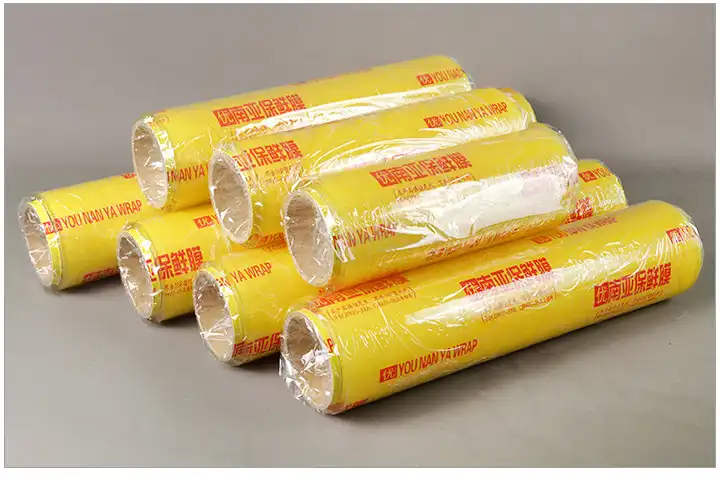
Transparent PE Cling Film is very useful for displaying food in stores because it makes things safer, easier to see, and more efficient. Because it is made of polyethylene, there are no concerns about its safety. It also has great moisture resistance and mechanical properties that make it suitable for demanding commercial uses. The material can be recycled and is good for the earth, so it meets sustainability goals without lowering efficiency. PE film is the best choice for purchasing managers looking for reliable packaging solutions because it meets food safety standards, is cost-effective, and keeps the supply chain stable, all of which are important for long-term partnership success.
FAQ
Q1: How Long Can PE Cling Film Keep Food Fresh?
A: Adding time to a product's shelf life depends on the type of product and how it is stored. When properly placed, Transparent PE Cling Film keeps the quality of meat and fish in the fridge for 3–7 days by stopping oxidation and moisture loss. Different types of fresh produce have different respiration rates. Leafy greens benefit from controlled oxygen transmission, which makes them more marketable for two to four days longer than unwrapped items. Instead of taking the place of proper temperature control, the film's barrier properties work well with cold chain management.
Q2: Is This Film Safe for Direct Food Contact?
A: The FDA's 21 CFR 177.1520 rules say that our polyethylene film can come into direct touch with food without any practical hurdles. Migration testing shows that no dangerous chemicals move to food under normal use conditions, such as when they come into touch with wet, acidic, or fatty foods. PE film is better for your health than PVC options because it doesn't have any phthalate plasticizers or heavy metal stabilizers.
Q3: Can We Order Custom Thicknesses or Printed Film?
A: Customization options include changing the thickness from 8 to 12 microns and the width from 30 to 50 centimeters. For bulk orders, special sizes are also available. Our basic product has crystal-clear transparency so that the product can be seen clearly, but we talk about unique printing needs on a project-by-project basis. Sample services let you look at custom specifications before committing to large orders.
Partner with a Trusted Transparent PE Cling Film Manufacturer
Shandong Honghe Plastics Co., Ltd. can help you with your store food display needs by combining high-quality production with service that puts the customer first. Our production center near Qingdao Port is ISO, CE, and FDA certified, and we use strict testing methods to make sure the quality is always the same. We know that purchasing managers need more than just competitive prices. They also need reliable supply lines, quick technology help, and the ability to make changes as needed. These are the building blocks of successful relationships. Our high-tech tools and structured workshops make sure that goods meet all of your exact requirements are delivered on time. Email our team at tony@sdhhsl.com to get samples or talk about bulk quotes that are made to fit your needs.
References
1. American Chemistry Council. (2021). Polyethylene Film in Food Packaging: Safety and Performance Standards. Plastics Industry Association Press.
2. European Food Safety Authority. (2019). Migration Testing Protocols for Food Contact Materials: Technical Guidelines. EFSA Journal, 17(4), 5632-5681.
3. Institute of Food Technologists. (2020). Packaging Technologies for Fresh Food Preservation. IFT Press Series in Food Science.
4. National Restaurant Association. (2022). Food Safety and Packaging Compliance in Commercial Kitchens. Educational Foundation Publications.
5. Sustainable Packaging Coalition. (2023). Life Cycle Assessment of Polyethylene vs. PVC Food Wraps. GreenBlue Environmental Research.
6. U.S. Food and Drug Administration. (2018). Guidance for Industry: Preparation of Food Contact Notifications for Food Contact Substances. FDA Center for Food Safety and Applied Nutrition.