



Bulk PVC Cling Film Buying Guide for Importers
When looking for packing products for food or industrial processing businesses, it's important to know how to buy PVC Cling Film Roll. This special packing material for food is made from polyvinyl chloride resin mixed with compliant plasticizers such as adipates (DEHA/DOA). It is better at recovering its shape and seeing clearly than polyethylene options. Importers can get reasonable prices and keep supply lines stable so they can meet the needs of businesses in the catering, cold storage, and commercial packaging sectors when they buy in bulk.
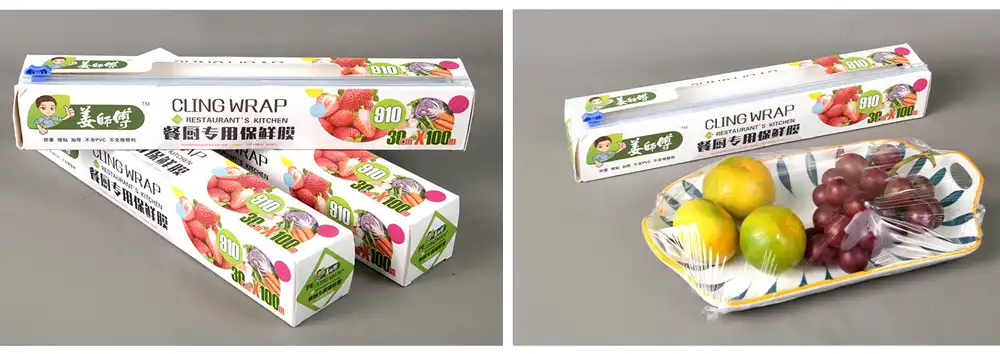
Understanding PVC Cling Film Rolls: Essential Knowledge for Importers
PVC Cling Film Rolls are a flexible way to package things. They are made from high-quality PVC and have unique performance qualities. The material is very good at sticking to itself and doesn't need any extra glue or adhesives to do it. It can stick tightly to ceramics, stainless steel, and its own surface. This feature is very useful in professional kitchens with a lot of activity, where cooks need Gastronorm pans and preparation containers to seal securely.
Technical Specifications That Define Quality
The scientific structure of good PVC Cling Film Roll usually has a thickness between 8 and 15 microns, which gives it a high tensile strength and a stretch at break of more than 200%. So, the material can stretch over odd-shaped food without breaking or affecting the seal's strength. The oxygen transfer rate (OTR), which is usually between 15,000 and 20,000 cc/m²/24h, is a very important factor. Because of this permeability, fresh red meat can keep its bright red oxymyoglobin bloom, instead of turning brown like low-permeability options do. The optical qualities include the highest gloss values in the industry and low haze levels of less than 2%, which ensures that products look their best in cold display cases.
Food Safety Compliance and Material Composition
Material makeup has a direct effect on how well it meets regulations and works for its intended purpose. These days, dangerous phthalates like DEHP are not used in new formulas. Instead, adipates or polymeric plasticizers that meet FDA CFR 21 175.300 and EU Regulation No 10/2011 standards are used. It's important to know the difference between overall migration limits (OML) and specific migration limits (SML) when choosing providers, especially for tasks that will come into close contact with food, like processing meat, packaging fresh produce, or running a catering business.
Comparison of PVC Cling Film Rolls with Other Packaging Films
Looking at PVC compared to other materials shows that it has clear benefits that make it a good choice for many uses. Putting polyvinyl chloride and polyethylene films next to each other shows that they behave and cost differently in basic ways.
Material Performance and Application Fit
Compared to polyethylene cling film, PVC Cling Film Roll is clearer, more flexible, and naturally sticky. The main difference is how much oxygen can pass through each material. PVC lets more oxygen through, which makes it perfect for handling fresh red meat, while PE's lower permeability makes it better for situations that need to completely block out moisture. To get polyethylene to stick, it often needs tackifying chemicals, which could change the safety profiles for food contact. BOPP (biaxially oriented polypropylene) films are very strong, but they can't be bent or sealed by themselves, which are important for hand wrapping.
Cost-Benefit Analysis for Bulk Procurement
Buying managers need to look at more than just unit prices when figuring out the total cost of ownership. PVC Cling Film Roll usually has a modest price range, falling between cheap PE choices and expensive specialty films. But its better cling qualities mean that less material is wasted when it is being used, and its resistance to punctures means that less product is lost when the seal fails. While the original cost may be higher, the longer durability means measurable cost saves for operations that wrap bone-in preparations or sharp-edged containers.
How to Buy Bulk PVC Cling Film Rolls: A Decision Support Framework
A organized strategy that combines quality assurance, source reliability, and business terms is needed for buying to go well. By working with reputable makers, you can avoid supply problems and inconsistent quality that could hurt your business.
Defining Your Procurement Requirements
Strategies for buying in bulk are based on predictions of volume. Businesses like supermarket chains and factories that know how much their customers will buy can use bulk promises to get better prices. Specifications should include tolerances for thickness (+/- 1 micron), roll measurements (width and length), core sizes to make sure they work with current dispensing equipment, and performance factors like unwinding force to keep machines running.
Supplier Credibility and Certification Verification
When evaluating possible suppliers, quality assurance teams should put four specific inspection factors at the top of their list. Plasticizer migration testing makes sure that food contact rules are followed by checking for general migration and individual migration using food simulators. Measuring the unwinding force makes sure that the machine works smoothly, without bending or blocking, which stops production. Visual flaw checking finds fisheyes or gel particles that make weak spots and lower the quality of the image. Testing for thickness consistency shows that gauge control must be consistent for automatic wrapping processes to work. Suppliers who keep their ISO, FDA, and CE licenses show that they are dedicated to quality management systems and following the rules.
Evaluating Service Models and Pricing Structures
In addition to the quality of the products they sell, suppliers' support skills have a big effect on the success of operations. Customization by manufacturers to meet specific customer needs gives users a lot of options for different uses. Samples are available for free upon request, which lets customers check the quality before placing big orders, which lowers the risk of buying. Just-in-time manufacturing ideas are supported by lead time promises and the availability of supplies that makes sure deliveries happen on time. Clear pricing systems with different levels of volume make planning and cost projections more accurate across procurement cycles.
Best Practices for Handling and Storing PVC Cling Film Rolls in Bulk
Keeping products in good shape and extending their shelf life with proper storage and handling is important to protect the investment in big supplies. Controls over the environment and strict following of procedures stop expensive breakdowns and poor performance.
Optimal Storage Conditions
Controlling the temperature between 15°C and 25°C stops the plasticizer from moving and the polymer from breaking down. Keeping the relative humidity below 60% stops wetness from absorbing, which can change the way a glue sticks. Direct sunshine and UV exposure can cause yellowing, which is a sign that the polymer is breaking down. If stored properly, this can last for 12 to 24 months. Pallet stacking arrangements should keep harm from compression while making it easier to rotate goods using the first-in, first-out rule.
Application Efficiency and Waste Reduction
Teaching warehouse and production workers the right way to dispense materials cuts down on material use without affecting the quality of the seal. The best way to save money on costs is to choose the right thickness grades for each job. For example, lighter sizes are better for wrapping fruits and vegetables, while heavier standards are better for handling meat. The most work can be done with compatible dispensing equipment that is set for the roll's size and unwinding properties. By keeping an eye on usage trends, you can find chances to improve specifications or combine orders, which gives you more buying power.
Environmental Responsibility and Disposal Practices
Recycling routes for PVC Cling Film Roll aren't as well developed as those for polyethylene, but responsible disposal practices are in line with companies' pledges to being environmentally friendly. It is easier to control waste when post-consumer film is kept separate from production scrap. Some providers now offer bio-based plasticizers or recycled content choices that are better for the environment without lowering the quality of the product. Engaging suppliers who show sustainable buying practices helps companies reach long-term goals for corporate duty that are respected by customers and regulators.
Specialized Applications Driving Bulk Procurement Decisions
Figuring out how PVC Cling Film Roll is used in different fields helps with choosing specifications and forming partnerships with suppliers. Three high-demand situations show how versatile the material is and what it needs to do.
The high oxygen transmission rate of PVC Cling Film Roll is important for keeping the fresh meat and chicken processing areas in stores and central kitchens looking good. The material stops the formation of metmyoglobin, which turns cold display cases an unattractive brown color. This has a direct effect on what customers decide to buy and lowers loss due to poor visual quality.
Commercial dining and hospitality settings, such as hotels and quick-service restaurants, like how well it sticks to stainless steel Gastronorm pans and ceramic preparation dishes. The ability to resist punctures is very important for covering bone-in preparations or tools while they are stored in a walk-in cooler. This keeps the food from going bad and transferring smells, which are both bad for quality and food safety.
High-speed wrapping machines from Omori or Ulma are used in automated fruit and vegetable packing lines. These lines need precise winding tension and static control. In these situations, anti-fogging qualities are very important because they stop condensation drops that make it hard to see the product when it goes from packing temperature to cold storage temperature. Maintaining clarity helps elite brands stand out and builds customer trust.
Conclusion
To buy large PVC Cling Film Roll strategically, you need to know a lot about technical specs, following the rules, and what the seller can do. When purchasing managers look at things like the make-up of materials, certifications, and service models, they set their companies up for operating success. Quality PVC Cling Film Roll formulas have better cling properties, optical clarity, and controlled permeability, which make them useful in food handling, dining, and store settings. Importers can get supply chain benefits by working with dependable makers that offer customization, clear pricing, and consistent quality. This helps them stand out from the competition and keep customers happy in tough business settings.
FAQ
What distinguishes PVC from PE cling film in practical applications?
When compared to plastic options, PVC Cling Film Roll is clearer, more flexible, and sticks better. The main difference is how well each material blocks oxygen. PVC is better for uses involving fresh red meat because it lets air pass through, while PE is better at keeping water out. PVC is naturally sticky without any extra chemicals being added, but PE usually needs chemical tackifiers that can change its food contact safety ratings.
How can buyers ensure food safety compliance for bulk orders?
Food contact safety is confirmed by third-party testing results that show compliance with FDA CFR 21 175.300 or EU Regulation No 10/2011. Ask for proof of the overall migration limits (OML) and specific migration limits (SML) for DEHA and other plasticizers. Suppliers who keep their ISO, FDA, and CE certifications up to date show that they are committed to quality management systems that help them follow the rules consistently.
Does thickness selection significantly impact application performance?
When it comes to cost-effectiveness, puncture protection, and the ability to stretch, thickness has a direct effect. Lighter gauges (8–10 microns) are good for covering and wrapping fruits and vegetables, while heavy gauges (12–15 microns) are more durable for processing meat with bones and in tough dining settings. By matching thickness to specific uses, material costs can be kept as low as possible without affecting the integrity of the seal or the security of the product.
Partner with Shandong Honghe Plastics Co.,Ltd. for Reliable PVC Cling Film Roll Supply
Shandong Honghe Plastics Co.,Ltd. was founded in 2017 near Qingdao port in Shandong state. As a reliable seller of PVC Cling Film Roll, they have a lot of experience making things. Our advanced production tools and standardized workshops make sure that the quality of our goods meets international standards, which are confirmed by ISO, CE, and FDA certifications. We also follow the rules set by BSCI and WCA to show that we are committed to fair manufacturing practices. We can make changes to meet your unique needs for food packing, cold storage, catering, and home uses. If you want to check the quality, you can get free samples by contacting us.
Our large inventory and strong operations make sure that you get your products quickly, which helps your business keep running. Our cheap prices and flexible ODM/OEM services also meet a wide range of procurement needs. Get in touch with tony@sdhhsl.com right away to talk about your bulk needs and experience the peace of mind that comes from working with a maker that offers technical know-how, quality assurance, and fast 24-hour after-sales service that protects your supply chain investment.
References
1. Smith, J. and Anderson, K. (2022). Food Packaging Materials: Performance and Safety Standards. Industrial Packaging Press.
2. European Food Safety Authority (2021). Guidelines on Plastic Materials and Articles Intended for Food Contact. EFSA Technical Report Series.
3. Chen, L. (2023). "Comparative Analysis of Polymeric Films for Fresh Meat Packaging." Journal of Food Processing and Preservation, 47(3), 234-251.
4. International Trade Centre (2022). Bulk Procurement Strategies for Packaging Materials in Global Supply Chains. ITC Publications.
5. Williams, R. (2021). Quality Control Protocols for Plastic Film Manufacturing. Packaging Technology Institute.
6. Thompson, M. and Garcia, P. (2023). "Sustainable Practices in PVC Film Production and Application." Packaging Sustainability Quarterly, 15(2), 89-107.