



Industrial Cling Film vs Standard Plastic Wrap
The main difference between industrial cling film and regular plastic wrap is how they handle being stressed by machines. Machine grade cling film has a controlled thickness, a firm roll winding, and predictable cling, which means that it feeds, stretches, and seals reliably in automatic wrappers. Standard plastic wrap can be used by hand sometimes in kitchens, but it tears easily or doesn't move well on fast machines. The right film cuts down on stops, waste, and work for people who run tray wrappers or weigh-wrap stations. I compare materials, specs, costs, and supplier checks in this guide so you can make an informed choice.https://www.sdhhsl.com/pvc-cling-film/machine-grade-cling-film
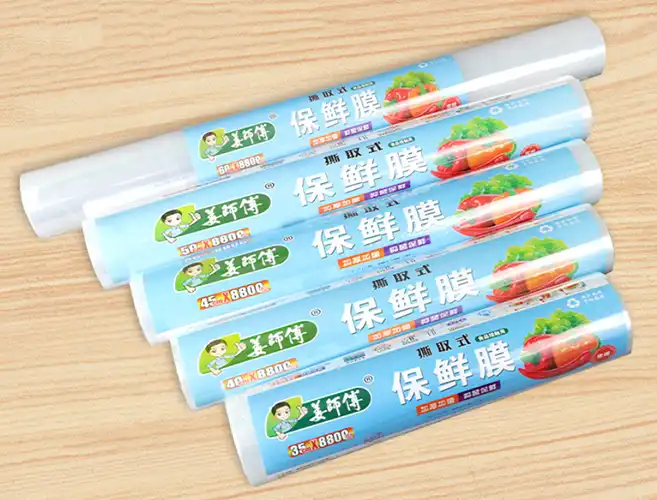
What Is Machine Grade Cling Film?
How Machine Grade Cling Film Is Defined?
Plastic film known as machine grade cling film is used in automatic, semi-automatic, and industrial packaging systems like tray wrappers, flow wrappers, and weigh-wrap stations. The width, winding tension, cling, and slip are all controlled by the people who make the roll so that it unwinds evenly and quickly. A thin gage of about 10 to 14 microns is used for most machine film, and the thickness variation is kept to about ±5%. The machine cuts, heats, and stretches the film in a very short amount of time, so that consistency is important. Seals burn through or stay weak if the gage swings. When people buy a machine, I always tell them to treat the film as a part of it, not as a separate consumable.
Where Buyers Use It?
There is machine film everyplace that food moves quickly. Central meat and poultry plants use it on inline wrappers because it doesn't tear easily along the edges of bones and the tight tension helps keep liquids inside during cold chain transport. Stores that weigh, wrap, and label items run it on machines made by Digi and Ishida. The film has to stretch on the elevator and seal on the heat pad. Packers of fruits and vegetables use film that lets air pass through it to protect the mushrooms and vegetables. Some films have tiny holes in them to help air flow. Our PVC film is also used in homes, food service kitchens, and cold storage, so one product family can meet many needs.
Core Physical Properties
How film acts on a machine depends on four things. ASTM D882 tests show that elongation at break is usually between 200% and 400%. This lets the film stretch tight and keep its drum-tight look. The next balance is the slip and cling balance. The outside face slides over rollers, and the inside face sticks to the tray. Anti-fog additives keep packs in chilled cases below 4°C from getting foggy with condensation, and haze below 1.5% lets you see the product. Lastly, gage consistency makes sure that sealing temperatures are always the same. Ask the supplier for information on all four of these things when you ask for a sample.
Industrial Cling Film vs Standard Plastic Wrap: Key Differences
Material and Thickness Control
Standard plastic wrap is made to be easy to use. Along the roll, the thickness can change, and the cling is set so that bowls and plates can be used by hand. When making industrial film, the tolerances are tighter, and the additives are made to work with rollers and heat plates. A few microns difference in thickness doesn't really matter in the kitchen, but it does change how fast the film melts and sticks to the belt. This is the reason why household wrap can tear, stretch unevenly, or have weak bottom seals on machines that work by themselves. With machine grade cling film, most of that variation is gone, so the process is more stable and operators don't have to make as many changes by hand.
Roll Construction and Machine Compatibility
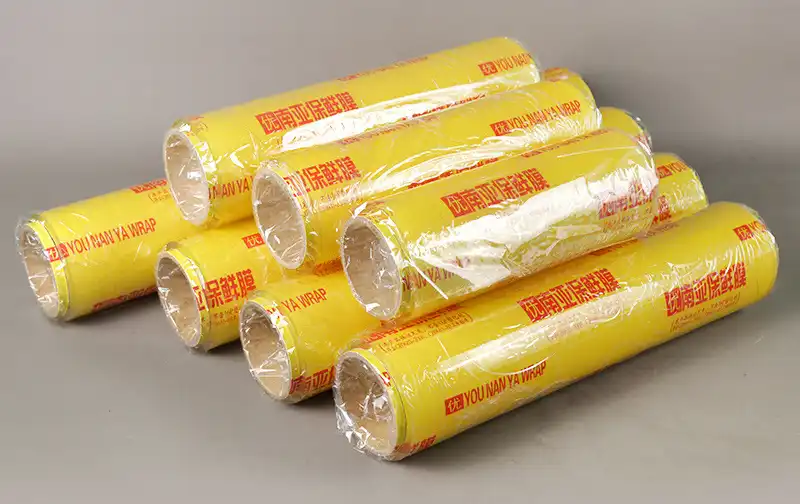
The second big gap is how rolls are made. Machine film has a set width, core size, and outer diameter that are chosen to fit the equipment. It is wound under more tension by the manufacturers. Some automatic rolls are at least 1,500 meters long, which means that they need to be changed less often during shifts. When layers slide sideways due to bad winding, this is called telescoping. When the core crushes, a roll can't be used on the mandrel. The rolls you use by hand in a cutter box are softer and stickier, and they tend to get stuck in automatic rollers. Measure your mandrel and look at the equipment manual to see what the maximum width and diameter are before you place your order.
Cling Film vs Stretch Film
People buy cling film and stretch film mixed up because they both stick to themselves, but they are used for different things. Cling film is often cut and heat-sealed on a tray wrapper to cover or seal single items, trays, and containers. Pallet wrappers use film carriages, tension control, or pre-stretch units to bundle cartons and keep pallet loads stable. We sell both PE/PVC cling film and stretch film, so we can help you with either. First, explain what you want to do: cover a single item, seal a tray, bundle items, or keep them on a pallet. That one sentence stops most mistakes in ordering, and a small test case clears up any remaining questions.
Machine Grade Cling Film Materials and Specifications
PVC, PE, and Specialty Options
There are two main groups of materials: PVC and PE. Neither one is always better than the other. PVC is clear, sticks well, and can be shaped, which gives packs a clean retail look. PE is tough and flexible, and it might work for programs that want to recycle or be more environmentally friendly. If the amount of plasticizer is a problem, especially for fatty foods, polyolefin film is another choice. Standard PVC machine film has plasticizers in it, so if you want to use pure oils and fats, make sure you check the migration data for fatty contact first. To find the exact formulation, compare the cling, stretch, puncture resistance, sealing behavior, smell, and regulatory status. Then, look over food-contact documents for the EU if you're going to sell in the EU and for the US market, such as FDA rules.
Specifications Worth Comparing
A movie is never good just because it's thick. Along with the material, thickness and tolerance, width, roll length, core diameter, outer diameter, winding direction, cling level, stretch, puncture resistance, clarity, and smell, a full specification lists all of these things. Just as important are things like telescoping, blocking, wrinkles, edge nicks, and gel particles in the roll. A very small nick on the edge of the roll can cause a tear when the film is under tension. This is why so much "random" film breaks on wrappers. Use the machine's manual or a sample roll to make sure the measurements are correct. For export orders, you should also ask for labels, inspection reports, the ability to track lots, and production dates.
Our PVC Film for Your Line
The machine film that we make at Shandong Honghe Plastics Co.,Ltd. is made from good PVC. We make it exactly the way you want it, including the right size and thickness for your equipment. We also give you free samples so that your team can try it out before placing a bulk order. The film can be used for home, food service, refrigeration, and packaging food. Our factory is in Shandong's Liu Guanzhuang Town, which is close to Qingdao Port and makes it easy to get to. We are certified by ISO, CE, FDA, BSCI, and WCA, and we keep a lot of stock on hand to make sure we can deliver quickly. We've been making PE/PVC cling film, disposable gloves, and stretch film since 2017.
How to Choose, Test, and Cost Your Film?
Define the Packaging Scenario and Run a Trial
Start with the item itself, including its size, shape, weight, temperature, level of moisture, and surface. Type in your daily volume and the speed you want to wrap at. Next, make sure you know the model of the machine, the roll diameter, the core size, the compatible width, and the cutting system. Do a controlled test with a sample of machine grade cling film and write down the loading time, tracking, coverage, cutting, sealing, breaks, wrinkles, film used per pack, rejects, and any actions taken by the operator. How well the seal works depends on how well the film fits the heat plate. A lot of machines are set to 110°C to 140°C, so ask the supplier if the machine grade cling film will work with your range. Written trial results make it easy to give permission.
Unit Price vs Total Packaging Cost
Packaging costs are rarely lowest where the price of the roll is lowest. If the film snaps a lot, needs constant tension changes, or doesn't seal well, it leads to extra work, rejects, and complaints. You should look at the prices per roll, per kilogram, per square meter, and per finished pack. Then you should add in the costs of shipping, taxes, packaging, certification, and storage. The unit price can go down when you order in bulk, but you should look over the minimum order quantity, lead time, safety stock, and payment terms. A cost-per-pack calculation from your test is a better way to compare than a price list. All of the prices should match up if you ask each supplier to quote the same details.
Troubleshooting Common Film Problems
Most of the time, three problems show up. When there is a mismatch between the machine tension and the film's gage or elongation limit, or when the roll edges are damaged, there is a lot of snapping. Too little dwell time or a film that doesn't seal well enough on the heat plate can cause the bottom seals to come loose. Rolls that won't unwind and stick together are often caused by too much heat. Storing rolls above 30°C can push the plasticizer to the surface and block it. Place rolls in a cool, dry spot and change your stock often. Our team will look into it if the problem persists after the adjustments have been made. Please send us a model of the machine and a picture of the problem.
How to Choose a Supplier and Avoid Costly Mistakes?
How to Evaluate a Manufacturer
Find out if the company extrudes, converts, or sells its own film as a first step. Then go over controlling the thickness, slitting, winding, inspection, tracking raw materials, and keeping samples. Documents and reports about migration that come in contact with food must match the exact product you plan to buy. OEM and private-label buyers should make sure they have choices for core dimensions, packaging, labels, printing, and width. Long-term supply is affected by lead time, MOQ, number of complaints handled, experience with exporting, and speed of technical replies. We make our own PE/PVC cling film, offer OEM and ODM services, and offer 24-hour after-sales support, so you can talk to us about everything.
Common Buying Mistakes
A lot of people make the same four mistakes: using household wrap instead of machine grade cling film, picking film based only on thickness, mixing up machine grade cling film and stretch film, and only comparing roll prices. All of them cause problems with feeding, weak seals, more material use, or stops. It's easy to fix. Before placing a large order, make sure you have written down the machine model and its purpose, ask for samples, do a controlled trial, check the food-contact and export documents, and agree on inspection standards. The technical, financial, and compliance risks are all lowered by this sequence.
Building an RFQ Specification Sheet
With a clear RFQ sheet, you can compare suppliers on the same level. I think there should be three blocks of information.
- Application details: List the product dimensions and weight, storage temperature, machine brand and model, wrapping speed, and target market with its regulatory requirements. These facts let a supplier judge whether a film will run on your line and meet the rules where you sell the packed goods.
- Technical fields: State the material, thickness tolerance, film width, roll length, core and outer diameter, cling, stretch, puncture resistance, clarity, odor, color, printing, and packaging. Precise numbers here prevent misunderstandings and make quotations from different suppliers directly comparable on a single page.
- Commercial fields: Include MOQ, sample quantity, Incoterms, lead time, monthly capacity, payment terms, pallet configuration, and claim procedures. Clear terms avoid delays, show whether the supplier can handle your volume, and set expectations for how problems are handled.
This kind of sheet speeds up the quote process and shows early on when a supplier's answers aren't complete.
Conclusion
Plastic wrap and industrial cling film are not the same thing. While household wrap is suitable for occasional hand use, machine grade cling film has a controlled gauge, firm winding, balanced slip and cling, and elongation that holds a tight pack. You can get cling and clarity from PVC, other goals can be met with PE and polyolefin, and migration data is needed for fatty foods. Stretch film bundles cartons and keeps pallets stable, while cling film covers single items and trays. A full list of specs, a controlled machine test, and a cost-per-pack comparison are better than just looking at the roll price. If you store it right and make sure the tension and heat settings are right, most breaks and seal failures can be avoided.
FAQ
Can I run household plastic wrap on an automatic wrapper?
Not often, no. Since household wrap is made to be used by hand, it doesn't have the same thickness, winding, or cling that a machine would expect. There will likely be breaks, bad tracking, and weak seals.
Is machine grade cling film the same as stretch film?
No, cling film is used to protect single items and trays, while stretch film is used to bundle cartons and keep pallet loads stable.
Do you provide samples and customization?
Yes. You can try out our PVC film on your own machine first because we give you free samples and can make it exactly how you want it.
How should I store the rolls?
Keep them somewhere cool and dry. Rolls that are stored above 30°C may stick together and break when they are unrolled.
Is PVC film suitable for fatty foods?
Plasticizers are in standard PVC machine film. For pure oils and fats, ask for migration test data for fatty contact or think about polyolefin film.
Request Machine Grade Cling Film Samples from Shandong Honghe Plastics Co.,Ltd.
Want a fast response from a company that sells machine grade cling film? Shandong Honghe Plastics Co.,Ltd. has a lot of PVC film in stock, free samples, ISO, CE, and FDA certifications, and they offer 24-hour customer service after the sale. To get a good specification, email tony@sdhhsl.com with your machine model, film width, and target volume.
References
1. ASTM International, Standard Test Method for Tensile Properties of Thin Plastic Sheeting (ASTM D882), 2018
2. ASTM International, Standard Test Method for Haze and Luminous Transmittance of Transparent Plastics (ASTM D1003), 2021
3. European Commission, Commission Regulation (EU) No 10/2011 on Plastic Materials and Articles Intended to Come into Contact with Food, 2011
4. U.S. Food and Drug Administration, Code of Federal Regulations Title 21, Part 177: Indirect Food Additives, Polymers, 2024
5. Robertson, G. L., Food Packaging: Principles and Practice, CRC Press, 2012
6. Ebnesajjad, S. (Ed.), Plastic Films in Food Packaging: Materials, Technology and Applications, William Andrew, 2013