



Is Biodegradable PVC Cling Film Worth Buying for Eco-Conscious Brands?
When certain conditions are met, it may be worth it to buy biodegradable PVC cling film. https://www.sdhhsl.com/pvc-cling-film/biodegradable-pvc-cling-filmWhen the finished film has been checked by a third party, follows the rules for food contact, and works well on your wrapping line, it makes sense. The movie is also made to break down in garbage dumps, so it can help people whose trash goes there. People may not be interested in your packaging if they want something that can be composted or recycled at the curb. This guide should be read by people in charge of operations, supply chains, and buying before they place an order. It's below that I'll compare claims, performance, cost, and suppliers.
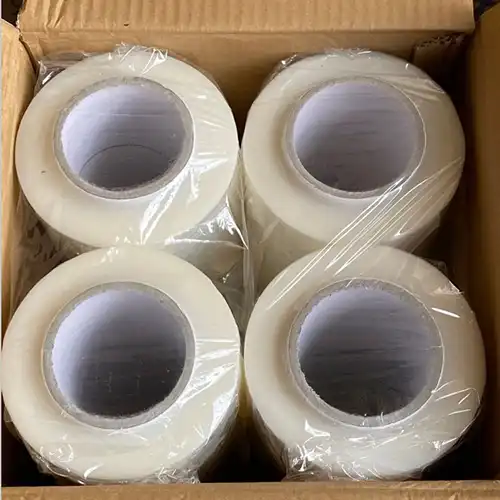
What Is Biodegradable PVC Cling Film?
How the Material Works
Polyvinyl chloride is what is used to make biodegradable PVC cling film. After that, organic additives or enzyme-based catalysts are put in. These extras are meant to help microbes break down the film in a landfill, where there isn't a lot of oxygen. ASTM D5511 is a lab method for measuring anaerobic biodegradation when there is a lot of solid matter to break down. People who make things often check this step. The add-on package is the main difference. Most types of PVC can stay in the environment for many years. On the shelf, clear, sticky PVC film should still look and feel like regular PVC wrap. It needs to stick to bowls and trays. Things should break down when they are thrown away, not when they are stored.
Biodegradable, Compostable, and Recyclable Are Not the Same
A lot of buyers mess up three terms, which can cost them a lot of money. There are times when microbes can break down something that is biodegradable. In order to be compostable, something must meet a certain standard, which is usually for industrial facilities. There are many things that can be used to make new things. More often than not, this film is made to be thrown away. The resin code for PVC is 3, and in the US, thin films rarely work with curbside recycling programs. Also, the additives can get into a clean PVC recycling stream if no one clears them out. Which of the three claims that suppliers make is backed up by a test? That's something I always ask them.
Is It Safe for Food Packaging?
When it comes to food safety, the finished film is just as important as the things that went into making it. The FDA makes rules about plastics that come into contact with food in the US. Regulation (EU) No 10/2011 says that the maximum amount of migration that can happen in the European Union is 10 milligrams per square decimeter. Foods that are high in fat can pull plasticizers out of PVC, especially when the PVC is hot. That's why you need to ask for migration results. Find out about the smell, the limits on heavy metals, and the date, issuer, and scope of the certificate. Foods that are cold, sour, or hot might need their own review. ISO, CE, and FDA have all given their approval to our business. When someone wants to buy film, I tell them to check each document to make sure it matches the film they want to buy.
Biodegradable PVC Cling Film vs. Other Packaging Options
Compared With Conventional PVC
PVC wrap from the past is still used in kitchens and meat departments because it sticks well, hides dirt, and can be used in cold rooms. Biodegradable PVC cling film now has a new end-of-life design that aims to keep its original characteristics. I think you should test them next to each other because the additive package could change the price, smell, or clarity of the film. Check out how each one tears on the cutter bar and how it sticks to plastic, glass, and stainless steel trays. The biodegradable option should be on your short list if the two seem to work about the same and the price difference is small. Find out what the extra cost gets you if there is a big difference.
Compared With PE and PLA
PE cling film can be recycled well and is commonly found in household wrap. It doesn't stick to things as well as PVC and doesn't keep out light as well. Plant sugars are used to make PLA, which helps meet goals for renewable content. However, it needs to be broken down in a factory and doesn't stretch as much. Being able to let oxygen pass through myoglobin is important for fresh red meat because it turns into the bright red oxymyoglobin that shoppers expect. A lot of people use PVC overwrap for this reason, and a lot of automatic wrappers work well with it. There isn't a clear winner in every test. The best choice will depend on your product, your machine, and how your customers can get rid of it.
Where Compostable Film Fits
Using film that can be broken down by nature only makes sense in places where it is legal to do so. There is no need to separate the food scraps from the wrap when a cafeteria sends them to an industrial composter. Plus, the store won't gain much if it's in a city that doesn't offer that service, since the film will then be thrown away. A green label doesn't prove anything by itself, so look for a certification that has been shown to work with that product. Check each film's price, how long it will last, and how much heat it can handle. Maybe they cost more and don't handle heat the same way other films do. A movie that breaks down in dumps might be more accurate if that's where most of your trash goes. There may be a better choice if you have someone with you who composts.
Environmental Impact: Is Biodegradable PVC Cling Film Truly More Sustainable?
Look at the Whole Packaging System
Sustainability is about more than one thing; it's about the whole system. The amount of energy used to make biodegradable PVC cling film, the cost, the time it takes to dispose of, and the amount of food lost are all important. The UNEP Food Waste Index Report 2021 says that in 2019, about 931 million tons of food were thrown away. That's around 17% of the food that people could buy. More food can be saved than wasted with a stronger wrap that works than with a thinner wrap that doesn't. So, the acting in the movie was more important to me than the story of the end of life. If the biodegradable PVC cling film tears or lets air out, it's not good for the items being packed.
How to Read Degradation Claims
Three questions should be asked: how often, when, and how much? The ASTM D5511 results are from a lab digester that was kept under control. This means that they only show what might happen, not what will actually happen in every landfill. The U.S. Green Guides. The Federal Trade Commission says that if something is claimed to be biodegradable without any other information, it is not true unless the whole thing breaks down in a normal year of being thrown away. The Guides also say that most of the time, landfills are not like that. Plastic items can only be used for a certain amount of time in some states, like California. I believe the label should be very clear, and the seller should send a report with the test method, sample, and outcome.
Where the Benefit Is Real?
When three things work together, it's very helpful. First, the film is approved for use with food. Second, a test report backs up the claim that film breaks. Since the film ends up in a landfill instead of being recycled, the additive doesn't hurt recycling. This is a little better than regular PVC, and you don't have to change the way you wrap things. Since it's impossible for the movie to have no impact on the environment, I stay away from slogans like "100% green." Customers and auditors are more likely to believe claims that are clear and honest. When the film is thick enough, it takes less of it to wrap each item.
Performance and Commercial-Use Evaluation
Cling, Stretch, and Clarity
Do a bench test first. The film can be used to cover items made of plastic, glass, ceramic, or stainless steel. When you stretch and tear it, see how well it holds its shape. Then, pull a piece of it tight to see if it breaks. People look at food through the film to see how clear it is in a cold case and under store lights. If you buy PVC cling film, it should be the right width, thickness, and core size for your machine. Most are between 8 and 15 microns thick. To make our cling film, we only use the best PVC. You can ask us to change its width, length, thickness, and packaging. Make a note of each answer so that your team can compare suppliers pretty well.
Where the Film Is Used?
Both plain PVC wrap and biodegradable PVC cling film are capable of doing the same. The largest group is made up of food packaging. In grocery stores, fresh meat, poultry, fruit, and vegetables are wrapped in plastic. In central kitchens, prepared meals are covered in plastic. Another is cold storage, where film needs to stay flexible in places like fridges and freezers. Talk to the company that made the film to find out what temperature ranges it can handle. Caterers cover bowls, trays, and sandwiches with wrap, and people at home store leftovers in it. In each setting, the film is under different kinds of stress. On the meat counter, oxygen must be able to get through. The freezer must be able to bend, and it must be easy to cut things in the busy kitchen. Setting the right film can help keep people from complaining.
Pilot Trials Before Bulk Orders
Do not use a data sheet to make a big order by itself. Run a test on your real line and store it in real space for two to four weeks. Record the number of tears per roll, the speed at which you wrap, the strength of the seals, any fogging, and any food smells. Just heat the film up to the levels shown on the technical data sheet. When the film is hot, keep it away from foods that are high in fat because the plasticizers can move. Also, write down how much waste there is. A film that tears more often might cost a little less per roll but more per shift. If you ask, we'll send you free samples so that your team can try them out before placing a big order.
How to Decide Whether Biodegradable PVC Cling Film Is Worth Buying
Define Your Use Case and Total Cost
Figure out what kind of food it is, how it will be wrapped, how long it needs to last, and how it will be thrown away. Next, make a scorecard with different points for things like performance, material use, supply capacity, customization, documentation, and following the rules. It's not just the price per roll. There are costs like freight, duties, storage, labor, waste, and any changes that need to be made to the equipment. Food places like things that are simple to give out and stick on. Food processors care about how consistent their machines are and how well their barriers work. Big grocery stores care about how their shelves look and how much stock they have. So that teams use it, I believe the scorecard should have no more than ten lines. When all the scores are on one sheet, it's easier to defend the final choice.
Weigh the Benefits and Limits
Also, the film can be used in the same ways that PVC can. It has a clear picture, is bendable, sticks well, and is simple to wrap. Because it was made for landfills, it may also help with sustainability goals. It's possible to get thinner options, custom sizes, and private labeling. On the other hand, biodegradable doesn't always mean compostable or recyclable. The benefit depends on how your customers throw away their trash, which you may not be able to control. You can also change the price, smell, clarity, strength, and stability by adding things. There are times when test results, line performance, local waste practices, and brand goals all point in the same direction that makes sense for me to buy the movie. You might like a different movie more if you don't have any of those four.
Evaluate the Supplier
When a good film comes from a source that isn't clear, your supply chain is still at risk. Review the business's production capacity, its track record of raw materials, its batch controls, its experience with exporting, and the number of times it has received the same order. You should ask for technical and safety data sheets, food-contact declarations, degradation reports, and certificates to make sure you get the right film. Shandong Honghe Plastics Co.,Ltd. has been making PE and PVC cling film, wipe-off TPE, CPE, and PE gloves, and stretch film since it opened in 2017. We are in Shandong Province's Liuguanzhuang Town, which is close to Qingdao Port and makes it easy to ship things. We have ISO, CE, FDA, BSCI, and WCA certifications. Our inventory is very big, and we offer support 24 hours a day, seven days a week after the sale.
Conclusion
Biodegradable PVC cling film can be a good option when the evidence suggests it. It's still sticky, clear, and lets oxygen through like PVC wrap, which makes it useful for storing food, catering, and everyday use around the house. But it's made in a way that makes it break down quickly in landfills. Still, saying that something breaks down, composts, or can be recycled is not the same thing. The ASTM D5511 results only show what could happen in the lab, not what will actually happen in a landfill. It is important that the migration data, test reports, and food-contact compliance all match the finished film. Also, how thick the film is, how well it stops food waste, and how simple it is to clean up the area are all things that matter. As you can see, the best film depends on the product, the equipment, and the waste infrastructure. This film is different from regular PVC, PE, and PLA. Based on these factors, it is simple to make a choice thanks to pilot tests, total cost calculations, and company paperwork.
FAQ
Is biodegradable PVC cling film really biodegradable?
Made so that microbes in a landfill with low oxygen can break it down on their own. Ask the lab for a report that lists the exact film you used, the conditions, and the amount of breakdown. Results will depend on how the test was done and what was used to make the formula.
Is biodegradable PVC cling film compostable?
No, it's not by default. Compostable films, which are often used in factories, have to meet different composting standards. Be careful what you write on the label—don't use the word "compostable." Biodegradable PVC is mostly meant to be thrown away in landfills.
How can I confirm food-contact safety?
Ask for certificates that match the finished film, test results for migration, and statements that say the film can be used with food. ISO, CE, and FDA have approved Shandong Honghe Plastics Co.,Ltd. The name of our business. We can talk about the papers that go with your order.
Can the film be customized?
Yes. You can get OEM and ODM services from us, and we can also change sizes and packaging to suit your needs. Free samples can be sent to you if you ask for them so you can try them out first.
Why does decomposition time vary?
It depends on the temperature, the amount of water in it, the activity of microbes, how it is made, and how it is thrown away. Even if the lab test goes quickly, it can still take weeks to finish. But what would happen in a real landfill?
Request Biodegradable PVC Cling Film Samples from Shandong Honghe Plastics Co.,Ltd.
People who need biodegradable PVC cling film for home, food storage, cold storage, and catering can purchase it from Shandong Honghe Plastics Co.,Ltd. It's made from high-quality PVC, and we can customize it, give you a lot of choices, and ship it quickly. If you ask for them, you can get free samples. After the sale, our team is here to help you 24 hours a day. Email tony@sdhhsl.com with the type of food, roll size, and yearly volume you want to know more about.
References
1. ASTM International, Standard Test Method for Determining Anaerobic Biodegradation of Plastic Materials Under High-Solids Anaerobic-Digestion Conditions (ASTM D5511-18), 2018
2. U.S. Federal Trade Commission, Guides for the Use of Environmental Marketing Claims (Green Guides), 2012
3. United Nations Environment Programme, Food Waste Index Report 2021, 2021
4. European Commission, Commission Regulation (EU) No 10/2011 on Plastic Materials and Articles Intended to Come into Contact with Food, 2011
5. U.S. Food and Drug Administration, Code of Federal Regulations Title 21, Part 177: Indirect Food Additives: Polymers, 2023
6. Mancini and Hunt, Current Research in Meat Color, Meat Science, 2005