



Multifunctional Plastic Wrap: Applications Across Food Sectors
Restaurants, supermarkets, processing factories, refrigerated storage, and residences use multifunctional plastic wrap https://www.sdhhsl.com/pvc-cling-film/multifunctional-plastic-wrapto cover, seal, protect, and portion food. It protects food in serving. Refrigeration reduces air interaction and moisture loss. It secures trays and portions on packing lines. Shandong Honghe Plastics Co.,Ltd. offers free samples of customised PVC cling film. This page discusses where the film works best, how to evaluate safety and quality, and how to compare choices before ordering in bulk.
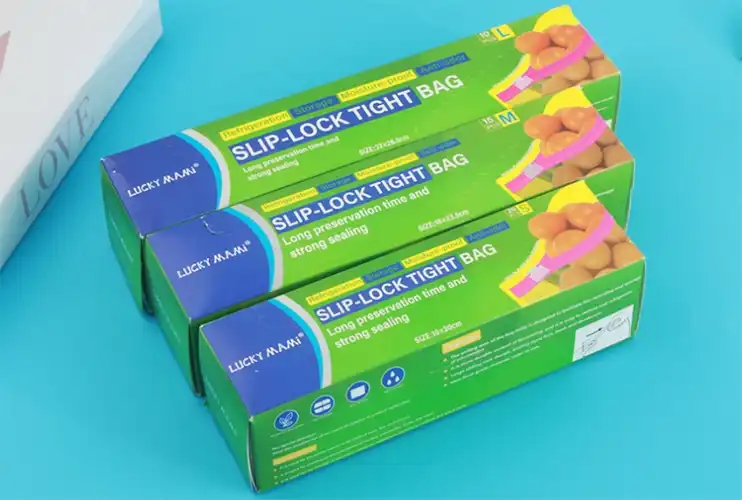
Applications of Multifunctional Plastic Wrap Across Food Sectors
What Multifunctional Plastic Wrap Means in Practice
The flexible sheet of multifunctional plastic wrap wraps, seals, protects, portions, and preserves food in homes, restaurants, and factories. Cling, stretch, clarity, width, roll format, and dispenser/cutter compatibility make it work. Household cling film is for mild kitchen usage, whereas professional purchasers consider volume, handling circumstances, equipment, and food-contact regulations. This range's wrap is made of clear, clingy PVC. I advise buying managers to examine the technical requirements sheet first since a product name does not indicate width, thickness, or tolerance. Roll performance on a crowded prep queue depends on those numbers.
Restaurants, Catering, and Institutional Kitchens
Wrap is used often in commercial kitchens. Prep pans, sauces, sandwiches, and walk-in fridge supplies are covered by staff. Fast dispensing, reliable cling, and roll sizes for daily workloads are important to these teams. Many goods must be cold kept at 41°F (5°C) or below per the FDA Food Code, and covered containers prevent contamination and drying. Film that rips or doesn't stick to a stainless-steel pan costs staff time and product. Wider rolls cover huge hotel pans faster in catering, hospitals, and school kitchens, whereas narrower rolls wrap portions. A minor choice to match roll width to work saves labour every shift.
Supermarkets, Processing Plants, and Households
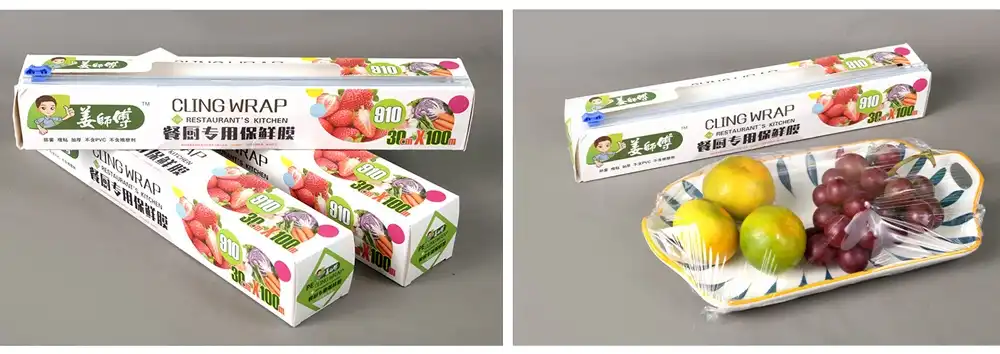
Deli and supermarkets wrap cheese, fresh fruit, cooked dinners, and platters. The product is visible through clear film, which boosts sales. Film covers trays, separates layers, and holds portions between manufacturing processes in food processors and bakeries. They require constant roll size to operate manual or semi-automatic stations. The same PVC cling film covers dishes, leftovers, and fruit at home. We provide PVC wrap for packaging for food, refrigeration, food service, and domestic usage, so distributors can carry one material family for several customers. Each configuration requires a varied thickness and breadth, thus we customise to client requirements.
Multifunctional Plastic Wrap Materials and Safety Information
Why PVC Remains a Common Choice
Multifunctional plastic wrap includes PVC cling film, which is popular for food wrap due of its transparency and self-adhesion requiring tape or clips. It fits over bowls and platters and irregular shapes like sandwiches and chopped fruit. Buyers evaluate PE, LDPE, and LLDPE films for flexibility, resistant to moisture, and toughness. Glass, stainless steel, and plastic trays respond differently, therefore test cling on your containers before using our PVC wrap. We provide no-obligation samples of your line to tell you in excess of a brochure.
Documents to Request Before Ordering
Food contact is regulated, therefore purchasers should have documents before ordering. The FDA regulates food-contact items under Title 21 of the Act of Federal Regulations. Food-contact declarations, migration test results, technical data sheets, and batches traceability records are useful. Shandong Honghe Plastics Co.,Ltd. has ISO, CE, FDA, BSCI, and WCA certifications. We can discuss which ones meet your market. Because a certificate of one film does not cover another, check that each document specifies material, thickness, and contact circumstances.
Microwave, Freezer, and Hot-Food Use
Never assume a wrap manages all temperatures. FDA and USDA consumer guidelines advises using only microwave-safe wrappers and avoiding handling food. Frozen and chilled storage present concerns. According to USDA's Food Safety and Inspection Service, tight, freezer-appropriate wrapping prevents freezer burn from moisture loss when frozen food comes into touch with air. Before recommending a temperature usage to workers or consumers, get written assurance since film behaviour alters with heat, cold, fat, and sugar. We prefer to confirm requirements in writing rather than leaving a gap that creates issues.
Multifunctional Plastic Wrap Compared with Alternative Solutions
Versus Standard Household Cling Film
Standard domestic film ideal for minor kitchen duties and small kitchens. High-turnover operations demand bigger or longer rolls, continuous winding, dispenser compatibility, and films that stick in cold, moist environments. Commercial multifunctional plastic wrap reduces tearing and dispensing time, and unique sizes enable you fit the roll to the work. A normal roll may be plenty for a café wrapping a few things daily. A central kitchen encircling hundreds of pans demands volume format. Useable area and labour should be compared, not shelf price.
Versus Aluminum Foil
Aluminium foil protects food from light and warmth and moulds well for oven and grilling. It lacks transparency, so workers must open packages to see what's inside, and it seals less firmly around bowl rims. Cooks can quickly identify contents using PVC wrap, which sticks to container edges to reduce colder air contact. Many kitchens store foil for heat and film for cold storage and show. Due to their diverse prep line solutions, I consider them partners rather than competitors.
Versus Reusable and Biodegradable Options
If washed, dried, and inspected, reusable coverings and beeswax-style wraps may reduce waste at home or in regulated cleaning environments. Disposable film reduces cross-contamination and cleaning in high-turnover kitchens. Biodegradable & compostable films need distinct attention. Many need industrial composting, which is not accessible everywhere, and vary in composition, authorisation, performance, and disposal. Lifecycle cost, safety, and local infrastructure should be considered alongside pricing. Tell us your objectives and we may discuss options for your organization.
How to Choose Multifunctional Plastic Wrap for Food-Sector Procurement
Define Specifications and Compare Real Cost
First, application, monthly volume, technique, and destination market. Set measurements for thickness, breadth, length, roll size, cling, stretch, piercing resistance, heat range, and dispenser fit. Testing standards unify language. ASTM D882 evaluates thin plastic sheeting tensile characteristics, while ASTM D1709 measures dart drop impact resistance. Compare useable square metre prices, then add labour, waste, goods, storage and tariffs. A cheaper tearable roll costs more each meal bundled. Before approval, discuss the specification with purchasing, warehouse, and operations management, who monitor various statistics.
Custom, Wholesale, and OEM Options
Bulk programs match film to equipment, brand, and distribution. We provide OEM and ODM PVC wrap customisation for width, length, thickness, core, packing, and labelling. A typical procedure includes application evaluation, free sample, specifications confirmation, quote, manufacturing, inspection, and shipping. Carton numbers, pallet arrangement, and container loading effect freight cost and warehousing space, so plan early. Export logistics are supported by our plant in Liu Guanzhuang town, Shandong Province, near Qingdao Port. We have plenty of inventory and 24-hour after-sales assistance, so repeat purchases move quickly.
Common Risks and How to Avoid Them
Most procurement issues for multifunctional plastic wrap stem from ambiguous claims, missing compliance documentation, incorrect film thickness, or price-per-roll quotations. Hot food may not fit a cooled film. Regional restrictions vary, therefore seek updated material and thickness papers. Quality of winding, dispenser fit, and carton protection impact daily performance. Before recurrent orders, create approval criteria for appearance, size, cling, strength, and labelling and retain a reference piece from the approved lot. Perform a trial order, capture waste and operator feedback, then notify your supplier with images and batch numbers to expedite remedial action.
Improving Food-Handling Efficiency and Sustainability
Match the Film to the Workflow
Wrap saves time only when the process matches the requirements. Slow cutting, frequent ripping, waste, and unequal portion wrapping are signs. A good roll width, cutter, and dispenser save handling time and hand contact. Separate raw, cooked, allergen-laden, and ready-to-eat foods and write standard storage, application, labelling, removal, and disposal processes. The CDC estimates that 48 million Americans get foodborne disease each year, therefore hygienic handling is important. Record batch film consumption, packing time, waste rate, and staff comments to alter the specification.
Cut Waste Through Smarter Specifications
Sustainable use starts with less. Select the thinnest film that passes performance testing, optimise cutting control, pick roll lengths that suit stations, and decrease secondary packaging. In 2018, the U.S. EPA reported 35.7 million tonnes of plastics in urban solid trash, 8.7% of which was recycled. Those numbers demonstrate why source minimisation matters. Film that rips on the first pull is thrown away before it works. Test several thickness with our samples for free and compare batch consumption, not roll usage.
End-of-Life and Environmental Claims
Check resin identification code + local recycling restrictions before promising consumers anything. PVC has code 3, but many curbside services don't take flexible film. Ask the local operator if PVC wrap qualifies for retail drop-off programs, which usually accept clean polyethylene film. Be cautious with environmental claims. Request certificates, test techniques, or computations for recycled content or compostable. We welcome open discussions about material possibilities and requirements with customers that follow sustainable sourcing. Clear information shields your brand and consumers.
Conclusion
Restaurants, supermarkets, processing industries, cold storage, and homes employ multifunctional plastic wrap to cover, seal portions, and protect food. Food-contact papers and microwave, ice, or hot-food use certification are needed for clear, clinging PVC film. Comparing home film, aluminium foil, or reusable or biodegradable options by useable area, labour, and waste, each matches different tasks and prices. Buyers should set quantitative needs, test samples, set acceptance criteria, and monitor results. Reduce sources and promote recycling for sustainability. Good film performance requires precise specification, not roll price.
FAQ
Can the PVC wrap be customized?
Yes. We customize width, length, thickness, and packaging to customer specifications, and we provide OEM and ODM services.
Are free samples available?
Yes. Share your application, size, and thickness needs, and we will arrange free samples so you can test the film on your own line before a bulk order.
Can I microwave PVC food wrap?
Do not assume so. FDA and USDA guidance says to use only wraps labeled microwave-safe and to keep wrap from touching food. Ask us to confirm the temperature range for your specific film in writing.
Where is this wrap used?
It serves food packaging, refrigeration, food service, and household applications.
Request Multifunctional Plastic Wrap Samples from Shandong Honghe Plastics Co.,Ltd.
Shandong Honghe Plastics Co.,Ltd. is a multifunctional plastic wrap supplier near Qingdao Port. We offer customizable PVC film, free samples, ISO, CE, and FDA certifications, ample inventory, fast delivery, and 24-hour after-sales service. Send your application, size, thickness, and volume to tony@sdhhsl.com, and our team will reply with a specification and quote. Visit sdhhsl.com for details.
References
1. U.S. Food and Drug Administration, Food Code, 2022.
2. U.S. Environmental Protection Agency, Advancing Sustainable Materials Management: 2018 Fact Sheet, 2020.
3. Emerging Infectious Diseases, Foodborne Illness Acquired in the United States—Major Pathogens, 2011.
4. U.S. Food and Drug Administration, Code of Federal Regulations, Title 21, Food and Drugs, 2023.
5. USDA Food Safety and Inspection Service, Freezing and Food Safety, 2013.
6. ASTM International, ASTM D882-18 Standard Test Method for Tensile Properties of Thin Plastic Sheeting, 2018.