


_1750233969309.png)
What Is Easy To Tear PE Cling Film and Why Buyers Prefer It Today
The Easy To Tear PE Cling Film is a high-tech polyethylene-based food wrapping solution created to solve a recurring problem that happens a lot in business kitchens and industrial packaging settings: it's hard to tear film cleanly without special cutting tools. In contrast to regular PE stretch films that need metal edges with serrated edges or PVC options that use questionable plasticisers, this product has perforation lines that are already set, which allow clean, straight split into fixed parts. The perforation design gets rid of the safety concerns that come with using sharp cutters at work. It also cuts down on packaging time by a huge amount while still meeting buyers' needs for superior cling, transparency, and food-grade compliance. This film is a big step forward in packaging technology because it combines ease of use with strict safety standards, such as FDA approval.
Understanding Easy To Tear PE Cling Film
Material Composition and Engineering
Blends of low-density polyethylene (LDPE) and linear low-density polyethylene (LLDPE) are what this product is made of. These materials make a film that is both bendable and strong. It doesn't naturally tear in random directions, but it does react normally to the perforation lines that have already been set. Specialised extrusion techniques are used in manufacturing to make changes to the molecular orientation or microstructure that allow for linear separation. PVC films are flexible because they contain plasticisers like DEHP, which are becoming harder to use in food-contact applications. PE-based films, on the other hand, are chemically neutral and don't contain any dangerous additives like BPA.
A thickness range of 8 to 15 microns is the best compromise between cost-effectiveness and usefulness. Thinner films (8–9 microns) are good for light-duty tasks like covering ready-made salads or baked goods. 12–15 micron films are better at resisting punctures for odd-shaped containers or protein products with visible bones. In food processing plants, business kitchens, and retail display areas, this range of thicknesses can be changed to meet different operating needs. The clearness makes it possible to see the goods, which is still important for getting people to buy things in deli areas and at catering events.
How Perforation Technology Works
The precision-engineered perforation line is what makes our product unique. These holes aren't just random weak spots; they were planned to be there during the manufacturing process by using controlled mechanical scoring or laser perforation. The holes are spaced and drilled to very precise levels to make sure that the film tears neatly along the lines marked, protecting the items that are sealed inside. This technology is in between continuous film, which needs to be cut with special tools, and fully separated sheets, which are not as useful when dispensing from a roll.
When someone takes the film off the roll and lightly pulls on the perforation line, the molecular structure gives way cleanly, making a straight edge without the annoying stretching that happens with regular PE films. What people in the business call "cling rage"—the twisted, stretched mess that happens when you try to tear regular films by hand—is gone. The perforation spacing can be changed based on what the customer wants. Typical gaps are between 30 cm and 60 cm to match the sizes of containers used in food service.
Material Composition and Engineering
The Easy To Tear PE Cling Film version is much better than the PVC cling film when it comes to chemical safety and environmental effect. Plasticisers that move to the surface of PVC films give them better initial cling, but these chemicals are bad when they come in contact with fatty foods or are heated in microwaves. When PE films are mixed with better tackifiers, like polyisobutylene, they stick just as well without worrying about leaking. This means that the seal stays intact from -60°C in the freezer to safe heating levels around 110°C.
The easy-tear design makes it much easier to use in high-volume settings than regular PE cling films that don't have hole technology. When 200 meals are made every day by a catering company, not having to look for scissors or deal with frustrated, torn ends saves real work time. The clean split cuts down on film waste because employees don't have to throw away jumbled pieces. Because of these organisational changes, labour costs will go down and work will get done faster during busy times.
Key Benefits and Use Cases of Easy To Tear PE Cling Film
Operational Efficiency in Commercial Environments
Professional kitchens in hospitals, restaurants, and service businesses are always under pressure to keep up with the workload without putting food safety at risk. The easy-tear design lets kitchen staff quickly wrap ready-to-eat foods, sealing ceramic dishes, stainless steel pans, and glass containers to keep air out without having to stop and find cutting tools. Workflow studies in institutional kitchens show that this small convenience adds up over hundreds of daily uses, cutting the total amount of time spent on food storage tasks by about 15 to 20 percent.
Getting rid of metal tools with sharpened edges solves a real safety problem in the workplace. According to the U.S. Bureau of Labour Statistics, cuts and scrapes are some of the most common injuries that happen in the kitchen. Box cutters and film makers are two tools that contribute to these rates. By getting rid of these danger spots, facility managers cut down on both the number of injuries and the costs of workers' compensation. This safety improvement helps businesses that have a lot of staff change because it saves them time and money that would otherwise be spent on teaching new employees how to use cutters correctly.
In addition to being fast and safe, our Easy To Tear PE Cling Film's excellent cling qualities make it a reliable moisture shield that keeps food fresh longer. Self-adhesion works with surface tackifiers that stick to the edges of the container, making seals that keep food from drying out and spreading germs. When deli sections in supermarkets switch to high-quality PE films, the rate of shrinking goes down because the better oxygen barrier slows oxidation in sliced meats and cheeses displayed in chilled cases.
Environmental and Compliance Advantages
Sustainability issues are becoming more and more important in the food business when it comes to buying things. When looked at over their whole lifecycle, PE films are clearly better than PVC alternatives. Polyethylene can be recycled through normal plastic recycling streams (it is usually labelled as #4 plastic), but PVC recycling is still limited because of the chlorine content and contamination issues. When PE is burnt at the end of its useful life, it only gives off carbon dioxide and water vapour. On the other hand, burning PVC gives off hydrochloric acid and possibly dioxins.
Procurement managers in controlled businesses have to make sure that food safety rules are followed at all times. Our film complies with EU Regulation No. 10/2011 governing plastic materials in contact with food and meets FDA 21 CFR 177.1520 standards for food contact substances. Migration testing by a third party confirms that the film does not transfer any harmful substances into food simulants like ethanol and olive oil solutions, even when it is in contact with them for a long time at high temperatures. These certifications provide the proof needed for health inspections and audits of suppliers.
This film can be used in a wide range of temperatures and will still work well in blast freezers and normal workplace settings. Cold chain transport operations like that the film doesn't crack at temperatures below zero, which is a common way for cheaper films to fail. The film's temperature stability, on the other hand, lets covered cases be heated up in a microwave without melting or letting too much plasticiser escape, which makes public meal programs more convenient for customers.
Real-World Application Examples
Think about a regional hospital system that makes meals for 2,000 patients every day at several locations. By switching to perforated easy-tear film, the food service department saved 45 minutes of work time each shift that they used to spend looking for scissors and untangling film. Standardised perforation spacing matched their most common tray sizes, which cut waste by 12% compared to their old film, where staff often cut pieces that were too big. Along with these efficiency gains, food safety rules were better followed because the quick, clean tears cut down on the chance of cross-contamination between meal preparations.
For use in supermarkets, deli managers like the clear visibility that shows off cooked foods while keeping them fresh. Over the course of six months, a regional chain with 35 stores found that switching to premium easy-tear PE film cut customer complaints about products that were drying out or changing colour by 18%. The better seal quality made the displays last longer, so shops could prepare things earlier in the day without losing quality. This made work go more smoothly during the morning rush.
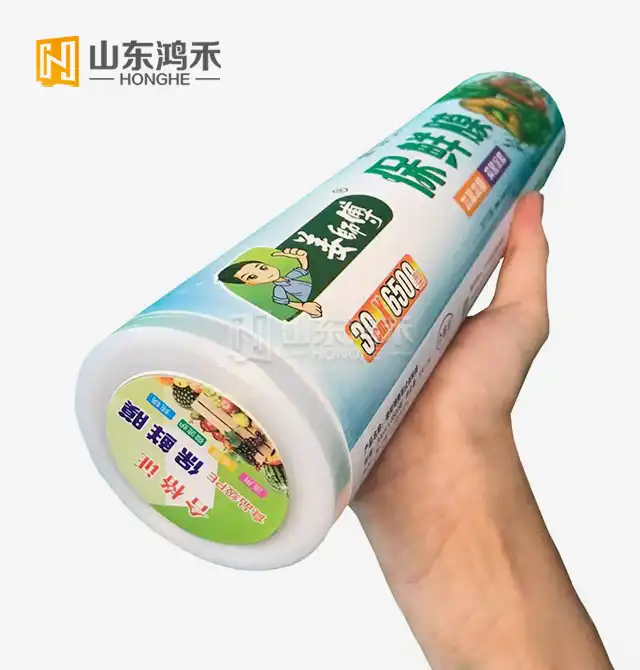
How to Select the Right Easy To Tear PE Cling Film for Your Business?
Evaluating Thickness and Mechanical Properties
Professionals in charge of buying things should make sure that the film specs they use are right for their business and the products they are buying. The 8-10 micron range is good for light applications that need to be easy to handle and save money, like bakery goods, salads that are already made, or snacks that are already divided up. These smaller films keep out moisture well enough for short-term keeping (24 to 48 hours) and have the best prices for people who use a lot of them. This thickness would work best for a school cafeteria that wraps sandwich trays to serve the next day.
For general commercial kitchen use, options in the 11–13 micron range strike a good balance between performance and cost-effectiveness. This thickness can handle the mechanical stress of wrapping around the edges of containers, even the corners of rectangular pans that cause stress concentration places. In this range, the resistance to punctures gets a lot better, so the film can be used with ready-made protein meals where bones or skewers might touch it. Regional caterers that serve a variety of foods usually keep this thickness on hand as their main film.
Heavy-duty standards at 14–15 microns cover tough industrial uses or long-term cold storage situations. Food processors who package large amounts of marinated meats or ready-made sauces will benefit from the improved seal integrity that stops leaks during storage and transport. The extra thickness protects against punctures when wrapping things with sharp edges, which lowers the amount of product that is lost because of damaged packaging. The cost per unit goes up as the diameter goes up, but for high-value items, the less waste and better security often make it worth it.
Customization Options for Bulk Procurement
The size of the rolls has a direct effect on how efficiently they work and how much space they need in business settings. There are different width options, from 30 cm to 60 cm, to fit different application sizes. Narrower rolls are better for wrapping individual portions in cafeterias, while wider formats make it easier to cover large sheet pans in banquet operations. To cut down on waste, the space between the holes should match the size of your most frequent containers. A buyer who makes hundreds of 9-inch plate covers every day might want opening intervals of 28 to 30 cm, while a food processor that wraps hotel pans might want 45 to 50 cm.
The choice of core size affects how well it works with current storage racks and pumps. Most tabletop cling film dispensers in business kitchens fit standard 38mm cores. Heavy-duty wall-mounted dispensers used in high-volume packaging lines can fit 76mm industrial cores. The length of a roll is usually between 300m and 1500m, and longer rolls mean less frequent changeovers in fully or partially automated packaging operations. A busy hospital kitchen might choose 1000m rolls so that they don't have to change them as often during times when they are making a lot of meals.
When choosing cling characteristics, you should think carefully about your main uses. One-sided cling films stick to objects but not to themselves. This makes them easier to handle and keeps them from getting tangled up while they're being used. Two-sided cling types make seals stronger and let films overlap when making double-layer protection, which is useful for some cold storage uses. The most reliable way to find out which type of cling works best with your specific container materials and storage temperatures is to test samples in real-world situations.
Pricing Considerations and Total Cost Analysis
Unit prices naturally go down as the number of rolls ordered goes up, but complex buying analysis goes beyond the quoted cost per roll. If a slightly more expensive film with better perforation accuracy cuts trash by 15%, it may actually lower the total cost of packing for each meal provided. Also, better cling qualities that make products last longer (even by just one day) can cut down on waste and save a lot of money in food service companies that serve a lot of people.
When comparing choices, the effects on labour efficiency should be measured. If one type of film saves 30 seconds on each task of wrapping, multiply that number by the number of tasks you do each day to find out how much time you save overall. With benefits, the average hourly wage for food service workers being $15 to $20, these efficiency gains add up quickly. A facility that does 400 wrapping operations every day would save about 3.3 hours of labour time each week, which is about $250 to $330 in monthly labour costs, thanks to what might seem like a small improvement in how things are done with Easy To Tear PE Cling Film.
Reliability in the supply chain should play a big role in choosing a seller, especially for businesses that keep their inventory low. When a supplier has slightly lower prices but often runs out of stock, buyers have to keep larger amounts of safety stock on hand, which uses up working capital and warehouse space. Premium providers who keep their goods available all the time and offer flexible shipping times may be able to explain slightly higher unit costs by making the supply chain more predictable and lowering the risk of production interruptions caused by lack of packaging.
Procurement Insights: Buying Easy To Tear PE Cling Film Wholesale
Supplier Evaluation Criteria
Comprehensive certification packages are a way for trustworthy makers to show that they care about quality. ISO 9001 certification means that quality management systems have been in place for a while and are consistent across production runs. Certifications for food safety, such as FDA registration and following FDA 21 CFR 177.1520 rules, make sure that products meet the rules for direct food contact. European buyers should make sure that the goods they are buying are in line with EU 10/2011. In the U.S., institutional buyers often need SQF (Safe Quality Food) certification in order to be eligible for government contracts.
Checking a company's ability to make things is more than just looking at its output numbers. Modern co-extrusion lines make more uniform film properties than older equipment, so buyers should ask about the age of the equipment and upkeep plans. A supplier's technical skill can be judged by how many in-house testing labs they have that can do migration analysis, tensile strength measurement, and oxygen transfer rate testing. Ask for proof of the testing procedures for incoming raw materials—premium providers check the resin specs from polyethylene suppliers instead of thinking they are met.
How fast customer service is has a big effect on how happy partners are with their long-term relationships. Ask for technical data sheets, certification documents, and sample shipments from suppliers as part of the evaluation process to test the communication channels. Keep an eye on reaction times and how technical the answers are to specific application questions. When it comes to order scheduling, specification changes, and problem resolution, suppliers who offer dedicated account management for large buyers make things run more smoothly than suppliers who treat buyers like they are just another transaction.
Minimum Order Quantities and Volume Discounts
Most manufacturers set MOQ levels based on how much it costs to make a certain number of items. Minimum orders are usually between 500 and 2,000 kilos, which is about 40 to 160 rolls, based on the size and thickness. These minimums are based on the costs of setup and the waste of materials that come with changing how machines are set up between runs of production. Buyers who run more than one facility might combine their needs across all of them to get the best prices while keeping inventory levels at each spot reasonable.
When orders go over 5,000 kilograms, volume discount structures usually lower prices by 5-8%. There are also discounts at 10,000 and 25,000 kilograms. These economies of scale mean that makers can buy more raw materials with less money because they don't have to pay as much for costs. Buyers should negotiate multi-shipment contracts that lock in volume pricing and allow deliveries that are timed to match consumption rates. This way, buyers can avoid the heavy burden on their working capital of receiving their entire annual needs in a single shipment.
Sample Testing and Quality Verification
In industrial procurement, it is standard practice to ask for samples before making large purchases. Reliable sellers give away free samples of standard specs and only charge for custom configurations that need to be made in large quantities. Sample sizes are usually between one and three rolls, which are enough for practical trials with different shifts and types of products. To make sure the testing methods are accurate, they should be used in real-life situations. For example, check how well the seals stick to the materials of your containers, how well they tear after being stored at the normal temperature in your facility, and how well they seal at the temperature extremes that your applications experience.
Quality control goes beyond the initial sampling and includes checking the consistency of each lot after a supplier relationship has been established. Set up random testing procedures where staff record problems with film performance on standard forms. Tracking measures like the number of tears per shift due to film flaws, the percentage of wraps that need to be reapplied because they didn't stick well, or the number of times the seal failed too soon gives you objective data to use in provider performance reviews. This paperwork is very helpful when the contract needs to be renewed or when looking at other sellers.
As a supplier with a lot of experience in Easy To Tear PE Cling Film, Shandong Honghe Plastics Co., Ltd. keeps a lot of stock of all of our products, so we can quickly fill both trial requests and production orders. Our logistics network is based near Qingdao Port, which makes sending containers to North America easy. Lead times to big East Coast ports are usually between 18 and 25 days. We offer a variety of incoterms so that buyers can choose the ones that work best for them when it comes to shipping responsibility and risk transfer places.
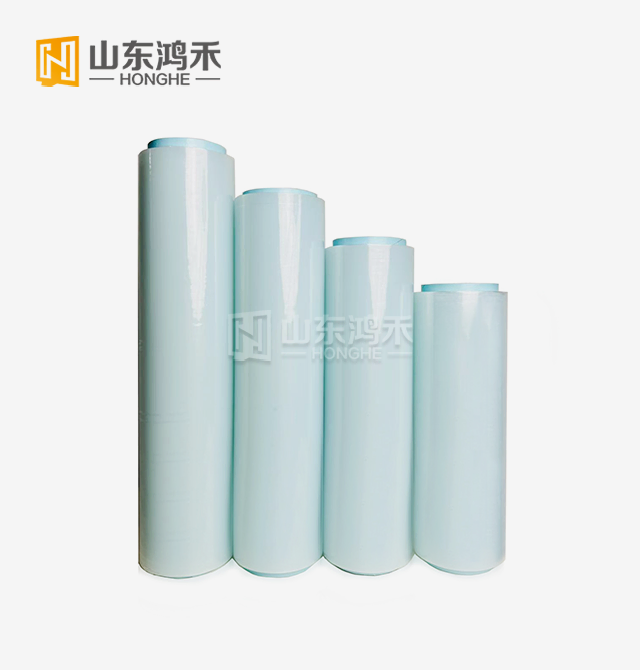
Best Practices for Storage and Usage of Easy To Tear PE Cling Film
Optimal Storage Conditions
Film rolls should be kept in climate-controlled spaces where the temperature stays between 10°C and 25°C. Extreme temperatures can change the tackifier compounds that give cling properties. For example, too much heat can cause film layers to stick together too quickly within the roll, while too much cold can make the surface less sticky until the film warms up again. Relative humidity should stay below 70% to keep cold rolls from condensing, which can leave water spots on the film surface that can make it hard to see and could even help microbes grow.
Film properties stay the same during storage as long as it is kept out of direct sunlight and UV light. Ultraviolet light slowly breaks down the chemical bonds of polyethylene, which causes it to become weak and yellow, which lowers its performance. Warehouses shouldn't have skylights or big windows unless UV-blocking glass is put in. When you have to store rolls outside during loading, do so for short periods of time and protect them from direct sunlight with opaque tarps or boxes. When you live in an area with a lot of solar radiation, these safety measures become even more important.
Product quality stays the same when inventory is rotated properly using FIFO (first-in, first-out) rules. Compared to other packing materials, polyethylene film has great shelf stability. However, the tackifier chemicals in Easy To Tear PE Cling Film do slowly break down over long periods of time. By putting receiving dates on cartons and setting up storage so that items can be used in the right order, you can avoid situations where older stock sits unused while new stock runs out. Most makers say that film works best when used within 24 months of being made, but if it is kept properly, it will still work well after this time.
Application Techniques for Maximum Efficiency
The dispensing method has a big effect on how much material is used and how happy the user is. Maintain a small force perpendicular to the perforation line when pulling film off the roll. Pulling at sharp angles will cause tears that aren't straight. The best way to do it is to grab the film at two points close to the perforation, gently pull it down, and then apply lateral tension to make the tear go all the way across the width. New workers benefit from short examples because after a dozen times of doing something right, it becomes second nature.
In food presentation situations, the wrapping order changes the quality and look of the seal. First, center the film over the container and make sure there is enough overlap around all four sides. Firmly press around the edges to start the tackifier bond. Work from one side to the other to get rid of any air pockets that leave gaps that aren't sealed. For containers with complicated forms or rough surfaces, stretching the film a little while you're applying it makes it fit better and keep the seal better. Because PE is elastic, it can stretch by about 20 to 30 percent during application without affecting the seal's performance.
Common performance problems can be avoided by controlling the temperature during the application. When film is taken out of refrigeration storage and put back into storage, it has less cling until the surface temperatures reach room temperature. In the same way, trying to wrap very hot containers can cause the seal to fail because the trapped steam condenses and breaks up the tackifier bond. If you wait until cooked foods are about 60°C cooler before covering them, the seals will be strong, and the food will still retain wetness that keeps it from drying out. This method also stops condensation from building up on the inside of the film, which can make it harder to see the product in display situations.
Recycling and Waste Management
PE film can be recycled in the same ways as other plastics, but how well it works depends on how dirty it is and the recycling infrastructure in your area. Industrial recycling programs often accept clean film that has been taken off of non-food applications. These programs turn #4 plastics into secondary products like plastic lumber or drainage pipes. Food-contaminated film can't be recycled as easily because grease and organic leftovers get in the way of the machines that do the recycling. Source separation programs are used in progressive operations to separate relatively clean film used to cover preparation surfaces from heavily soiled film that came into contact with raw proteins.
Strategies for reducing waste are good for both the environment and the economy. When compared to hand cut films, where users often guess the lengths they need too long, our film's exact perforation spacing cuts down on over-pulling waste. Regular audits that keep an eye on waste production reveal chances to train staff or make changes to specifications. Some high-volume businesses find that switching between two different perforation spacings for small and large containers cuts total consumption by 8–12% compared to using a single size that works for everything.
Conclusion
Easy To Tear PE Cling Film solves important operational problems in commercial food packaging by using smart engineering to find a balance between ease of use, safety, and performance. The pre-set hole technology gets rid of the dangers that come with cutting tools at work and speeds up work in places with a lot of it. Its polyethylene content makes it safe for food, reusable, and up to strict government standards, without the chemical worries that come with PVC options. When evaluating options, procurement professionals should look at the total cost implications, which go beyond unit pricing.
They should include gains in labour efficiency, less waste, and the reliability of the supply chain in their analysis. Long-term partnership success depends on choosing the right supplier based on certifications, manufacturing ability, and service responsiveness. This film consistently improves food safety, extends product shelf life, and makes operations more efficient in a wide range of settings, from institutional kitchens to retail display cases, as long as it is kept properly and applied using tried-and-true methods.
FAQ
Q1: How does Easy To Tear PE Cling Film differ from standard cling film in food safety?
A: The main difference is in the materials used and how well they follow regulations. Food-grade Easy To Tear PE Cling Film that meets FDA 21 CFR 177.1520 standards is used in our product. It doesn't have any plasticisers like DEHP that are common in PVC alternatives. Migration testing shows that no harmful substances get into food, even when foods are heated in the microwave or with a lot of fat. The hole technology doesn't change the chemical inertness; it just makes mechanical break points without adding any contaminants.
Q2: Can I order custom perforation spacing for specific container sizes?
A: Customisation is one of the most important skills for industrial suppliers who work with a wide range of applications. It changes from manufacturer to manufacturer, but the lowest amount you can order for unique perforation spacing is usually around 2,000 kilograms. Changing the settings on the piercing equipment during production is part of the process. This adds a small amount of setup costs that are noted in the MOQ requirements. Buyers should give exact measurements of the most common sizes of containers they use, and suppliers can suggest the best perforation intervals to reduce waste while still making the containers easy to handle.
Q3: What factors should I prioritize when comparing supplier pricing?
A: Aside from the price mentioned per roll, you should also look at the delivered price, which should include freight costs and import taxes if you're buying from another country. Instead of looking at the cost per roll, look at the cost per linear metre or the cost per wrapping operation. This is because changes in size affect the functional value. Think about consistency and dependability. When suppliers run out of stock, you have to buy things quickly at higher prices, which cuts into your savings. Overbuying ties up your working capital, so compare the minimum order amounts to how much space you have and how fast you use things.
Partner with Shandong Honghe Plastics Co., Ltd. for Premium Packaging Solutions
Shandong Honghe Plastics Co., Ltd. is ready to meet your needs for Easy To Tear PE Cling Film. They have a history of producing high-quality products and putting the needs of their customers first. Since we started in 2017, we've focused on making food-grade packaging films that meet foreign standards like ISO, FDA, and CE certifications. Our BSCI and WCA compliance shows that we're committed to using ethical production practices. Our standardised buildings and high-tech production tools near Qingdao Port make sure that the quality of our products is always the same and that they can get to North American markets quickly.
As a supplier with a lot of experience, we offer flexible specifications, low wholesale prices for large orders, and a free sample service that lets you test the product thoroughly before making a purchase commitment. We offer flexible ODM/OEM options and 24-hour after-sales support to meet the specific needs of industrial companies, food makers, and institutional buyers looking for long-term relationships they can rely on. Visit sdhhsl.com or email tony@sdhhsl.com to get samples, talk about custom requirements, and find out how our packaging solutions can help your business run more smoothly while meeting the highest quality standards.
References
1. Chen, L., & Morrison, P. (2021). Advanced Polyethylene Film Technologies for Food Packaging Applications. Journal of Applied Polymer Science, 138(42), 51234-51248.
2. Food and Drug Administration. (2020). Food Contact Substances: Polyethylene Films and Coatings. CFR Title 21 Part 177.1520, U.S. Government Printing Office.
3. International Organization for Standardization. (2019). Plastics Film and Sheeting: Determination of Tear Resistance (ISO 6383-2:2019). Geneva: ISO Publications.
4. Kumar, R., & Thompson, J. (2022). Sustainability Assessment of Food Packaging Materials: Comparative Life Cycle Analysis of PE and PVC Films. Packaging Technology and Science, 35(6), 447-462.
5. Robertson, G. L. (2021). Food Packaging: Principles and Practice (4th ed.). Boca Raton: CRC Press, Taylor & Francis Group.
6. Zhang, Y., Wang, S., & Liu, M. (2023). Perforation Technology in Flexible Packaging: Engineering Controlled Tearability in Polyethylene Films. Polymer Engineering & Science, 63(3), 892-906.