



Which PE Cling Film for Food Thickness Is Best for Different Uses?
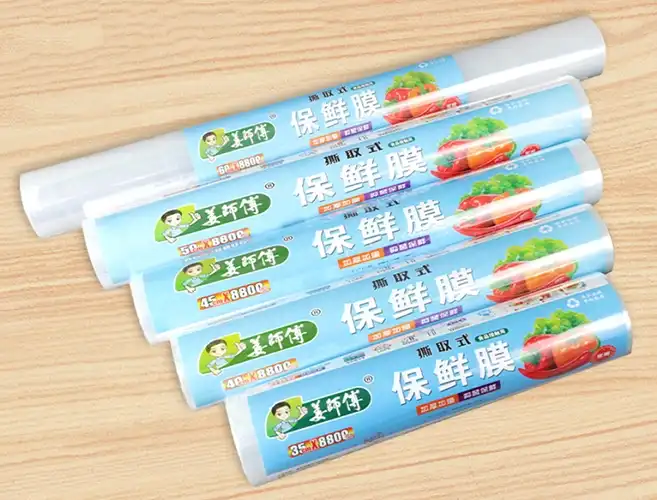
The best thickness for PE cling film for food https://www.sdhhsl.com/pe-cling-film/pe-cling-film-for-fooddepends on what you wrap. In my experience, 8–10 microns suits light, short-term covering, 10–15 microns fits everyday restaurant and foodservice work, and 15–20 microns suits meat, poultry, and retail trays. Film of 20–30 microns or more belongs to heavy-duty jobs. The right choice is the thinnest gauge that still protects the food, wraps cleanly, and meets food-contact rules. Treat these ranges as starting points, then confirm them with samples, equipment trials, and compliance documents before you place a bulk order.
Why PE Cling Film Thickness Matters in Food Packaging?
Match Film Thickness With the Application, Not Just the Lowest Price
How does the thickness of a film change the way it feels and moves on your line? Thick thickness is less likely to tear or damage most of the time. It is easy to stretch and quick to put on a thinner gauge, and it uses less resin. When it comes to kitchens, quickly wrapping by hand is important. When it comes to stores, steady rest on tray machines is important. And when it comes to wholesalers, handling during transport is important. The cheapest roll price doesn't always mean the cheapest cost because these needs are different. If a thin film on a bone-in tray tears, it costs time and money to fix the film. I never look at the price per roll when I compare prices. Instead, I look at how much the whole box costs per folded unit.
Define PE Cling Film and Food-Contact Suitability
It is usually low-density (LDPE) or linear low-density (LLDPE), and it is blown or cast into shape to make PE cling film for food. LDPE has a number of 4 for its identity. Some types of PVC wrap use phthalate plasticizers, but this film doesn't. That's one reason why lots of people like it for cheese and roasted meat as well. When you want to be safe, the word "polyethylene" is not enough. You also need chemicals, cling agents, and controls during production. The Food and Drug Administration (FDA) in the US controls food-contact polyethylene under 21 CFR 177.1520 for olefin polymers.
Compliance Documents Belong in Every Purchase
It is important to get a compliance declaration, migration test reports, information on additives, and the ability to keep track of each batch from each supplier. This is because different types of food and touch conditions put different amounts of stress on films. For example, fatty, acidic, and frozen foods all put different amounts of stress on films. If you look at the FDA's rules on food-contact substances, you can see how migration is judged. A good provider will be able to talk about its papers in that light. You can also use these records to keep track of customers in shops. To let your quality team look at both at the same time, I think you should put them together with demos.
PE Cling Film Thickness Guide: Common Ranges and Their Typical Uses
8–10 Microns: Lightweight Film for Short-Term Food Covering
This band is pretty thin compared to most food-grade PE cling film for food, which is between 8 and 20 microns thick. It works well at home and at events for bowls, plates, containers, fruit, vegetables, baked goods, and more. Easy to spread out and doesn't take much, so it's cheap and quick to cover. It's not as strong against tears and holes, though, so it can tear on heavy or sharp points. You should do this for short-term storage and soft shapes. Before you buy a lot of it, try it out on the biggest, strangest jar you have.
10–15 Microns: General-Purpose Thickness for Food Service
Most diner food, ready-made foods, bakery goods, store trays, and daily storage start in this range. As long as the cost, stretch, and cling are all about the same, most cooks find it easy to work with by hand or with a die. If you are in charge of a general food service account and need a standard, this is where you should start. If you see heavy pans being torn, move up. If there is enough space for the film to work, move down.
15–20 Microns: Heavy-Duty Film for Commercial and Retail Packaging
Pick this band if you have to handle a lot of meat, poultry, odd-shaped items, bigger containers, and weighty items. This extra width makes it harder to poke holes in and easier to wrap around bones and plates that aren't level. Even though the film is stronger, it still needs to stick and stretch just right. It's bad for the food or the tray if the film is too thick and hard to stretch. Get a sample and test it on your real products before you buy.
20–30 Microns and Above: Industrial or Specialized Food Packaging
Food packaging that is heavy, bulky, has sharp edges, or needs to be moved around a lot should use this level of film. A lot of everyday tasks don't need it. When it comes to thickness, more resin per wrap means the box weighs more and the resin may not come out as quickly. You should only do it after a thinner film has failed a real test. A smaller gauge will usually save you money per wrapped unit if it meets your needs.
How to Choose PE Cling Film Thickness for Different Food Applications?
PE Cling Film for Meat, Poultry, and Seafood
Trays for meat and fish should be the toughest against holes. Most of the time, I start at 15–20 microns for normal trays and tables. I look at 20 microns or more for bones, sharp edges, and long routes. When they drip or get cold, wraps that don't hold water or stick together well will become less strong. It's also helpful if PE cling film for food can resist fog, since fog can hide something in a cooler. Check to see if the film works well in cold storage. A film that works well at room temperature might not work so well in a freezer.
PE Cling Film for Fruits, Vegetables, and Bakery Products
In this case, 8–12 microns is enough for small boxes and short displays because produce is thin. Use 12–15 microns when durability in stores is more important. Make sure the film is clear, has soft cling, doesn't fog, and has holes in it so the food can breathe. Also, PE film lets a lot of air pass through, which is good for fresh food that needs to breathe. This size range works well for most baked goods and ready-made meals. If you want hard edges, choose a thicker film. Stay away from heavy cling film because it can hurt ornaments, frosting, or surface that is soft.
PE Cling Film for Restaurant and Supermarket Packaging
Restaurants often use 10–15 microns for general covering, and 15–20 microns are used for heavy containers. Make sure the roll's width, core size, ability to keep things cool, and compatibility with cutter boxes are all checked. This is because wrapping speed affects daily work. Most of the time, stores look at 12–20 microns. This depends on the item's weight, the tray's shape, how long it will be displayed, and the type of machine used. When it comes to automatic tray overwrappers, the performance in terms of stability, transparency, anti-fog, and consistent thickness are more important than the micron number. A packaging line can't move if the gauge isn't even. It can break under stress.
Key PE Cling Film Specifications Beyond Thickness
Cling, Stretch, and Puncture Resistance
It's better to have a thin PE cling film for food that sticks well than a thick film that doesn't stick well. The cling is balanced so that it can stretch, recover, and not tear. It's also easy to remove from the roll. In labs, ASTM D882 is often used to check for tensile and elongation properties, and ASTM D1709 is used to check for impact strength. You can use these numbers to check the accuracy of different sources. Still, first try wrapping your own trays in real paper. There are different types of rolls with different core diameters, widths, lengths, and formats. The type of roll (cutter boxes, perforated rolls, or pre-cut sheets) determines how much work needs to be done and how much storage space is needed.
Temperature, Refrigeration, and Microwave Use
Go over the glue, solvents, thickness, contact time, and working conditions all over again every time you use it. Check both frozen and chilled storage separately, because being cold changes how stretchy, sticky, and tear-proof something is. When you use a microwave, be careful. The FDA says that you should only use wraps that say they can go in the microwave. I only use film in the microwave if the company that sold it to me has said it is safe and marked it for that purpose. Stay away from open flames and hot things with the film.
PE Cling Film Compared With PVC, Foil, and Stretch Film
The plasticizers in regular PVC wrap are not at all in PE wrap. It also has the recycling number 4, but different places have different ways of recycling. LDPE is a plastic, so it or a mix of LDPE and polyethylene could be used to make cling film. Tech sheets, not material names, are what you should compare. The foil is not able to let light or oxygen through, but it can handle heat. The two are often used together because PE cling film is clear, light, and easy to bend. This type of stretch film is meant to keep crates stable, not to touch food. Before you buy it, make sure it can handle being in direct contact with food.
A Practical Decision Process for Selecting the Right Thickness
Five Steps From Food Scenario to Cost
Start by describing the kind of food, how much it was handled, its shape, weight, any sharp edges, how wet it is, how long it will last, and the temperature at which it was stored. Second, pick a starting area using the above list. Third, check that the type of machine, the width, the core size, the unwind tension, the speed, and the failure rate can all work together. Fourth, try a line of samples to make sure they all work right. Some of the tests that should be done are cling, stretch, puncture, tear, visibility, anti-fog performance, and cold storage. Fifth, add up how much each wrapped unit costs all together. In this amount, there are costs for film, work, trash, breakage, shipping, and the dispenser itself. After that, facts, not roll price, are used to make choices.
What to Put in Your RFQ
If you ask a supplier for a price in depth, they can help you pick out the right PE cling film for food and give you a correct quote. List the type of material, its thickness, and any tolerances that need to be met. Also list the material's width, length, core size, roll weight, cling, stretch, visibility, anti-fog needs, perforation, and packing format. Describe the purpose, the tools, the people who will be using them, and the licenses that are needed. After that, you should talk about the MOQ, prices, sample policies, lead time, capacity, payment terms, Incoterms, and export documents. When you ask about custom and private-label formats early on, make sure you know that they can change the MOQ and schedule. Also, find out which foreign markets the company already does business with.
Common Mistakes to Avoid
That's the same mistake I keep seeing. To save money, some people choose the thinnest film, but it gets ripped, causes complaints, and takes longer to wrap. Some people think that bigger is always safer, which makes things more expensive, heavy, and hard to give. People sometimes buy plain plastic film without reading the labels or movement data. They also get food cling film and pallet stretch film mixed up, or they don't test it at real refrigeration temps. The answer is simple: choose the smallest layer that always works for your product, pump, and storing conditions.
How Shandong Honghe Supports B2B Buyers of PE Cling Film for Food?
Product Range and Custom Programs
Since it began in 2017, Shandong Honghe Plastics Co.,Ltd. has been making stretch film, TPE/CPE/PE gloves, and PE cling film for food. We do both ODM and OEM work, so you can talk to us about the thickness, size, and packaging format of your program. Before your team places a bulk order, we give them samples to try. Businesses that sell food, private-label names, and distributors who need a standard that fits their own gear can all use this way well.
Certifications and Quality Control
The ISO, CE, and FDA have all said that our products meet international standards. The company also has BSCI and WCA certifications. We use high-tech tools to make things in a normal workshop where quality is closely watched. Get the papers that are important to your market and product, and then compare them to your compliance plan. Shandong Province is home to our factory, which is in Liu Guanzhuang Town.
Supply, Pricing, and After-Sales Service
Big buyers need a steady supply. It's close to Qingdao Port, which makes it easy to get to and run. For large orders, we offer low prices and have a lot of stock. We can also send quickly with the help of logistics. Our after-sales service is open 24 hours a day, seven days a week. If you have any questions about samples, packages, or specs, we'll get back to you right away. To plan long-term goods, teams that buy things and work with the supply chain can work with us. They can see us as more than just a source.
Conclusion
Different kinds of PE cling film for food work in different ways, and the cheapest one isn't always the best deal. 8–10 micron film is good for short-term use. 10–15 micron film is good for general food service and bakeries. 15–20 micron film is good for meat, poultry, and retail trays. 20–30 micron film or more is good for heavy-duty work. Just as important as the micron number is how the material clings, stretches, resists punctures, clears, doesn't fog, and reacts to temperature. These properties should be looked at along with food-contact documents. You can tell that PE is different from PVC, foil, and stretch film by putting it next to them. First, describe the food situation. Then, choose a starting point. Next, test some samples. Finally, compare the total cost per wrapped unit.
FAQ
Q1: What thickness of PE cling film is best for general food packaging?
A: Most people start with 10–15 microns for everyday food service. The final choice will depend on the type of food, how it is stored, how it is handled, and the tools that are used to wrap it. First, test pieces should be made.
Q2: Is thicker PE cling film better for meat packaging?
A: Most trays are 15–20 microns in size. Things like bones, sharp edges, long transport, and handling over and over may need thicker PE cling film for food, but only after a test shows that thinner film doesn't work.
Q3: Is PE cling film safe for food?
A: Safety depends on how the product is made, what ingredients are used, how it is controlled during production, and what paperwork is needed for the final sale. If you want to place an order, you should ask for migration records and statements of compliance.
Q4: Can PE cling film be used in a microwave?
A: It is only safe to use film that has been tested and marked for use in microwaves. Keep this film away from fires and other heat sources.
Q5: What is the minimum order quantity for custom PE cling film?
A: The MOQ depends on the needs for thickness, size, printing, packing, and private mark. Send a full RFQ so the supplier can give you exact terms.
Request PE Cling Film for Food Samples From Shandong Honghe Plastics Co.,Ltd.
Shandong Honghe Plastics Co.,Ltd. is ISO, CE, and FDA-approved and makes PE cling film for food. They have a lot of stock, ship quickly, and can do both OEM and ODM work. To reach the market you want to reach, email your application along with the thickness, size, volume, and market you want to reach to tony@sdhhsl.com. Then we'll give you some samples to test and make a suggestion about what you need. After the sale, we have customer service available 24 hours a day, 7 days a week.
References
1. Code of Federal Regulations Title 21, Section 177.1520, Olefin Polymers, U.S. Food and Drug Administration, 2024
2. Guidance for Industry: Preparation of Premarket Submissions for Food Contact Substances: Chemistry Recommendations, U.S. Food and Drug Administration, 2007
3. Food Packaging: Principles and Practice, Robertson, G.L., CRC Press, 2012
4. Food Packaging—Roles, Materials, and Environmental Issues, Journal of Food Science, 2007
5. ASTM D882, Standard Test Method for Tensile Properties of Thin Plastic Sheeting, ASTM International, 2018
6. ASTM D1709, Standard Test Methods for Impact Resistance of Plastic Film by the Free-Falling Dart Method, ASTM International, 2016