



Why Choose Biodegradable PVC Cling Film for Food Packaging?
Why choose biodegradable PVC cling filmhttps://www.sdhhsl.com/pvc-cling-film/biodegradable-pvc-cling-film for food packaging? It keeps the cling, clarity, and stretch that kitchens and stores expect from PVC wrap, and its formulation is designed to break down through microbial action in landfill conditions. Buyers get familiar wrapping performance, a documented environmental claim, and a supplier who can customize the product. I wrote this guide for purchasing managers, warehouse supervisors, and operations teams in the United States who want clear facts before they request samples. Below, I cover materials, safety, uses, and bulk buying.
What Biodegradable PVC Cling Film Is and Why Buyers Consider It?
Definition and Core Properties
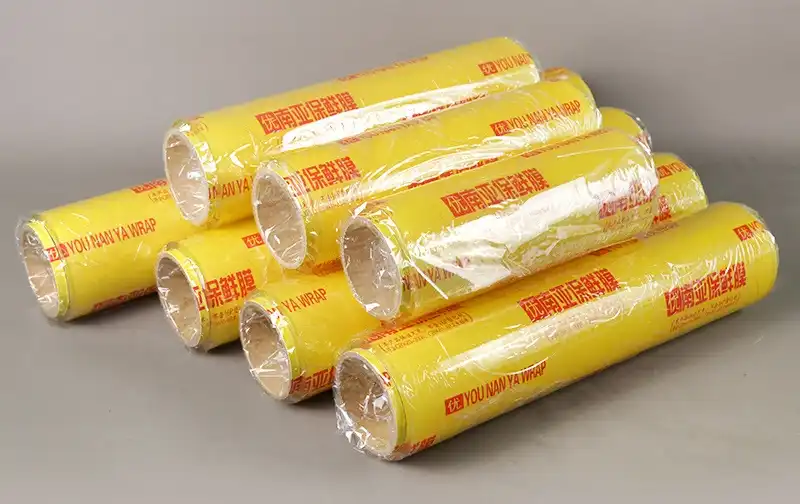
Biodegradable PVC cling film is clear, sticks to surfaces, and doesn't soak up water. It is used to cover, wrap, and safe guard food. There are fillers or changes to the way it's made that help it break down in certain ways. It's made of polyvinyl chloride. "Biodegradable" does not mean "compostable" or "recyclable." For example, PVC has the resin number 3, and adding things that break down faster can make it harder to recycle them the right way. Before getting the film, food shops, restaurants, caterers, and processors should look at what it is made of, what it covers, how it was tested, and when it was tested. This is because each company makes films in a different way. What happens will also depend on how your area deals with trash.
How Biodegradation Works
Small living things, not heat or sunlight, make the process work. The biodegradable PVC cling film can be broken down by bacteria in a landfill with little air flow if you put it there. Chemicals or enzymes that break down organic matter can also help. Most of the time, ASTM D5511 is used to test this. It checks how well plastics break down in high-solids anaerobic processing conditions without oxygen.
The results may be different based on the temperature, the amount of water, the bacteria, the oxygen levels, and the thickness of the film. A third-party lab should give you a report that tells you how long the test took and what percentage was reached to be sure that biodegradation is done. Rolls that haven't been used should stay stable in a normal building because microbes break them down. On the sheet, it says how long it will last.
Why Food Businesses Pay Attention?
Wasteful packaging can change both prices and how things look. The US Environmental Protection Agency (EPA) said that about 12% of trash in towns in 2018 was made up of plastics. There was a lot of plastic trash in those dumps. Every week, grocery shops, caterers, and food makers use a lot of wrap. It's possible for small changes in the things used to make a big difference. Without changing the way food is wrapped, biodegradable PVC cling film can assist these buyers in meeting their green goals. Instead of cutting down on waste and reusing things, it should go with them. Claims should only be made after they have been proven to be true, and there should be a real way to get rid of the goods if it's really bad.
Materials, Performance, and Comparison With Other Films
Premium-Grade PVC and Production Steps
The best PVC plastic that can be recycled is used to make our biodegradable PVC cling film. In formulas, you can also find stabilizers, plasticizers, processing aids, and chemicals that break down naturally. It's usually part of production to check the raw materials, mix and combine them, make films, control the thickness, cut rolls, and pack them. Each step changes the brightness, stickiness, even thickness, quality of winding, and regularity of the batch. Tech sheets, makeup statements, food-contact papers, and shipping records are all things that people who want to buy something should ask for. Shandong Honghe Plastics Co.,Ltd. is where we have our workshop. is full of high-tech tools, and before we send out any goods, we make sure they are all of good quality.
Performance Traits That Matter
Cling, stretch, clarity, and air flow are the four things that show how well a wrap works for everyday use. Metal, stone, or stainless steel plates are easy for film to stick to. Stretch lets the staff pull the film tight over things that aren't round. When it's clear, people and government workers can see the food. PVC doesn't let water through as well as a lot of other materials. In 2005, Mancini and Hunt wrote a study for Meat Science that says adding oxygen to red meat makes oxymyoglobin. This is why new red meat is so bright red. For a long time, meat trays have been wrapped in PVC because it lets air pass through. The wrap can be anywhere from 8 to 15 microns thick, depending on the order. To find out more, look at the data sheet.
Comparison With PE and PLA
Different types of PVC can be told apart in more than one way. These are regular PVC, PE, and PLA. People have been wrapping food in PVC wrap for a long time because it sticks well. PE film has different prices, isn't always bendable, and can be recycled in various ways. Sometimes PLA needs to be broken down in a plant because it doesn't stick or stretch like PVC wrap does. For something to be called sustainable, it has to meet certain rules, like EN 13432. When comparing films, you should look at their thickness, useful area, roll length, cling, tensile strength, storage life, certifications, minimum order number, and total cost. Because they are thinner and longer than they are tall, some rolls may cost less per square meter.
Food-Contact Safety and Compliance Requirements
Documents to Request
That would be a good idea before you ask how much it costs. This depends on the exact recipe, the kind of food, and how it will be used. See if they can show that they follow the rules. You should also ask for detailed data sheets, test results, and information on how to keep track of each batch. Talk to the company about their composition or restricted-substance paper if you need biodegradable PVC cling film that doesn't have BPA or phthalates. The words used in ads don't say anything. Things in the United States that touch food must follow the rules set by the FDA. Title 21 of the Code of Federal Regulations has these rules. Five groups—ISO, CE, FDA, BSCI, and WCA—have signed off on our business. The people who work here can tell you about the papers we have that will work for you.
Standards and Marketing Claims
ASTM D5511 and EN 13432 look for different things. These things break down without oxygen and look a lot like trash. ASTM D5511 talks about them. EN 13432 tells us how to make packaging that can be broken down and used again. Check the lab, test settings, sample makeup, and report date to see if it really does cover the whole film. In the US, label rules are also very important. The Green Guides from the Federal Trade Commission say that you should have proof before saying something is biodegradable. Also, some states, like California, have rules about what words can be used on plastic things to say that they break down naturally. Talk to your compliance team about the rules for labels before you print any claims on cartons.
Temperature Claims
"Freezer-safe," "fridge-safe," and "microwave-safe" are all different claims that need their own proof. Learn how hot the food can get and for how long before it can be used. Some types of food should not be used. An ordinary oven can heat up a lot of PVC wrap. But most food manufacturers say that when you heat high-fat foods, you should leave space between the film and the food so that the film doesn't move. Another test is for clothes that are part of a cold chain. These clothes still need to be able to work in cold places. If you have a walk-in cooler, a display case, or a reheating station, you should try it out in those places before you place a big order.
Where Biodegradable PVC Cling Film Works Best
Food Packaging and Supermarket Fresh Foods
The major use is to package food. Clear packaging is easy for stores to tear, but it sticks well and can hold meat, poultry, fish, fruits and veggies, baked goods, and ready-to-eat foods. Fresh red meat plates should use this biodegradable PVC cling film because it lets air pass through and lets you see the color of the food. If you use an automatic line to make food, you should test the speed, tightness, and twisting of the line first. This is because when a roll snaps or expands, there is time to wait. Fruit or corn on the cob that isn't round test well for being resistant to being poked. What kind of machine do you have, and how big is its core? After that, we'll talk about a plan that works for you.
Cold Storage and Catering
To keep things cold and in the main kitchens, wrap is used every day. When stored in cold places, it keeps trays, bowls, and things that are divided up from getting wet or tasting bad. Chefs put biodegradable PVC cling film over containers made of stainless steel, ceramic, and plastic to keep food inside while the containers are being moved. They like things that are easy to use and tear up quickly when they are busy. Some films can get stiff in cold rooms, so make sure you test the cling at the temperature where it will be kept. A lot of people in cold storage and the food service business use our film. You can talk about the roll's width and length to make sure it fits in your tool boxes and on your shelves.
Household Use and Private-Label Programs
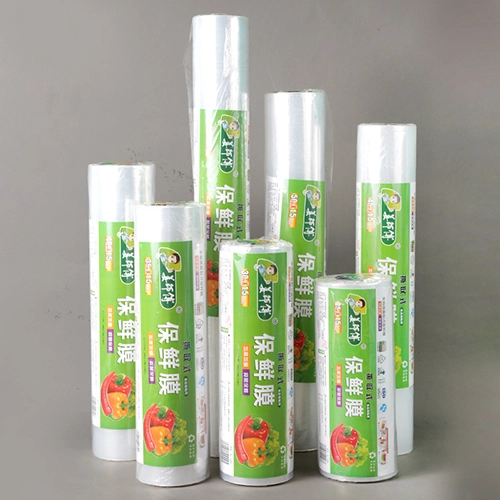
Some places sell small rolls with their own names on them to cover leftovers, bowls, and sandwiches. This is called biodegradable PVC cling film. There are more rules for projects that have their own label. First, everyone has to agree on the rules for the target market, the style of the boxes, the language, the labels, and the barcodes. Only then can mass production start. People in the US who want to buy from you should also check the language rules in their state about how to say "degradability." Since we offer OEM and ODM services, wholesalers can ask for custom sizes and packaging. This means that the same company can give small rolls to homes and big rolls to businesses.
How to Choose a Supplier and Buy in Bulk?
Define Your Specifications and Test Samples
First, write down a clear plan. What is the size, shape, thickness, core diameter, roll weight, box format, cling, clarity, and temperature range of the material? First, send an RFQ that lists why you want to buy, the market you want to reach, the number of items you need, your private label needs, Incoterms, and the shipping address. Before you buy them, make sure you see how they stick to things, tear, stretch, look clear, smell good, work well at different temperatures, and fit your machines or dispensers.
It is important to write down the FOB price, lead time, packaging, acceptable quality standards, inspection rights, payment terms, and shipping duties. Pick a seller based on how valuable they will be in the long run, not how much they charge. You can do this with the help of a seller evaluation that checks things like paperwork, lab tests, capacity, export experience, and response time.
Common Mistakes to Avoid
This is what a lot of people do wrong. Some people believe that "biodegradable" and "compostable" are the same thing, but they are not. They are two different ways to get rid of trash. The words they used to pick the film only had to do with being environmentally friendly. It didn't say anything about how safe the food was or how well the film was wrapped. The gain that was supposed to happen never does because they don't care about the neighborhood garbage system. They compare prices per roll instead of per square meter and don't check how well the film sticks and tears. The line goes down and the film tears. Your cash and business claims will be safe if you don't do these things. To keep the rate up to date, check it again after the first shipment. Check out the papers, complaints, delivery, and quality.
What Shandong Honghe Plastics Co.,Ltd. Offers?
Shandong Honghe Plastics Co.,Ltd. has been in business since 2017. has been making biodegradable PVC cling film, TPE, CPE, and PE gloves, and stretch film. Our place of business is in Liuguanzhuang Town, which is in Shandong Province. It's close to Qingdao Port, so it's easy to get to. In our normal work, we use high-tech tools to make our goods. These things are okay with ISO, CE, FDA, BSCI, and WCA. Biodegradable PVC cling film that can be changed to fit your needs is what we sell. It is made from good PVC. Taste tests are free if you ask for them. You can buy from us quickly because we have a lot of stock, low prices, and are here for you 24 hours a day after the sale.
Conclusion
Similar to regular PVC wrap, biodegradable PVC cling film adheres well, stretches easily, is transparent, and allows air to pass through. The only thing that makes it different is that microbes can break it down in a landfill. The way it's thrown away and test methods like ASTM D5511 make that claim less general. It is not the same as compostable. To be sure the product is safe, you need papers that can come in contact with food, data on movement, and proof of temperature. Tags also need to follow FTC and state laws. People who want to buy PVC films should not check how much they cost per roll, but how much they cost per square meter. A clear RFQ and seller review, along with tests done in the kitchen, cold room, and packing line, help people decide what to buy.
FAQ
Q1: Is biodegradable PVC cling film safe for direct food contact?
A: In order to be safe, food must be in line with the rules and be hot or cold. Make sure the seller gives you the technical data sheets, migration test results, and statement of compliance that you need before you sign.
Q2: Is biodegradable PVC cling film the same as compostable film?
A: No, it's meant to break down in the trash on its own. But film that can be broken down in soil must meet standards like EN 13432. The decomposition time depends on what is done with the trash, how thick it is, how much water is in it, and how long it takes to break down.
Q3: Can I use it in the microwave or freezer?
A: For each use, there needs to be a record. Reading the data sheet will help you figure out what temperature range the biodegradable PVC cling film can handle. Stay away from the film while warm foods that are high in fat are being made. You should also try the film in your own freezer or while cooking.
Q4: Can I get free samples?
A: Shandong Honghe Plastics Co.,Ltd. will send you free samples if you ask. Before you place your order, you can check to see how the line fits, sticks, and is clear.
Request Free Samples of Biodegradable PVC Cling Film from Shandong Honghe Plastics Co.,Ltd.
Biodegradable PVC cling film is made by Shandong Honghe Plastics Co.,Ltd. Their PVC is good, and they can make it just the way you want it. If you ask, they'll even give you free trials. We'll tell you how much it costs based on how many, how wide, how long, and how thick they are. tony@sdhhsl.com is the address to fill out. Then, get in touch with us to test a sample in your kitchen, cold room, or packing line.
References
1. ASTM International, Standard Test Method for Determining Anaerobic Biodegradation of Plastic Materials Under High-Solids Anaerobic-Digestion Conditions (ASTM D5511), 2018.
2. European Committee for Standardization, EN 13432: Packaging Recoverable Through Composting and Biodegradation, 2000.
3. U.S. Federal Trade Commission, Guides for the Use of Environmental Marketing Claims (Green Guides), 2012.
4. U.S. Food and Drug Administration, Code of Federal Regulations Title 21, Part 177: Indirect Food Additives, Polymers, 2023.
5. U.S. Environmental Protection Agency, Advancing Sustainable Materials Management: 2018 Fact Sheet, 2020.
6. Meat Science, Current Research in Meat Color, 2005.