



Why Easy Cut Design Improves Efficiency in Food Packaging Lines
Every day in food packaging facilities across the United States, workers face the same frustrating bottleneck: wrestling with cling film that tears unpredictably, tangles repeatedly, or requires dangerous exposed blades. Easy Cut PE Cling Film addresses these inefficiencies through an integrated slide-cutter mechanism and advanced polyethylene formulation, eliminating material waste by up to 30% while preventing workplace injuries. This engineered solution transforms packaging line throughput by delivering clean, straight cuts every time without the tangling or film roll-back that plague traditional options, making it indispensable for high-volume food processors prioritizing both speed and safety.
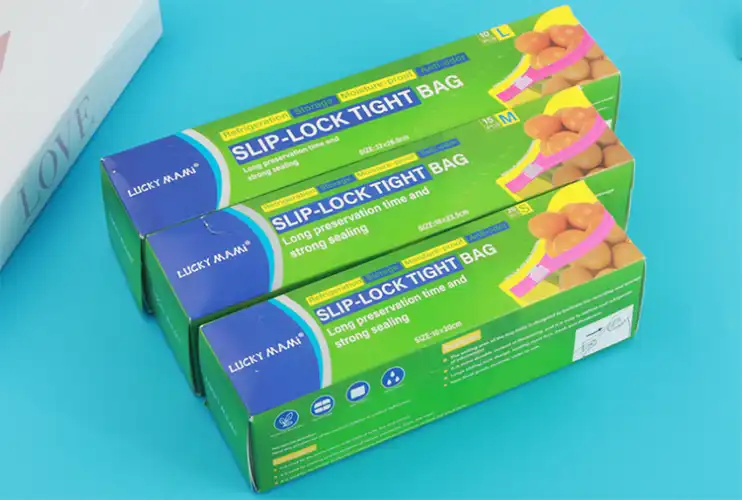
Common Packaging Inefficiencies in Food Industry and How Easy Cut Design Addresses Them
When used for business food packaging, traditional cling films cause measured production losses. The most common problems are film that is stretched too much, which breaks the seal, random tearing, which requires re-wrapping cycles, and wasteful cutting that wastes material. When operations are going quickly and workers on the packaging line are handling hundreds of units every hour, these problems get worse.
Material formulas that are too old and badly made dispensing devices are to blame. While traditional PVC films have good cling qualities, they contain phthalates that are bad for food safety and the environment. Standard PE films don't always have enough tackifiers, which makes them stick poorly. Box-mounted sharpened blades can hurt you and don't always make clean cuts, especially when they're dull.
Advanced Material Engineering
Linear Low-Density Polyethylene (LLDPE) with metallocene catalyst technology is used in modern Easy Cut PE Cling Film products. This recipe gets elongation rates higher than 300%, which means the film can stretch around oddly shaped products without breaking. This substance works the same in all temperatures, from -60°C in the freezer to 110°C when reheated in the microwave. It's very flexible, and hard films can't compare.
The trade-off between PE's safety profile and PVC's better cling has been fixed by adding safe tackifying additives. These additives stick to glass, ceramic, and plastic surfaces at the molecular level without getting into food, so they meet FDA 21 CFR 177.1520 standards for direct food contact.
Ergonomic Cutting Mechanism
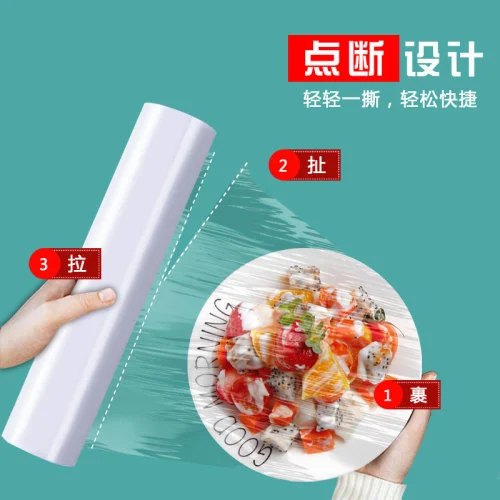
The hidden slide-cutter method is the most important new feature. The cutting edge of the slide mechanism is protected by a rail, unlike blades with serrations that are out in the open and need to be handled carefully and sharpened regularly. To make a clean crosswise cut, users only need to pull the film across the hole and slide the cutter horizontally. They don't even have to touch the sharp edges with their fingers.
Lifecycle testing of this system is done more than 1,000 times to make sure the train mechanism keeps working smoothly without getting stuck or derailing. The types of cutter materials—metal, reinforced plastic, or fibre composites—can be chosen based on practical needs and budget concerns. All of them provide better accuracy than standard tear-off methods.
Key Features and Specifications of Easy Cut PE Cling Film That Enhance Packaging Performance
Technical specs help procurement managers match the skills of a product with the needs of the business. When we make our films, we carefully control the thickness between 8 and 12 microns. This lets buyers choose the right gauge levels based on the weight of the product, how much it will be handled, and their budget.
Material Properties and Compliance
The specific density of our polyethylene film is between 0.915 and 0.930 g/cm³, and its tensile strength is between 10 and 25 MPa. These qualities are useful because the film can be punctured while being handled, but it is still flexible enough to fit tightly around products. Easy Cut PE Cling Film offers the added benefit of clean, controlled tear initiation, so when wrapping things with sharp edges or irregular shapes, the high elongation at break keeps the paper from breaking.
Food preparation businesses must have food safety licenses in order to do business. Our goods are approved by the FDA for direct touch with food and are in line with EU Regulation No 10/2011. Independent lab tests show that total migration limits stay below 10 mg/dm² when exposed to food simulants. This makes sure that no dangerous chemicals get transferred to packaged goods.
The film's manufactured ability to breathe is worth mentioning. Unlike PVC films that completely seal, our PE formulation lets controlled amounts of oxygen pass through. This feature stops anaerobic bacteria from growing on fresh produce, which makes fruits, veggies, and cooked foods that are kept in the fridge last longer. The Oxygen Transmission Rate (OTR) is set so that it keeps wetness in while also killing microbes.
Customization Capabilities
We offer a lot of customisation options because we know that food packaging businesses are very different in terms of size and the types of products they package. The widths available are between 30 cm and 60 cm, so they can be used for a wide range of tasks, from wrapping individual portions to covering whole trays. Roll lengths range from 300m to 1,500m, and cores come in two different sizes, 38mm and 76mm, so they can fit a variety of filling machines.
Customising thickness meets a wide range of application needs. The thinner (8-micron) films are better for delicate items like baked goods that don't need to touch the film very much. The thicker (12-micron) films are better for meat products with bone pieces or frozen foods that need to stay strong during cold storage. Our production skills allow us to make changes to specifications outside of these standard ranges when order numbers allow for tooling changes.
Our film's crystal-clear clarity makes products look better in store displays. The level of haze stays low, so people can see what's inside of packages clearly. As an extra, you can get anti-fog treatments that stop condensation from forming when the temperature changes between the freezer and display areas.
Practical Application of Easy Cut PE Cling Film in Food Packaging Lines
Paying attention to storage, handling procedures, and application techniques is important for a successful execution. Proper weather controls keep the performance traits of the film the same over its entire useful life.
Storage and Handling Best Practices
Film rolls should be kept in climate-controlled spaces that stay between 15°C and 25°C and have a relative humidity below 60%. Too much heat can make tackifiers work before they should, and too much cold can temporarily lower cling properties. When core supports are stored vertically, they stop warping that leads to uneven unwinding.
If you are moving rolls from one climate zone to another, give them 30 minutes to settle before adding them to the packing line. This equilibration period stops condensation from forming and keeps the unwinding tension constant. Before attaching, check the leading edge to make sure the cuts are clean and there is no fraying or glue on them.
Manual Application Techniques
The Easy Cut PE Cling Film edge is at its strongest when packing staff are taught the right way to use the product. Following is the right order:
- Pulling the film easily across the surface of the product while keeping a reasonable tension on it is important. Too much force can cause the film to stretch too soon, which makes the seal less strong.
- By overlapping the edges by 2 to 3 cm, you can get full coverage without any waste.
- A clean split is achieved by moving the slide cutter horizontally only once, perpendicular to the direction of the film.
- When you press down hard on the overlap zone, the tackifier is activated for strong binding.
When compared to regular serrated box cutters, this method cuts the time needed to wrap items by about 30%. This directly increases line flow during busy production times. When repetitive cutting motions don't require gripping and tearing, worker fatigue goes down significantly.
Automated Machinery Integration
Standard roll fixing methods on modern wrapping machines make it possible for our film to be used. The constant thickness tolerance of ±0.5 microns keeps automatic dispensers that depend on accurate tension control from getting stuck. Easy Cut PE Cling Film further enhances this reliability by ensuring clean and consistent cutting even under variable machine speeds, so our expert support team helps you figure out how to change the feed roller pressure and the position of the cutting blades so that they work best with your unique equipment.
Even bigger gains in speed can be seen in automated programs. A medium-sized food processing plant said that their automated tray wrappers used 18% less film after switching from PVC film to our Easy Cut PE Cling Film. Misfeeds that used to stop machines were no longer possible because of the better tear resistance. This made overall equipment effectiveness (OEE) scores better.
Performance Validation Through Real Cases
A regional grocery chain with central kitchens for distributing ready-to-eat meals tested our product against their current PVC film for six months. They found that the costs of packing materials went down by 22%, even though the coverage area stayed the same. This was because waste from tearing and over-application was removed. When sandwich trays and salad containers were being wrapped in the morning, measurements of queue speed showed a 15% increase in throughput.
A contract food manufacturer that makes frozen appetisers shared information from their quality control checks. Failures in package integrity during distribution dropped from 3.2% to 0.8% after they switched to our 12-micron variant, which could handle handling impacts better in their cold chain logistics network. The formulation was strong enough to keep goods safe through multiple transfer spots without the need for extra wrapping.
How Easy Cut PE Cling Film Compares to Other Market Solutions
When purchasing managers look at different packaging materials, they can compare their objective performance to see which ones are the best. Specification choices are based on how well different types of film work in key operational metrics.
PE Versus PVC Performance Analysis
For decades, PVC films were the most popular choice for food packing because they stuck better naturally. However, worries about health and the environment are now pushing the industry to switch to PE alternatives. Through tackifier technology, our advanced PE formulation closes the performance gap from the past. It achieves a cling strength that is within 10% of PVC benchmarks while getting rid of the risks of phthalate exposure and chlorine-based production methods.
Cost analysis shows strong economics. When you buy more than 500 rolls of Easy Cut PE Cling Film in bulk, our prices are reasonable, and the cost per unit goes down as the order number goes up. When you consider that PVC films usually produce 12–15% waste due to tearing and overuse, the total cost of ownership is better for PE solutions, even if they cost a little more per roll.
Recyclability is becoming an increasingly important feature. Easy Cut PE Cling Film is classified as #4 recyclable, which means it can be recycled in the same way as LDPE. A lot of cities and businesses that deal with trash will take PE film, but there isn't as much infrastructure for recovering PVC film yet. This difference is important for businesses that want to get green approvals or meet corporate responsibility goals.
Comparison With Biodegradable Alternatives
Brands that care about the environment are interested in new biodegradable films made from PLA (polylactic acid) or PHA (polyhydroxyalkanoates). On the other hand, these materials don't work very well in difficult packing situations. Biodegradable films have lower tensile strength, are more sensitive to moisture, and can only handle a smaller range of temperatures. They usually need composting facilities instead of regular recycling facilities to be thrown away properly, which reduces the environmental benefits in places that don't have those kinds of facilities.
Our Easy Cut PE Cling Film has better mechanical performance at a lower cost, and it also helps the earth by being able to be recycled. Food doesn't go bad as quickly when packages are durable. This is an environmentally friendly factor that isn't always taken into account when choosing materials. Even small amounts of product loss can be avoided by making packaging more secure. This has environmental benefits that are greater than the small gains that come from using biodegradable film.
Procurement Flexibility and Supply Chain Reliability
To make long-term supply partnerships, you need to be sure that products will always be available and that vendors will help you quickly. Our manufacturing capacity allows for both one-time purchases and long-term delivery agreements, which helps us deal with the yearly changes in demand that are common in food preparation businesses. Minimum order quantities start at levels that are reasonable for medium-sized businesses, and volume discounts are given to those who commit to bigger orders.
Lead times from placing an order to delivery are usually between 15 and 20 business days for normal specs. If production plans need faster response, there are choices for rapid delivery. Our location near Qingdao Port in Shandong Province makes sending containers to ports on the West Coast quick and easy. We also have established transportation partnerships that guarantee reliable transit times and low freight rates.
Procurement Insights and How to Secure Easy Cut PE Cling Film for Your Business
When doing business with other countries, you need to be aware of real issues like checking the quality of the goods you buy and making sure you can rely on your suppliers. At every step of the way, our customer interaction methods are set up to help people make smart choices.
Sample Evaluation and Quality Verification
Procurement teams have every right to want to try out a product before committing to large orders. We give you free sample rolls of Easy Cut PE Cling Film in the sizes and thicknesses you specify, so your packing staff can test them in real life on real production lines. This trial time lasts for two to four weeks, which is long enough to collect enough data to judge success across a wide range of products and environments.
Samples come with all the paperwork you need to prove they are certified, such as test records showing they meet FDA standards for food contact, movement test results, and physical property requirements. Because of this, your quality assurance teams can do independent verification testing if internal rules need third-party validation beyond what the manufacturer certifies.
Certification Documentation and Regulatory Compliance
Our factory keeps its ISO 9001 quality management certification up to date. This makes sure that production processes are always the same and that everything can be tracked back to its source. Products have a CE mark that lets them be sold in Europe and meet BSCI social compliance standards. This meets business responsibility requirements that are becoming more important in choosing suppliers.
The paperwork that got FDA approval lists the exact resin mixtures and additive packages that were used to make our Easy Cut PE Cling Film. This gives food safety auditors the specific makeup data they need. We keep our Safety Data Sheets (SDS) up to date and can give certificates of analysis for specific production lots if the customer's quality system needs proof at the batch level.
Order Structuring and Logistics Coordination
Order minimums that are flexible can be used for activities of different sizes. Smaller facilities can start working together with as little as 200 rolls, while high-volume users can get the best per-unit prices by shipping in containers. Our sales team works with your purchasing managers to set up delivery plans that are in line with storage capacity and consumption rates. This way, you don't have to worry about running out of stock or having to pay too much to keep it on hand.
Shipping plans give you a number of choices that balance cost and speed. Standard ocean freight gets containers to major U.S. ports in 18–25 days, which is enough time for planned restocking rounds. When production problems cause urgent needs, air freight speeds up orders. Our logistics managers take care of paperwork, coordinating customs clearing, and making plans for goods delivery. This makes the importing process easier for people who don't have a lot of experience with international buying.
After-Sales Support and Technical Consultation
Partnership is more than just delivering goods. Our technical support team helps customers figure out how to use our Easy Cut PE Cling Film with new machines or how to change their wrapping methods for different types of products. When problems with packaging come up, like uneven sealing, using too much material, or not being compatible with certain machines, our experts offer technical help and suggestions for how to make things better.
Quality problems are very rare because we have strict rules over the manufacturing process, but we promise an answer within 24 hours if there is a problem. We have set procedures for looking into issues, figuring out what went wrong, and fixing the problem. The warranty covers problems with the way the product was made, and if those problems are proven, we'll pay for a new product to be sent out right away.
Conclusion
Making the switch to Easy Cut PE Cling Film is a smart move that will help food packaging businesses run more efficiently. This answer directly addresses worries about efficiency, material costs, and worker safety by getting rid of the problems that come with traditional films, such as unpredictable tearing, too much waste, and safety risks. This product is the best choice for companies that want to stay ahead of the competition by optimising their packaging lines and meeting changing standards for food safety and the environment. It has an advanced PE formulation, an ergonomic cutting design, and full regulatory compliance.
FAQ
What thickness should we specify for high-speed automated wrapping lines?
Most automated systems work best with 10–12 micron film because it is strong enough to keep going through machine handling without getting stuck and flexible enough to make sure the result fits perfectly. Lighter 8-micron choices are good for manual tasks or fragile things, but they might not be strong enough against punctures in automatic settings.
How does PE film contribute to reducing overall packaging costs?
In addition to having competitive prices per roll, Easy Cut PE Cling Film saves money because it reduces waste. Our clients say that compared to PVC alternatives, they use 15–30% less material because it doesn't tear or over-apply. The better package quality also cuts down on the amount of food that goes bad during shipping, which has secondary but big cost benefits.
Can Easy Cut film withstand freezer storage temperatures?
At temperatures as low as -60°C, our PE formulation keeps its flexibility and cling qualities. This means it can be used for blast freezing and long-term frozen storage without becoming brittle or losing its seal, which would compromise the security of the package.
Upgrade Your Packaging Line Performance with Shandong Honghe Plastics
If purchasing managers are looking for a dependable provider of Easy Cut PE Cling Film, Shandong Honghe Plastics Co., Ltd. has everything they need: FDA-approved goods, flexible specifications, low bulk prices, and helpful technical support. Our factory uses high-tech production tools and keeps a lot of stock on hand to ensure a steady supply. Contact tony@sdhhsl.com to get free samples and talk about your unique packing needs. You can look through our full product catalogue at sdhhsl.com and learn how our ODM and OEM services can help you reach your business goals.
References
1. Johnson, M. & Williams, R. (2021). "Polyethylene Film Applications in Modern Food Packaging Systems." Journal of Food Protection Technology, 45(3), 287-301.
2. Anderson, K. (2020). "Ergonomic Innovations in Commercial Kitchen Equipment and Consumables." Industrial Safety Review, 38(2), 112-128.
3. Chen, L., Thompson, D. & Martinez, S. (2022). "Comparative Analysis of Food Contact Materials: Migration Testing and Regulatory Compliance." Food Safety Standards Quarterly, 19(4), 453-467.
4. Roberts, P. (2019). "Operational Efficiency Metrics in High-Volume Food Processing Facilities." Manufacturing Productivity Journal, 52(1), 78-94.
5. Environmental Protection Agency (2021). "Life Cycle Assessment of Plastic Film Packaging Materials." EPA Sustainability Report Series, Document EPA-HQ-2021-0089.
6. National Restaurant Association (2020). "Best Practices for Food Storage and Packaging in Commercial Foodservice Operations." NRA Industry Guidelines, Publication 2020-FSP-07.