



Biodegradable PVC Cling Film vs Traditional Plastic Wrap
When comparing packaging options, Biodegradable PVC Cling Film emerges as a technically superior alternative to traditional plastic wrap. This engineered solution modifies conventional Polyvinyl Chloride through organic bioactive additives, enabling anaerobic biodegradation in landfill environments while maintaining the exceptional cling properties and oxygen transmission rates essential for fresh food preservation. Unlike traditional wraps that persist for centuries, biodegradable variants degrade within controlled timeframes, addressing environmental concerns without sacrificing performance metrics critical to industrial food packaging operations.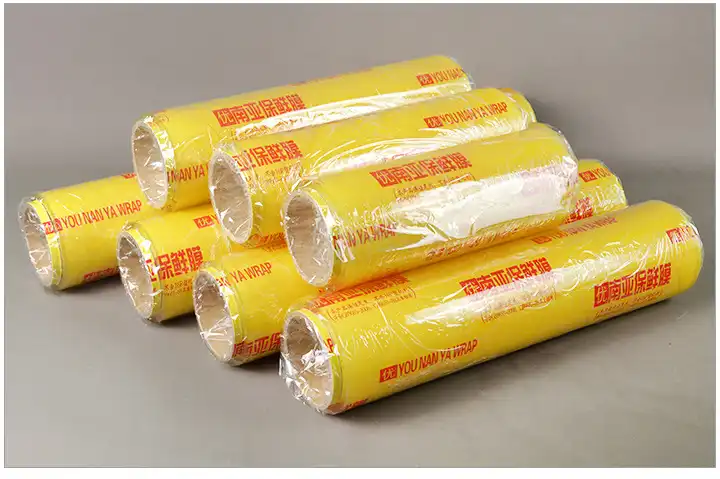
Introduction
For many businesses, like store cold storage and professional catering, cling films are an essential part of their packaging. We've seen a big change in procurement goals over the past ten years. This is because environmental laws are getting stricter and business sustainability requirements are changing in North America and Europe.
The discussion about materials used for food packing has grown beyond just how they work. Purchasing managers now have to balance two different needs: keeping products safe and extending their shelf life while also reducing their impact on the environment. Because of this double duty, next-generation materials that balance performance and responsibility are being made and used more quickly.
This in-depth study looks at the technical, environmental, and financial differences between Biodegradable PVC Cling Films and regular plastic wraps. We will talk about the different types of materials, how they are made, how they are bought, and how they are used in the real world. This will give supply chain managers the information they need to make smart buying decisions that meet both practical needs and sustainability goals.
Understanding Biodegradable PVC Cling Film and Traditional Plastic Wrap
Material Composition and Degradation Mechanisms
Biodegradable PVC Cling Film is a big step forward in the field of polymer engineering. Manufacturers add organic biological substances or enzymes triggers to the PVC molecular structure, which changes how the material behaves when it's no longer useful. These additives don't do anything when the product is on the shelf or being used normally. They only start working when it comes into contact with the microbial-rich, anaerobic conditions that are common in landfills. The end result is controlled bio-assimilation that meets ASTM D5511 standards. Under accelerated testing conditions, degradation happens in 15 to 45 days.
Usually, traditional plastic wraps are made of either pure PVC or polyethylene. Even though these common materials are good at keeping things safe, they don't break down naturally, so they stay fixed in landfills for hundreds of years. Standard PVC wraps have great barrier and cling qualities because of their molecular structure. However, this stability makes long-term trash management difficult and increasingly goes against government rules and company environmental policies.
Mechanical Properties and Food Safety Compliance
Both types of materials meet strict standards for food handling, but they work in slightly different but still important ways. Biodegradable versions usually have thicknesses between 8 and 15 microns and tensile strengths above 15 MPa in the machine direction. This makes sure that they don't snap during high-speed automated wrapping operations. The film's elongation at break is between 200% and 400%, which gives it the memory effect where it gets tighter around goods after being used.
Traditional wraps have similar mechanical properties and have been used successfully in a wide range of situations for a long time. Both materials meet FDA 21 CFR 175.300 for food contact safety. Plasticizers like DOA (dioctyl adipate) are tested for movement many times to make sure they stay below certain limits. The important difference is not in terms of basic food safety, but in terms of environmental lifecycle concerns and new governmental forces aimed at single-use plastics.
Environmental and Performance Benefits of Biodegradable PVC Cling Film
Sustainability Advantages and Waste Reduction
The environmental case for recyclable versions is based on how they can be thrown away at the end of their useful life. Classic PVC adds to long-lasting "white pollution," but biodegradable plastics break down slowly in dumps, preventing a lot of long-term buildup in the environment. This breaking down doesn't affect the shelf life; biodegradable films that are stored correctly stay intact for more than two years in a normal warehouse, only breaking down when they come into contact with certain microbes.
Third-party validation by labs like SGS and Intertek gives procurement teams biodegradation data that can be checked. This data is needed for corporate sustainability reports and regulatory compliance paperwork. These certifications show that the environment has been improved in a way that can be measured, without affecting the functionality that industrial operations need. The move toward biodegradable choices is in line with the circular economy ideas that are becoming more and more a part of procurement strategies in the food processing and industrial sectors.
Performance Characteristics for Industrial Applications
In addition to being better for the environment, Biodegradable PVC Cling Film keeps the technical performance traits that made traditional PVC the standard in the industry. High clarity with haze levels below 1.5% ensures great product exposure, which is important for store display uses. Because the material sticks to itself so well, you don't need to use adhesives. This makes it easier to use on automated packaging lines and lowers the risk of contamination when food is involved.
The rates of oxygen and water vapor transfer are carefully designed to meet the needs of different types of food when it comes to preserving. Controlled oxygen permeability helps keep the cherry-red color of myoglobin while avoiding moisture buildup that speeds up bacterial growth. This is especially helpful for fresh meat packing. These carefully calibrated barrier properties are the result of years of work in material science. They provide performance that other bioplastics, like PLA, currently find hard to match in real-world cold chain processes that work between -4°F and 39°F.
Comparing Procurement Factors: Biodegradable PVC Cling Film vs Traditional Plastic Wrap
Cost Analysis and Volume Purchasing Dynamics
Purchasing managers who are looking at these products need to look at more than just the unit price. They need to look at the total cost of ownership. Biodegradable versions usually cost 15% to 30% more than regular versions because they are harder to make and need special ingredients. But this difference at first glance gets smaller when you look at big buying plans and new rules about how to get rid of non-biodegradable plastic.
Through economies of scale, volume agreements open up big savings on costs. Customization options from suppliers, such as custom branding, different thickness requirements, and roll shapes that fit specific production equipment, add value that makes up for higher prices. Long-term contracts with certified suppliers keep prices stable, which is important for budgeting. They also make sure that quality is consistent and deliveries happen on time, so there are fewer interruptions in production.
Supplier Reliability and Certification Requirements
Creating relationships with trustworthy makers who have the right certifications is a key way for procurement teams to lower their risk. You can be sure that suppliers follow consistent production standards and do business in an honest way if they have ISO quality management systems, FDA food contact compliance, or BSCI social responsibility certifications. These credentials are especially useful when dealing with complicated rules in markets in different parts of the world.
Flexibility in the supply chain goes beyond pricing and includes managing lead times, making sure there is enough inventory, and being able to distribute goods in different areas. For operations that need to be done quickly, suppliers that are close to major ports and have well-established logistics networks can be helpful. Strategic supplier partners are different from transactional vendors because they can quickly adjust orders to meet seasonal or unexpected volume increases. This is especially important for grocery stores and food processing companies that have to deal with changing demand patterns.
How to Choose the Right Cling Film Solution for Your Business?
Evaluation Criteria Aligned with Operational Needs
To choose the best packing materials, you need to carefully look at them from a number of different angles. To start, procurement managers should make a list of all the specific requirements for each application. For example, for direct food contact, they need to see proof of migration testing; for automated packaging lines, they need precise mechanical properties to keep the equipment from getting stuck; and for cold storage, they need to see proof of low-temperature performance data. The choices about which materials to use are based on these technical standards.
As companies are put under more pressure from regulators, investors, and customers further down the supply chain to show measurable environmental improvements, sustainability goals are having a bigger impact on how they choose which materials to use. Biodegradable PVC Cling Film provides measurable indicators for reporting on sustainability while keeping business performance high. Trial steps let you compare things objectively in real-life production settings, collecting data that helps you build a business case for wider adoption.
Supplier Assessment and Post-Sale Support
Checking out possible suppliers is more than just looking at their products. They should also be able to provide services that affect the overall value delivery. Respondent technical help, easy return policies, and quick sample delivery for quality testing are all signs that a provider wants to build partnerships, not just business relationships. When problems happen during production runs, manufacturers who offer 24-hour after-sales service reduce the chance of downtime.
Certification files need to be looked at very carefully. Aside from basic food safety rules, look for providers who have a number of foreign certifications, such as the CE mark for European markets and full testing records for specialized uses like medical labs. When a manufacturer offers both OEM and ODM services, it gives supermarket chains and retail distributors more options for private labeling and customizing products, which helps them differentiate their brands.
Future Outlook: Trends and Innovations in Biodegradable Cling Films
Regulatory Drivers and Market Evolution
Regulations that target single-use plastics are pushing the recyclable packaging market to change quickly. California's new law that limits non-recyclable food packaging and the EU's Single-Use Plastics Directive are two examples of policy trends that are changing the way people buy things. Because of these rules, people have to follow biodegradable alternatives more, which lowers the price difference between regular and sustainable choices by keeping people from having to pay dumping fees and regulatory fines.
As food processors and retailers respond to what end consumers want, consumers' awareness of environmental issues affects their buying decisions more and more, even in B2B situations. This demand signal encourages investment in new ideas in materials science, which leads to faster breakdown, better durability, and a wider range of uses. When these materials go from being high-end options to industry standards, procurement teams that build ties with suppliers early on will be in a better position.
Technological Advancements and Material Innovation
New technologies promise to make recyclable film work better and be more cost-effective. The goal of research into new enzymatic catalysts is to speed up the process of biodegradation while keeping the products stable for longer periods of time. Nanotechnology uses improve barrier qualities, which could lead to biodegradable film being used in situations where multi-layer laminates are currently the norm. These new ideas are in line with the ideas of the circular economy because they make it easier to reuse materials and use fewer resources in the packing supply chains.
Procurement professionals should keep an eye on these changes through trade publications, industry groups, and direct conversations with suppliers. By taking part in source innovation programs and pilot trying next-generation materials, you can see early on how they improve performance and cut costs. This proactive method lets you make plans for slow fleet changes that cause less trouble and gain environmental benefits over time, instead of making risky big changes to the materials used.
Conclusion
When you look at Biodegradable PVC Cling Film next to regular plastic wrap, you can see that the market is getting more mature and that environmental duty and business performance are becoming more and more aligned. While traditional materials have been used for a long time and are known to be reliable, biodegradable alternatives offer similar technical performance with measurable environmental benefits that meet legal pressures and business sustainability goals. The original price premium for biodegradable choices keeps going down as production volumes rise and the costs of regulations put a strain on regular plastics. Procurement managers who have access to thorough evaluation frameworks can carefully handle this shift by balancing short-term operating needs with long-term economic and environmental factors.
FAQ
Q1: Is biodegradable PVC cling film safe for direct food contact?
A: Yes, FDA 21 CFR 175.300 rules for food-contact products are met by good Biodegradable PVC Cling Film. Plasticizers and additives stay well below the limits set by regulators thanks to strict movement testing. This keeps chemicals from getting into food items. Validation by a third-party lab gives the proof needed for food safety checks and making sure that regulations are followed.
Q2: How long does biodegradable PVC film take to decompose?
A: Biodegradable PVC Cling Film breaks down a lot in 15 to 45 days when tested under rapid anaerobic conditions according to ASTM D5511. In a real landfill, this time frame is usually longer, but degradation happens a lot faster than with regular PVC, which lasts for hundreds of years. Importantly, the degradation process only happens in places where there are a lot of microbes. This means that the normal shelf life in a warehouse is longer than two years.
Q3: Can biodegradable PVC cling film be recycled?
A: Biodegradable PVC is technically recyclable and is classified as Resin Code #3. However, the biodegradation additives could contaminate regular PVC recycling streams if they are not properly separated. The material is mostly made for properly getting rid of trash in areas where recycling facilities are still limited. It provides a way to improve the environment for places that don't have complete plastic recovery systems.
Partner with Shandong Honghe Plastics Co., Ltd. for Sustainable Packaging Solutions
Shandong Honghe Plastics Co., Ltd. is one of the best places to buy Biodegradable PVC Cling Film because it has both advanced production skills and a wide range of certifications to meet the needs of businesses that buy from other businesses. Our company was founded in 2017 and is strategically located near Qingdao Port in Shandong Province. We use standard production facilities with cutting-edge technology to ensure consistent quality that meets ISO, CE, FDA, BSCI, and WCA standards.
We make premium-quality PVC cling films that can be fully customized to fit your needs in terms of thickness, width, and coloring. Our inventory management systems make sure that large orders are filled quickly and at prices that are competitive for big purchases, which lowers your total cost of ownership. We offer free examples so that you can see and feel the quality of our work before you commit to buying it. Our clear technical paperwork will also help with your due diligence processes.
To talk about your packing needs and get custom quotes, email our procurement experts at tony@sdhhsl.com. Let us show you how a strategic partnership with a supplier can bring you measurable value in terms of quality, dependability, and sustainability.
References
1. American Society for Testing and Materials (2019). ASTM D5511-18: Standard Test Method for Determining Anaerobic Biodegradation of Plastic Materials Under High-Solids Anaerobic-Digestion Conditions. ASTM International.
2. European Commission (2021). Directive (EU) 2019/904 on the Reduction of the Impact of Certain Plastic Products on the Environment. Official Journal of the European Union.
3. Food and Drug Administration (2020). Code of Federal Regulations Title 21, Part 175.300: Resinous and Polymeric Coatings for Polyolefin Films. U.S. Government Publishing Office.
4. Intertek Testing Services (2022). Migration Testing and Food Contact Compliance: Best Practices for Packaging Procurement. Industry Technical Whitepaper Series.
5. Plastics Industry Association (2023). Biodegradable Additives in Conventional Polymers: Performance Characteristics and Market Trends. Annual Market Research Report.
6. Society of Plastics Engineers (2022). Advances in Food Packaging Films: Balancing Barrier Properties with Environmental Sustainability. Polymer Engineering and Science Journal, Volume 62, Issue 8.