



Can PVC Food Wrapping Film Be Recycled? A Practical Buyer Guide 2026
PVC food wrapping film https://www.sdhhsl.com/pvc-cling-film/pvc-food-wrapping-filmis technically recyclable, but few programs in the United States accept it in practice. Household curbside systems rarely take thin cling film, and food residue, labels, and mixed plastics make recovery harder. Commercial collection can work when a business gathers clean film in volume and sends it to a recycler that accepts PVC. Recycled PVC also rarely returns to food contact. For buyers in 2026, the practical question is whether the film's end-of-life route matches your local infrastructure and compliance goals. This guide covers the facts, then compares materials, suppliers, and prices.
What PVC Food Wrapping Film Is and Whether It Is Safe
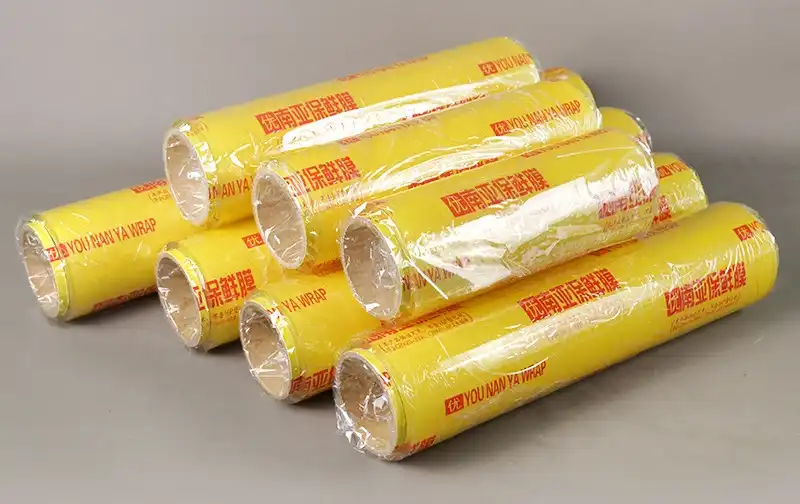
What Is PVC Food Wrapping Film and How Do Buyers Use It?
This is a picture of PVC food wrapping film. It is made of polyvinyl chloride that has been stretched and made flexible. It's clear, sticks to things, and can be stretched. Plasticizers like DOA and DOTP make it soft and allow it to stick together without heat. In grocery stores, it's used to wrap trays of food, meat, and fish. In restaurants and central kitchens, dish platters are used. In shops and houses, hand rolls are used. Rigid PVC containers are not the same as other containers. The type of plasticizer, the thickness, and the finish on the surface all have an impact on how well something sticks, how clear it is, how much it costs, and how hard it is to recycle later on. Buyers should think of these as important specification items.
Is PVC Food Wrap Food Grade and Safe for Food Packaging?
Food grade means that there are certain ways that the film can be used with food. It's not said that it can be recycled. The Federal Food, Drug, and Cosmetic Act in the United States goes over everything that has to do with food. Title 21 of the Code of Federal Regulations has the rules that the FDA has to follow. How safe the food is depends on what kind it is, how hot it is, and how long it's in the wrap. Foods that are high in fat can pull plasticizers out of the film, so be careful if you touch it for a long time. Do what it says on the wrap about how to microwave it, and don't let the heat hit the food. If a film works well in the freezer, it might not work so well in the microwave.
Which Documents Should B2B Buyers Request?
Before you place a large order, make sure you get a Declaration of Compliance, migration test reports, a technical data sheet (TDS), a safety data sheet (SDS), and batch records. Some rolls may meet the requirements, but a general business license doesn't. Make sure that each document lists the right product, production site, and target market. Shandong Honghe Plastics Co., Ltd. is certified by ISO, CE, FDA, BSCI, and WCA. You should look at the paperwork that your order needs at this time. Then, get samples and have your quality team look at the look, feel, and smell of them before you decide.
Can PVC Food Wrapping Film Be Recycled in Practice?
Why Household Programs Rarely Accept Cling Film
ASTM D7611 says that PVC food wrapping film has the material identification code 3. That code, on the other hand, doesn't mean that a local program will accept it. The EPA says that only 8.7 percent of plastics in the U.S. were recycled in 2018, and most of the sorting lines along the roads are only made for bottles and other hard bins. Because it's not very thick, thin film that wraps around sorting screens is hard to separate. A lot of stores let you recycle plastic bags and wraps, but not PVC. Most of the time, used cooking cling film is thrown away because food, grease, labels, and glues make it dirty.
When Commercial Recycling Can Work
A business has a better chance of winning than a family. You can keep clean PVC food wrapping film separate from polyethylene stretch film in the back room of a grocery store or a distribution center and bale it for a PVC recycler. PVC gives off hydrogen chloride when it gets too hot. This is a corrosive gas that can ruin a batch of other resins. This is the reason why PVC can't be recovered with other kinds of plastic. PVC that has been recycled is often used to make things that aren't food. The FDA wants proof that any contaminants have been taken out of recycled plastics before they can be used to package food. So, any process that is used on food needs to be okay with the FDA. Before you start gathering, make sure the recycler says in writing that they will take it.
How to Collect and Dispose of Used Film Correctly
This is what I think food producers, restaurants, and grocery stores should do:
- Identify and separate: If you're not sure about the polymer, check the data sheet that comes from your provider. Also, keep polyethylene stretch film and PVC food wrapping film separate. Junk haulers often turn down loads because the film is mixed up. Label each bin and teach your staff to check the label before putting film in it to avoid this. One wrong roll can contaminate a bale.
- Remove food and attachments: Food scraps, plates, labels, and tape should all have film that you can peel off when you can. Film that is oily or very dirty should be thrown away with regular trash because it makes a bale less valuable and could lead a collection to refuse the whole load. Dry, clean scraps from the prep and receiving rooms are the best choice.
- Store, bale, and document: Put clean film in bins that are labeled and have lids. When the amount calls for it, bale it. That way, your sustainability reports will show the real path of the trash and not just a guess. Write down the recycler's name, the amount of trash, and the date. Ask your collector what the pollution limits are before you sign anything.
These steps keep the film clean and let people who are buying it know where it goes.
PVC Food Wrapping Film vs. Alternative Materials and Specifications
PVC Cling Film vs. PE Film
Stores use PVC food wrapping film to wrap meat trays and show off their meat because it has a strong natural cling, is clear, and has good elastic recovery. Fresh red meat can keep its bright color because it lets air pass through. PE film is often used for high-fat foods and home-cooked meals that you don't want to move around because of the plasticizer. Other things that can be dropped off are clean, dry polyethylene film and drop-off services in your area. You can't recycle both of these things everyplace. You should never throw away PE and PVC together. Before you decide, test the item, the tray, and the machine yourself to see how they tear, stick, and clear.
Compostable, Biodegradable, and Reusable Options
Films that break down and can be composted sound good, but they're only useful in places with a proper industrial composting facility, which is a lot of places. The Ellen MacArthur Foundation's study on the "New Plastics Economy" found that plastic packaging loses most of its value after only one short use. This is one reason why more and more people want to reuse things. Some kitchens use reusable covers instead of throwaway ones to cut down on trash, but they need to be washed, kept, checked for cleaning, and worked over. When you have a lot of packing to do, those costs can add up to more than the savings. You should try each choice in your own work flow and make sure you know how it ends its life before you say anything about the surroundings.
Performance and Specification Guide
It's important to know the range of thicknesses, as well as the fabric's width, length, core size, stretch, cling, tensile strength, resistance to punctures, and how it unwinds. If you want better protection and less damage, use thinner film. It uses less material per wrapped unit, which can lower the cost per tray. When it comes to food service, hand rolls work best, machine rolls work best, and big rolls work best for converts. It's important to know exactly what temperature you need because the fridge, freezer, and microwave all have different claims. From Shandong Honghe Plastics Co., Ltd., you can get rolls that fit your equipment because they can make them in any size and as OEM or ODM goods.
How to Choose a PVC Food Wrapping Film Supplier and Compare Wholesale Pricing
What to Check When Selecting a Supplier
First, look at the place where you're working. For restaurants, quick service and correct paperwork are very important. For supermarkets, speed and presentation are very important. For manufacturers, machine fit and batch consistency are very important. Then, look at how clear the recipe is, how much PVC food wrapping film can be made, how quality is controlled, how much has been exported, the lead time, the minimum order quantity, and how much has been exported.
Companies that make, sell, or trade goods all have different levels of control over production, so find out who makes the film. When it comes to bigger jobs, you should look at samples, accept samples, check the production site's certificates, and use pre-shipment inspection. Our factory is close to Qingdao Port in the town of Liuguanzhuang in Shandong, which helps with exports.
PVC Food Wrap Wholesale Pricing and Total Cost
Quotes are based on the cost of the resin and additives, the thickness, the size, the weight of the roll, the packing, the order number, the freight, and the testing. You can look at prices by the kilogram, the roll, the square meter, or the unit of wrapping. Make sure that all of the quotes are based on the same details. A cheaper roll that tears or gets squished on a machine costs more because of the time, work, and rolls that can't be used. Buyers in bulk can choose from standard hand rolls, machine rolls, jumbo rolls, private label, and scheduled deliveries. Having stable sources is just as important as having stable unit price when it comes to wrapping lines. People who buy from us again get good deals because we have a lot of stock.
Common Mistakes When Buying or Recycling PVC Food Wrap
Many times, people who buy films think that all of them can be recycled. They also think that "food-grade" is a green claim, or they pick films based only on price and thickness. PE and PVC should have different names. In its Green Guides, the Federal Trade Commission warns people not to make broad environmental claims. Labels that say "recyclable" or "eco-friendly" without proof can get a business in trouble with the law and hurt its reputation. Before you say something in public, find out where the trash is picked up, what services are available, and what the pollution limits are. You should test the film on your own project, get written confirmation from the seller, and clearly label everything so that staff can put it in the right place.
Buyer Checklist and Final Decision on PVC Food Wrapping Film
A Practical Buyer Checklist
Before you buy PVC food wrapping film, make sure you cross things off this list. Check the polymer make-up, whether it can be used with food, the product's thickness range, size, roll format, cling, stretch, and temperature range. To follow the rules, you need to keep track of statements, transfer reports, TDS, SDS, tracking records, and notes of any changes to the formulation. Find out if you can recycle where you live, how to tell the difference between PVC and PE, and how much you can collect. The provider should have samples, a minimum order number (MOQ), a wait time, the ability to do OEM work, good packing, and checking methods. If your team writes down every answer, they will be safe during audits and customer reviews.
Why Buyers Choose Shandong Honghe Plastics
Shandong Honghe Plastics Co., Ltd. has been making garbage gloves made of TPE, CPE, and PE since 2017. They also make PE and PVC cling film. We can change the size and other features of our PVC food wrapping film to fit your needs. It is made from high-quality PVC. Before you place an order, your quality team can get free samples to check the fit, brightness, and cling. The film can be used around the house, in food service, to package food and keep it cold, and to wrap things. Our products have been approved by ISO, CE, and FDA. You can also check us out on BSCI and WCA. A standard workshop, high-tech tools, and customer service that's open 24 hours a day all help to keep the load steady.
Is PVC Food Wrapping Film the Right Choice?
For jobs that need it to stick well, show clearly, stretch, and be easy to handle, PVC food wrapping film works well. For this reason, people can't recycle as much as they'd like, and there needs to be some way to keep track of business pickup. These are the five things you should think about: performance, food-contact compliance, total cost, recycling infrastructure, and supply consistency. If you want something that is PE, recyclable, biodegradable, or reuse, you should first see how well it works and how it can be put away. If the site doesn't have a PVC recycler, plan how to legally get rid of it and focus on cutting off the extra. Think about what the area can handle, samples, and test results when making your choice.
Conclusion
Most home recycling centers don't take PVC food wrapping film, even though it can be recycled. To get PVC back for business use, you need enough clean, separated film and a recycler that can handle it. Most of the time, recycled PVC doesn't come back into contact with food without following the right steps. A product is food-grade if it meets certain safety standards. Buyers should look at the product's compliance documents to make sure they are correct.
PVC is clear and sticks well compared to PE and materials that can be recycled or used again. But each choice has its own restrictions on how it can be used and how much work it can do. Unit price is not the only thing that matters. Specifications, total cost, and the ability to keep getting supplies are also very important. Environmental claims alone are not enough to make a good choice. You should also look at application trials, written proof of recycling routes, and the ability to work in the area.
FAQ
Q1: Does PVC food wrap belong in household recycling?
A: Not often. You can pick up bins at the curb, and most stores won't take PVC film. Check the show in your area. If it doesn't have clean film, throw it away.
Q2: Is PVC food wrap safer than PE?
A: Neither is safer in general. How safe something is rests on what kind of food it is, how it was made, the temperature, and the paperwork that comes with it. For a long time, don't put PVC film or pure fats near each other.
Q3: Can I use PVC food wrap in the freezer or microwave?
A: Fridges and microwaves get different ratings. Follow the directions on the package exactly, and don't let food touch microwave-safe wrap. Confirm the temperature range with your provider.
Q4: Can I order custom sizes and free samples from Shandong Honghe?
A: Yes, talk to your provider about the temperature range. You can ask for changes, and we can make things for you for free. Email tony@sdhhsl.com with your application, measures, and how much room you need.
Request a PVC Food Wrapping Film Specification and Sample from Shandong Honghe Plastics Co.,Ltd.
Not far from Qingdao Port is a business called Shandong Honghe Plastics Co., Ltd. that makes PVC food wrapping film. High-quality PVC samples are free, and they offer OEM and ODM service as well as free PVC film samples. Send an email to tony@sdhhsl.com with your purpose, measurements, thickness, roll format, and an estimation of how many you need. We'll get back to you. We can also help you discover a film that works with your wrapping line.
References
1. U.S. Environmental Protection Agency, Advancing Sustainable Materials Management: 2018 Fact Sheet, 2020
2. U.S. Food and Drug Administration, Code of Federal Regulations Title 21, Food and Drugs, 2024
3. U.S. Food and Drug Administration, Guidance for Industry: Use of Recycled Plastics in Food Packaging: Chemistry Considerations, 2006
4. ASTM International, ASTM D7611 Standard Practice for Coding Plastic Manufactured Articles for Resin Identification, 2021
5. Ellen MacArthur Foundation, The New Plastics Economy: Rethinking the Future of Plastics, 2016
6. Federal Trade Commission, Guides for the Use of Environmental Marketing Claims (Green Guides), 2012