



Which Multifunctional Plastic Wrap Is Best for Kitchen Organization?
The best multifunctional plastic wraphttps://www.sdhhsl.com/pvc-cling-film/multifunctional-plastic-wrap for kitchen organization is the one that fits your food type, storage temperature, and dispensing method. For many commercial kitchens, food service teams, and household product lines, PVC cling film is a strong choice. It clings well, stays clear, and bends easily around bowls, trays, and cut produce. I wrote this guide to help purchasing managers, supply chain teams, and warehouse supervisors compare materials, specifications, and suppliers. Shandong Honghe Plastics Co.,Ltd. makes PVC cling film that we can customize to your specifications, and we offer free samples for testing.
Start With the Application Before You Compare Products
Match the Wrap to Your Workflow
Small food service groups often want clear film that is easy to tear and comes in roll sizes that fit bowls and tables. Places that serve a lot of people need to be able to keep things secret and work quickly. First, you should write down what containers, foods, people, and how often they handle the film. Even if the film looks good on a data sheet, it can still slow down a line cook if the roll width is off or the tears aren't even. That won't happen if you use multifunctional plastic wrap for the task at hand.
Understand the Needs of Different Buyers
Food processors and public cooks might need better film, batches that are always the same, and freezers that work better. Distributors and OEM buyers also look at things like private-label packing, how the cartons are set up, and the minimum order amounts. Supply chains, like grocery stores, want to keep getting more. Businesses that handle logistics and packing also keep an eye on roll length and storage space. Many times, there isn't just one "best" product because different groups have different ways of figuring out what's valuable. This is a good place for people who want to buy our PVC cling film to start because a lot of people use it for home, food service, refrigeration, and packaging food.
Use Clear Film to Cut Waste and Speed Up Labeling
The USDA says that 30 to 40 percent of the food that comes into the US is thrown away. Source reduction is the most important goal for the EPA when it comes to food recovery. Good marking and covering habits help meet this goal. Clear film lets staff see what's inside, read date labels, and move stock around without having to open boxes. The FDA Food Code says that foods that are ready to eat and have dates on them can only be kept at 41°F or lower for seven days. It's easier to read what's on the shelves and the checks go faster when the labels are clear on clear wrap.
Compare Materials and Technical Specifications
PVC, PE, and Other Material Options
Use PVC, PE, films that can be recycled, and wraps that can be used more than once in the kitchen. PVC is often chosen because it is clear, flexible, and sticks well. For people who want a simple cloth that doesn't soak up water, PE is a good choice. These films need to be approved and thrown away in the right way. However, it takes more work to clean and keep germs from spreading when silicone or cloth wraps are used. We use both PVC and PE to make cling film, but this guide is mostly about PVC. If you want to compare materials, I think you should look at how well they handle food, how strong they are, what temperature range they work in, and how much they cost per use.
Thickness, Width, and Roll Length
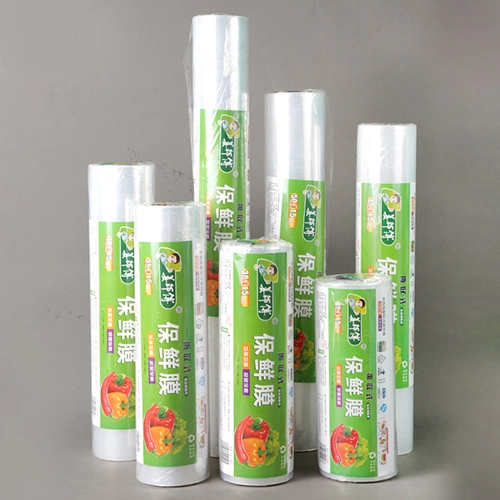
The thickness of multifunctional plastic wrap, which is usually measured in microns, changes the price, how well it holds up against tears, and how flexible it is. Having thicker film isn't always better. If the film is thin, it's easy to wrap around bowls. If the film is thick, it can handle sharp edges like bones or cut container rims. Your containers and carriers should be the same size as the width of the roll. Based on how fast you use film, the roll's length should match. This is because shorter rolls need more changes. People don't have to change how they work to fit a standard roll because we make each roll to order. They can instead ask for sizes that work with their gear.
Cling, Strength, and Clarity Checks
Some things that good cling will stick to are glass, clay, plastic, and stainless steel. When you let go, it won't tear. When you use test methods, you can talk to providers in the same language. The free-falling dart method in ASTM D1709 is used to find out how resistant something is to impact. ASTM D882 talks about the tensile properties of thin plastic strips. You can use these ways to get answers and then check them out for yourself to be sure. It is also important that the film is clear because it makes it easier to see what you have and write dates on it. When people buy film, I always tell them to check the cling, strength, and clarity all at the same time. This is because a film that is bad in one area can lead to new problems.
Evaluate Temperature, Food Safety, and Alternatives
Refrigeration and Freezer Use
The wrap that goes around walk-in freezers and coolers has to be able to bend and stick to itself. Foods that need to be kept cold must be kept at 41°F or less, according to the FDA Food Code. Even though temperature control is still needed, film works well instead. A tight cover keeps things apart and stops air from getting to them. You can ask any provider for information on how their goods work at the temperatures where you store them. For a few weeks, I think you should put sample-wrapped items in your cooler to see how well the cling holds. Our PVC film is used in refrigerators.
Food-Contact Safety and Documentation
It's important to keep records because plasticizers make PVC cling film bendy. In the US, the FDA is in charge of things that come into touch with food. People who want to buy something should ask for compliance declarations and other important details. International groups like ISO, CE, FDA, BSCI, and WCA have given our business their seals of approval. Also, please read the directions on how to handle acidic, hot, or fatty foods. For each use, follow the written instructions that came with the wrap. Every wrap doesn't work with every way to heat it up.
Cling Film, Stretch Film, Foil, and Reusable Wraps
"Cling film" and "plastic wrap" are words that are often used to describe the same thing. Stretch film is meant to be used for shipping and crates, not food. Ask the seller if it's okay to use on food. I'm making this line very clear because we make both of these things. Iron foil keeps heat in and light out, but you can't see through it. Useful wraps cut down on trash, but they are less clean and take longer to wash. Each cover should be used for a specific task. Keep multifunctional plastic wrap on hand for tasks that need to be seen and have a tight seal.
Build a Selection Plan and Compare Suppliers
Match the Product to Each Use Case
That cling needs to work every time, be delivered quickly, and not cost too much per service. Teams that do catering might like rolls that are longer and less likely to tear. Food manufacturers should put a lot of emphasis on testing, keeping records, and making sure that each batch is correct. Barcodes, dense boxes, and reliable wait times are some of the things that distributors look for. OEM and private-label buyers need to choose the material, size, packaging, artwork, and number of items they want to order before the business starts making them. It's faster and easier to compare quotes from different companies when you write down all of your needs on one short piece of paper.
Look Beyond the Price Per Roll
It's easy to forget how much a roll costs when the price is low. First, look at how much it costs per meter or square meter. Then, add up how much it costs to ship, store, and fix film that tears or doesn't stick well. Buying a cheaper roll that wastes 10% more film might cost you more in the long run. What should be in the purchase agreement? Lead times, inspection standards, steps for making claims, and tolerances for roll weight, width, thickness, and length. These little things keep everyone safe and make it easier to ask for things again.
Test Samples Before a Bulk Order
I tell smart buyers to test multifunctional plastic wrap before they buy because that's what smart buyers do. You can ask for samples and check the cling, tear and puncture resistance, freezer performance, seal stability, and how well the carton fits. There should be two or three candidates running on the same containers next to each other. Write down the findings. Use the accepted sample as a guide for your next orders. You can try our PVC cling film and see how it works with the thing you already have by getting a free sample.
Work With a Specialized Supplier and Finalize Your Choice
What a Specialized Supplier Provides
Shandong Honghe Plastics Co.,Ltd. has been making PE/PVC cling film, disposable TPE/CPE/PE gloves, and stretch film since it opened for business in 2017. Liu Guanzhuang Town is in Shandong Province, and that's where our factory is. It's simple to get to because it's near Qingdao Port. Standard workshop with high-tech tools for making things. We keep a lot of stock on hand so we can serve you quickly. We can do both OEM and ODM work, so you can tell us what size, thickness, and packing you need. It's possible to get help 24 hours a day, 7 days a week after the sale.
Quality Assurance and Long-Term Partnership
Ask each provider how they check the materials that come in, how they keep an eye on the process, how they test the finished rolls, and how they keep records for each batch. The specs don't change from one order to the next because of these checks. We're happy to answer those questions, and we make sure all of our products are the best they can be. Over time, there is less risk in procurement when specifications stay the same, lead times are known, and responses are quick. Many buyers want a long-term partner who knows what they need. This cuts down on the time it takes to get approval and keeps them from being surprised at the dock.
Your Final Decision Checklist
Make sure you know what food is being wrapped, how it will be kept, how often staff will handle it, and how much space you need before you place your order. Then check the material, strength, cling, width, roll length, core size, and how well the holder fits. Last but not least, check out the cost per use, the minimum order number, the package, the certifications, the lead time, the transportation, and the lead time. An honest maker who always checks the specs is worth more than the first price that comes up. That's the simplest way to answer the question of what kind of multifunctional plastic wrap is best for your kitchen.
Conclusion
There is no one best type of multifunctional plastic wrap for organizing your kitchen. It all depends on what it will be used for. First, buyers should decide what kind of work needs to be done. Then, they should compare PVC, PE, and other options based on how well they stick, how thick, how wide, how long the roll is, how clear it is, and how well it works in different temperatures. It is safe to use if you have the right paperwork and store things in the right way. For example, the FDA Food Code says to keep things cold at 41°F. You can use cling film, stretch film, foil, or pre-used wraps to wrap different things. Not only does the price of the roll include shipping, storage, and film waste, but so does the total cost. Regular source checks and testing of samples lower risk and help cooking operations stay steady over time with repeat orders.
FAQ
Q1: Is multifunctional plastic wrap the same as cling film?
A: Most shops use the same name for the same kind of food wrap. We sell cling film made of PVC. Don't just believe the names; also read the standard sheet and the papers that say it is safe for food contact.
Q2: How do I choose thickness for a commercial kitchen?
A: Start with the box and the food. Thin film works best for bowls and trays, but things with sharp edges need more protection against tears. Put the samples next to each other and look at them side by side before you decide.
Q3: Can I get samples before a bulk order?
A: Yes. You can try some for free, and we can make the movie just the way you want it. Send an email to tony@sdhhsl.com telling them what size, thickness, and packaging you need.
Request Multifunctional Plastic Wrap Samples From Shandong Honghe Plastics Co.,Ltd.
The people at Shandong Honghe Plastics Co.,Ltd. can help you choose the best film. We are a company that makes multifunctional plastic wrap close to Qingdao Port. We offer PVC material, free samples, customization to your exact needs, ODM and OEM services, a large inventory, and support 24 hours a day, seven days a week after the sale. To find out more, email tony@sdhhsl.com with your size, thickness, number, and how you want it wrapped.
References
1. U.S. Food and Drug Administration, Food Code, 2022.
2. U.S. Department of Agriculture, Food Waste FAQs, 2023.
3. U.S. Environmental Protection Agency, Sustainable Management of Food Basics, 2023.
4. U.S. Food and Drug Administration, Packaging and Food Contact Substances, 2023.
5. ASTM International, ASTM D882 Standard Test Method for Tensile Properties of Thin Plastic Sheeting, 2018.
6. ASTM International, ASTM D1709 Standard Test Methods for Impact Resistance of Plastic Film by the Free-Falling Dart Method, 2016.