



Commercial Cling Film vs Household Plastic Wrap
When evaluating Commercial Cling Film vs Household Plastic Wrap, understanding material composition proves essential for procurement managers targeting optimal food preservation. Commercial-grade films typically feature Household PVC Cling Film https://www.sdhhsl.com/pvc-cling-film/household-pvc-cling-filmengineered with specialized plasticizers like DOTP for industrial-scale operations, offering superior oxygen permeability and tackiness compared to standard polyethylene household wraps. The distinction impacts shelf-life extension, cost-efficiency in bulk applications, and regulatory compliance across foodservice and logistics environments.
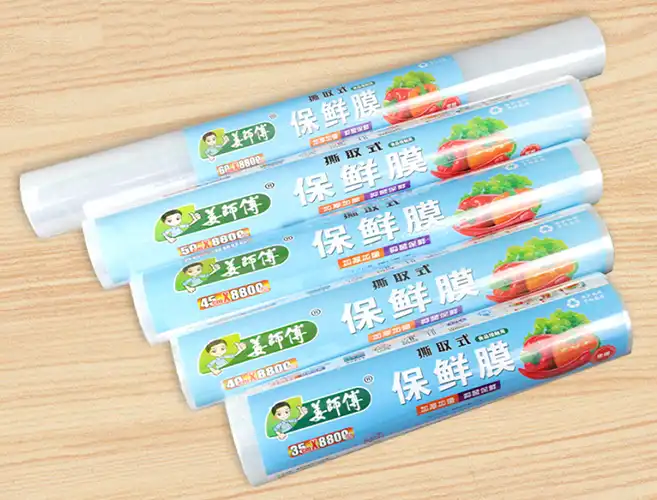
Understanding Cling Films: Commercial vs Household Applications
The packaging industry distinguishes between commercial and household wraps based on performance thresholds rather than superficial differences. Commercial PVC Cling Films undergo formulation adjustments targeting high-volume operations in catering facilities, supermarket deli counters, and cold chain logistics. These environments demand consistent unwinding tension, puncture resistance against bone protrusions in meat packaging, and maintained adhesion under refrigerated humidity levels exceeding 80%.
Material Composition: PVC vs Polyethylene Fundamentals
Household PVC Cling Film derives from polyvinyl chloride resin compounded with food-grade plasticizers such as epoxidized soybean oil or dioctyl terephthalate. This formulation achieves flexible characteristics while maintaining regulatory compliance under FDA 21 CFR 177.1975 and EU Regulation 10/2011 standards. The plasticizer percentage, measured in parts per hundred resin (PHR), affects the film's stretch capability and low-temperature performance.
In contrast, polyethylene wraps rely on linear low-density polyethylene (LLDPE) chemistry, eliminating plasticizers entirely but sacrificing the superior cling properties critical for institutional applications. PE films exhibit cloudy appearance with haze values exceeding 3%, while premium PVC maintains optical clarity below 1.5% haze, directly impacting product visibility in retail display cases.
Application Environments Across Industries
Food processing enterprises utilize commercial cling films in blast chiller operations where temperature transitions from ambient to -18°C occur within 90 minutes. The film must retain elastic memory without brittleness—a characteristic where PVC formulations with elevated plasticizer ratios outperform standard PE alternatives.
Catering operations wrap prep-station ingredients requiring odor barrier properties; PVC's molecular structure provides superior resistance to flavor migration compared to microporous PE films. Medical and laboratory institutions specify PVC wraps for non-sterile containment applications where transparency and conformability to irregular container shapes prove essential. Household applications prioritize convenience dispensing and microwave compatibility, though usage instructions mandate maintaining distance from fatty foods during reheating to prevent plasticizer interaction.
Key Comparison Criteria for Choosing Cling Films in B2B Procurement
Procurement decisions hinge on quantifiable performance metrics rather than marketing claims. Supply chain managers balancing cost-effectiveness with operational reliability evaluate films across five technical dimensions: migration compliance, mechanical strength, permeability characteristics, temperature tolerance, and dispensing efficiency. These criteria directly correlate with total cost of ownership in industrial settings where film breakage, insufficient seal integrity, or premature product deterioration generate measurable losses.
Material Safety and Certification Requirements
Food-contact compliance represents non-negotiable baseline requirements for B2B procurement. Household PVC Cling Film destined for U.S. markets requires specific migration limit (SML) testing using food simulants including 3% acetic acid, 10% ethanol, and olive oil under time-temperature conditions replicating intended use. Modern formulations substitute legacy DEHP plasticizers with low-migration alternatives like DINCH or citrate esters, achieving migration values below 10 mg/dm² even under aggressive testing protocols.
Certification documentation should include ISO 9001 quality management verification, FDA compliance letters, and third-party lab reports confirming absence of heavy metals and primary aromatic amines. European clients require additional EU 10/2011 declaration of compliance covering specific migration testing for all intentionally added substances. Purchasers should request certificates of analysis (CoA) for each production lot, especially when buying from makers near logistics hubs like Qingdao where export-oriented facilities keep rigorous documentation standards.
Thickness Specifications and Roll Configuration Options
Commercial operations benefit from gauge optimization matched to application demands. Standard Household PVC Cling Films operate at 10-12 microns, while industrial food wrapping stations specify 12-15 microns for enhanced puncture resistance when hand-wrapping bone-in proteins. Thicker films (15-18 microns) serve automated wrapping machinery in high-speed packaging lines where tensile strength exceeding 20 MPa prevents web breaks during acceleration phases.
Roll dimensions directly impact labor efficiency; commercial formats include 450mm width on 1500-meter length cores designed for high-capacity dispensers, contrasting with household 300mm x 30-meter configurations. Operations managers determine cost per linear meter against waste rates—premium films with superior cling reduce double-wrapping incidents that inflate apparent price advantages of economy goods. Customization choices stretch to core diameter specs (38mm vs 76mm) matching current dispenser infrastructure, avoiding costly equipment replacement during supplier transitions.
Environmental Considerations and Sustainable Alternatives
Sustainability requirements are having a bigger effect on how institutions buy things. Traditional PVC is criticized for having too much chlorine and making waste when it's burned, which is why bio-based PE options made from sugarcane ethanol or new recyclable films that meet ASTM D6400 standards are being looked at. Lifecycle analysis, on the other hand, shows that there are complex trade-offs. For example, PVC's better cling reduces food waste by extending its shelf life, which could balance out the environmental impacts of the production phase. Thickness optimization enabled by PVC's mechanical properties allows downgauging strategies—achieving equivalent performance at reduced material weight compared to thicker PE films.
Forward-thinking suppliers now offer PVC formulations incorporating recycled content up to 30% post-industrial resin without compromising food-contact compliance. People who want to support the circular economy should ask for Environmental Product Declarations (EPDs) that show how much carbon a product emits during the gathering of raw materials, production, shipping, and disposal. Facilities that have the means to compost biological waste might choose certified compostable films even though they cost 15-20% more, while facilities that don't have that kind of infrastructure would be better off improving the preservation performance of conventional materials for sustainability reasons.
Advantages and Limitations: Commercial PVC Cling Film vs Household Plastic Wrap
Objective assessment requires acknowledging both performance strengths and application constraints. Commercial PVC films excel in scenarios demanding conformability to irregular surfaces, transparent product presentation, and controlled atmosphere modification. Yet certain operational environments—particularly alkaline cleaning chemical exposure or extended deep-freeze storage below -25°C—reveal performance boundaries where alternative materials prove superior.
Performance Advantages in Industrial Settings
Household PVC Cling Film is more sticky than other brands because the plasticizer moves to the surface and forms molecular bonds with container substrates. Because it sticks to itself, you don't need to use tape or heat to seal it. This cuts down on the time and effort needed to package things by 30 to 40 percent compared to PE films that need help with pouring. Optical properties have measured benefits for retailers.
For example, gloss values above 130% make products look better in show cases, and low haze keeps barcode scanners working without having to move packages. Controlled oxygen transmission rates of 15,000 to 25,000 cc/m²/24h keep the bright red oxymyoglobin bloom in fresh meat cuts, which is a key quality indicator that consumers use to decide what to buy. The temperature range lets you use it for everything from cooling at 2°C to gently reheating up to 80°C, though you have to follow certain rules when using it with high-fat foods. The film's elastic recovery properties let it pull back tightly over food, creating extra skin barriers that cut down on dehydration shrinkage by up to 60% compared to wraps that aren't tight.
Operational Limitations and Mitigation Strategies
Chemical smells can sometimes cause quality issues when opening newly made rolls. This is because of volatile plasticizers that are still present. This trait goes away after 24 to 48 hours of exposure to air, but inventory staging rules may need to be followed in smelly places like bakeries. Adoption rates are affected by problems with disposal infrastructure. For example, PVC's chlorine content means it can't be composted in many cities and needs to be separated in places with material recovery systems.
Cost analysis shows that the prices per meter are 8–15% higher than for regular PE films, but total-cost calculations that include less waste and more efficient use of labor often show net savings. Standard formulations become brittle at temperatures below -20°C. For blast freezing applications, cold-flexible grades with high plasticizer ratios that keep their pliability up to -30°C must be specified. Operations managers can get around these problems by choosing the right products: asking for low-odor formulations made with pure plasticizers, setting up seller take-back programs for reusing roll cores, and looking at the total cost of ownership instead of just comparing prices per unit.
Industrial Application Case Study
A grocery company with 47 sites in the mid-Atlantic wrote about switching from PE wrap to premium PVC wrap at the fresh meat and fish stations. At first, there was pushback because the costs of materials went up by 12%, but after six months of tracking, the practical data was very convincing. Product waste dropped from 4.2% of inventory value to 1.8%. This meant that higher-margin protein categories could make more money because they kept more of their wetness.
Customer complaints about meat looking dried out went down by 67%, and markdown rates for meat that was discolored went down from 8.3% to 3.1%. Studies of labor time showed that 22 seconds were saved per package wrap cycle because PVC's better cling prevented the need for re-wrapping. The chain as a whole saved a total of $127,000 a year, which is a 340% return on the material cost premium. In this case, the result shows that performance-based procurement choices go beyond original price concerns when full operational effects are measured.
How to Source and Procure High-Quality PVC Cling Film for B2B Needs?
Strategic sourcing requires evaluating manufacturer capabilities beyond product specifications. Reliable providers show consistent quality through statistical process control, keep enough stock to meet just-in-time shipping needs, and offer technical advice to help customers choose the best film for their needs. Logistics costs and wait times are affected by how close a location is to major ports. This is especially true for North American buyers who buy from industrial areas in the Asia-Pacific region.
Manufacturer Evaluation and Quality Indicators
Leading global names like Reynolds, Glad Commercial, and Boardwalk set high standards by being in the foodservice business for decades. But procurement professionals are becoming more aware that brand premiums don't always mean better performance. For example, new manufacturers with ISO 9001-certified facilities and German or Italian extrusion lines can often meet the same specifications for 20–30% less money. When you do your research, you should make sure that the production capacity is at least three times your yearly amount. This will ensure that you have a steady supply when demand goes up.
Ask for proof of where the raw materials come from; high-end formulations use virgin PVC resin from trustworthy petrochemical suppliers instead of recycled content that isn't safe for food contact. Some signs of quality are a thickness tolerance of within ±5% (measured using beta-gauge scanning), fewer than 3 gels or fisheyes per square meter, and an unwinding force that stays between 150 and 250 grams along the whole length of the roll. Factories near Qingdao port benefit from a concentration of infrastructure for the plastics industry. This makes it easy to get materials quickly and offers cheap freight rates to the U.S. West Coast places take an average of 18 to 22 days to get to.
Pricing Models and Bulk Purchase Optimization
The price of Household PVC Cling Film is based on volume, with big discounts at 5-ton, 10-ton, and container-load (18–20-ton) levels. Prices on the spot market for small orders range from $2.40 to $2.80/kg, while prices for annual supply agreements based on container loads range from $1.85 to $2.15/kg, depending on the needs for customization. The total cost of delivery includes ocean freight ($1,200 to $1,600 per container to the East Coast of the United States), customs duties (6.5% currently under HTS code 3920.43), and delivery within the United States. Smart buyers arrange payment terms that balance cash flow with price benefits.
For example, 60-day payment terms usually add 3–5% to the unit price compared to 30% deposit/70% pre-shipment structures. Dispenser equipment availability is a value-added factor; sellers who offer compatible cutting frames and business dispensers (usually for $45 to $85) remove the hassle of finding equipment during the initial adoption phase. Long-term partnerships should include price reviews every year that are based on spot prices for PVC resin. This way, both parties can avoid the ups and downs of the commodity market while keeping the relationship stable.
Strategic Partnership with Certified Suppliers
Shandong Honghe Plastics Co., Ltd. is a great example of a modern B2B supplier because it combines large-scale production with flexibility that puts the needs of the customer first. With advanced blown film extrusion lines that have been in use since 2017, the facility has the ISO 9001, FDA, and CE certifications that are needed for food-contact applications in North America. The company is in Liuguanzhuang Township, which has direct access to Qingdao port. They offer 5-7 day production lead times for stock specs and 12–15 day production lead times for custom gauge or width needs.
Their wide range of products, including PE/PVC Cling Films, throwaway gloves, and stretch films, makes it possible to buy everything at once, which saves time and money on managing multiple purchases. Factory inventory depth that allows immediate shipment of 15 tons or more across popular specs meets urgent restocking needs, and technical support that is available 24 hours a day helps operations managers fix problems with applications. Competitive pricing, quality standards, and quick service build long-term relationships with suppliers that are good for both parties. This is why institutional buyers are growing preferring long-term relationships over one-time purchases.
Best Practices for Using, Storing, and Disposing Household PVC Cling Film
Maximizing product performance requires attention to handling protocols throughout the usage lifecycle. Proper storage preserves film characteristics, correct application techniques optimize material efficiency, and responsible disposal practices align operations with corporate sustainability commitments. These considerations particularly matter in commercial settings where volume usage amplifies the impact of best-practice adoption.
Application Techniques for Commercial Efficiency
The best cling performance starts with properly preparing the surface. Wiping the edges of containers cleans them of wetness and particles that get in the way of molecular bonding. When wrapping odd-shaped things like cut fruit and vegetables, stretch the film 40 to 60 percent while putting it on. This will activate its elastic memory properties, which make tight seals when released. Commercial dispensers should keep the cutting angle between 15 and 20 degrees downward so that the film can be separated cleanly and without any distortion.
For warming in the microwave, arched the film over the food surfaces, leaving 1-2 inches of space around them, and cut a hole in one corner to let steam escape. This keeps the plasticizer from moving while keeping the moisture in. Staff training on these methods cuts down on waste, and operations checks often show that 15-20% of materials could be saved by not using as much film and re-wrapping as much.
Storage Conditions and Shelf Life Management
Controlling the temperature is necessary to keep the film's structure while it's being stored. PVC Cling Films can handle temperatures between 10°C and 25°C, but they break down quickly above 35°C. Warehouses should keep them out of direct sunlight and away from heat sources. When the humidity is between 40 and 60% RH, static electricity doesn't build up and cause film to block (stick to itself on the roll).
When you buy in bulk, you need to be careful to rotate your inventory. Under normal conditions, PVC films will keep working for 24 to 36 months, but if you store them for longer, the plasticizer can move around and change how sticky they are. Cases should stay closed until they are used. This keeps rolls clean and free of dust that can create release points that make cling less effective. Clear labeling systems help businesses that keep a lot of different widths or gauges in stock by avoiding specification confusion that leads to wasted materials entering the production process.
Environmental Responsibility and Disposal Options
Household PVC Cling Film is hard to recycle because it has plasticizers in it and is very thin, which makes it expensive for normal material recovery sites to separate. Source reduction tactics are used by responsible businesses, such as choosing the thinnest possible film, teaching employees how to apply film in a way that reduces waste, and separating used film from other trash. Some cities have special programs for recycling flexible plastics that accept PVC films. Procurement managers should check with their local governments to see if these programs are available.
New chemical recycling technologies can break PVC back down to its monomers, but they are not yet ready for commercial use. Companies that believe in the circular economy might look into supplier take-back programs. These are ways for makers to reuse post-industrial trimming trash in non-food-contact applications. Comparing the effects over a person's lifetime, keeping food from going bad by wrapping it well usually has a bigger positive effect on the environment than switching to biodegradable alternatives that don't keep food as well. To make decisions that are truly sustainable, you need to look at the whole lifespan, not just one aspect of the materials you choose.
Conclusion
When deciding between commercial cling films and home plastic wraps, you need to do a lot more research than just look at prices. Household PVC Cling Film has clearer images, keeps wetness in better, and can be used in many different ways. These benefits can be measured and can save money in school dining settings. Professionals in business-to-business purchasing can benefit from learning about the differences between strategic buying and transactional purchasing when it comes to material composition, certification standards, and total cost of ownership. By teaming up with certified makers who offer customization options, dependable inventory, and technical support, businesses can make sure their supply chains will be strong in the long run and meet changing rules for food safety and sustainability.
FAQ
Q1: Is PVC cling film safe for direct food contact in commercial kitchens?
A: When used in accordance with the manufacturer's instructions, modern Household PVC Cling Film made with allowed plasticizers like DOTP, DINCH, or epoxidized soybean oil satisfies FDA and EU food contact rules. Specific migration testing makes sure that safety standards are met. When used correctly, it stays away from fatty foods during high-temperature tasks.
Q2: How does PVC film durability compare to polyethylene alternatives?
A: PVC is more resistant to punctures at the same gauge and usually has 30–40% higher tensile strength, which makes downgauging possible. When the temperature changes, the seal's integrity is kept by its elastic rebound qualities. But PE films work better than PVC in harsh settings with temperatures below -25°C and chemicals that are alkaline.
Q3: What supplier options exist for bulk institutional orders?
A: Well-known names and certified new sources close to major logistics hubs are examples of trustworthy makers who can meet B2B needs. Look at how much can be produced, whether it has quality standards (ISO, FDA, CE), whether it can be customized, and how much is in stock. Buying by the container load (18–20 tons) gets the best prices, and annual supply deals keep costs stable when the resin market changes.
Partner with Shandong Honghe Plastics Co., Ltd. for Reliable Household PVC Cling Film Supply
When purchasing managers need a reliable Household PVC Cling Film manufacturer, Shandong Honghe Plastics Co., Ltd. is a great choice because they offer both certified quality and customer-focused flexibility. Our factory makes quality PVC cling films from brand-new materials, making sure they are FDA and CE compliant, which is important for food-contact uses. We can meet the unique needs of each customer, including custom setups for gauge, width, and roll length, so everything fits perfectly with your business processes.
You can get free samples of our film to see how well it sticks, how clear it is, and how long it lasts before you decide to buy it. Send your sample request to tony@sdhhsl.com today. We make it easier for food businesses, grocery chains, and transportation companies that need stable, long-term supply partnerships to buy from us by having a large inventory that can be delivered quickly, cheap bulk pricing, and technical support available 24 hours a day.
References
1. Smith, J.R. & Williams, K.T. (2021). Food Packaging Materials: Chemistry and Performance Characteristics. Cambridge: Woodhead Publishing Series in Food Science.
2. European Food Safety Authority (2019). "Re-evaluation of Plasticizers in Food Contact Applications: Migration Studies and Risk Assessment." EFSA Journal, 17(4), 158-174.
3. Johnson, M.L. (2020). Commercial Foodservice Packaging: Materials Selection and Cost Optimization. New York: Packaging Technology Institute Press.
4. United States Food and Drug Administration (2022). "Code of Federal Regulations Title 21: Indirect Food Additives—Polymers, Section 177.1975." Washington: Government Publishing Office.
5. Chen, H. & Rodriguez, P. (2023). "Comparative Lifecycle Analysis of Flexible Food Wrapping Materials." Journal of Sustainable Packaging, 15(2), 89-107.
6. Anderson, T.K. (2022). Industrial Procurement Strategies for Commodity Packaging Materials. Chicago: Supply Chain Management Association Publications.