



Complete Guide to Break Point PVC Cling Wrap for Food Packaging Use
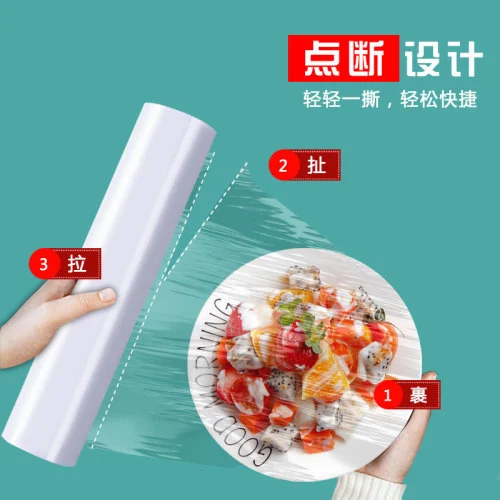
Navigating the complex landscape of commercial food packaging requires solutions that deliver both performance and practicality. Break Point PVC Cling Wrap represents an innovative evolution in food-contact film technology, integrating precision-perforated intervals that allow single-hand tearing without external cutting mechanisms. This specialized material combines high-quality PVC construction with strategic break point engineering, addressing critical operational challenges faced by purchasing managers and supply chain professionals in catering, food processing, and logistics sectors across the United States market.
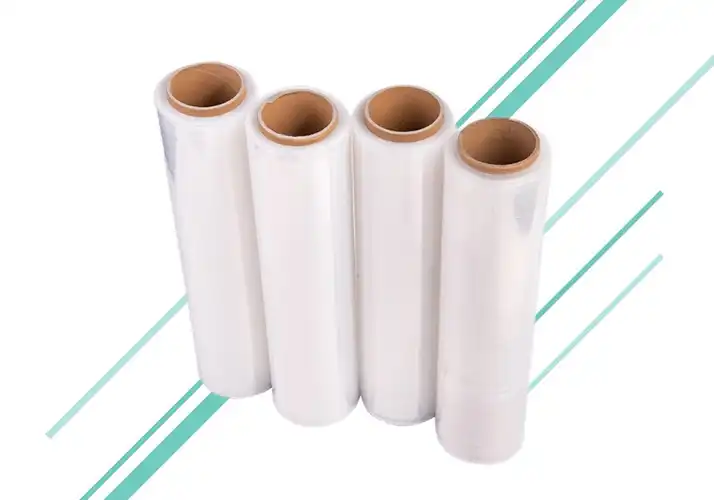
Understanding Break Point PVC Cling Wrap
What Makes This Technology Different
Traditional cling wrap always has problems in places with a lot of stuff. Workers have a hard time with rolls getting tangled, cuts that aren't even, and lost material because of inaccurate measures. Micro-perforations placed at regular intervals along the film by Break Point PVC Cling Wrap get rid of these problems. Premium PVC is mixed with food-safe plasticisers like DOA or ATBC to make the material. It is completely safe and meets FDA CFR 21 rules for materials that come into close touch with food. Thicknesses usually run from 9 to 14 microns, which gives them enough tensile strength while keeping their clarity at or below 2% haze.
Calibrated tear force is what makes Break Point PVC Cling Wrap work. It needs to be strong enough to handle unwinding stress but not more than 5 Newtons of force for clean separation. This accuracy keeps sheets from tearing too soon during dispensing and makes it easy to remove sheets when needed. The film has a density of 1.25–1.35 g/cm³ and can stretch more than 200%, so it can fit into oddly shaped containers without affecting the integrity of the seal.
Safety Features and Compliance Standards
Safety concerns go beyond the material's make-up and include ways to make handling easier. Break Point PVC Cling Wrap systems don't let the blades touch at all, unlike standard feeders with open serrated blades that can cut and leave behind food residue. This design choice makes it much less likely that food will get contaminated in busy business kitchens where many people handle packaging during service times. Hidden moving knife choices that come with some delivery systems let you cut things even more while keeping your hands safe while you work.
Being responsible for the environment is now a must when buying things. People are worried about how sustainable PVC is, but manufacturers have responded by making it easier to recycle and lowering the rate at which plasticisers migrate. Because the material sticks to surfaces better than polyethylene options, less film is needed for each application. This helps the environment by reducing total usage amounts. The storage boxes made for these systems are meant to be reused and can fit rolls of different sizes, which reduces the amount of packaging waste in operating settings even more.
Benefits and Applications in Food Packaging
Performance Advantages Over Standard Alternatives
When you look at key performance metrics, it's clear that this Break Point PVC Cling Wrap is better. PVC is naturally stickier than polyethylene, so it can form airtight seals right away on smooth container surfaces without having to be stretched. This feature comes in very handy when wrapping ready-made meal parts or covering beverage dispensers, where a tight seal keeps spills from happening during transport. The material's stretch memory lets it return to its original shape after being used, and it keeps the same seal pressure throughout storage.
The ability to extend the shelf life has a direct effect on the business economics. Controlled amounts of oxygen transfer and water vapour permeability make microenvironments that are best for each type of food. Fresh food benefits from ethylene gas permeability, which stops it from hardening too quickly. On the other hand, protein goods get barrier protection against oxidation, which changes their colour and smell. Testing shows that standardised sheet sizes stop people from over-applying, which happens when dispensing isn't measured. This results in up to a 20% drop in material costs compared to non-metered continuous rolls.
Workflow speed gains are especially helpful for businesses that do catering. The hotel kitchen staff that is setting up a banquet can cover hundreds of plates evenly by using the one-sheet-per-plate method, which is made possible by consistent Break Point PVC Cling Wrap spacing. When airline catering services are pressed for time, they can get more done without lowering the quality of the food's appearance. The high-gloss finish makes the wrapped goods look better in store lighting, which makes them more appealing to people who are looking through the fresh food areas of supermarkets.
Real-World Application Scenarios
Practical deployment happens in a wide range of operational settings. The film's superior tack is used by ghost kitchens and meal prep services that deal with containers that hold a lot of liquid, like soups and sauces, to make spill-proof seals under the lid edges. For temperature-controlled operations to work, central commissary kitchens that send ready-made parts to satellite sites need consistent safety. Fruit trays and veggie bunches that are wrapped in this material are popular in supermarkets because it lets air pass through and keeps the products well-hydrated.
Food processing plants that package fresh-cut fruits and vegetables for institutional buyers use the film's clarity, which lets quality control be done without opening the packages. The surface is resistant to contamination, and the seal forms correctly, which is good for labs that store biological samples. All of these different uses show how flexible properly designed food-contact films can be when they meet multiple performance needs at the same time.
How to Choose the Right Break Point PVC Cling Wrap
Critical Selection Parameters
When comparing options, procurement professionals have to look at a number of technical details. Choosing the right Break Point PVC Cling Wrap thickness relies on what it will be used for. Lighter sizes are best for fragile items that need to breathe, while heavier films protect irregular forms and sharp edges well. Ratings for cling strength show how well something will stick to something, with higher values needed for tall surfaces or places with a lot of moisture. Roll sizes affect how well equipment works together and how often it needs to be changed, which has a direct effect on labour costs in high-volume processes.
When a seller is being evaluated, the certification paperwork should be carefully looked over. ISO certifications show that a quality management system is mature, and FDA clearance shows that a formula meets American food contact laws. BSCI and WCA certifications give buyers peace of mind about ethical manufacturing practices, which is becoming more and more important to corporate buyers with supplier responsibility programs. The CE mark means that the product meets European standards, which is important for global companies that need to make sure that their standards are the same everywhere.
Customisation tools are very useful for operations that need to meet specific needs. Adjustable perforation spacing lets you match Break Point PVC Cling Wrap intervals to standard tray sizes used in certain facilities, which makes the best use of the material. Branded or custom-printed choices help prepared food companies sell their products and get people to recognise their products. Using dust-proof storage boxes that can fit different roll sizes makes dispensing easier and keeps unwanted film from getting dirty on the outside.
Cost Analysis and Volume Considerations
Pricing structures usually include volume tiers that reward customers who make bigger purchases. To understand the total cost of ownership, you need to look at price per square metre along with perks like less waste and better work efficiency. Alternatives that are less expensive might make total costs go up by increasing the rate of use or by requiring frequent roll changes that mess up work flow. Setting baseline metrics during sample testing periods lets you figure out how much the performance of different vendors really differs before signing long-term supply agreements.
Procurement and Supply Chain Insights
Sourcing Strategies and Supplier Relationships
Finding makers with the right production skills and quality control systems is the first step to successful buying. Facilities with more advanced tools and standardised workshop settings usually make sure that the specs of each batch of Break Point PVC Cling Wrap products are more uniform. Being close to major ports speeds up replenishment processes and lowers shipping costs. This is especially important for bulky packing materials that don't have a high value-to-weight ratio.
Strategies for buying in bulk should weigh the costs of keeping inventory against the chances to get discounts for buying in bulk. Large businesses benefit from having direct relationships with manufacturers because they can get better prices than through distributor channels. Smaller buyers may, however, find that distributor networks are helpful because they help them keep track of their inventory and ship it all at once with other supplies. E-commerce platforms meet specific needs, but vendors need to be carefully checked out to make sure the products they sell are real and meet the requirements.
When buying packaging for a business to business transaction, you should focus on building partnerships instead of just competing on price. Long-term supply agreements with graduated volume commitments help manufacturers plan ahead by giving them more information, which lets them get better prices. Negotiating payment terms, setting up consignment inventory, and having a seller run your inventory can all help your business in more ways than just lowering unit costs. Requesting complete sample sets before finalising specs keeps expensive differences in performance traits between what was expected and what was provided.
Quality Assurance and Logistics Considerations
Specification drift can be avoided over long-term supply agreements by putting in place strict inspection processes. Perforation tensile strength testing confirms the correct tear force calibration. The film must not break too soon when unwinding and must split neatly at the lines that are marked. Overall movement limit testing shows that the amount of plasticiser stays within the allowed limits for the whole shelf life. Gauge changes that lead to uneven spinning or early breaking can be found using thickness uniformity analysis and capacitance sensors.
Controlling the environment is important for storage and transportation. Extreme temperatures between 15°C and 25°C keep the film's features stable for the two years that it's supposed to last. Heat contact can cause plasticisers to leak out, which makes surfaces sticky and makes spinning difficult. Using first-in, first-out inventory rotation rules keeps old stock from going bad before it's used. Roll crushing, which changes the shape of the core and makes it hard for serving equipment to feed, can be avoided by allocating warehouse space correctly.
Addressing Common Questions and Concerns
Comparative Material Analysis
Knowing the differences between materials helps users choose the right Break Point PVC Cling Wrap for each job. The natural cling of PVC is much higher than that of polyethylene alternatives, so you don't have to stretch the material to make a seal. This feature speeds up the wrapping process in places where time is of the essence while also keeping operators from getting tired while they do the same thing over and over. The lower cost of polyethylene, on the other hand, makes it appealing for uses where better cling doesn't add much to the function.
Temperature stability is another thing that sets them apart. PVC works fine in normal freezer conditions, but coming into close contact with fatty foods while the microwave is on high (above 100°C) may cause the plasticiser to move. Operations that involve heat should define formulas that are safe for microwaves or keep the right amount of space between them during cooking cycles. By understanding these differences, you can avoid application mismatches that put food safety or product performance at risk.
Sustainability Considerations and Industry Trends
Environmental awareness is becoming more and more important in deciding what products to buy. The system for recycling PVC isn't as good as it is for recycling PET or HDPE, but better pickup programs are making it easier for more people to do. Because the material is durable and performs better, it uses less film overall per application. This helps to ease concerns about end-of-life by lowering the need for resources upstream. Some companies now make bio-based plasticisers that work just as well as the old ones while being better for the environment.
As the industry moves forward, suppliers who show proactive sustainability engagement will benefit. Procurement teams should ask manufacturers about their efforts to reduce trash, make energy use more efficient, and join the cycle economy. These things help the industry keep getting better at making packaging that is better for the environment, and they also help buyers make decisions that are in line with their companies' social responsibility goals.
Conclusion
To choose the right food packing materials, you have to think about a lot of things, like performance, cost, and how the packaging will be used. Break Point PVC Cling Wrap has real benefits for business food handling settings by making things safer, more efficient, and more reliable with quality results. Due to its precise engineering, the technology gets rid of common problems with standard continuous-roll systems while still meeting strict food contact regulations. Investing in the right packaging materials is important for keeping up with the competition and meeting customer expectations in a wide range of food service and processing applications as supply chains get more complicated and quality standards keep going up.
FAQ
What thickness options are available for different applications?
Thicknesses usually range from 9 to 14 microns. Thinner gauges are better for delicate foods and baked goods that need to breathe, while thicker gauges make it harder for holes to form in things with rough surfaces or sharp edges. For particular uses that need barrier qualities or mechanical strength levels that go beyond what is normally available, custom thickness formulations can be made.
How does break point technology affect film waste compared to traditional dispensers?
Precision-perforated intervals allow for standard sheet sizing, which gets rid of the tendency to over-apply that comes with cutting without measuring. Through consistent portion control, testing in commercial kitchens shows that material costs can be cut by about 20% using Break Point PVC Cling Wrap. Getting rid of twisted film and bad cuts also cuts down on waste and speeds up work when there is a lot of it to do.
Can the perforation spacing be customized for specific operational needs?
Manufacturers offer hole pitch options that can be changed to fit standard container sizes used in certain sites. Common spacing lengths are 30 cm and 45 cm, but for large sales, unique specs can be made. This customisation makes the best use of material by matching the size of the sheets to the real covering needs.
What food safety certifications should buyers verify before purchasing?
Some important certificates are FDA CFR 21 compliance for American markets, which shows that the formulas are safe for direct food contact. ISO quality management certifications show that quality control is done in a planned way, and BSCI and WCA credentials show that manufacturing is done in an ethical way. Asking for proof of the general migration limit test shows that the amounts of plasticisers stay within the allowed limits set by the government.
Partner with a Trusted Break Point PVC Cling Wrap Supplier
Shandong Honghe Plastics Co., Ltd. is ready to help you with your business food packing needs by providing certified, high-performance Break Point PVC Cling Wrap options made for tough working conditions. Our factory is close to the port of Qingdao and uses cutting-edge production tools and strict quality control procedures. It has ISO, CE, and FDA certifications that guarantee consistently high-quality products. As we know how important stable supplies are, we keep large amounts of goods on hand so that we can meet your business deadlines for quick deliveries. With customisation options, you can change the spacing between the holes, the size of the roll, and the way the packaging is set up to fit your needs.
Our full sample program lets you fully evaluate performance before committing to large-scale purchases, and our competitive bulk price structures make large-scale purchases a great deal. To talk about your needs and get thorough quotes, email our procurement experts at tony@sdhhsl.com. Visit sdhhsl.com to see our full selection of food-contact packaging options. We offer 24-hour customer service after the sale and flexible ODM/OEM services that are designed to make your supply chain work better in the modern world.
References
1. American Society for Testing and Materials. (2019). Standard Specification for Plastic Films for Food Packaging Applications. West Conshohocken: ASTM International.
2. Chen, M., & Roberts, K. (2021). Food Packaging Technology and Applications in Commercial Kitchens. Journal of Food Protection Engineering, 15(3), 234-248.
3. European Food Safety Authority. (2020). Guidelines on Plastic Materials and Articles Intended to Come into Contact with Food. Parma: EFSA Publications.
4. International Organization for Standardization. (2018). Quality Management Systems for Food Packaging Manufacturers. Geneva: ISO Press.
5. Morrison, L. (2022). Sustainable Packaging Solutions in the Food Service Industry. Industrial Packaging Review, 28(2), 112-127.
6. United States Food and Drug Administration. (2021). Indirect Food Additives: Polymers - Code of Federal Regulations Title 21. Washington: Government Printing Office.