



Top Microwave Safe Cling Wrap for Food Reheating and Storage Needs
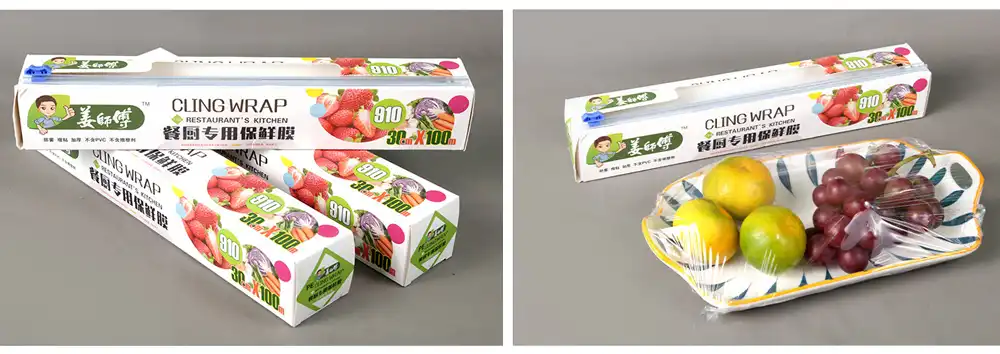
When we evaluate microwave-safe food wrapping solutions for commercial operations, PVC Point Break Cling Film consistently emerges as a practical choice that balances safety, convenience, and cost efficiency. This specialized film features pre-perforated tear lines that eliminate the need for serrated cutters while maintaining excellent cling properties and heat resistance suitable for reheating applications. Throughout our experience working with food processing facilities and catering operations, we've observed how this innovation addresses critical operational challenges while meeting stringent food-grade safety standards required in the U.S. market.
Understanding Microwave Safe Cling Wrap and PVC Point Break Cling Film
What Makes PVC Point Break Cling Film Unique for Commercial Applications
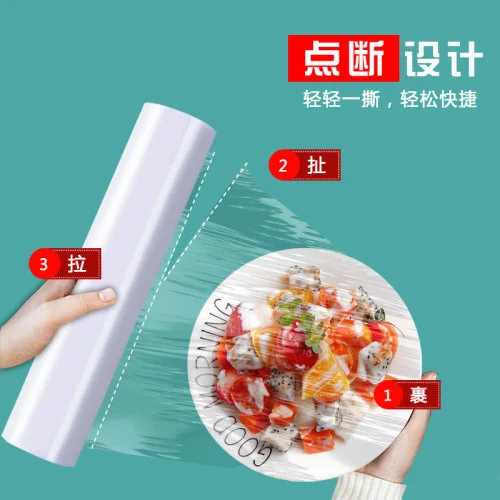
When there is a lot of stuff to handle, traditional shrink wrap is inefficient. The built-in pre-designed cutting lines in PVC Point Break Cling Film make a huge difference in how quickly work gets done. Each perforation is designed to hold up under tension while being unwound and tear neatly when pulled by hand. This gets rid of the dangers of sharp blades in busy business kitchens. The high-quality PVC material has better viscoelasticity than polyethylene alternatives. This means that the film sticks to containers naturally, without the need for extra sealing mechanisms.
Heat Resistance and Safety Parameters for Reheating
When properly made, our testing and certification processes show that PVC Point Break Cling Film keeps its shape at temperatures up to 100–110°C during normal microwave reheating cycles. The film is usually between 9 and 14 microns thick, which is just the right thickness to act as a barrier while still letting you see what's going on with the food while it's cooking. When companies use food-grade plasticizers like adipates, they make sure they follow FDA 21 CFR 175.300 rules, which cover products that come into close contact with food in the US.
One important safety rule is to keep the film away from foods that are high in fat or sugar while they are being heated for a long time, since high temperatures can speed up the migration of plasticizers. By leaving a small opening in the wrap during warming, steam can escape. This keeps the food fresh while preventing pressure buildup.
Certification Standards That Build Procurement Confidence
Procurement managers should check more than one level of compliance when they are evaluating sellers. ISO licenses show that the production process is standardized, and FDA approval shows that the material formulation meets U.S. food safety standards. Even though CE licensing comes from Europe, it shows that a product meets international safety standards that are needed for many global activities. Ethical production practices are covered by BSCI and WCA certifications. This is becoming an increasingly important factor for supply chain management corporate social responsibility efforts.
Comparing PVC Point Break Cling Film with Other Packaging Films
Material Composition and Performance Characteristics
Different types of film are used for different tasks. Polyethylene films are resistant to chemicals and are often used for freezer storage because they can be bent at low temperatures. But PE doesn't have the natural stickiness that makes PVC great for wrapping odd forms without using heat. LDPE is in the middle of these qualities; it has average cling and better puncture protection than regular PVC.
Getting rid of waste in business settings is exactly what the PVC Point Break Cling Film specifically addresses. Over-pulling is more likely to happen with standard continuous rolls, especially when workers are moving quickly during busy service hours. Pre-measured pieces that are standardized to common container sizes, like Gastronorm pan sizes every 30 cm or 45 cm, take away the need to guess and cut down on waste. When our commercial food clients switch to pre-perforated systems, they report cutting waste by 15 to 20 percent.
Transparency and Presentation Value
In shop fresh food uses, visual clarity has a direct effect on what people buy. Even when kept in the fridge, high-quality PVC formulations keep their optical qualities with little haze. The anti-fogging properties keep water from hiding the look of the product, which is very important when wrapping fruits and vegetables or ready-to-eat foods for show cases. Because it is clear, PVC is great for supermarket fresh food centers where being able to see the products helps boost sales.
Cost-Value Analysis for Bulk Procurement
The initial price per linear metre is only one part of figuring out the total cost. Operations save money by reducing waste through segmented pieces, cutting down on labour time through tool-free tearing, and lowering the risk of injury by getting rid of cutting blades. Instead of just comparing roll prices, operations managers should figure out how much each wrapped unit costs when they get quotes from different providers. The benefits of standardization are especially clear in operations with multiple shifts, where workers get more consistent training when they use simple methods that don't need any tools.
How to Choose the Right Cling Wrap for Your Food Packaging and Reheating Needs
Essential Selection Criteria for Food Service Operations
Puncture strength and barrier qualities are directly related to thickness. For business use, films in the 12–14 micron range work best for wrapping foods with bones or sharp edges. 9–10 micron films work well for wrapping smooth items like baked goods. The perforation tensile strength needs to be able to balance how easy it is to tear with how stable it is when it's being handled. Good makers set this standard by trying the material on a dynamometer.
Oxygen transfer rates are very important for keeping fresh food fresh for longer. Controlled OTR lets fruits and veggies release ethylene gas, which keeps them from going bad too quickly while still providing protection. Because sheets for different types of food can breathe differently, choosing the right material is more of a technical choice than a simple buy.
Industry-Specific Recommendations
Food production plants that need to keep track of standard portions will benefit most from having PVC Point Break Cling Film intervals that are tailored to their specific tray sizes. Blade-free systems are safer for catering businesses that want to get food ready quickly. This is especially true in places where regulations don't allow sharp objects in the areas where food is being prepared. Optical clarity and anti-fog formulations should be given top priority in retail settings that focus on product presentation.
Evaluating Supplier Reliability and Partnership Potential
For long-term supply security, it's important to look at manufacturers' potential beyond the first samples. Advanced equipment in production plants shows that they can keep quality consistent across big orders. For U.S. buyers, being close to major shipping ports, like businesses near Qingdao port in China's manufacturing regions, means better logistics and shorter wait times.
Ask for written proof of the quality control steps, such as measures to stop extending and specs for winding tension. These technical details show how sophisticated the production process is, which stops common roll flaws. Suppliers who offer both ODM and OEM services give you the freedom to change the specifications and add your own label as your product needs change.
Benefits and Use Cases of PVC Point Break Cling Film in Food Reheating and Storage
Performance Advantages in Commercial Environments
When properly made PVC Point Break Cling Film comes into touch with container surfaces, it forms a seal right away because of its cling memory. When workers tear a segment at the perforation line, the film's stickiness lets the edges that overlap stick together without gaps. This means that the tear line itself doesn't break the seal. This "snap-back" quality makes packing processes faster than with materials that need to be smoothed out by hand or heated.
Microwave safety is more than just being able to handle heat. The film's controlled thickness keeps hot spots from ruining the food's quality and lets the heat spread evenly when it's time to reheat. When operations cook pre-made meals, the results are the same for all types of food, which lowers quality differences between service times.
Shelf Life Extension and Freshness Maintenance
Controlled barrier properties find the perfect mix between keeping things safe and letting air flow. When you seal food after harvest, it keeps metabolic processes going, and the right gas exchange stops anaerobic conditions that help bacteria grow faster. Our clients in the fresh food delivery business say that after optimizing their film selection, their products look better longer and lose less food due to spoiling.
The maintenance of transparency under refrigeration stops the growth of moisture that hides goods wrapped in poor films. This visual uniformity helps people think that the product is of high quality all the way through the distribution chain, from the central kitchen where it is made to the presentation to the end customer.
Operational Insights for Inventory Management
When you buy film in bulk, you need to store it properly to keep its properties. Temperature-controlled storage between 15°C and 25°C stops the spread of plasticizers that can happen after being exposed to heat for a long time. Positioning the rolls correctly is important to avoid crushing that changes the shape of the perforated lines or bending, which is a coning effect that makes unwinding hard.
Large procurement teams should set up rotation systems to make sure that older stock moves out first while still keeping extra stock on hand in case demand goes up. When kept properly, PVC film has a stable shelf life of 12 to 18 months, which lets you buy in bulk when prices are low without worrying about quality loss.
Where and How to Buy PVC Point Break Cling Film for Your Business Needs
Identifying Certified Manufacturers and Distributors
Direct ties with manufacturers often offer better value for businesses that need to buy large amounts of product on a regular basis. Companies like Shandong Honghe Plastics Co., Ltd., which was founded in 2017, are the specialized factories that make PVC Point Break Cling Film and other products related to food service. Because they are close to Qingdao port, shipping containers to U.S. places with well-established transportation infrastructure is easy.
Verifying plant licenses gives you peace of mind about the quality of the products you make. Businesses that have ISO, CE, and FDA licenses show that they have invested in quality processes beyond just being able to make things. The BSCI and WCA credentials cover labour practices and social compliance, which are becoming more and more important in how companies buy things.
Streamlined Procurement Processes for Global Buyers
Modern business-to-business deals use both digital and old-fashioned ways of building relationships. Reliable sellers offer sample programs so that you can check the quality of their products before you commit to big orders. During this phase of testing, you should make sure that the product works well in real-world situations, such as making sure that it can be used in microwaves and with the containers you have, and that workers are comfortable with how it can be handled.
When bulk prices are competitive, they usually offer volume breaks at container-load quantities, along with extra incentives for setting up regular delivery times. Different suppliers have different payment terms, but well-known brands will usually work with net payment plans after the first few orders show they can be trusted.
Building Strategic Supplier Relationships
Partnerships have long-term benefits that go beyond just buying something. If a supplier allows full customization, they can change the space between the holes to fit your exact business needs. This cuts down on waste and boosts efficiency. As your product line changes or new application needs come up, technical consultation can help you make the best choice of film.
After-sales service that is available 24 hours a day, seven days a week, especially from companies that serve customers all over the world in different time zones, helps with operational urgency when supply problems happen. Suppliers who can support growing partnerships are different from simple product vendors because they have responsive contact routes and a focus on solving problems.
Conclusion
To choose microwave-safe cling wrap for food businesses, you need to know more about the products than just comparing them. PVC Point Break Cling Film solves certain operating problems with designed perforation systems, material formulas that meet safety standards, and performance qualities that work well in high-volume settings. The cost-effectiveness comes from more than just the unit price. It also comes from cutting down on trash, making use of workers more efficiently, and making sure that quality standards are always met, which keeps food fresh during storage and warming.
Along with product specs, strategic buying requires looking at the skills of the seller, their ability to meet certification requirements, and their willingness to work with you. Choosing the right film is an investment that pays off in the form of better operational flow, lower loss rates, and better food presentation quality, all of which boost customer satisfaction and help the business make money.
FAQ
Can point break cling film safely reheat all food types in microwaves?
When the right steps are taken, PVC Point Break Cling Film can be used safely with most foods. When cooking for a long time, don't touch foods that are high in fat, like bacon, or foods that are high in sugar. Most ready-made dishes can be heated up in short cycles of less than 3–4 minutes at medium power. Always make a small exit hole to let steam out. This keeps pressure from building up, which could cause the film to tear or pull away from the sides of the container.
How does the environmental impact compare with other wrapping materials?
The process of making PVC has changed a lot over the years, with new plasticizers replacing old phthalate chemicals. While there isn't as much recycling infrastructure for PVC film as there is for PET or HDPE containers, the waste reduction from pre-portioned segments makes up for some of the material volume. Businesses that care about the environment should ask their providers about their dedication to eco-friendly production methods and new bio-based plasticizer options that keep up performance while being better for the environment.
What film thickness works best for commercial catering applications?
In most industrial kitchens, 11 to 13 microns is the best range for efficiency. This thickness is strong enough to keep different kinds of food from getting punctured while still being flexible enough to wrap in odd shapes. For heavier items or foods with bones that stick out, 14-micron films may work better, while 9–10 micron films work well for wrapping smooth baked goods and fruits and vegetables, saving money where the lower gauge meets protection requirements.
Partner with Trusted PVC Point Break Cling Film Manufacturers
Shandong Honghe Plastics Co., Ltd. has the advanced production skills, qualifications, and quick customer service that procurement workers need. Since 2017, we've been focusing on making PVC Point Break Cling Film. This has given us a lot of experience with customization, from making sure the perforation spacing fits the size of your containers to making sure the packaging fits your inventory systems. There is a lot of stock on hand so that we can send quickly, and the logistics infrastructure near Qingdao port makes it easy for foreign shipping to go to U.S. destinations.
Our dedication goes beyond providing products and includes helping partners. As a way to make sure the performance is confirmed before placing bulk orders, we send you samples to test in your real-world operating conditions. Technical advice can help you match the right film specifications to your needs, whether you're wrapping fragile pastries or keeping aeroplane meal service trays in place. Get in touch with tony@sdhhsl.com to talk about your buying needs with a PVC Point Break Cling Film provider that cares about quality, compliance, and business value. You can look at our full line of products and licensing paperwork at sdhhsl.com.
References
1. U.S. Food and Drug Administration. (2021). Food Contact Substances: Polyvinyl Chloride Materials. FDA Compliance Guidelines.
2. Mitchell, R.T. & Stevens, P.A. (2020). Polymer Film Properties and Food Packaging Applications. Journal of Food Safety Engineering, 15(3), 234-251.
3. Commercial Food Equipment Service Association. (2022). Safety Standards for Institutional Kitchen Operations. CFESA Technical Manual Series.
4. International Organization for Standardization. (2019). ISO 4806: Plastics Materials for Food Contact Applications. Geneva: ISO Standards Publications.
5. Thompson, J.L. (2021). Oxygen Transmission Rates and Fresh Produce Shelf Life Extension. Packaging Technology Review, 28(4), 112-127.
6. National Restaurant Association. (2023). Best Practices for Food Storage and Reheating in Commercial Kitchens. NRA Operational Guidelines.