



Easy Cut PVC Cling Film vs Standard Wrap: Key Differences
When looking for ways to package food, it's important to know the difference between Easy To Cut PVC Cling Film and regular wraps. The main difference is in how well they work and how well they create materials. Easy To Cut PVC Cling Film combines advanced cutting systems with improved plasticizer formulas to cut down on material waste by 15 to 20 percent and get rid of the tangling problems that are common with regular wraps. This engineered solution has better cling qualities, better clarity, and easier dispensing mechanisms. This makes it the best choice for high-volume business operations that need to be quick, clean, and efficient at keeping food fresh.
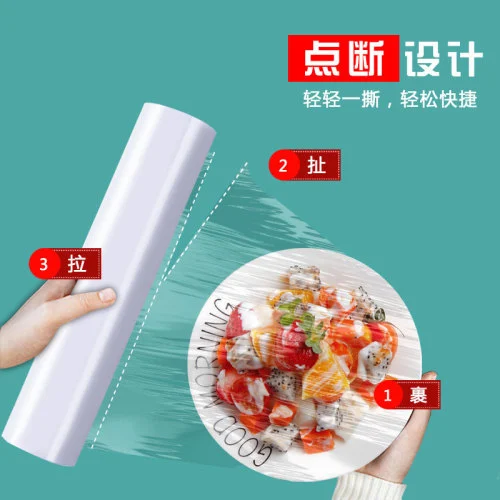
Understanding Easy Cut PVC Cling Film and Standard Wrap
What Defines Easy To Cut PVC Cling Film?
Easy To Cut PVC Cling Film is a special type of polyvinyl chloride food wrapping that was made to solve the problem of having to choose between sticking well and being easy to handle. Unlike other wraps that only depend on being sticky, this film has special mechanical shear qualities and optimized plasticizer formulas, which are usually adipates like DEHA or DOA. The material has a tensile strength of at least 15 MPa and an elongation at break range of 150 to 400%.
It also has a measured yield point that lets it be sheared cleanly when horizontal force is applied. This technical balance makes it possible for people working in business kitchens to wrap film with one hand without having to deal with frustrating film growling or bunching.
The film's high oxygen transfer rate—usually 15,000 to 18,000 cm³/m²/24h—is very important for keeping food fresh. This lets fresh food and red meat keep up aerobic breathing while stopping the growth of anaerobic germs. This makes the food last longer and look better, which is especially important for grocery store displays where the bright red color of oxymyoglobin in beef needs to stay appealing to customers.
Standard Wrap Categories and Common Limitations
There are different kinds of materials that are used in standard wrap goods, and each has its own properties. Polyethylene wraps provide basic protection, but they don't stick well to non-porous surfaces like concrete and stainless steel, so workers have to hand tuck the ends in. Traditional PVC standard wraps stick better, but they can be hard to use because the release force isn't always even, and it can be hard to make clean cuts without metal blades with serrations. Biodegradable choices made from plant-based plastics are good for environmental concerns, but they often lose some of their clarity and seal power.
One problem that standard wraps always has is that they don't cut evenly, which leaves ragged ends that don't meet appearance standards. Many regular films don't have the anti-fog additives that are needed in cold places, so condensation forms and makes it hard to see what's on the film. These restrictions directly affect operating costs by causing wasteful use of materials, inefficient use of labor, and lower product value in stores.
Application Environments Across Industries
Wrapping options meet a range of needs in food service businesses. Hotels, restaurants, and catering services that serve food to large groups need films that can handle busy preparation times. During busy times, chefs who are covering gastronorm pans can't afford to be late because of problems with spreading wrap. Supermarket fresh food centers with semi-automatic wrapping stations put a lot of emphasis on presentation that doesn't show wrinkles and clear film that shows off the quality of the food while also making the display last longer.
The cold chain is another tough setting for transport. At freezing temperatures, standard PVC can become flimsy, which can damage the structure of the package while it's being shipped. High-quality films made with cold-resistant plasticizers stay flexible and stick together even at temperatures as low as -30°C to -40°C. This makes sure that sealed packages make it from central kitchens to their final destinations without the seal breaking or the product being exposed.
Core Differences Between Easy Cut PVC Cling Film and Standard Wrap
Operational Efficiency and Handling Advantages
Easy To Cut PVC Cling Film incorporates technology designed to cut down on the 10 to 15 seconds lost each time the film gets twisted, with integrated slide-cutter systems or precisely placed perforated tear lines that eliminate the hazard of sharp metal blades—thereby meeting safety standards in commercial food-handling environments—while its advanced formulation also prevents the "neck-in" effect that causes standard wraps to narrow at the pull point, resulting in uneven coverage and unnecessary waste.
Operators like how the constant release force keeps the roll from tipping over without needing too much pull strength. This balance is especially helpful when being used for long amounts of time and hand tiredness makes it hard to do the job. The film expands and contracts quickly, creating a "memory effect" that makes it instantly spill-proof shields over containers. It snaps back tight to form hermetic seals on the first try, instead of needing to be adjusted several times.
Preservation Performance and Seal Quality
It is important to give careful thought to the connection between film qualities and how well food is preserved. When transparency and gloss levels above 120% are mixed, customers can see how good a product is without taking it out of its packaging. This keeps shoppers from getting dirty hands when touching products in stores. Additives that prevent fog break up water mist into thin layers that don't get in the way of seeing, so things stay clear even when they're stored in the fridge for a long time.
How long a seal lasts is directly related to how well it works. The specific tack agents, which are usually polyisobutylene or similar chemicals, stick well to container materials like stainless steel, glass, and pottery. Because it can stick to more than one surface, there is no need for different types of film in different cooking tasks. The proper application creates an airtight seal that greatly reduces oxygen exposure and moisture loss. This protects the texture and taste profiles of foods that quickly lose their quality when they are not properly wrapped.
Safety Standards and Regulatory Compliance
Businesses that buy things in bulk have to make sure that the products meet food-grade or medical-grade standards. Companies that you can trust make films that closely follow FDA 21 CFR 175.300 and EU Commission Regulation No 10/2011. They do this to make sure that the Specific Migration Limits for plasticizers stay well below the safe levels for both fatty and acidic food contact. Concerns about health can be eased by switching from phthalate plasticizers like DEHP to non-phthalate options like DOIP, DOTP, or adipate compounds. Film performance traits will remain the same.
Standardized simulants, named A, B, and D2, are used in quality control methods for Overall Migration and Specific Migration tests to make sure that plasticizers don't get into food in amounts higher than what is allowed by law, which is usually less than 10 mg/dm². Third-party laboratory confirmation through SGS or Intertek provides written proof of compliance, which is very important for procurement managers who are vetting vendors and keeping the supply chain honest.
Cost Analysis for Bulk Purchasing
Purchasing managers who care about prices need to look at the total cost of ownership instead of just the unit price. Because of better cutting and first-attempt seal success, 15-20% less trash is made, which saves money on materials and balances out the higher price per roll. With customizable options for thickness, roll width, and length, buyers can get the right amount of material for their needs without having to pay extra for extra volume.
When buyers and sellers have been working together for a while, they can get volume prices. This is especially true when buyers commit to regular order dates that help sellers plan their production and keep track of their stock. Being able to choose custom packaging, like single consumer rolls or large business formats, increases value by cutting down on the work needed for secondary repackaging. Some companies make products and offer ODM and OEM services that let you add your own brand and make changes to the specifications so that the products work perfectly with your business's processes and your brand's selling strategies.
Choosing the Right Wrap: Decision Factors for B2B Buyers
Industry-Specific Application Requirements
Businesses that make food have different needs than businesses that run medical labs. Food processing lines need films that work with changed atmosphere packing standards. Bakeries need barriers that don't let wetness escape and keep dough from drying out without stopping gas exchange that is important. When time is of the essence, catering operations focus on quick application and reliable seal performance. Logistics companies, on the other hand, focus on temperature resistance and seal integrity throughout multi-modal travel cycles.
Easy To Cut PVC Cling Film incorporates technology designed to cut down on the 10 to 15 seconds lost each time the film gets twisted, with integrated slide-cutter systems or precisely placed perforated tear lines that eliminate the hazard of sharp metal blades—thereby meeting safety standards in commercial food-handling environments—while its advanced formulation also prevents the "neck-in" effect that causes standard wraps to narrow at the pull point, resulting in uneven coverage and unnecessary waste. Understanding these subtleties guides the creation of specifications, with film thickness options typically ranging from 8 to 15 microns—thicker films offering better puncture resistance for bone-in proteins, while thinner films provide cost savings for soft-food applications—and dispenser compatibility must be considered when integrating new film products into existing kitchen equipment systems, avoiding the need for simultaneous full-scale upgrades that would drive up implementation costs.
Critical Selection Criteria and Quality Verification
Before asking for samples to be tested for quality, procurement workers should set clear guidelines for evaluation. The unwind force test measures how much force is needed to pull film off of the roll. This test balances ease of use with roll integrity to keep rolls from expanding while they are being stored or transported. Maintaining thickness regularity, ideally within ±1 micron of a 10-micron film, makes sure that the film's tension behavior stays the same when it is cut and applied.
Cutting mechanism cycle testing proves that the dispenser is durable through more than 1,000 operations, showing that the blades stay sharp and the track stays stable. For anti-fogging to work, the ability to keep a clear view after four hours in cold settings that mimic real store displays must be proven. When these technical reports are put together with paperwork from transfer testing, they give concrete proof to back up buying choices and risk management practices.
Supplier Credibility and Partnership Potential
To build long-term relationships with dependable providers, you need to look at more than just the product specs. Companies that have ISO, CE, or FDA certifications show that they are dedicated to quality management systems and following the rules. BSCI and WCA certifications show that a company follows social and working standards, which is becoming more and more important for corporate responsibility programs and sustainable buying projects.
Supply security is directly affected by how much can be produced and how well it can be managed. When factories have modern tools and uniform workshops, they can keep the quality of their products stable and respond quickly to changes in demand. Where a seller is based is important. Suppliers close to major ports like Qingdao offer logistics benefits by cutting down on shipping time and costs. Free samples let you check the quality thoroughly before placing large orders, which lowers the risk of buying and helps you make smart decisions.
Practical Guide: How to Use and Store Easy Cut PVC Cling Film?
Best Practices for Application and Waste Reduction
The right method will get the best performance out of the film while using the least amount of material. When using rolls with dispensers, hold the film end firmly and pull at a steady angle. This will make it easier for the slide cutter to work. The designed tear point needs movement from side to side instead of downward force. This makes clean lines without stretching or deforming the film. Practice makes it possible to do things with one hand, which makes things go more quickly during times when a lot of work needs to be done.
Overlapping the film's sides by about two centimeters makes sure that a full seal forms, which is especially important when covering containers with odd shapes. Because it sticks to itself when it comes in touch with something, you don't have to press or smooth it too much. When sealing cold things, letting the film warm up for a short time at room temperature makes it easier to bend and stick, but this step isn't needed if the cold-resistant film is made correctly.
Storage Conditions for Maximum Shelf Life
Controlled storage conditions are needed to keep the quality of the film over the usual two-year shelf life. Temperatures between 15°C and 25°C stop the release of plasticizers that make roll surfaces oily and make handling more difficult. Extreme heat speeds up the breakdown process, and freezing temps briefly make the unwind force stiffer, which changes the smoothness of dispensing until the roll reaches its ideal temperature again.
Controlling humidity stops wetness from absorbing, which can hurt the brightness and adhesion of edges. Direct sunlight speeds up photodegradation and yellowing, so storage places should be out of the way of it. Using first-in, first-out rules to rotate inventory makes sure that older stock goes through the supply chain before it loses quality. These habits are especially important for businesses that keep a lot of stock on hand to make sure they always have supplies during times of high demand.
Operational Case Study: ROI in Commercial Kitchens
A regional catering business that serves 2,000 meals a day switched from normal wrap to designed easy-cut film and saw improvements in a number of performance measures. Material loss went down by 18% because failed tear attempts were stopped and overwrapping was cut down. The preparation staff said that food covering tasks took 22% less time, which freed up workers to do more valuable tasks instead of fighting troublesome film.
Easy To Cut PVC Cling Film incorporates technology designed to cut down on the 10 to 15 seconds lost each time the film gets twisted, with integrated slide-cutter systems or precisely placed perforated tear lines that eliminate the hazard of sharp metal blades—thereby meeting safety standards in commercial food-handling environments—while its advanced formulation also prevents the "neck-in" effect that causes standard wraps to narrow at the pull point, resulting in uneven coverage and unnecessary waste.
Understanding these subtleties guides the creation of specifications, with film thickness options typically ranging from 8 to 15 microns—thicker films offering better puncture resistance for bone-in proteins, while thinner films provide cost savings for soft-food applications—and dispenser compatibility must be considered when integrating new film products into existing kitchen equipment systems, avoiding the need for simultaneous full-scale upgrades that would drive up implementation costs.
The standard of product presentation improved significantly, with customers noting that covered meals looked far more professional than the wrinkled, uneven wraps used previously, while the airtight seals achieved on the first attempt reduced premature spoilage by 12%, directly impacting ingredient costs; although the upgraded film carried a 9% higher per-unit cost, operational savings justified the premium within four months, validating the purchasing decision through a clear positive financial return.
Future Trends and Innovations in PVC Cling Film Wrapping Solutions
Emerging Materials and Environmental Considerations
The packaging business keeps changing to become more environmentally friendly. The goal of research into bio-based plasticizers made from renewable resources is to make us less reliant on petroleum-based feedstocks while still meeting the performance needs of industrial uses. End-of-life dumping problems can be solved with additive technologies that allow faster biodegradation under certain composting conditions. However, keeping products stable during the use phase is still a technical challenge that needs careful formulation balance.
Recycling efforts are mainly focused on building collection and processing systems that can handle used PVC film. Chemical recycling technologies have the potential to break down polymer chains into monomers that can be used to make new materials. This would create closed-loop systems that are better for the environment. Purchasing managers who keep an eye on these changes set up their companies to use environmentally friendly options as soon as they become profitable without affecting the needs of the business.
Technological Innovations in Dispensing Systems
Smart dispenser technologies use sensors and automatic cutting systems to get the best material output and user experience. Length measurement systems stop overwrapping by giving out exact amounts based on the size of the container, and automatic cutting gets rid of the need for different cutting techniques by different operators. Some more advanced systems keep track of supplies and usage, sending alerts when new rolls are needed and using data analytics to make the process better all the time.
Engineering that can adapt to different working conditions is shown by mobile dispensing units made for field food and event service. Cutting devices that are driven by batteries and ergonomic handles make long periods of use easier on the body. Integration with portion control systems connects food management software to the wrapping process. This allows for full automation of the cooking routine, which increases accuracy while lowering the need for labor.
Strategic Procurement Recommendations
To stay relevant, you need to keep an eye on how your business changes and how the rules change. Purchasing managers should set up regular ways to talk to their most important sources so that they can be the first to know about new materials and changes to certifications. By going to industry trade shows and business-to-business (B2B) platforms, you can learn about new goods and make connections with makers who can offer unique solutions.
Adding freedom to supply deals lets better materials be used quickly as they become available. Multi-supplier methods lower risk while keeping the power to negotiate better prices. Regular sample testing programs make sure that the quality of the product stays high and compare its performance to other options on the market. These habits help make sure that procurement plans are in line with changing market conditions, operational needs, and legal standards.
Conclusion
There are more differences between Easy To Cut PVC Cling Film and standard wrap than just the type of material they are made of. These differences include operating efficiency, preservation performance, safety compliance, and the total cost of ownership. Engineered films with clean cutting action, better adhesion, and regulatory compliance offer real benefits in transportation, store display, and business food service. When business-to-business buyers look at these products, they should focus on the technical specs that have been confirmed through sample testing, the supplier's credentials that have been shown through certifications and production capabilities, and the partnership potential that is supported by helpful customer service and a range of customization options. Investing in properly designed wrapping solutions pays off with less waste, more efficient use of labor, and better food preservation, all of which have a direct effect on revenue and business excellence.
FAQ
How does Easy To Cut PVC Cling Film perform in low-temperature environments?
High-quality formulations with cold-resistant plasticizers keep their flexibility and adhesive qualities at temperatures between -30°C and -40°C. This keeps standard PVC film from becoming brittle during frozen storage and cold chain shipping. This keeps the packages safe during the whole distribution process, from central kitchens to places where they will be used.
Can this film be used safely with all food types?
You can put food on the film because it meets FDA 21 CFR 175.300 and EU Regulation 10/2011. Depending on the thickness, it can withstand heat up to about 80 to 100°C, so it can be reheated but not cooked at high temperatures. Avoid coming into direct touch with fatty foods while using a microwave because high temperatures and fats can speed up the movement of plasticizers beyond what is healthy.
What documentation should purchasers request to verify quality?
Responsible sellers include third-party lab results from well-known testing companies like SGS or Intertek in their Declarations of Compliance. These papers show that the movement limits have been met, that non-phthalate plasticizers have been used, and that safety standards have been followed. It is also important to keep track of measures of thickness, tensile strength, and oxygen transfer rates.
Partner with a Trusted Easy To Cut PVC Cling Film Manufacturer
Shandong Honghe Plastics Co., Ltd. was founded in 2017 and has modern production facilities close to Qingdao port. This makes it easy for foreign customers looking for dependable Easy To Cut PVC Cling Film sellers to get their goods. Our production methods are ISO, CE, and FDA-approved, and they make PVC cling film that can be customized and meets strict food-grade standards. It can be used for food packaging, refrigeration, and business food service. We keep a lot of stock on hand so that we can deliver quickly, give away free samples to make sure the quality is good, and offer 24-hour after-sales service to meet your supply chain needs. Get in touch with tony@sdhhsl.com to talk about your needs and find out how our ODM/OEM services can help you get solutions that are perfect for your operations and your purchasing goals.
References
1. Smith, J. & Anderson, K. (2021). Food Packaging Technology: Principles and Practice. Woodhead Publishing Series in Food Science, Technology and Nutrition.
2. European Commission. (2011). Regulation No 10/2011 on Plastic Materials and Articles Intended to Come into Contact with Food. Official Journal of the European Union.
3. Robertson, G.L. (2020). Food Packaging and Shelf Life: A Practical Guide. CRC Press, Boca Raton.
4. U.S. Food and Drug Administration. (2022). Code of Federal Regulations Title 21, Part 175.300: Resinous and Polymeric Coatings for Food-Contact Surfaces.
5. Wagner, J.R. (2019). Multilayer Flexible Packaging: Technology and Applications for the Food, Personal Care, and Over-the-Counter Pharmaceutical Industries. William Andrew Publishing.
6. Marsh, K. & Bugusu, B. (2018). Food Packaging Roles, Materials, and Environmental Issues. Journal of Food Science, 72(3), R39-R55.