



Is Biodegradable Glad Wrap Compostable and Leak Resistant at Home?
Biodegradable glad wraphttps://www.sdhhsl.com/pe-cling-film/biodegradable-glad-wrap is compostable at home only when the finished film carries a home-compost certification, and it resists leaks only for short, low-risk jobs. In my experience, the word "biodegradable" alone proves very little. A film that breaks down in a hot industrial facility may sit untouched in a backyard bin. A well-made film can seal a bowl of leftovers in the fridge, but it cannot replace a rigid, lidded container for soups or sauces. This guide shows how I judge both claims and how buyers can test samples before placing a bulk order.
What Is Biodegradable Glad Wrap, and Is It Really Compostable?
What Biodegradable Glad Wrap Actually Is?
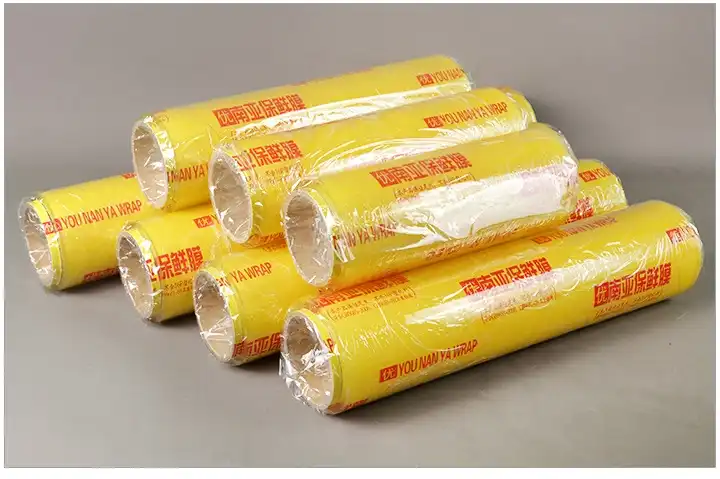
Biodegradable glad wrap is a film that can touch food and can be used to cover, protect, or wrap food in place of regular plastic wrap. "Glad" is a brand name that everyone who buys cling wrap will tell you. Biodegradable cling film or biodegradable food wrap are two other names for this type of film. A lot of people use PLA, PHA, cellulose, starch mixes, and PBAT blends. Bio-based materials don't always mean that a film can be recycled or broken down. There are types of plastic that can be composted that are made from natural fuels and types that are made from plants. How well something works depends on its thickness, composition, chemicals, and how well it was made. That's why I compare the green promise to cling, stretch, cut resistance, and temperature tolerance.
Biodegradable vs. Compostable: Why the Difference Matters?
It is said that germs can break down something in certain scenarios, but no date is given. What's compostable has more rules. Biodegradability standards must be met by the finished product, and it must also be safe for the environment. ASTM D6400 in the US and EN 13432 in Europe both say that the material must break down at least 90% in 180 days if it is kept in controlled composting circumstances. The FTC Green Guides give you a formal view. People who sell things shouldn't say that something is completely biodegradable unless it breaks down in a year after being thrown away normally. It's more important to use clear wording because most food film ends up in the trash. The helpful claim is "compostable" with a tag. The word "biodegradable" is a claim in and of itself, marked with a question mark.
Home Composting vs. Industrial Composting
Heat above 131°F (55°C) is often used to keep piles warm in factories. This helps microbes do their work more quickly. Put a film that is approved for industrial composting in a backyard bin. The bin might not be stable enough and the film might take longer to break down. It's better for test films to be OK compost HOME from TÜV Austria or AS 5810 from Australia when it's warmer outside. Still, the time it takes to break down depends on how thick, wet, hot, or cold it is, and how active the germs are. Most of the time, landfills don't compost because they keep water and oxygen out. Before I say that a wrap is "home-compostable," I need to see the full certificate, the test report, and instructions on how to get rid of it. A data sheet for just one raw material is not enough.
Is Biodegradable Glad Wrap Leak-Resistant at Home?
How Well It Seals Everyday Food
Biodegradable glad wrap can protect bowls, plates, sandwiches, and cut fruit and vegetables in the fridge for a short time if you use it the right way. To stop leaks, cling, stretch recovery, and film strength all work together. The edges of glass or ceramic are sealed off by a film that sticks to them. This keeps air out and slows the loss of moisture. Clean and dry edges help the film stick. At home, people should fold the wrap down and press it against the edge. Things that are dry or a little wet can use this. Instead of a cover, try to picture it as a lid.
Where Leaks Start
The risk goes up for foods that are soft, have sharp edges, hot oil, or have been stored for a long time. The film can be poked through with a bone tip because soups, brines, and marinades press against it. Different versions handle water, oil, and acid in different ways, so a film that works well with sandwiches might not work well with tomato sauce. There are two strengths of the film that show how much stress it can handle before it tears. Heat is another reason. The steam from hot food can make some compostable polymers break down more quickly. For instance, PLA starts to get softer when the temperature is about right. Wrap is only a temporary covering for me. I put liquids in rigid containers with lids when I can.
Freezer Use and Transport
The right freezer for a product relies on what it is. There are different kinds of films that get stiff and crack when they are stored in cold places. Do not guess; instead, look at the temperature range that the maker has tried. When you lose water, freezer burn happens. That's why the film's ability to keep water out is just as important as how well it sticks. It helps me catch leaks if the film moves when I carry food in a bag or cooler. I use an extra container, like a box with a lid or a zip bag. A quick check can be done in business kitchens. Put a sample tray in the freezer overnight while it is wrapped in plastic wrap. Check it for cracks, shrinking, and loss of cling in the morning.
Biodegradable Glad Wrap vs. Plastic Wrap: Which Performs Better?
Performance and Unit Cost
In general, regular PE and PVC cling films offer consistent stretch, cling, and barrier performance at a lower cost per unit. This clear PVC film is used a lot in food service because it sticks well. When they're done being used, alternatives that can be composted like biodegradable glad wrap may be better for the earth. However, the results vary from material to material and source, especially when it comes to food that is frozen, wet, or sticky. In every test, there is no clear winner. I compare pieces from each to the same food, container, and amount of time that they were kept. What I then do is compare the price to what I've seen happen instead of what it says on the label.
End-of-Life and Disposal
The only time end-of-life is helpful is when the product can be thrown away. If you want to compost a certified compostable film, you can either put it in a location that takes it or in a home compost system that has a home compost certificate. Don't do that, or it might end up in a dump with other bags. Also, in many U.S. cities and towns, it's hard to recycle plastic film at the curb, so people usually take it to stores and drop it off there. First, buyers should find out about trash services in their area. After that, they should pick the movie. There has to be a real way to get rid of the trash for a green claim to be true.
Reusable Options and Hygiene
Around the house, you can cover things like a bowl or a block of cheese with beeswax wrap that you can use again and again. In places of business that need to be clean, it's not as good because it's hard to clean and warm water can melt the coating. This is also a problem when it comes to raw meat and poultry. Many places that sell food like pictures that are used just once and then thrown away. When I compare formats, I use a scorecard that shows how well they work technically, how much they cost overall, what the customer wants, and how they plan to throw them away.
How to Choose and Source Biodegradable Glad Wrap?
Match the Film to the Job
To begin, fill out the form. For those who live alone, ease of use and limited fridge space are usually important. Kitchens, caterers, and restaurants need rolls that are always the same width, stick well, don't tear easily, and can be used with all types of dispensers. Some of the most important specs are the thickness, tensile strength, elongation, barrier performance, temperature range, and ability to resist acid and oil. The rules about food interactions must also meet the needs of your market. That means materials made in the US that are safe to use with food and follow FDA rules, such as the polymer rules in 21 CFR Part 177. Get a copy of the statement in writing for your biodegradable glad wrap.
Evaluate Total Cost, Not Only Unit Price
A low ticket price can hide costs. It costs more because of things like damaged film, slow packing, extra boxes, freight, storage space, disposal fees, and certification papers. An easy-to-tear thin film might cost more per closed container than a thicker film. I believe you should try it out and see how much it costs for each wrapped item. People who buy in bulk should also plan when to reorder so they don't run out in the middle of the season. This way, teams that want to save money don't pick a roll that looks cheap but doesn't work well.
Supplier Checks and Documentation
When people buy in bulk, they should look at both the product and the skills of the supplier. You should ask about the minimum order quantity (MOQ), sample policy, payment terms, export papers, wait times, and the number of batches that can be made at once. People who buy OEM items need to make sure that the artwork approval, printing, box design, and core size are all correct. Near Qingdao Port in Shandong Province, Shandong Honghe Plastics Co.,Ltd. was begun in 2017. They make stretch film, TPE/CPE/PE gloves, and PE/PVC cling film. Our business is certified by BSCI and WCA, and our products are certified by ISO, CE, and FDA. Every day, seven days a week, you can get free samples, OEM and ODM services, and help after the sale. If you want to buy biodegradable film, ask the seller for the proof that it can be burned.
Common Mistakes, Test Methods, and the Right Use Cases
Mistakes I See Most Often
People who are shopping for things often get biodegradability and bio-based substance mixed up. They also think that all films that can be recycled can be thrown away, or they choose based only on claims that the product is eco-friendly. Others don't look at how well the packing sticks, leaks, works in the freezer, or lasts. When you test a film outside of its range, it fails. Some everyday examples are food that is very hot, bones that are very sharp, heating something in the microwave, and keeping liquids for a long time. Not tasting the food before placing a big order is the worst mistake you can make, because problems only become apparent when the pallets arrive.
A Simple Test Method for Home and B2B Buyers
You can compare samples fairly before giving the go-ahead with this three-step process.
- Stickiness and coverage: Steel pans, plastic plates, and glass bowls, among other sizes and types of containers, should all be wrapped. Write down how simple it is to play the movie again and whether the edges still lift after an hour. Note down the rolls' width and thickness so that you can compare the results from different suppliers.
- Leak and transport: Put water in the containers first, then oily or salty foods if you have to. Leave room for air to leak out. They will stay fresh longer if you put them in a cooler or shipping box. Check it often for seepage, tears, and edges that are coming loose. Take a picture of each result so that the kitchen and purchasing teams can both see the same proof.
- Cold storage: Third, put samples that have been wrapped in plastic wrap in the fridge or freezer for a certain amount of time. Look at them to see if they are broken, shriveled, or stiff, or if the food has freezer burn. As a check, keep one sample that hasn't been wrapped to see what the film really stopped. After a week and a month, check again.
When the Right Choice Is Biodegradable Glad Wrap
Sandwiches, leftovers, cut fruit and veggies, food that needs to stay cold, restaurant prep, catering, and food service programs that want to be more environmentally friendly can all be wrapped in biodegradable glad wrap. It works best when the film does its job and there is a way to get rid of it. If you need to cook at high temperatures, store liquids for a long time, make precise holes, or live somewhere that doesn't allow composting, you might want to look at other options. The team in charge of buying things should decide what the environmental goal is. They should also check the license, test the performance, and find out about the local waste services. When making a decision, you should think about how long it will last, how safe the food is, how easy it is to use, how stable the supply is, and how much it costs all together.
Conclusion
In your home, biodegradable glad wrap can be recycled and won't leak as long as you follow the steps in the sign. It is not the same thing to be biodegradable or recyclable. And home composting needs its own set of rules. Papers that can be composted must meet standards like ASTM D6400 or EN 13432. Short-term: The film can cover food, but not hot or liquid-heavy things for a long time. This is because it depends on the food it's covering, as well as its thickness, cling, and puncture strength. If compostable options can be thrown away in the right way, they might be better than PE and PVC wrap when their time is up. Normal films, on the other hand, work just as well and cost less. Check out samples, read certificates, and see how much something costs all at once before you buy it.
FAQ
Q1: Are biodegradable and compostable the same?
A: Things that break down naturally and things that can be composted are not the same thing. It doesn't mean that it will break down over time. What does "compostable" mean? It means that it meets safety, biodegradation, and breakdown standards like EN 13432 or ASTM D6400.
Q2: Can I put biodegradable glad wrap in my backyard compost bin?
A: Yes, but only if it's approved for cooking in the garden for your biodegradable glad wrap. Films that are okay to be composted in business piles might take longer to break down in cooler home piles.
Q3: Can it replace a leak-proof container?
A: No, it's not good for long-term keeping because liquids, sharp edges, or hot oil can make it leak or break. Use a jar with a lid for soups and sauces.
Q4: Is it freezer safe?
A: That is up to what it is. Check to see what temperature range the service provider has tried.
Q5: What should I request before a bulk order?
A: Find out about the minimum order quantity (MOQ), how the goods will be packed, and the lead times. Use your own foods and the way you store them with the samples.
Request Samples and a Quote for Your Biodegradable Glad Wrap Comparison
Shandong Honghe Plastics Co.,Ltd. can give you samples of our PE/PVC cling film if you want to compare our biodegradable glad wrap supplier to normal PE cling film. Tell us how big and thick your rolls are, what kind of food they will be used for, how many rolls you need, and if you have any OEM needs. We have a lot of stock, fast shipping from near Qingdao Port, fair prices, and customer service that's open 24 hours a day, seven days a week. Email tony@sdhhsl.com to learn more.
References
1. Federal Trade Commission, Guides for the Use of Environmental Marketing Claims (Green Guides), 2012.
2. ASTM International, ASTM D6400 Standard Specification for Labeling of Plastics Designed to be Aerobically Composted in Municipal or Industrial Facilities, 2021.
3. European Committee for Standardization, EN 13432 Packaging: Requirements for Packaging Recoverable Through Composted and Biodegradation, 2000.
4. U.S. Food and Drug Administration, Code of Federal Regulations Title 21, Part 177: Indirect Food Additives, Polymers, 2023.
5. Standards Australia, AS 5810 Biodegradable Plastics: Biodegradable Plastics Suitable for Home Composting, 2010.
6. Rujnić-Sokele and Pilipović, Challenges and Opportunities of Biodegradable Plastics: A Mini Review, Waste Management & Research, 2017.