



Is PE Plastic Cling Film Safe for Food Contact and Refrigeration?
Yes. Most of the time, food-grade PE plastic cling film https://www.sdhhsl.com/pe-cling-film/pe-plastic-cling-filmis safe to store in the fridge and touch food, as long as it was made for that purpose, is tested to make sure it meets the rules of the market it is going to, and the user keeps it frozen within the temperature ranges given. "Polyethylene" or "PE" are not enough when it comes to safety. It's also important to look at the additives, migration results, and manufacturing controls. If someone in the US wants to buy film, they should make sure it follows FDA rules, such as 21 CFR 177.1520 for olefin polymers, and ask for the right paperwork for the film they want to buy.
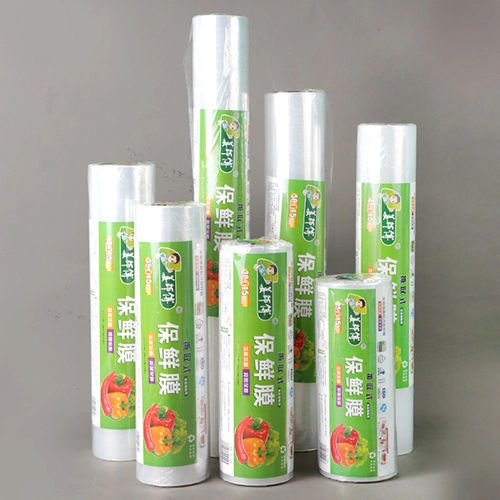
Why PE Cling Film Safety Depends on More Than the Material Name?
What PE Plastic Cling Film Is and How It Performs
PE plastic cling film is a thin sheet of polyethylene that can be used to cover, protect, and bundle things like food. LDPE, LLDPE, or a mix of the two can be used to make it. What kind of resin you use changes how the film sticks, stretches, and tears. Clear film that can be bent doesn't smell bad. Also, it keeps the item from getting wet. It's made of LDPE, which can stretch up to 300% and let around 5 thousand cycles per hour of oxygen pass through. It also lets about 20 grams of water vapor pass through every 24 hours. Less waste is made when the thickness is the same, the stretch is even, the cling is right, and the food stays in place without tearing at the dispenser.
Is Food-Grade PE Cling Film Safe for Direct Food Contact?
"Food-grade" doesn't just mean that the film is made of polyethylene; it also means that it is safe to touch food. In the US, 21 CFR 177.1520 talks about olefin polymers. It's still important to know the whole answer. Stabilizers, colorants, slip agents, and processing aids all need to be looked at again. If something can move from the film to food or things that look like food, it is said to have "migrated." Rules (EU) No. 10/2011 in the European Union say that 10 mg of material can move per dm² of contact surface. To make sure you get the right product, you should ask for a Declaration of Compliance, migration test reports, information on additives, and batch traceability. This is because rules vary from market to market.
Can PE Cling Film Go in the Refrigerator and Freezer?
Food-grade PE cling film is often used in cold storage because it keeps air out, slows the loss of moisture, stops smells from spreading, and keeps food surfaces clean. They say that freezers should be kept at -18°F (0°C) and fridges should be kept at 4°F (-18°C) or less. It also says that food that is packed in airtight containers is less likely to get freezer burn, which happens when air gets into food and dries it out. PE films don't all work well at the same temperature range because the way they are made, how thick they are, and the formulation all affect how well they work. Find out from the technical data sheet how cold it can get, if it can go in the freezer, and how far it can freeze. Every time you use a fridge, freezer, microwave, or oven, it should be thought of as a separate application that needs to be confirmed in writing.
Using and Comparing PE Cling Film in Practice
How to Use PE Cling Film Safely for Food Storage?
Set the PE plastic cling film down on a dry, clean surface with clean hands or tools. It should be kept away from flames, hot food, heating elements, and containers that haven't been approved by the supplier. It's important not to tear the film by stretching it too far. It's just enough to seal the edges. Just make sure that the food meets the needs. You want to make sure that meat and seafood can't be pierced, that fruits and vegetables stay moist, and that baked goods stick to it without sticking too much. Don't use any rolls of PE plastic cling film that smell bad, are brittle, leave behind residue, crack, or don't stick well. Also, tell your supplier what batch number it is.
PE vs PVC vs PP Film for Food Packaging
Each movie does a different job well. PE is often used in cool rooms and food service because it is stretchy and can bend. People who want to buy PVC cling film should think about the plasticizers and additives it has, as well as the rules in their area and what the customer wants. It's harder to bend PP film around odd shapes because it's stiffer and can handle more heat. You shouldn't choose based on the material's name or the price per unit. Instead, you should look at test results for applications, documents for food contact, equipment compatibility, and the overall cost of doing business. It's possible for us to talk about these trade-offs for your line since we make both PE and PVC cling film.
Recyclability and Sustainability Considerations
On paper, polyethylene film could be recycled, and LDPE has a code 4 for its resin identification. How you recycle depends on how the film is collected in your area, the technology used to sort it, how clean it is, and how much demand there is in the market. Thick film is tougher to pick up than hard plastic, and food residue makes it even tougher. Two things help me figure out if something is sustainable: how easily it can be thrown away and how well it makes use of materials. It takes less plastic to make a high-stretch film that covers the same area but is thinner. With accurate roll sizes and stable quality, there is less waste and rewrapping. If biodegradable or compostable options interest you, find out about their certifications, how well they work, and the right way to throw them away.
How to Choose the Right PE Cling Film for Your Operation?
Household and Commercial Kitchen Needs
Most people who use PE plastic cling film rolls at home want them to be the right size and simple to handle. Restaurants and central kitchens need PE plastic cling film rolls that are always the same length, clean cutting, and instant film so that staff don't waste time or film. Our rolls have 38 mm, 50 mm, or 76 mm cores and widths from 200 mm to 2000 mm. You can match the dispenser and shelf to these rolls. One of our films is 8 microns thick and another is 50 microns thick. For bowls, use the thinner film and for tough jobs, use the thicker film. Get some samples to try on your own containers before you place a big order.
Supermarket, Meat, Seafood, and Produce Packaging
Stores want displays that are clear and work with their wrapping machines. The packaging for meat and seafood needs to be strong enough to handle being poked by bones and the edges of trays. It should also be safe to use around food and be able to handle low temperatures well. To keep food fresh, it needs a film that lets just the right amount of air and water through. For this reason, some vegetables need room to let water out. It's easy to see everything on our clear film, which is great for presentations. Its transmission numbers give your quality team numbers to compare. You should test each film with real products and how they are stored because the results depend on the item and the cold chain.
Industrial and Wholesale Requirements
Industrial and wholesale buyers often need large rolls, custom widths and core sizes, and products that can be used with automated lines. Our roll lengths of 300 to 1500 meters cut down on the number of times you have to change rolls. You can also choose your own sizes, colors, and brand for the packaging with our ODM and OEM services. Check out the roll size, thickness, stretch ratio, film yield, and packaging waste all at the same time. If the roll tears or doesn't stretch as much, it might cost more per wrapped package than the roll that costs the least per unit. People in logistics, labs, and medical supplies can place multiple orders with our stretch film and disposable gloves lines but only one company.
Avoiding Procurement Mistakes and Qualifying a Supplier
Common Safety and Procurement Mistakes
Buyers make the same mistakes over and over. The first is to believe that all PE film is safe for food, and the second is to check the compliance status of the specific product. The second way is to use film that has been frozen in the oven or microwave. First, make sure you know what temperature range is fine. Third, don't just compare length or price when making your choice; compare the total amount of packaging that will be made. People also make mistakes like not paying attention to the type of food, not testing the equipment, and not paying attention to export rules, lead times, and being able to track each batch. Check out how the supplier handles quality control and logistics before you buy. You can ask for samples and test them on your line.
How to Qualify a PE Cling Film Manufacturer
Start with the amount of product that can be made, the extrusion and slitting tools that can be used, the ability to control the thickness, the clean manufacturing standards, the inspection standards, and the ways that mistakes can be fixed. Shandong Honghe Plastics Co.,Ltd. was founded in 2017 and has high-speed extrusion lines, precise slitting machines, automated packaging systems, and tools for making sure the products are of good quality. Our products have been approved by ISO, CE, and FDA. You can also check us out on BSCI and WCA. There is an easy way to ship orders to other countries from our plant in Liu Guanzhuang Town, Shandong Province. It is close to Qingdao Port. Anyone can be asked to prove that the paperwork matches the real film grade, additives, thickness, production site, and market the film is going to. This includes us.
Documents and Services to Request
Before you take a sample, make sure you have the film's Declaration of Compliance, migration reports, technical data sheets, batch records, and market certifications. Then look at the business terms, which include the minimum order quantity, lead time, export paperwork, pre-shipment inspection, and how to handle complaints. There are a lot of items in stock, fast shipping, help with logistics, samples, ODM and OEM services, and service after the sale 24 hours a day, 7 days a week. The FDA's instructions on submitting substances that come into contact with food explain the chemical information that backs up safety reviews. A common test called ASTM D882 checks how easy it is to pull apart thin sheets of plastic. Being able to compare things is fine when you ask suppliers what they do.
A Practical Buying Checklist for B2B Procurement
Specifications to Define
Write down the type of PE plastic cling film, its thickness and range, its width, its roll length, its core dimensions, its color or transparency, its stickiness or flexibility, its resistance to punctures, and whether it can be used in the fridge or the freezer. LDPE material, 8–50 microns, 200–2000 mm width, 300–1500 m length, 38 mm, 50 mm, or 76 mm cores, clear film with custom colors available, and a stretch ratio of up to 300%. We use this range of PE plastic cling film all the time. There is no need to guess with a full specification sheet. It makes sure that all suppliers quote the same product and fills in any gaps before sampling or mass production.
Compliance and Commercial Checks
The Technical Data Sheets, Batch Records, Market Certifications, and Migration Reports should all be looked over as part of the Compliance Review. The commercial review should include the price, lead time, production capacity, payment terms, shipping support, and how to handle complaints. The MOQ is the smallest amount of items that need to be ordered. On the same sheet, give each supplier a score. This will help you figure out why the prices are different. When buyers' needs are stable, a steady supply is just as important as a low unit price. That's why we keep our packaging costs low and our prices low.
Sample Testing Before Bulk Orders
You can choose what to buy with the help of a structured sample test. Place the film over your tools and wrap your real goods. Keep them at the same temperature where you normally keep them. How records smell, tear, stick together, and look clear. Make sure that the production batches are the same as the approved sample, then look at the data sheet and compare the results to its. Your quality team can do these checks before committing to a large order if you ask for samples. Tests that you can do over and over again also help you plan your next orders and supplier reviews.
Conclusion
If you keep it in the right way, food-grade PE plastic cling film that is compliant can be used to touch food directly and store things in the fridge. The name of the material is not the only thing that needs to be thought about. Some of these are the recipe, the ingredients, the migration results, the controls used during production, the types of food that can be used, and the temperature limits. The tested range tells you how long the film can be kept in the fridge, but you need to get separate permission to use it in the microwave or oven. PE can bend and stretch more than PVC and PP. If it can be recycled or not depends on how clean the film is and how recycling works in your area. You should consider the film's thickness, how well it fits your equipment, how much material it yields, and how much it stretches and sticks. After that, samples and paperwork from the supplier can be used to confirm the results.
FAQ
Is PE plastic cling film safe for direct food contact?
In the US, 21 CFR 177.1520 talks about olefin polymers. The film must be safe for food and follow the rules of your market. Even for the same product, you should still ask for a migration report and a Declaration of Compliance.
Can I refrigerate or freeze food in PE cling film?
Most of the time, yes. They should be kept at or below 40°F (4°C) according to the USDA. Most people keep them in the fridge. Make sure the freezer fits your needs by reading the technical data sheet.
Is it microwave or oven safe?
No, it's not by default. You need to get written permission from the supplier before you can use it in an oven or microwave.
How does PE compare with PVC cling film?
Things that need to stay cold are often wrapped in flexible PE. PVC can stick well, but you need to pay close attention to plasticizers and local laws.
Is PE cling film recyclable?
Most of the time, yes. And LDPE has a resin code of 4. But recycling only works if the film is picked up, sorted, and cleaned in the same place where it was made.
What should I check in a wholesale supplier?
Make sure you look at the samples, lead times, compliance documents, thickness control, ability to track, and customer service after the sale.
Request a PE Plastic Cling Film Sample and Wholesale Quotation from Shandong Honghe Plastics Co.,Ltd.
Lanzhou Honghe Plastics Co.,Ltd. is a company that makes PE plastic cling film. They have ISO, CE, and FDA certifications, a large inventory, competitive prices, and customer service that is available 24 hours a day, 7 days a week. Send an email to tony@sdhhsl.com with the width, thickness, roll length, type of food, storage temperature, and volume you need for your film. After that, we'll give you ideas and set up samples.
References
1. Code of Federal Regulations, Title 21, Section 177.1520: Olefin Polymers, U.S. Food and Drug Administration, 2024
2. Commission Regulation (EU) No 10/2011 on Plastic Materials and Articles Intended to Come into Contact with Food, Official Journal of the European Union, 2011
3. Regulation (EC) No 1935/2004 on Materials and Articles Intended to Come into Contact with Food, Official Journal of the European Union, 2004
4. Freezing and Food Safety, USDA Food Safety and Inspection Service, 2013
5. ASTM D882, Standard Test Method for Tensile Properties of Thin Plastic Sheeting, ASTM International, 2018
6. Guidance for Industry: Preparation of Premarket Submissions for Food Contact Substances: Chemistry Recommendations, U.S. Food and Drug Administration, 2007