



How does Point Break Cling Film compare with standard wrap rolls?
When a business wraps a lot of items each shift, point break cling film https://www.sdhhsl.com/search?key=point%20break%20cling%20filmworks just as well as standard wrap rolls. With its tear points, staff can separate sheets at regular times. This means that sheets aren't pulled too far, torn unevenly, or touched by cutter blades as much. Standard rolls are still a good choice for kitchens that don't use a lot of paper or that have a mix of different-sized items. Plus, they usually cost less per roll. Price per roll is not a fair way to compare costs; cost per wrapped unit is. How are the two formats different? How do you test them? How do you pick a supplier before you switch?
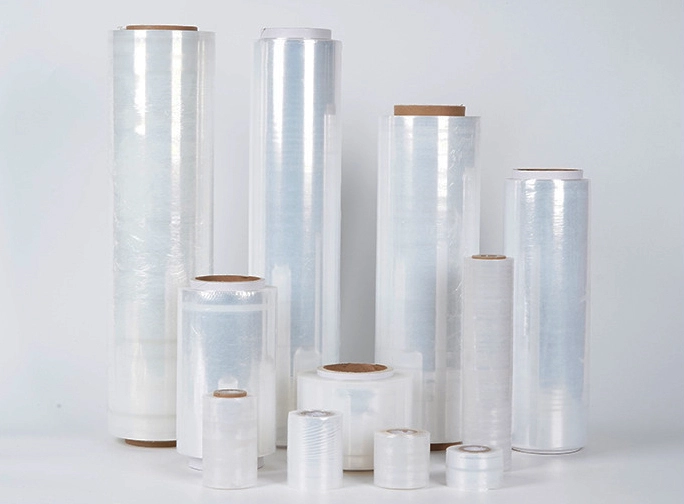
Point Break Cling Film Basics and Key Differences from Standard Wrap Rolls
What Point Break Cling Film Is?
A roll of food wrap called point break cling film has separation points built into it at predetermined intervals. Manufacturers make these points by perforating the film or using other converting techniques. This way, the film tears at planned spots instead of where a hand or blade lands. A worker unwinds the film, pulls it to where it will break, and lightly tugs on each sheet to separate them. The sheets on this roll stay together, so it's not a stack of pre-cut sheets. The results depend on the type of material, its thickness, roll width, point spacing, and the quality of the production. Because of this, I tell people who want to buy to read the technical data sheet and test some sample rolls first, then compare prices.
Dispensing Control Compared with Standard Rolls
Standard rolls of wrap need to be cut with a knife, a dispenser blade, or by hand. Each method works, but different workers get different results. Some people pull out too much film, others tear it at an angle, and some take too long getting their gloved hand to the cutter. The point break film gives workers a steady sheet length, which lets them wrap trays, pans, and bowls more quickly. With this, you don't have to touch the cutting edge of each metal sheet, which is better for keeping your hands clean and safe. If you want to know what the real gains are, you should measure them instead of guessing them. They depend on things like film thickness, room temperature, dispenser design, and operator habits.
Comparison with Perforated Film, Pre-Cut Sheets, and Plastic Wrap
People often mix these up. Perforated point break cling film can have a line of small cuts that go all the way through it, while point break film has clear separation areas that are spaced out at regular intervals. As each maker is different, ask for drawings. Pre-cut sheets are easy to use and come in fixed sizes, but they take up more space and don't work well with items of different sizes. "Plastic wrap" refers to a large group of materials, while "point break" refers to a roll format. A fair comparison of point break cling film looks at things like tear resistance, cling, stretch, dispenser fit, storage space, food-contact compliance, and the ability to be customized. If you put these things in a simple table for your team to see, review quotes will be based on facts instead of labels.
How to Evaluate Point Break Cling Film Performance?
Thickness, Cling, and Tear Force
Different film thicknesses have different tear strength, resistance to punctures, stretch, and material use. A lot of store-bought food wraps are between 10 and 14 microns thick, but you should check the data sheet for each one to be sure. The film must be able to seal a rim without sliding, but it must also be able to come off the roll without sticking to itself. The amount of tear force determines whether the film stays together while it's being unrolled or breaks apart with a light pull. ASTM D882 tests how strong thin plastic sheets are when pulled apart, and ASTM D1922 tests how strong they are when torn. Find out from suppliers what methods they use and ask for the results.
Break-Point Spacing and Batch Consistency
One clean sheet doesn't mean much. I think you should test a few rolls from more than one production run and keep track of the ones that don't work. Check the distance between the points, the direction of the tear, the quality of the edge after it has been separated, and the chance that it will break while being unwound. Most sheets on the market are about 30 cm long, but the space between them can be different depending on the use. For example, longer sheets are used for larger platters. Check the core size, roll width, and compatibility with the dispensers you already have. Make a list of how many sheets stretch instead of tear. Most of the time, stretching means that the perforations are too small, the tool is dull, or the film is too stretchy for the design.
Food-Contact Compliance and Documents
The FDA sets rules for plastic films that touch food in the United States. Olefin polymers are covered by 21 CFR 177.1520 for polyethylene. Find out from each supplier if they have a food-contact declaration, important details, and migration test results that are appropriate for your food type and the US market. The FDA Food Code also talks about keeping stored food from getting dirty. One common way to do this is to cover the food. Quality records are also important, so make sure you ask for batch numbers, management certificates like ISO 9001, and the ability to track your order. Along with BSCI and WCA, Shandong Honghe Plastics Co.,Ltd. has ISO, CE, and FDA certifications. During sample review, they can talk about documents.
Choosing the Right Point Break Cling Film for Different Applications
Restaurants, Catering, and Commercial Kitchens
When kitchens cover pans, bowls, and prep containers all day, they need something that is easy to handle, sticks well, and can be dispensed quickly. This speed works well with point break cling film because a worker can tear a sheet with one hand while keeping the other on the container. Sheets of the same size are helpful for catering teams that need to seal a lot of pans before an event. This makes it easier to plan how much point break cling film to use for each event. Cold storage is also important. If you want to test the film, put it in a walk-in cooler. When the film is cold, it can change how it sticks and tears. Choose a width that fits the pan or tray you use most often.
Supermarkets, Meat Counters, and Bakeries
In the back of stores, food on trays and in display cases needs clear film that makes it easy to see. When it comes to meat packaging, the film may need to be more resistant to cling and punctures, especially around the edges of bones. It also needs to be able to handle being frozen. In bakeries and delis, visibility is weighed against keeping out moisture and making the door easy to open. Lots of people who buy films compare PE and PVC. People who want a wrap that doesn't have PVC often choose PE, which is known for being clear and sticking well. Based on data from the EPA, recycling claims for plastic bags and wraps need to be taken with a grain of salt. Before you decide, try it out on your real trays.
Distributors and OEM Buyers
Distributors and OEM customers don't just look at one use case. They need private-label cartons, pallet plans, export papers, and a steady volume. They also need different widths and thicknesses. Check with the supplier to see if they can change the break-point spacing, roll length, core size, and outer packaging. Find out who is in charge of the artwork, who signs off on the proofs, and what the lowest amount that can be ordered. That makes both PE and PVC cling film can meet more customer needs through a single sales channel. Shandong Honghe Plastics Co.,Ltd. does both OEM and ODM work and offers samples so that customers can make sure they understand the requirements before placing a larger order.
Cost and Procurement Comparison: Is Point Break Cling Film Worth It?
Total Cost per Unit
Roll price doesn't tell the whole story. In some cases, a roll with break points will cost more per meter than a plain roll. However, if it cuts down on waste and work, the cost of packaging each wrapped unit can go down. To find the total cost of packaging per unit, add up the costs of film, labor, waste, and rework. Get information from your own line, such as the number of seconds used per item, the amount of film used per item, failed wraps, and rework. Check the prices per meter, per square meter, and per unit that comes in a package. Add space for keeping the dispensers clean and stocking them. With this method, a vague claim of savings is turned into a number that your finance team can check.
What Changes the Quoted Price?
Price changes because of many things. Roll length, break-point design, carton style, order volume, and freight terms are some of the things that affect the price. People who buy in bulk usually get better deals on each item, and it usually costs less per roll to ship a full container load than a few rolls. For private-label printing, you need to add artwork and approval steps. So, make sure that every supplier quotes the same specs. If they don't, you'll be comparing products that aren't the same. Ask each one for the same width, thickness, roll length, carton count, minimum order quantity (MOQ), lead time, and shipping terms, such as FOB or CIF.
When Standard Wrap Still Wins?
Standard rolls are still a good choice sometimes. A small cafe that only wraps a few items every day might not save enough money to make the switch to point break cling film. Fixed break-point spacing can cut sheets too short or too long, which is also true when product sizes are very different. Film may not be wasted much in places with strong cutter boxes and trained staff. In these situations, the cheapest price might be the most important thing. People who use point break cling film a lot, like those who work in central kitchens, supermarket prep areas, or catering companies, are more likely to notice a difference. I think there should be a trial, and the numbers will answer the question.
Supplier Selection and Switching Guide
What to Ask a Supplier?
Technical consistency, regulatory support, customization, and delivery should all be checked by the supplier. Ask for proof of a stable thickness, a repeatable break-point, batch control, documents that are safe for food, and steps for fixing the problem. Inquire about how the factory deals with telescoping rolls, uneven winding, and tearing that doesn't match up. If you buy more from a direct factory, you can usually get better customization and better prices, but if you buy less, you can get regional stock from a distributor. Since its start in 2017, Shandong Honghe Plastics Co.,Ltd. has been making PE/PVC cling film, disposable TPE, CPE, and PE gloves, and stretch film. Our site is in Liu Guanzhuang Town, Shandong. It is close to Qingdao Port, which helps with shipping, and we offer service after the sale 24 hours a day, 7 days a week.
Running a Side-by-Side Trial
It is less likely that you will pick a film that works on paper but not on the line if you do a controlled trial. First, make a list of your current wrapping speed, film use, waste, problems with the dispenser, and operator feedback. Then, make sure the material, thickness, width, spacing, and level of cling are all right for the job. You should then test both formats with the same products, workers, stations, and temperatures for storage. Check how long it takes to wrap each item, how much it costs per unit, how much is wasted, and how the package looks. Once everything is okay, teach your staff how to relax and take a break, set up a standard workflow, and look over the results before you place a bulk order.
When to Choose Point Break Cling Film
If you need to wrap a lot of things, want to separate them faster and more consistently, or find that standard rolls cause waste and extra work, point break cling film is the way to go. It also helps when the sizes of your items are different and pre-cut sheets don't work with your workflow. It works with private labels, OEM programs, and custom sizes. Keep standard wrap if there isn't much demand, if item sizes change a lot, if your cutters work well, or if the first price that is the lowest wins. Before making a decision, look at the trial data, the supplier's long-term capacity, the cost per unit, and the food-contact compliance.
Conclusion
Despite the fact that point break cling film and standard wrap rolls both keep food safe, they are applied differently. When point break film separates at a certain distance, it makes it easier to work with uniform sheets, wrap them again more quickly, and handle the cutter blades less. Normal rolls work well for small amounts of items and a range of sizes. To make the best choice based on results, buyers should look at the cost per wrapped unit, which includes film, labor, waste, and rework, instead of just the price of the roll. The thickness, cling, tear force, spacing, and batch consistency should all be tested, and if possible, they should be tested against ASTM standards. In the US, migration data and food-contact declarations must match the food that is being sent. The answer is most clear when the same people and products are used in both tests.
FAQ
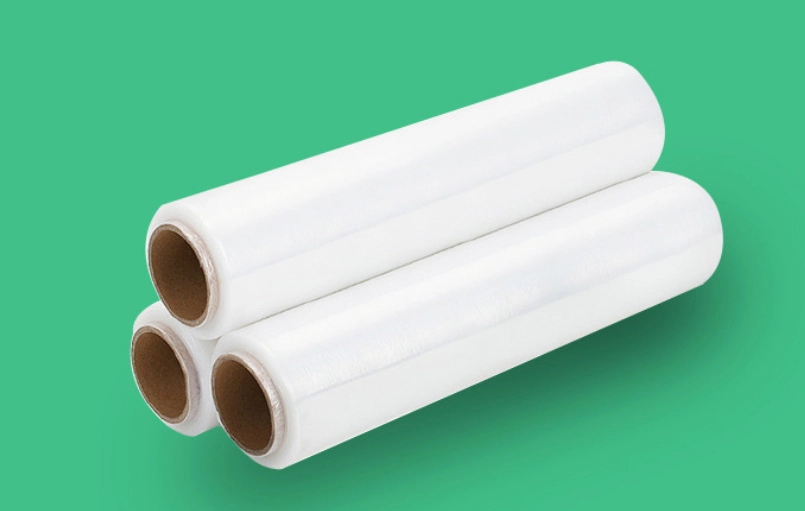
Is point break cling film the same as perforated film?
Not all the time. Point break film has clear separation areas spaced out at regular intervals, while perforated film may have a line of small cuts that go all the way through it. Before you compare prices, ask to see a sample and a drawing because each maker has a different style.
Is point break cling film suitable for direct food contact?
It is possible if the material follows the rules for food contact in the US. Get a food-contact declaration and migration test data that are right for the type of food you sell and the market you're in. Before putting it in the microwave or freezer, check the data sheet to see what temperatures are safe.
Can point break cling film reduce packaging costs?
When there is a lot of work to be done, over-pulling, uneven tearing, and slow cutting can add up to waste and extra work. You might not save money right away, so check the cost per wrapped unit first before making the switch.
Request a Point Break Cling Film Sample from Shandong Honghe Plastics Co.,Ltd.
People who want to compare point break cling film to their current rolls are welcome to do so at Shandong Honghe Plastics Co.,Ltd. We are a point break cling film supplier close to Qingdao Port. We offer samples, ODM and OEM services, a large inventory, fast delivery, competitive prices, and after-sales support 24 hours a day, 7 days a week. Please email tony@sdhhsl.com with the type of food, its width, thickness, roll length, and monthly volume.
References
1. U.S. Food and Drug Administration, Code of Federal Regulations Title 21, Section 177.1520: Olefin Polymers, 2024
2. U.S. Food and Drug Administration, Food Code, 2022
3. ASTM International, ASTM D882 Standard Test Method for Tensile Properties of Thin Plastic Sheeting, 2018
4. ASTM International, ASTM D1922 Standard Test Method for Propagation Tear Resistance of Plastic Film and Thin Sheeting by Pendulum Method, 2015
5. International Organization for Standardization, ISO 9001 Quality Management Systems: Requirements, 2015
6. U.S. Environmental Protection Agency, Plastics: Material-Specific Data, 2023