


_1750233969309.png)
Is PVC Cling Film Safe for Food Packaging?
Safety is the most important thing for procurement managers and supply chain workers when they look at materials for food packing. When made correctly, PVC Cling Film Roll made from high-quality polyvinyl chloride resin and plasticizers that are compliant with FDA CFR 21 175.300 and EU Regulation No 10/2011 meets the standards. These rules make sure that chemicals are safe by setting Overall Migration Limits and Specific Migration Limits for plasticizers into food simulants. These certifications are given to high-quality manufacturers like Shandong Honghe Plastics Co., Ltd. after they pass strict testing procedures. This means that their products can be used for industrial food packaging as long as they follow the allowed rules and keep the temperature limits in mind.
What is PVC Cling Film and Its Role in Food Packaging?
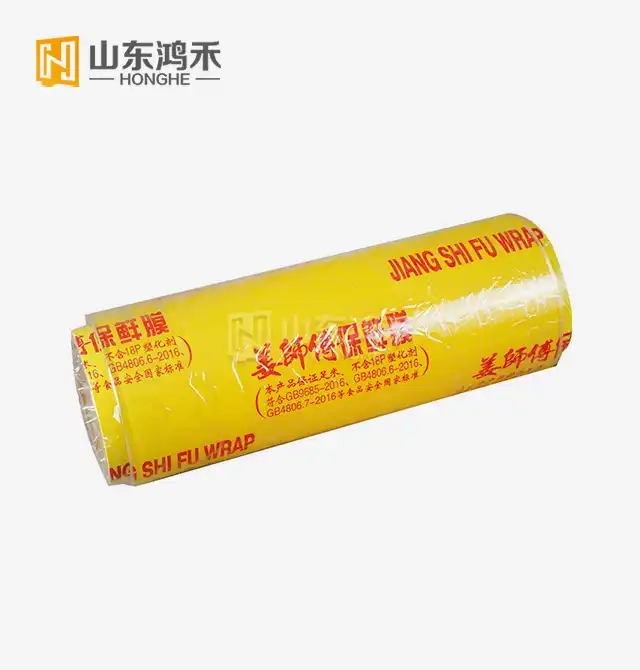
Understanding what PVC Cling Film Roll is made of and what it does helps buying workers make smart choices. This kind of packing is now an important part of keeping food fresh in many areas.
Chemical Composition and Manufacturing Process
One of the building blocks of PVC Cling Film Roll is polyvinyl chloride plastic. Plasticizers, which usually make up 20 to 35 percent of the end mixture, are added to this naturally stiff material to make it flexible and sticky. DEHA (Di-2-ethylhexyl adipate) and DOA (Dioctyl adipate) are two common plasticizers that are chosen because they are safe for food contact. The stretch, elastic recovery, and self-adhesive features of good PVC Cling Film Roll are provided by these chemicals. Precise mixing, extrusion, and quality control are used in the production process to make sure that the thickness and performance meet industry standards.
Typical Applications Across Food Industries
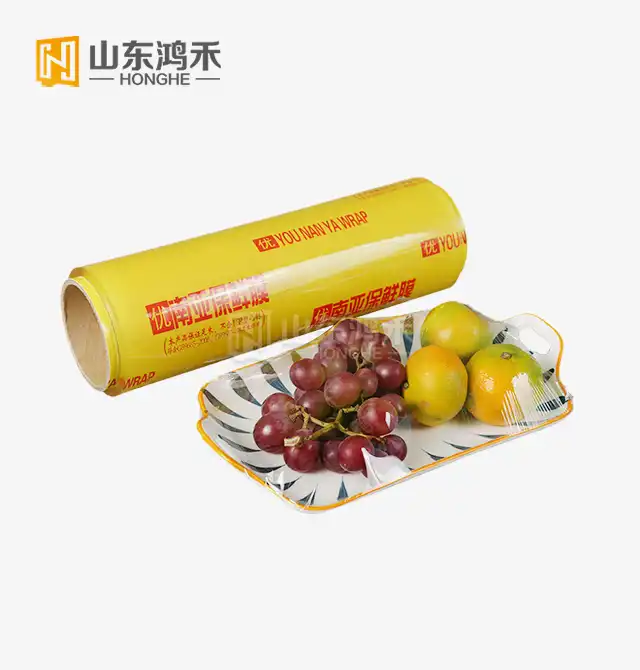
Different food industries use PVC Cling Film Roll for different reasons. It is widely used in supermarkets and central kitchens to wrap fresh meat and fowl because its high Oxygen Transmission Rate (usually 15,000 to 20,000 cc/m²/24h) stops the browning that happens when metmyoglobin forms. This ability to let air pass through keeps meat looking fresh in cold cases. Businesses that serve and host events like the better stickiness on stainless steel Gastronorm pans and clay containers. Automated fruit and vegetable packing lines use PVC Cling Film Roll on high-speed wrapping machines. This film's anti-fogging qualities stop condensation droplets from making it hard to see the product during cold chain changes.
Thickness Variations and Performance Characteristics
The normal diameter range of 8 to 15 microns makes it useful for many situations. Thinner PVC Cling Film Rolls (8–10 microns) are good for light-duty tasks like covering bowls or wrapping sandwiches. Thickner films (12–15 microns) offer better cut resistance needed for meat with bones or containers with sharp edges. The tensile strength is directly related to this thickness. Good films have an elongation at break of more than 200%, which means they can stretch over irregular food forms without breaking. Optical qualities are very important in store settings—low haze values below 2% and high gloss make products look great, which affects people's decisions to buy.
Heat Resistance and Storage Requirements
Temperature limit tells you how far PVC Cling Film Roll can be used. For most formulations, their integrity stays the same from -30°C in freezers to about 60°C in normal show settings. Direct touch with heat sources or use in microwave stoves, on the other hand, needs to be carefully considered because plasticizer migration speeds up a lot at high temperatures. Maintaining a reasonable temperature (15–25°C), low humidity, and shade from direct sunlight are important for storing rolls that haven't been used. This keeps the film's quality and stops it from aging too quickly or getting blocked, which can make rolling difficult.
Understanding Safety Standards and Regulatory Compliance
Regulatory guidelines set the limits of how safely PVC Cling Film Roll can be used. To reduce risk and protect the integrity of the goods, procurement teams must check compliance.
FDA and EU Regulatory Approvals
Title 21 of the Code of Federal Regulations tells the FDA how to control substances that come into touch with food. Section 175.300 of that code talks about PVC Cling Film Rolls in particular. Overall Migration Limits are set by this rule, which usually doesn't go over 60 mg per kilogram of food simulant. Specific Migration Limits are set for specific additives like plasticizers. Regulation No. 10/2011 of the European Union covers plastic materials and items that are meant to come into contact with food. It sets similar standards and requires similar migration testing. To show compliance across all predicted use cases, manufacturers must do a lot of testing using food simulants that look like different types of foods, such as wet, acidic, alcoholic, and fatty foods.
Barrier Properties and Migration Testing
The barrier function of PVC Cling Film Roll measures the ability to let air through while also keeping out outside contaminants. The film successfully stops moisture loss and environmental sources from spreading, and its relatively high oxygen transfer help fresh meat by keeping its color. Migration testing looks at how plasticizers move, especially into fatty and oily foods, where lipophilic plasticizers stick to them better. To see what would happen in the worst possible storage conditions, quality assurance labs do extraction tests at high temperatures (usually 40°C for 10 days or the similar rapid conditions). To keep consumers safe, the results must show that movement goes well below the limits that have been set.
Comparative Safety Analysis with Alternative Films
There are pros and cons to each type of film when you compare PVC Cling Film Roll to polyethylene (PE) and low-density polyethylene (LDPE). Most of the time, PE-based films are less likely to have plasticizers migrate because they are flexible because of their polymer structure instead of adding plasticizers. But PE films don't have the better cling and visual clarity that PVC Cling Film Roll does, which is why PVC Cling Film Roll is better for displaying meat in stores. LDPE is resistant to chemicals and doesn't move around as much, but it doesn't have the strong stickiness that automatic wrapping systems need. As a response to safety concerns, players in the industry like 3M and Reynolds have made PVC formulations with non-phthalate plasticizers and clearer labels about how to use them. This shows that properly formulated PVC Cling Film Roll can meet safety standards as long as application rules are followed.
How to Use PVC Cling Film Safely and Effectively?
Using the right methods to handle PVC Cling Film Roll will get the most protection out of it while minimizing any risks. End-users must be trained on best practices to ensure compliance and peak performance.
Correct Application Techniques
Properly dispensing the film is the first step to getting a good seal. People should easily pull the PVC Cling Film Roll off the roll, being careful not to stretch it too much, which can make weak spots. When you wrap food, the film should touch the surface of the food with just a bit of strain. This lets the film's natural cling qualities make a tight seal without any air pockets. Covering everything means that the sides must overlap by at least two to three inches. Smooth surfaces, like glass, pottery, and stainless steel, are the best places for the film to stick. Pressing gently around the edges of bowls or containers when closing them makes an airtight seal that keeps food fresh longer. To keep things from getting stuck or torn during high-speed operations, automated systems need precise unwinding tension settings, which are usually set while the equipment is being set up.
Storage and Contamination Prevention
Maintaining the quality of a product requires more than just putting film on it. Before wrapping food, users should make sure that the surfaces are clean and dry, since water or dirt can weaken the seal. Food safety rules say that wrapped items should be stored in a certain way. For example, PVC-wrapped items should be kept in a fridge below 4°C for fresh foods. PVC Cling Film Rolls that haven't been used need to be kept away from heat sources and direct sunlight so that they don't break down. Purchasing managers should set up ways to rotate their stock so that older items are used up before younger ones. To avoid cross-contamination, separate rolls of film are used for raw meat and ready-to-eat foods, even though the film itself doesn't spread germs.
Environmental Disposal and Recycling Considerations
Because it contains plasticizers and could get contaminated by food leftovers, PVC Cling Film Roll is hard to recycle. At the moment, most local recycle programs don't take PVC Cling Film Roll, so it ends up in landfills. If procurement teams want to be more environmentally friendly, they should look into other ways to get rid of waste and form partnerships with recyclers who can handle PVC products. Some companies have started to offer take-back programs for businesses that make a lot of film trash. The plastics industry is still working on bio-based plasticizers and looking into recyclable options, but these are still in the early stages of being used. Organizations can make choices that balance performance goals with sustainability commitments when they are clear about how their actions affect the environment.
Comparing PVC Cling Film with Alternative Packaging Films
Procurement managers can choose the best options for specific tasks when they know about competing materials. Different types of films have different pros and cons.
Functional Performance Comparison
When it comes to sticking to different surfaces, PVC Cling Film Roll is better than PE and LDPE options because it sticks strongly without the need for adhesives. This self-sealing feature cuts down on the time and materials needed for packing. Another strength of PVC Cling Film Roll is that it is optically clear. Haze values are usually less than 2%, while they are between 3 and 5% for normal PE films. This makes it perfect for use in store displays where product visibility drives sales. But PE films are better at staying flexible in cold temperatures; they stay flexible below -40°C, where PVC becomes rigid. PE is also better at withstanding heat; some types can safely handle temperatures up to 90°C, while PVC can only handle temps up to about 60°C. Different formulations have different tensile strengths, but good quality PVC Cling Film Rolls have the same or better puncture protection than PE films of the same thickness because they are more pliable and can bounce back.
Emerging Eco-Friendly Alternatives
Biodegradable and recyclable films are being made faster because the market wants more eco-friendly packing. Polylactic acid (PLA) films made from natural resources like corn starch can be composted, but they don't stick to things like PVC Cling Film Roll does and don't keep water out like PVC does. Polyhydroxyalkanoates (PHA) show potential because they break down more quickly, but they are still too expensive for most industrial uses. Some makers now make PE films with recycled material from previously used products. This cuts down on the need for new plastic while keeping the same performance levels. When deciding between these options, procurement managers have to weigh environmental goals against practical needs, cost concerns, and customer standards. At the moment, eco-friendly choices usually cost 15–30% more than regular films.
Cost and Durability Analysis
Prices vary a lot depending on the width, the amount ordered, and the seller. When bought in bulk, standard PVC Cling Film Roll costs between $1.20 and $1.80 per pound, while PE options cost between $0.90 and $1.40 per pound. Even though PVC costs more per pound, its better cling can cut overall material use by 10–15 percent in situations where PE films need more wraps to make the same seals. When thinking about durability, one thing to think about is shelf life. PVC Cling Film Rolls keep their performance for 18 to 24 months when stored properly, which is about the same amount of time as PE options. Choosing the right thickness has an effect on both cost and performance. Procurement teams need to find the best mix by trying applications and looking at waste.
Procurement Guide for PVC Cling Film Rolls
To strategically source package materials, you need to know what the suppliers can do, how they make sure the materials are of good quality, and how to handle logistics in a way that doesn't raise the total cost of ownership.
Key Evaluation Criteria for Suppliers
Reliable providers show a number of important skills. For standard goods, the minimum order quantity is usually between 2,000 and 5,000 pounds. Lower minimums are offered at higher prices. Lead times range from two to four weeks for stock items to six to eight weeks for custom specs like unique lengths, core sizes, or formulations. Customization is very important, so providers should let you choose the PVC Cling Film Roll width (12–18 inches for food service and up to 48 inches for commercial uses), length per roll, and core diameter to fit the tools you already have for dispensing. Consistent production standards are guaranteed by quality certifications like ISO 9001, FDA registration, and third-party food safety checks. Suppliers should be happy to give migration test results and certificates of compliance that are specific to their formulas.
Optimizing Pricing and Logistics
When you commit to buying a lot of something, you can get better prices. Usually, the savings start at 5,000 pounds. In return for locked prices and priority production schedules, procurement teams can arrange yearly contracts that set baseline volumes. Shipping logistics have a big effect on delivered costs. For example, container loads that come from industrial hubs close to major ports like Qingdao are cheaper because they use more efficient freight routes. If a supplier has enough inventory, they can support just-in-time shipping models that keep supplies flowing and save customers money on storage costs. Terms of payment, promises of quality, and return policies should all be carefully negotiated. Progressive providers let you return broken items in a variety of ways and offer expert help for application troubleshooting, which keeps operations running smoothly.
Sample Evaluation and Custom Orders
Asking for samples before placing a big order reduces risk and makes sure the product will work. Good sellers give away free samples of their standard formulations and let customers try them in different applications. As part of the evaluation, the material should be looked at visually for fisheyes or gels that show unfinished resin melting. It should also be tested for unwinding force to make sure there are no blocks, and the PVC Cling Film Roll should be used in the intended setting. For custom orders, there must be clear technical details, such as exact thickness limits (usually ±1 micron), opacity standards, and any special additions, such as anti-fog agents. Working together with suppliers' technical teams makes it easier to turn practical needs into product specs that give the best performance.
Conclusion
PVC Cling Film Roll safety for food packing relies on how it is made, how it is used, and how it complies with regulations. Premium-grade PVC Cling Film Roll protects food reliably in a wide range of settings, from business catering to meat processing, as long as it is made according to FDA and EU standards and with allowed plasticizers. Managers of procurement must judge sellers based on their credentials, proof of transfer tests, and past performance. Although new materials are being developed all the time, PVC Cling Film Roll still has benefits in some situations because it sticks better, is clearer, and costs less. Companies can choose package solutions that protect the purity of their products and meet legal and customer standards by balancing safety requirements with performance needs and environmental goals.
FAQ
Can PVC cling film be used safely in microwave ovens?
When it comes to touching fatty or oily foods, most PVC Cling Film Rolls shouldn't be used directly in the microwave. Heating plasticizer in a microwave speeds up the movement faster than is safe. People who need to heat something should leave vents open so that steam can escape and keep food from touching the heat directly. PE-based films that can be used in microwaves are better for heating purposes.
What thickness is recommended for meat packaging applications?
12–15 micron PVC Cling Film Roll is often used in commercial meat packing to keep bone-in goods from getting punctured while still being clear. Tighter error ranges may be set for automated wrapping systems to make sure that the machines always work the same way. Testing with real goods helps figure out the best specs.
How should facilities handle PVC cling film recycling?
At the moment, most city systems can't handle PVC Cling Film Roll because it contains contaminants and plasticizers. Businesses that make a lot of trash should look into specialty recyclers or maker take-back programs. If you separate your trash properly, PVC will not get into other plastic streams that can be recycled.
Partner with a Trusted PVC Cling Film Roll Manufacturer
Since 2017, Shandong Honghe Plastics Co., Ltd. has provided high-performance, compliant food packing options to industry businesses, food producers, and catering companies around the world. Our factory close to Qingdao port has the latest production tools and is certified by ISO, CE, and FDA. This makes sure that every PVC Cling Film Roll meets the highest safety standards around the world. We can customize our products to meet your exact needs, whether you need a certain thickness, width, or anti-fog formulas for automatic packing lines. Our free sample program helps procurement managers test our products thoroughly before placing large orders. We get rid of supply chain uncertainties by keeping a large inventory, offering reasonable prices for large buyers, and providing technical help 24 hours a day, 7 days a week. Contact tony@sdhhsl.com to talk to our team about your needs and find out how working with an expert PVC Cling Film Roll provider can help your food safety standards and operations run more smoothly.
References
1. U.S. Food and Drug Administration. (2021). "Indirect Food Additives: Adhesives and Components of Coatings - Code of Federal Regulations Title 21, Section 175.300." Government Printing Office.
2. European Commission. (2011). "Regulation (EU) No 10/2011 on Plastic Materials and Articles Intended to Come into Contact with Food." Official Journal of the European Union.
3. Robertson, G.L. (2016). "Food Packaging: Principles and Practice, Third Edition." CRC Press, Boca Raton, Florida.
4. Institute of Food Technologists. (2019). "Migration of Chemical Substances from Food Contact Materials: A Comprehensive Review." Journal of Food Science, Volume 84, Issue 6.
5. British Plastics Federation. (2020). "PVC in Food Contact Applications: Safety Assessment and Regulatory Framework." BPF Technical Publications.
6. Packaging Technology and Science Journal. (2018). "Comparative Analysis of Oxygen Transmission Rates in Commercial Cling Films for Fresh Meat Display." Wiley Periodicals, Volume 31, Issue 4.