


_1750233969309.png)
Private Label PVC Cling Film Roll for Global Brands
Global brands that want customized packaging that blends performance, safety, and brand identity should look into private label PVC Cling Film Roll options. These films are made from high-quality polyvinyl chloride resin and plasticizers that are compatible. They have great clarity, good cling qualities, and controlled oxygen permeability, all of which are important for food packing. Private labeling lets brands stand out by offering custom sizes, package formats, and a branded look, all while keeping quality control high and following all regulations in all foreign markets.
Understanding PVC Cling Film Rolls: Features, Benefits, and Usage
What Defines a High-Performance PVC Cling Film Roll?
Polyvinyl Chloride resin and compatible plasticizers are mixed to make PVC Cling Film Roll, a special kind of food-grade packing material that is flexible and sticks to itself. Compared to polyethylene options, this material has better visual clarity and elastic recovery, which solves important problems in the business. In complex cold-chain settings, the PVC Cling Film Roll creates a seal that keeps air out but keeps the freshness of the food inside by controlling how much wetness is retained and stopping cross-contamination.
Technical Properties That Matter in B2B Applications
PVC Cling Film Roll wrapping has a unique set of physical and chemical properties that make up its technical structure. The thickness is usually between 8 and 15 microns, and it has a high tensile strength and an elongation at break of more than 200%, which means it can stretch over uneven food shapes without tearing. The biggest benefit is that it has a high Oxygen Transmission Rate, usually between 15,000 and 20,000 cc/m²/24h. This lets red meat keep the bright red oxymyoglobin bloom that is wanted. Strong sticking power of the PVC Cling Film Roll, which doesn't need any extra glue, means it sticks well to ceramics, stainless steel, and even its own surface. It stays strong in temperatures from -30°C to 60°C.
Three Critical Application Scenarios
There are three situations where PVC Cling Film Roll covering really shines. When processing fresh meat and chicken for stores and central kitchens, the high oxygen transmission rate stops the browning that happens with low-permeability films. This keeps the meat looking fresh and appealing in fridge display cases. Commercial food and hospitality businesses depend on Gastronorm's better adhesion to stainless steel pans and ceramic bowls. Its ability to resist punctures is especially important when covering bone-in dishes or containers with sharp edges. The PVC Cling Film Roll is used on high-speed wrapping machines for automated fruit and vegetable packaging. Its anti-fogging features stop condensation drops from forming when the temperature changes from packing to cold storage, so the product can still be seen clearly.
Choosing the Right PVC Cling Film Roll for Your Brand: A Rational Choice Approach
Material Performance Comparison: PVC Versus Alternatives
Understanding important differences helps people make smart decisions about what to buy. When compared to polyethylene films, PVC Cling Film Roll is clearer, more flexible, and sticks better. The main difference is how well air can pass through. PVC Cling Film Roll is better for fresh red meat because it breathes better, while PE is less breathable and has less cling, so it usually needs extra stuff to make it stick. BOPP films are great at blocking things out, but they can't be shaped to fit uneven surfaces. Temperature resistance also varies a lot. PE works better in freezers below -30°C, while normal PVC Cling Film Roll formulations work best in both cold and warm environments.
Why Private Labeling Delivers Competitive Advantage?
Private label solutions give businesses an edge over their competitors by letting them customize products, improve their supply chains, and set their brands apart. Customization includes more than just changing the logo. It also includes changing the roll sizes, core sizes, perforation designs, and package forms to fit the way an operation works. Direct ties with manufacturers help optimize the supply chain by getting rid of markups on middlemen and allowing prices based on volume. Consistent quality standards, unique formulations that meet certain performance criteria, and packaging that reinforces brand personality at every point of contact with the customer are all ways that brands stand out.
Regulatory Compliance and Quality Standards
For uses that come into touch with food, you must follow FDA CFR 21 175.300 or EU Regulation No 10/2011. To make sure chemicals are safe, compliance focuses on the Overall Migration Limit and Specific Migration Limit of plasticizers into food simulants. These days, most compliant production doesn't use dangerous phthalates like DEHP. Instead, it uses adipates or polymeric plasticizers that are safe for food contact around the world. Certifications like ISO, FDA, and CE are third-party checks that make sure the quality of the product and that it meets all the rules. This gives buying managers and quality assurance teams more faith in the company.
Procurement Strategies for Global Brands: Buying Private Label PVC Cling Film Rolls
Strategic Sourcing from Reliable Wholesale Suppliers
For strategic sourcing from trusted makers with track records to work, procurement must be done well. Production capacity, quality control systems, a collection of certifications, and referrals from past clients should all be used as evaluation factors. When you buy in bulk, between 500 and 5,000 kilograms, you can often get bigger discounts. This is because volume-based price systems usually have big benefits. Lead times rely on how complicated the customization is. Standard specs can be delivered within 15 to 20 days, while unique formulations need 30 to 45 days for development and production.
Customization Possibilities for Brand Alignment
Customization can happen in many areas to meet the needs of the brand. The width of a roll can be changed from 250 mm for store packing to 450 mm for industrial uses, and the length can be changed from 30 m to 1,500 m per roll. Different types of packaging include single store boxes, cartons with multiple items, and bulk packages on pallets that are best for delivery centers. Thickness ranges from 8 microns to 15 microns, with smaller gauges used for light-duty tasks and heavy gauges for situations where punctures are likely to happen.
Logistics, Shipping, and Supplier Support
For a PVC Cling Film Roll supply chain to work smoothly, transportation facilities and supplier support must be taken into account. Optimizing container loading saves the most money—a standard 20-foot container can hold between 8 and 10 tons of PVC Cling Film Roll, depending on packaging configuration. Ocean freight shipping times to North American destinations from factories near major ports typically range 18-25 days for PVC Cling Film Roll. The warranty should cover manufacturing defects, and responsive after-sales service should quickly address non-conforming PVC Cling Film Roll products. Supplier support services including technical advice, application assistance, and sample supply demonstrate commitment to relationship success for PVC Cling Film Roll.
Private Label PVC Cling Film Roll Market Insights: Brands and Suppliers
Evaluating Supplier Credibility Through Rigorous Assessment
Systematic review of credibility signs is needed to tell the difference between trustworthy providers and generic manufacturers. Production facility audits check the factory's ability to make things, its quality control methods, and its working standards. Certifications like BSCI and WCA show that a company is committed to social compliance and responsible production. As part of quality control, raw materials should be inspected when they come in, work should be watched over while it's being done, and the end product should be tested for things like thickness uniformity, unwinding force, visible flaws, and migration.
Building Long-Term Strategic Partnerships
Long-term relationships provide consistent product quality, lower risk, and quick after-sales service in global supply settings that change all the time. Long-term partnerships allow companies to work together to make new products and improve existing ones by using customer feedback to help with the process. When you have a connection with a preferred supplier, you can often get better prices, special scheduling for production during times of high demand, and access to specific technical support resources. Stable partnerships lower the risk of supply chain volatility, which is important for keeping operations running smoothly and making sure customers are happy.
Regional Distribution Networks and Market Access
Knowing about regional transportation networks makes it easier to get to markets and get help in your area. Suppliers that have been around for a while keep in touch with regional distributors who store goods, fill orders quickly, and offer expert help in the area. When compared to direct import, distribution partnerships lower the minimum order amounts and wait times, which makes inventory management more flexible. Regional influence also makes it easier to follow local rules and solve quality problems because of culture alignment and closeness.
Future Trends and Innovations in PVC Cling Film Rolls for Global Brands
Sustainability Initiatives Reshaping the Industry
There is a lot of pressure on the packaging business to be more environmentally friendly, which is leading to new products that are reusable and have low smells. New eco-friendly materials keep their performance while having less of an effect on the world by being easier to recycle and not letting plasticizers move around as much. Low-odor versions meet the needs of customers and government regulations, especially in food service settings where worries about odor spread affect the choice of material. More rules about the environment and customer demand have led to these changes, which make forward-thinking companies green leaders.
Technology Integration and Performance Enhancement
Modern manufacturing techniques allow for exact control over the properties of the film, ensuring that all production runs work the same way. Using multi-layer coextrusion methods, you can make films with the best surface qualities and core performance. Anti-fog treatments that are built in during production get rid of mist problems without having to be treated after production. By making it less likely for PVC Cling Film Roll to stick to machine parts, static control formulas make automatic wrapping more efficient. These technological improvements make operations more efficient, cut down on trash, and improve the look of finished products.
Strategic Recommendations for Competitive Positioning
To stay competitive, businesses need to be proactive about adapting to how the market is changing. Brands should work with their suppliers to get new technologies and better formulations before their competitors do. Using customer feedback to improve specifications makes sure that goods meet changing customer needs. Using flexible manufacturing arrangements, smart inventory placement, and multi-source methods to optimize the supply chain lowers the risk of disruption. Private labeling is a key part of adapting to changing market needs because it lets specifications change quickly and allows for customization based on market needs without affecting the brand's personality.
Conclusion
Global brands can get strategic benefits from private label PVC Cling Film Roll options that let them customize, control quality, and improve their supply chains. Because it is clear, sticks to things, and lets some things through, this material is perfect for important packing needs in food service, retail, and industrial settings. To do good procurement, you need to carefully evaluate suppliers, make sure you follow the rules, and form smart partnerships with reliable makers. As new technologies and efforts to be more environmentally friendly change the industry, private labeling helps brands quickly adapt while keeping their quality and brand identity. This gives them a long-term edge in global markets that are always changing.
FAQ
Is PVC cling film safe for food contact applications?
Food safety rules, such as those set by the FDA and the EU, are strictly followed when making modern PVC Cling Film Roll with compatible plasticizers. Migration testing shows that the transfer of plasticizers is still well below the set safety limits. This means that these films are safe for direct food contact in both cold and warm environments.
What customization options are available for private label solutions?
Customization for private labels includes roll sizes, thicknesses, core sizes, perforation designs, and package types. Printed cartons, custom labels, and color-coded packing are all examples of branding elements that help keep the brand's personality strong throughout the supply chain.
How does PVC compare to polyethylene film in cost-performance?
PVC Cling Film Roll usually has better clarity, cling, and oxygen penetration than PE. This makes the slightly higher unit costs worth it because the products look better and last longer. For uses in freezers, PE films are better, and they might be cheaper for uses where visual clarity is not as important.
Partner with Shandong Honghe Plastics Co., Ltd. for Premium Private Label Solutions
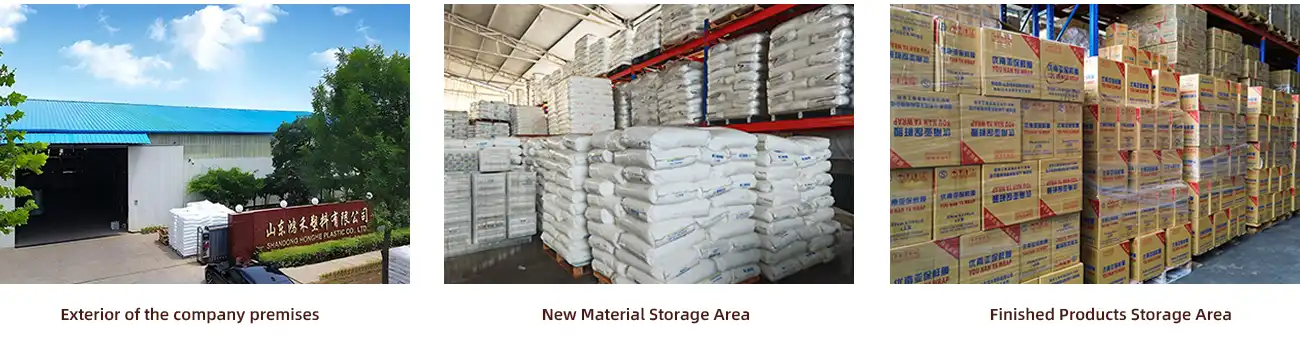
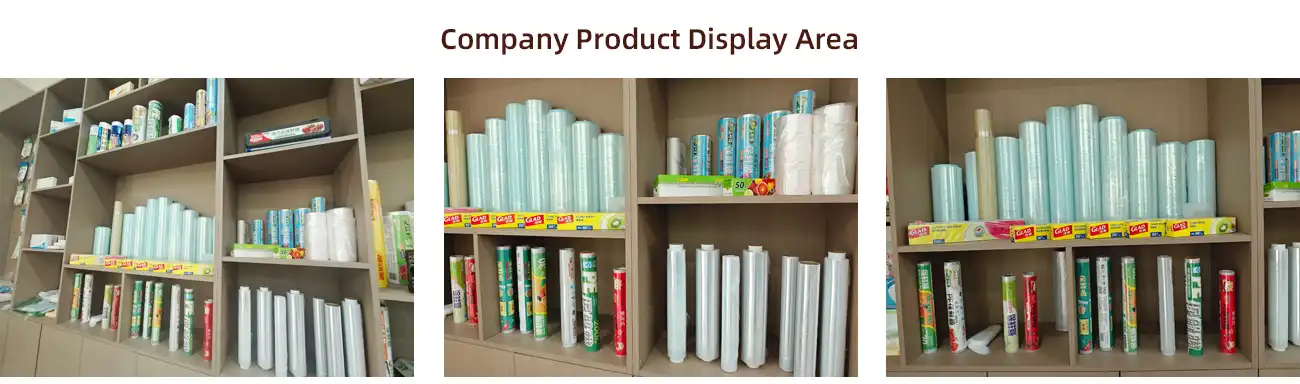
Shandong Honghe Plastics Co., Ltd. is ready to help you advance your brand with custom PVC Cling Film Roll options made just for you. Since we started in 2017, we've built up our production skills and gotten ISO, CE, FDA, BSCI, and WCA certifications to make sure we meet world-class quality standards. We are a provider and maker with a lot of experience. We offer full ODM and OEM services, free samples, and helpful after-sales support 24 hours a day, 7 days a week. Our position near the port of Qingdao makes transportation easy and our prices are low for large orders. Get in touch with tony@sdhhsl.com right away to talk about how our private label knowledge can help you get great packaging that helps your brand stand out and makes your business run more smoothly in global markets.
References
1. Brown, M. (2022). Food Packaging Technology: Principles and Practice. Cambridge: Woodhead Publishing.
2. International Organization for Standardization. (2021). ISO 22000:2018 - Food Safety Management Systems. Geneva: ISO Publications.
3. Jenkins, R. & Patterson, L. (2023). Modern Plastics Handbook for Food Applications. New York: Technical Publishing Group.
4. Smith, J. (2021). Supply Chain Management in the Food Industry: Strategies for Procurement Efficiency. London: Business Press International.
5. United States Food and Drug Administration. (2020). Code of Federal Regulations Title 21 Part 175.300 - Food Additives Permitted for Direct Contact. Washington: U.S. Government Publishing Office.
6. Williams, D. & Chen, H. (2023). Sustainable Packaging Solutions: Innovations in Polymer Films. Boston: Environmental Materials Research Institute.