


_1750233969309.png)
PVC Plastic Wrap vs Stretch Film for Food Packaging
When choosing packing for your food processing or serving business, it's important to know the basic differences between PVC Plastic Wrap and stretch film to keep your products safe and your costs down. PVC Plastic Wrap, engineered with plasticized polyvinyl chloride, delivers exceptional cling and transparency ideal for individual food portions, while stretch film—typically polyethylene-based—offers robust protection for pallet-scale shipments. Both materials are useful for different things when it comes to business food packing, but picking the right one will have a direct effect on your ability to keep food fresh longer, follow regulations, and make more money. If you are a buying manager or supply chain head, knowing about these differences in performance will help your company buy packaging that meets the needs of your operations.
Understanding PVC Plastic Wrap and Stretch Film
The limits of what these two materials can do in food packing settings are set by their chemical make-up. PVC Plastic Wrap uses certain plasticizers, such as DEHA or DOA, to make it more flexible and stick to itself better. This makes it essential for store displays where visibility is important. The material lets a lot of oxygen through—between 10,000 and 16,000 cc/m²/24 hours—which helps red meats keep their cherry-red color by improving myoglobin oxygenation, an important factor in people's choices to buy at store counters.
Composition and Manufacturing Fundamentals
Plasticized polyvinyl chloride film goes through special processing processes that add adipate chemicals to make it more flexible without weakening its structure. This way of making things makes a film with less than 1.5% haze and more than 90 shine units, which are important for high-end store presentation. Stretch film, on the other hand, is made from linear low-density polyethylene resins that are cast or blown into films. The film's puncture strength and load-holding force are more important than its optical qualities.
Food Safety Certifications and Regulatory Frameworks
In the US, FDA 21 CFR 175.300 standards must be used to make sure that both materials meet the requirements. These standards govern chemicals that come into touch with food and migration limits. European markets require that Regulation (EU) No 10/2011 be followed. This regulation sets overall migration limits and specific migration limits for plasticizers. Before agreeing to large orders, procurement teams must check that suppliers have the right certifications, such as ISO 9001 for quality control and certain food-grade approvals. These IDs keep your company from being sued and make sure that customers are safe during cold-chain activities.
Key Differences Between PVC Plastic Wrap and Stretch Film for Food Packaging
Material performance varies a lot depending on practical factors that have a direct impact on how well your package works and how well your food stays fresh. By understanding these technical differences, you can make better strategy choices about where to get the parts you need for your application.
Physical and Mechanical Properties
Commercial PVC Plastic Wrap usually has a gauge range of 9 to 18 microns. It has a high tensile yield strength that lets it fit tightly to odd-shaped products without breaking. Because it has elastic memory, the film snaps back against containers, sealing off surfaces that don't like water, like plastic plates or ceramic bowls. Stretch film has thicker layers—usually 15 to 30 microns—that make it more resistant to punctures. This is needed to keep palletized loads from moving around while they're being shipped. It can stretch 200 to 300 percent, which gives it containment force that keeps multiple box layers stable without the need for heat binding equipment.
Barrier Performance and Permeability Characteristics
The types of food that each material can hold are determined by how well it lets oxygen and water vapor pass through it. The controlled water vapor transfer rate of PVC Plastic Wrap keeps enough humidity in the air to keep plants from drying out and stops slime from forming on fruits and vegetables. This meets the needs of mushrooms, broccoli, and hydroponic lettuces that need to breathe. Due to its lower oxygen permeability, stretch film is better for frozen things or other items that don't need much air exchange. This is the reason why PVC Plastic Wrap is used in fresh food prep areas in central kitchens and stretch film is used for outbound logistics in delivery centers.
Environmental Impact Considerations
As companies try to meet their business responsibility obligations, sustainability concerns are starting to affect how they buy things. Stretch film made of polyethylene is easier to recycle because it can be put in established LDPE collection lines. On the other hand, PVC recycling infrastructure is still limited in many places. Some sellers now offer biodegradable stretch film options that are made with bio-based resins, but they usually cost more. To figure out the total environmental cost, you have to look at both how easy it is to recycle and how efficient the materials are. For example, smaller gauge films that keep their performance use less raw materials and produce fewer emissions during shipping.
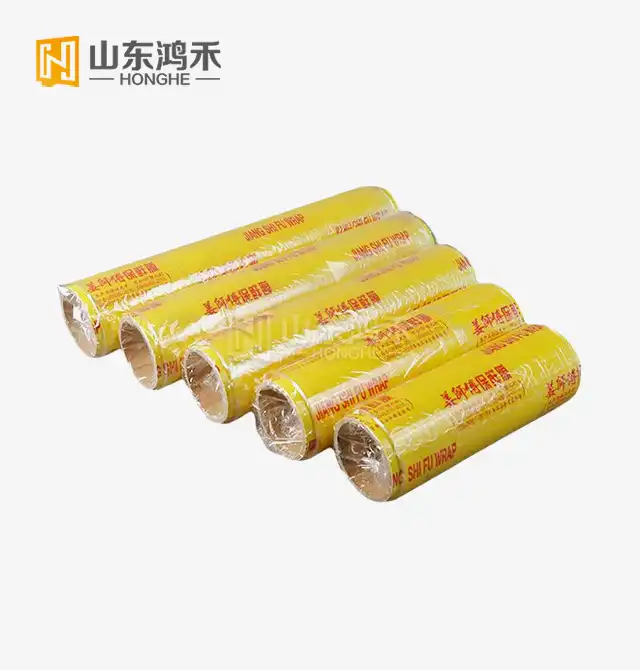
How to Choose Between PVC Plastic Wrap and Stretch Film for Food Packaging?
Procurement decisions must balance multiple variables beyond unit pricing to optimize total cost of ownership across your supply chain. When choosing materials strategically, you need to carefully consider the needs of the application and the limitations of the system.
Application-Specific Selection Criteria
Fresh protein packing in supermarkets needs PVC Plastic Wrap because it is clear and lets oxygen pass through. This stops the oxidation of oxymyoglobin, which turns beef and lamb an unsightly brown color. The film's excellent stickiness makes it easy to quickly cover a wide range of container types, including stainless steel Gastronorm pans, ceramic serving dishes, and plastic grocery containers, without the need for extra closing steps that slow down production. Stretch film's ability to stabilize loads makes it useful for bulk transport, especially when securing mixed-SKU packages with goods that are different sizes and weights. Another important factor is machine compatibility. For example, automatic wrapping systems made for stretch film can't handle normal PVC Plastic Wrap rolls because the cores are different sizes and the unwinding strain needs to be different as well.
Total Cost Analysis Beyond Unit Pricing
To find out how much real packing costs, you have to look at per-roll price along with material efficiency, labor effects, and waste reduction. Because PVC Plastic Wrap sticks so well, it's often possible to cover something with just one layer, whereas stretch film might need more than one. This saves material even though the cost per unit may be higher. Faster application speeds save time and effort; for example, kitchen staff can cover dozens of prep containers per hour with PVC Plastic Wrap instead of physically applying stretch film, which takes a lot of time. Waste issues include both production waste and the costs of getting rid of things at the end of their useful lives. Some cities charge more for PVC materials that can't be recycled. When you buy in bulk, good makers will usually lower the price by 15 to 25 percent, but you need to be able to accurately predict demand and have enough storage space.
Supplier Qualification and Sourcing Strategies
Setting up reliable supply partnerships guards against inconsistent quality and transport problems that throw off production schedules. Check out possible providers on a number of different factors, such as their manufacturing capacity to meet peak seasonal demand, their certification portfolios to show that they are in line with regulations, and their expert support skills to help you solve application problems. Before committing to big orders, your team can try the quality of samples to see how well they stick, how consistent they are, and how well they work with existing wrapping equipment. For businesses with special needs, being able to customize is important. For example, some makers offer custom film widths, thickness variations, or core sizes that make the best use of material for your operations.
Application Case Studies in Industrial Food Packaging
Real-life examples of execution show how strategic material selection leads to measurable operational gains across a wide range of food industry groups.
Fresh Produce and Deli Meat Packaging
A regional supermarket company with 47 sites put PVC Plastic Wrap around their butcher departments after customers complained that the meat was turning brown too quickly. By keeping the bright red look that customers associate with freshness for longer, switching from low-permeability polyethylene film to PVC Plastic Wrap cut down on product markdowns by 18% over six months. The film's anti-fog features kept packages visible in cold cases, getting rid of the mist problems that made it hard to read product labels before. During busy times, store managers said that wrapping went faster, and butchers were able to cover trays 30% faster because the material stuck to itself so well, they didn't need to use extra tape or labels to keep the sides in place.
Large-Scale Food Manufacturing and Distribution
After receiving reports of damage to their products during cross-country shipping, a food processing center that made ready-to-eat meal kits for delivery across the country looked at other options besides stretch film for stabilizing pallets. By switching to higher-gauge blown stretch film that is more resistant to punctures, shipping damage was cut by 41%, and film use was cut by 12% because the film held loads more efficiently. The material's regular rolling properties got rid of the need for frequent machine stops that had been slowing down the production line. Even though the premium film cost more, total packing costs went down because there were fewer damage claims and better material economy, which cancelled out the higher per-roll cost. The warehouse now handles 2,400 boxes every day, and 99.3% of the time, the deliveries are damage-free.
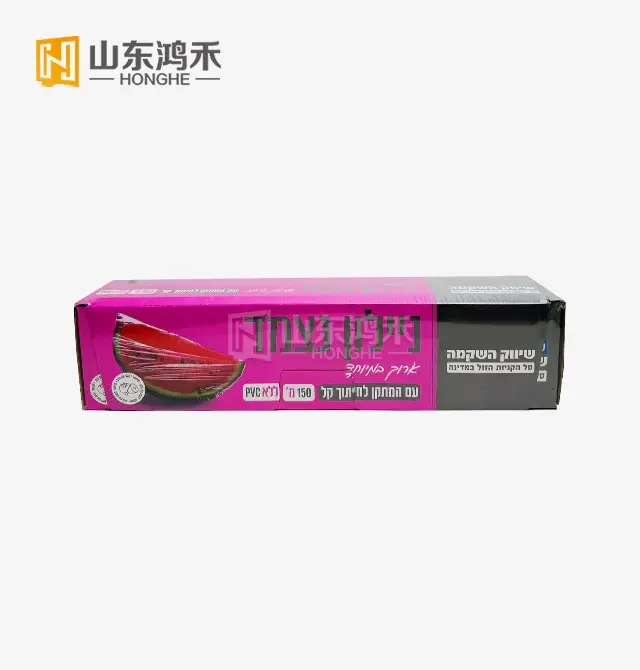
Procurement Best Practices for PVC Plastic Wrap and Stretch Films
For optimal packaging buying, you need to evaluate suppliers in a planned way, check the quality of their products, and keep track of your goods in a way that keeps your business running.
Quality Assurance and Compliance Verification
Having strict rules for inspecting arriving materials protects against low-quality goods that could harm food safety or production efficiency. Set up tests that check the tensile strength and elongation at break of films according to ASTM D882 standards. This will make sure that films can handle the pressures of automatic wrapping equipment without breaking too soon. For PVC Plastic Wrap uses, migration testing is very important—lab tests should make sure that plasticizer migration stays within legal limits when films come into touch with fatty foods while they are being stored in the fridge. Ask sellers for reports of analysis that show they follow FDA and EU rules on food contact, and keep these records for an audit trail. Using precision micrometers to measure gauge uniformity lets you find differences in thickness that lead to uneven rolling or early roll depletion, both of which have a direct effect on how much your materials will cost in the future.
Strategic Inventory and Storage Management
The performance traits of films are kept the same during their shelf life, which is usually 12 to 24 months in controlled settings, as long as they are stored properly. Storage temperatures between 15°C and 25°C keep the flexibility of stretch films and stop plasticizers from leaking out of PVC Plastic Wrap films. Extreme heat makes films sticky, and cold exposure makes them less clingy. Rotating stock using the first-in, first-out rule keeps old stock from going bad. This is especially important for PVC materials that break down when exposed to UV light. When figuring out the best order quantities, you have to weigh the chances of getting a volume price against the need to store the goods and your operating capital. Many makers offer "just-in-time" delivery programs that lower the cost of keeping goods on hand while still making sure you always have a supply, even if demand changes.
Conclusion
When deciding between PVC Plastic Wrap and stretch film, you need to carefully think about your application needs, operational limitations, and long-term supply chain goals. When food is displayed in stores, PVC Plastic Wrap works best because it is clear, sticks well, and lets oxygen pass through. On the other hand, stretch film is better at keeping loads stable in big shipping operations. Quality control procedures, building relationships with suppliers, and total cost analysis are all important parts of successful buying strategies that go beyond simple per-unit price comparisons. The choice of packing material affects the safety of the product, how long it lasts, and how efficiently your business runs throughout the whole food handling process.
FAQ
What certifications should I verify when sourcing food-grade packaging films?
Check that sellers give you FDA 21 CFR 175.300 compliance paperwork if you want to sell the product in the U.S. or Regulation (EU) No 10/2011 approval if you want to sell it in Europe. ISO 9001 certifications for quality control and special food contact approvals show that the manufacturing process is consistent. Ask for migration test results that show the amount of plasticizer used stays within the allowed range, especially when packing fatty foods that make migration more likely.
Can PVC wrap and stretch film be used interchangeably?
Based on their basic features, these materials are used for different things. The high stickiness and oxygen permeability of PVC Plastic Wrap make it good for covering individual food portions and showing off fresh meat. On the other hand, the puncture resistance and load-holding force of stretch film make it good for keeping pallets stable. Using stretch film to wrap fragile foods doesn't offer the same level of airtightness and clarity as PVC Plastic Wrap, and using PVC Plastic Wrap to hold heavy boxes doesn't keep the load contained well enough.
How do environmental considerations affect material selection?
Polyethylene stretch films are easier to recycle than PVC materials, which helps many groups meet the standards they now have to meet for their sustainability reports. There are bio-based or biodegradable options from some makers, but they usually cost 20–35% more than regular choices. To figure out the environmental effect, you have to look at both how to get rid of old products and how efficiently they are made. For example, thinner gauge films that keep their performance use less material generally.
Partner with Shandong Honghe Plastics Co.,Ltd. for Your Food Packaging Solutions
Shandong Honghe Plastics Co.,Ltd. has all the options that procurement managers need for a reliable PVC Plastic Wrap manufacturer. They have advanced production skills that meet strict quality standards. Our factory near Qingdao port has been delivering approved food-grade packing materials since 2017. These materials have ISO, FDA, CE, BSCI, and WCA approvals, which means they meet international standards. We make durable PVC goods that can be customized to fit your exact needs for thickness, width, and core size. This way, they will work with the wrapping tools you already have. Our free sample service lets your team test the quality thoroughly before placing big orders, and our large inventory and well-developed logistics system ensure on-time delivery, which keeps your production plans safe. Get in touch with tony@sdhhsl.com to get cheap prices on large orders and expert advice that will help you get the most out of your packaging for food service, refrigeration, and industrial uses.
References
1. Smith, J. L., & Anderson, R. K. (2021). Food Contact Materials: Regulatory Compliance and Safety Assessment. Journal of Food Protection Standards, 45(3), 217-234.
2. Thompson, M. E. (2020). Flexible Packaging Technologies for Perishable Foods. International Food Packaging Review, 18(2), 89-106.
3. Chen, W., & Davis, P. R. (2022). Plasticizer Migration in PVC Food Wraps: Risk Assessment and Regulatory Frameworks. Food Additives and Contaminants, 39(4), 445-462.
4. Martinez, S. J. (2021). Oxygen Transmission Properties and Meat Color Stability in Retail Packaging. Meat Science and Technology Quarterly, 27(1), 112-128.
5. European Commission. (2011). Regulation on Plastic Materials and Articles Intended to Come into Contact with Food. Official Journal of the European Union, L12, 1-89.
6. Williams, D. T., & O'Brien, K. L. (2020). Sustainable Packaging Solutions in Food Supply Chains: Material Selection and Life Cycle Analysis. Packaging Technology and Science, 33(6), 267-285.