


_1750233969309.png)
PVC Food Wrapping Film for Retail and Wholesale
PVC Food Wrapping Film is a very important product for both retail and wholesale food companies that need reliable, low-cost wrapping that keeps food fresh and looks good. This flexible film is made from high-quality polyvinyl chloride and special plasticizers. It solves important problems in the industry by controlling oxygen leakage, keeping moisture in, and having great cling qualities. In today's competitive food packaging market, procurement managers can make smart sourcing choices that balance quality, safety, and operating efficiency by knowing about the product's technical benefits, compliance standards, and wide range of uses.
Understanding PVC Food Wrapping Film: Properties and Applications
Chemical Composition and Physical Characteristics
PVC Food Wrapping Film is a special kind of bendable wrapping made from polyvinyl chloride that has been heated and cooled. High-quality inhibitors, usually calcium-zinc or barium-zinc compounds, are used in the making process to keep the film from breaking down when exposed to heat and to make it last longer. These stabilizers reduce the hydrochloric acid that is released during processing. This keeps the film's structure at temperatures ranging from -20°C to 100°C.
The film has a tensile strength of more than 15 megapascals and a mass of between 1.25 and 1.35 grams per cubic centimeter. The elongation at break is between 150% and 400%, which gives it a lot of flexibility and lets it fit tightly around odd-shaped food. When it comes to automated packing lines, where consistent recovery and memory qualities guarantee package integrity, this mechanical performance is very useful.
Oxygen and Moisture Transmission Properties
The fact that PVC Food Wrapping Film can control how much gas passes through it is one of its best engineering features. The oxygen transfer rate lets enough oxygen from the air get through the packaging to keep the fresh look of red foods by keeping myoglobin in an oxygenated state. This managed permeability keeps fresh veggies and mushrooms from going bad without oxygen, which also makes them last longer.
Water vapor transfer rates are also designed to keep proteins from losing weight and to stop mist fogging that makes it hard to see the product. This balanced barrier performance solves problems in the cold chain industry by lowering food waste in stores while keeping the draw of buying at the shelf level.
Safety Standards and Compliance Certifications
When choosing food-contact packaging, material safety is still the most important thing. Quality PVC Food Wrapping Film follows FDA 21 CFR rules and EU 10/2011 migration standards, which makes sure that plasticizer migration stays within safe limits. Because they are non-toxic, calcium-zinc binders are popular for use in direct food contact uses, such as cling film for delicate foods.
People who work in procurement should make sure that sellers give them all the paperwork they need to prove they have the food-grade certifications that are needed for the target markets. This paperwork is needed to get goods through customs, and it also keeps companies from breaking the rules, which could lead to expensive product returns.
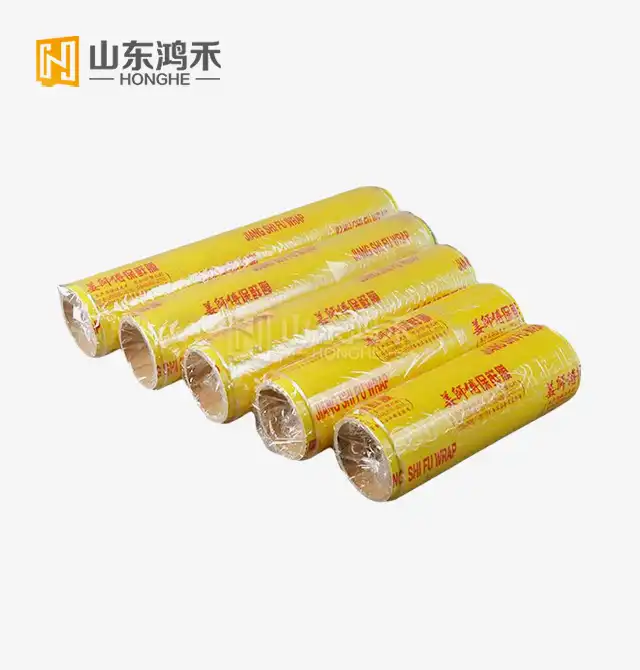
PVC Food Wrapping Film vs Alternative Films: Making the Right Choice
Performance Comparison with PE and LDPE Films
Knowing the differences between materials helps buying teams choose the right pictures for each job. When compared to polyethylene options, PVC Food Wrapping Film has much better cling, elasticity, and visual sharpness. Because PVC Food Wrapping Film sticks to itself, you don't need any sticky coats. This makes it easier to put on and take off.
Polyethylene layers usually let less air through, so they're better for storing frozen foods or things around the house than for displaying fresh meat. When product respiration is needed, PVC Food Wrapping Film's higher oxygen transfer rate is helpful. On the other hand, PE's tighter barrier works best for situations that need total atmospheric separation.
Application-Specific Material Selection
Choosing the best way to wrap something depends on the type of food and how it needs to be handled. Because PVC Food Wrapping Film is porous, it lets fresh food breathe, which keeps it from hardening too quickly and keeps the moisture level steady. Red meat displays need to be able to transmit air in a way that keeps the meat looking fresh and appealing instead of going brown from not getting enough oxygen.
Because it is so clear and forms a tight seal, PVC Food Wrapping Film is often best for ready-to-eat foods and restaurant items. The moisture-controlling qualities of seafood packing keep the product's weight while preventing too much fluid loss. Some cheeses and high-fat foods may need special low-migration PVC Food Wrapping Film types to keep the plasticizer from getting into foods that are high in fat.
Comparing commercial brands shows that top makers have made mixtures that work best for certain uses. According to comments from users, PVC Food Wrapping Film continues to perform better in store display settings where visual appeal directly affects decisions to buy. The film's high gloss and anti-fog properties boost customer trust and cut down on stock that isn't sold.
How to Use and Store PVC Food Wrapping Film Effectively?
Proper Application Techniques for Various Food Categories
To get the most out of preservation, you need to pay attention to how you wrap things. When you package meats, make sure that the PVC Food Wrapping Film touches the food all the way to the top, getting rid of any air pockets that could cause the food to go bad faster. For things with odd shapes, gently stretch the film to use its memory qualities. This will let it mold to the shape of the object and keep its tension as it rebounds.
A slightly tighter application that lets the produce continue to breathe without causing too much moisture to build up is better for packing. Do not overstretch the film; doing so can damage its barrier qualities and cause it to tear easily when handled. Another thing to think about is temperature. For best cling action, film applied to chilled items should be left to equilibrate slightly to room temperature.
Optimal Storage Conditions for Film Rolls
Managers of warehouses should keep film stock in controlled environments that are 15°C to 25°C and out of direct sunlight. When plasticizers are exposed to extreme heat, they leak out, leaving behind a sticky film that makes sticking and moving harder. On the other hand, storing film below the suggested temperatures makes it more brittle and less flexible.
If you store rolls the right way, they should stay good for 12 to 24 months without losing any of their quality. Controlling humidity stops moisture absorption, which could change how automatic filling equipment unwinds. When big loads are stored vertically on end caps instead of horizontally stacked, the core doesn't distort, which can cause uneven unwinding and film waste.
Troubleshooting Common Application Challenges
In high-volume settings, film can sometimes tear during automatic packing processes. This problem usually happens because the tension settings are too high or the cutting blades are dull, which causes stress to build up. Most problems with tearing can be fixed without having to buy new film by adjusting the dispensers and keeping the cutting edges sharp.
When there isn't enough film overlap or debris on the sealing surface, there isn't enough sealing. Seal quality is improved by teaching staff to keep the right gap ratios and making sure food surfaces are dry before wrapping. When cling qualities seem to be decreasing, check the storage conditions and look for plasticizer movement that could be caused by bad environmental controls.
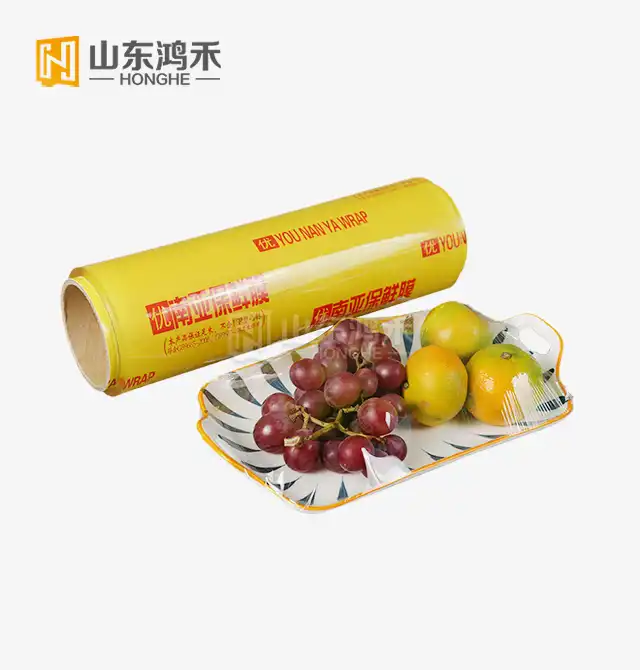
Procurement Guide: Buying PVC Food Wrapping Film for Business Use
Identifying Trusted Suppliers and Evaluating Capabilities
To find high-quality PVC Food Wrapping Film, you have to carefully check out potential suppliers, and not just look at price. Established makers should show their production skills, such as advanced aluminum equipment and standard workshop facilities that make sure quality is always the same. Logistics work better when they are close to major ports; sellers near transportation hubs usually offer faster delivery and lower freight costs.
Supply chain dependability can be trusted when quality control systems are checked. ISO licenses show that you are committed to process control, and FDA and CE approvals show that you are following the rules. Following social responsibility standards is becoming more and more important in business procurement strategies, as shown by BSCI and WCA certifications.
Bulk Purchasing and Customization Options
Buying in bulk can save you a lot of money, but being able to customize goods makes sure they meet your unique needs. Different safety needs are met by films with thicknesses ranging from 8 microns to 15 microns. Thinner films save money on materials for lightweight uses, while thicker films make it harder for sharp objects to puncture them.
Customizing the roll's width and length makes it work best with current delivery equipment and cuts down on the number of times it needs to be changed during production shifts. Core diameter standards make sure that the rolls fit correctly on automatic wrapping machines, which keeps operations running smoothly. Before placing a big order, procurement managers should ask for samples that fit the planned specifications so that they can test the quality thoroughly.
Regulatory Compliance and Import Requirements
Knowing the rules of the target market can help you avoid expensive delays during customs clearance. Imports into the United States need to be accompanied by proof that the materials meet FDA rules for food-contact substances, especially 21 CFR parts that cover plasticizers and stabilizers. Migration testing results that show that component transfer stays below legal limits should be included in the documentation.
Supply chain openness is becoming more important as buyers want to be sure about where materials come from and how they are made. Suppliers should give full material safety data sheets and records of analysis that make it easier to show that they follow the rules. Long-term relationships with dependable sellers lower the risk of buying things and make sure that you can always get materials that are in line with the rules, even as the rules change.
Future Trends and Innovations in PVC Food Wrapping Film
Sustainable and Recyclable Film Development
As regulations and customer tastes move toward sustainability, environmental concerns affect the choice of packing materials more and more. Bio-based plasticizers and reusable PVC Food Wrapping Film formulas are being studied to make PVC Food Wrapping Film less harmful to the environment without affecting its usefulness for keeping food fresh.
Some companies now have programs that collect used film and recycle it mechanically for uses other than food. These closed-loop systems solve the problem of how to handle trash while keeping the material economy benefits that make PVC Food Wrapping Film a good investment. As environmental rules get stricter, companies that use procurement plans that include sustainability criteria will be in a better situation.
Market Demand for Safer Packaging Solutions
The market wants safer packaging options. Demand for packaging materials with better safety profiles is driven by both government pressure and customer knowledge. Heavy metal-based stabilizers are being phased out, which is in line with this trend. Instead, calcium-zinc options are becoming the standard in the business. Buyers can make choices that are in line with business responsibility goals when formulation ingredients are clear.
Concerns about plasticizers getting into fatty foods have been addressed by new low-migration formulas. With these new materials, PVC Food Wrapping Film can be used for things that weren't thought to be ideal for close contact with plasticized films before. Keeping up with these changes helps buying teams take advantage of new solutions that give them a competitive edge.
Strategic Integration of Industry Developments
To find a good balance between low cost, quality, and sustainability, you need to be involved with source innovation projects. When manufacturers put money into research and development, they can get better recipes faster, which is good for operations. When buyers and sellers work together and talk about how their needs are changing, it helps suppliers make unique solutions that solve problems in that business.
Procurement workers stay up to date on changes to regulations that affect packing materials by reading trade magazines and joining trade groups. This information helps with strategic planning that looks ahead to changes in the market instead of reacting to them. By building networks of different suppliers, you can be sure that you will have access to other sources in case your main providers go down or can't change to your needs.
Conclusion
To choose the right PVC Food Wrapping Film for retail and bulk uses, you need to know a lot about the film's qualities, the rules that apply, and the supplier's abilities. The film's excellent stickiness, optical clarity, and controlled leakage make it a useful tool for protecting product quality while keeping the eye-catching look that makes people want to buy. Successful procurement strategies focus on long-term relationship value as well as short-term cost concerns. They do this by highlighting source dependability, customization options, and compliance guarantee. As sustainability becomes more important in packaging choices, businesses can be ready to react by keeping up with new materials and changes in regulations. This way, they can keep up with working efficiency and product safety standards.
FAQ
Is PVC Food Wrapping Film Safe for All Food Types?
When it comes to food handling, high-quality PVC Food Wrapping Film that meets FDA 21 CFR and EU 10/2011 standards is safe. When normal PVC Food Wrapping Film wrap comes into direct touch with pure fats or oils, lipophilic plasticizers may move into the fats. For cheese, butter, and high-fat foods, there are special low-migration varieties. Because the calcium-zinc stabilizers in the film are safe, it can come into close touch with proteins, veggies, and fruits.
Can PVC Film Be Used in Microwave Applications?
Standard commercial PVC Food Wrapping Film wrap shouldn't be used in the microwave, especially with fatty foods, because the plasticizer could move around when the temperature is high. Users should check labels that say "Microwave Safe" or look at options like polyethylene or polymethylpentene for heating needs. The film works great in places with cooling and cold storage.
What Film Thickness Works Best for Meat Packaging?
PVC Food Wrapping Film that is 10 to 15 microns thick is often used to package meat. This range has the right amount of puncture resistance for bone touch while still letting air through to keep the color of the meat. For flat goods with smooth surfaces, thinner films save money on material costs, while thicker films last longer.
Partner With a Trusted PVC Food Wrapping Film Manufacturer
Shandong Honghe Plastics Co., Ltd. sells high-quality PVC Food Wrapping Film that is designed to work with both retail and market food businesses. Since we started our business in 2017, we've only made high-quality cling film that meets international safety standards and has been certified by ISO, CE, and FDA. Our factory is close to the port of Qingdao, which makes transportation easy and offers low prices for bulk purchases.
We know that supply chain managers need more than just good items. They also need relationships they can count on. Our customization options let you meet specific packing needs, and our free sample service lets you fully assess the quality before committing. With cutting-edge production tools, strict quality control, and a large collection, we can ensure on-time delivery that keeps your business running.
Get in touch with tony@sdhhsl.com right away to talk to our expert team about your unique needs. As a provider of PVC Food Wrapping Film with a lot of experience, we offer flexible ODM and OEM services, 24-hour after-sales support, and bulk discounts that help you save money.
References
1. Johnson, M. & Williams, R. (2021). Food Packaging Technology: Principles and Practice. Cambridge: Woodhead Publishing.
2. Chen, L. (2022). "Plasticizer Migration in Food Contact Materials: Regulatory Perspectives and Testing Methods." Journal of Food Safety, 42(3), 156-172.
3. United States Food and Drug Administration. (2023). Indirect Food Additives: Polymers - Code of Federal Regulations Title 21. Washington, DC: Government Printing Office.
4. Thompson, S. & Garcia, P. (2020). Sustainable Packaging Solutions for the Food Industry. New York: Springer Publishing.
5. European Commission. (2022). Regulation (EU) No 10/2011 on Plastic Materials and Articles Intended to Come into Contact with Food. Brussels: Official Journal of the European Union.
6. Martinez, D. & Anderson, K. (2023). "Comparative Performance Analysis of Flexible Food Packaging Films." Packaging Technology and Science, 36(2), 89-107.