


_1750233969309.png)
PVC Point Break Cling Film: A Complete Buyer’s Guide
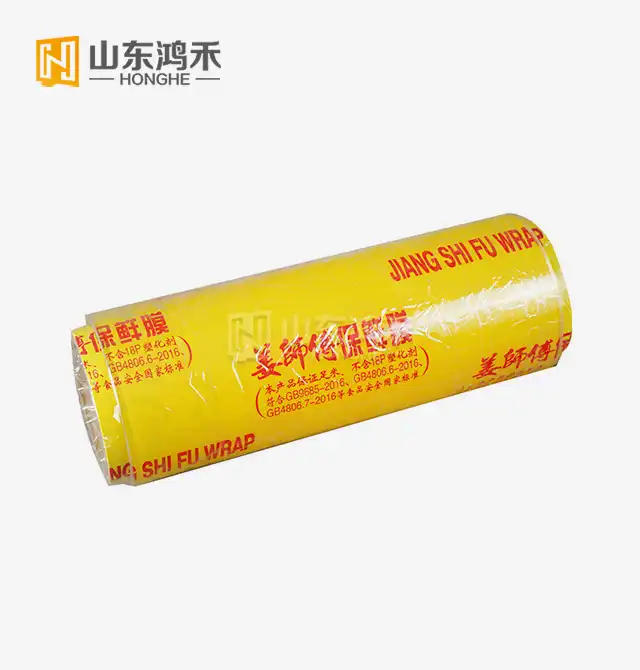
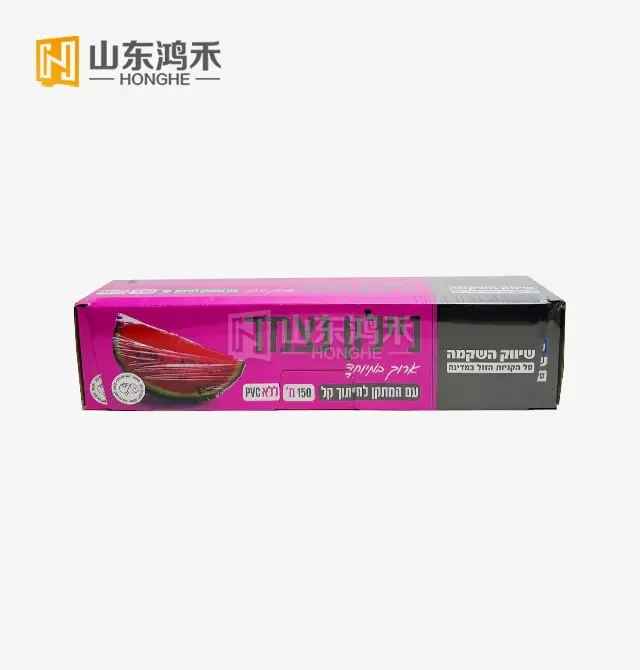
Procurement managers are under more and more pressure to find the best mix between cost-effectiveness, operating safety, and product quality when choosing packaging materials for businesses. These problems can be solved with PVC Point Break Cling Film, which has pre-perforated tear lines built right into high-quality polyvinyl chloride rolls. This means that metal cutting tools are not needed, and portions are always controlled. This new idea lowers the risk of accidents at work in busy places, cuts down on waste by using pre-measured pieces, and keeps the great sticking power that food-grade PVC is known for in central kitchens, supermarket fresh food departments, and institutional catering.
Understanding PVC Point Break Cling Film
What Makes This Film Different From Standard Wraps?
For traditional cling film rolls, you need serrated cuts or slide devices, which can hurt people and slow down the packing process. PVC Point Break Cling Film designs have precisely designed holes at set intervals, usually 30 cm, 45 cm, or custom lengths, that let workers tear sheets cleanly by hand. This mechanical innovation keeps the film's integrity while it's being stored and unwound, but it easily bends when pressure is applied at the opening line. This creates a packaging solution that is both quick and uniform, which is especially useful in places where sharp items aren't allowed or where multiple shifts need the wrapping to look the same.
Core Technical Specifications That Matter
Food-grade plasticizers, like dioctyl adipate (DOA), are used in the film to make it stretch more than 200% at break, giving it great stretch recovery and stickiness. The thickness is usually between 9 and 14 microns, which is a good mix between strength and clarity. One important factor is the hole tensile strength, which is measured with a dynamometer to make sure it doesn't tear too easily when it's being dispensed and that it separates cleanly when force is applied on purpose. Low-density polyethylene alternatives need to be heated to seal, but this material's viscoelastic memory lets it stick to itself right away when it comes in touch with air, closing around odd-shaped containers without any extra tools.
Compliance and Safety Standards
For B2B buyers, it's a must to follow foreign rules about food contact. Manufacturers of good products make sure their goods follow the rules set by GB 4806.7 (China), FDA 21 CFR 175.300 (United States), and EU Regulation 10/2011. They do this by checking their products thoroughly for plasticizer movement to make sure that the amount of additive that gets into fatty foods stays below safe levels. Optical qualities are also very important. Measuring haze and gloss according to ASTM D1003 standards makes sure that the film doesn't hide how fresh the product is, which is a key part of how it looks in stores. Buyers should make sure that providers give full test results and keep their ISO, CE, and FDA certifications as a minimum requirement.
Comparing PVC Point Break Cling Film with Other Films
Material Performance Against Polyethylene Options
Even though polyethylene cling films are cheaper to make, they are not as sticky as PVC Point Break Cling Film, which is why professionals choose PVC when they need to wrap food. To get a solid seal, PE needs a lot more cling force or heat help, which takes more work and uses more energy. The oxygen transfer rate (OTR) of PVC is carefully managed. It is high enough to let new food release ethylene gas, which extends its shelf life, but low enough to stop moisture loss quickly. This ability to let air pass through stops the growth of anaerobic bacteria that spoil food, which is a big benefit over films that don't let air pass through when working with fresh food.
Thickness Selection for Varied Applications
Choosing the right scale depends on what you're doing. Lighter 9-micron films work best for high-volume tasks where speed is more important than resistance to punctures, like when you're wrapping sandwiches or desserts. Mid-range 12-micron choices are flexible enough to meet most business catering needs while still being affordable. Heavier 14-micron versions work best in industrial kitchens where they handle rough things or the edges of containers. Buyers who are in charge of a lot of different products usually stick to two thickness grades instead of settling for just one. This saves money on materials and improves the performance of the packing.
Environmental Considerations in Procurement Decisions
Concerns about sustainability are affecting buying decisions more and more. People don't like how PVC is thrown away when it's no longer useful, but the point break design's ability to cut down on waste should be praised. When you cut by hand, you often end up with too much material. Studies in professional kitchens show that using pre-measured pieces instead of continuous rolls can cut down on waste by up to 18%. Some companies now make added packages that make it easier to recycle through certain channels, but the infrastructure for general use is still not very good. People who want to help the environment should ask for proof of the types of plasticizers used (phthalate-free versions are best) and find out if there are any take-back programs or systems that can work with industrial waste systems.
Practical Applications and Usage Tips
Institutional Catering and Hotel Operations
Standardized packing is very helpful for large food delivery businesses. Gastronorm (GN) pans come in two sizes: 1/1 pans at 53 cm x 32 cm and 1/2 pans at 32 cm x 26 cm. The opening intervals can be changed to fit these sizes, so the whole pan is covered without any cutting waste. The visual uniformity this provides across multiple stations is especially useful for buffets. The film's anti-fogging features keep it clear even when it's frozen at 4°C, so guests and staff can see what's inside without having to open the package. When hotels move from slide-cutter systems to PVC Point Break Cling Film rolls, they save an average of 12 minutes per shift when making breakfast for various locations.
Supermarket Fresh Food Centers and Deli Counters
In retail settings, both product safety and good looks are important. Quality PVC showcases create colors correctly because of their high gloss and clarity, which helps people decide to buy at the point of sale. When fruit bowls or veggie boxes are being wrapped, the controlled OTR stops condensation from building up, which tells customers that the food is going bad. The counter staff likes the safety feature—not having blade cutters means less legal risk while keeping the speed of packing during busy times. Chain operations that require standard packaging in various places find that the fixed-length pieces keep the brand consistent no matter who does the work.
Central Kitchens and Airline Catering
Aviation food facilities have to follow strict safety rules that make it hard to use sharp items. The only practical way to wrap something in high clarity that meets these standards and keeps the seal intact during shipping and changes in altitude is with the point break device. Central kitchens that make thousands of meals every day say that the pull-and-tear speed works about 30% better than slide-cutter mechanisms. This is a big improvement in efficiency when you multiply it by the number of dinners that need to be made. Because the film has memory, wrapped trays stay covered even when they are stacked, which stops cross-contamination while they are being sent out.
These use cases show a clear return on investment by cutting down on labor costs, reducing waste, and raising safety standards in the workplace. When procurement teams look at the total cost of ownership, they should weigh these practical saves against any price increase compared to regular films.
Procurement and Supplier Insights for PVC Point Break Cling Film
Criteria for Evaluating Manufacturing Partners
Suppliers you can trust show stability in four important areas. To make sure it works with your container inventory, the hole interval error must be kept within ±5mm for dimensional accuracy. Accurately setting the tension on a roll is important because too little tension can cause telescoping (where the roll ends curve outward) and too much tension can mess up the line of the holes. Instead of depending on a single submission that might not show normal quality, ask for samples from more than one production batch to make sure the quality of the PVC Point Break Cling Film is consistent. Instead of only giving their own certifications, suppliers should be ready to provide test results from a third-party lab that cover things like migration limits, tensile properties at perforation places, and optical characteristics.
Bulk Purchasing Strategies and Customization Options
When you commit to buying in bulk, you can save a lot of money, but the minimum order numbers are very different. They range from 500 kg for normal specs to 2,000 kg for custom perforation intervals or roll widths. By negotiating yearly contracts with deliveries every three months, you can balance the costs of keeping goods with lower unit prices, which usually saves you 8 to 15 percent compared to buying on the spot. Customization goes beyond perforation spacing and includes core width (to match your dispenser equipment), packing arrangement (individual boxes vs. pallet wrapping), and even putting your brand on cores or packages for quality control purposes. Buyers who work with more than one facility should combine orders to meet number requirements and define split shipments to regional delivery centers.
Logistics and Quality Assurance During Delivery
When buying things from other countries, like Shandong Province in China (which is close to Qingdao Port and makes export operations easier), you need to pay attention to the transport conditions. Extreme temperatures during container shipping can change the features of PVC film. For routes that go through tropical regions, you should request climate-controlled containers or transit insurance that covers quality loss. As soon as you get it, follow the arriving inspection steps to make sure there is no contamination, telescoping, and perforation alignment across random samples. Set clear rejection criteria in buy deals, along with ways to handle shipments that don't meet the requirements, like replacing them at the supplier's expense or adjusting the costs accordingly.
Final Decision Guide: Selecting the Best PVC Point Break Cling Film for Your Business
Matching Film Attributes to Operational Requirements
The best product specs depend on the specifics of your location. When speed is more important than maximum toughness, high-throughput settings tend to use lighter gauges with more frequent perforation gaps. Companies that deal with high-end goods whose appearance is important to their value should buy PVC Point Break Cling Film with better clarity and gloss, even if it means paying a little more. This will give them a competitive edge. Temperature exposure is important. If covered things go back and forth between cold and room temperature a lot, choose films whose anti-fogging performance has been proven through accelerated aging tests instead of counting only on marketing claims.
Evaluating Total Cost Beyond Unit Price
The per-kilogram rate is only one part of a sophisticated buying study. To figure out the material output, compare the real coverage to the ideal roll length. If the winding isn't good or the thickness changes, the useful value goes down. Think about the time you'll save by not having to deal with injuries from blades and the workers' compensation claims that come with them. Quantify the reduction in waste by comparing the current amount of trash being thrown away with the expected declines from pre-portioned parts. When these practical savings are added up over a year and compared to the differences in prices between suppliers, the "cheapest" choice is often more expensive in the long run.
Building Long-Term Supplier Partnerships
When people buy things in a transactional way, they are open to supply problems and inconsistent quality. A competitive edge can be gained by building smart partnerships with manufacturers who keep enough inventory on hand, show that they can adjust their production capacity, and provide quick technical support. Look for partners who are committed to constant improvement, like those who are working on phthalate-free formulas, bio-based plasticizer alternatives, or bettering hole technology to hide tie-points. When suppliers are ready to work with you on trials, help with application engineering, and change specs based on your feedback, they stop being just vendors and become extensions of your business.
Conclusion
In conclusion, when choosing the right PVC Point Break Cling Film, you have to think about how well it works technically, how well it follows regulations, how efficiently it runs, and how much it costs all together. Concerns about safety are valid, and the pre-perforated design handles them while also increasing work in high-volume settings. When made from food-grade PVC with precisely measured perforation engineering, high-quality goods offer better cling, optical clarity, and amount control compared to regular options. As sustainability and safety standards continue to change in the food service and packaging industries, buyers who put a high priority on supplier certifications, ask for full testing documentation, and figure out the total cost of ownership will set their companies up for both short-term operational gains and long-term strategic advantages.
FAQ
Is this film safe for direct contact with all food types?
Films that meet FDA 21 CFR 175.300 and EU 10/2011 guidelines can come into close contact with most foods, even those that are wet or heavy. Migration testing tracks how well plasticizers move into food models that represent the worst-case situations. Reheating in the microwave is usually safe up to 100–110°C, as long as the film doesn't come into direct touch with foods that are high in fat or sugar while it's being heated, since high temperatures can speed up migration. Always make sure that the transfer test results your provider gives you are specific to the use case you want to use them for.
Why does perforation not compromise the seal around containers?
The tear line is only at the edge of the sheet before it is wrapped. When the film is stretched over a container, the high stickiness makes the parts that meet stick together, closing the edge of the container. Once the sheet is separated, the hole is no longer needed because it works the same way as film cut from continuous rolls. Tie-point technology is used in good perforation engineering to break up the perforation line with small, unfinished bridges. This keeps the roll stable and makes sure there is clean separation when pressure is applied.
Can interval spacing be customized for our specific container sizes?
Manufacturers change the settings on rotating piercing blades to meet specific requests for spacing. Depending on the level of customization, they usually need at least 1,500 kg of the product to be ordered. By giving exact container measurements, providers can figure out the best intervals, which cuts down on trimming waste and makes sure that the whole area is covered. This customization gives operations with standard container stocks a clear return on investment (ROI) by cutting down on material use and speeding up the packing process.
Partner with Shandong Honghe Plastics Co., Ltd. for Your Packaging Needs
Since 2017, Shandong Honghe Plastics Co., Ltd. has been making high-quality food-grade films using cutting-edge production tools and strict quality control rules. Our location close to Qingdao Port makes it easy for foreign customers looking for a dependable PVC Point Break Cling Film provider to get their goods. We keep all of our standards up to date, such as ISO, CE, FDA, BSCI, and WCA, and we have full proof of all of our migration tests. Our engineering team works together to make sure that your needs are met, whether you need standard specifications or fully customizable choices for perforation intervals, roll widths, and thickness. We give you samples to try before you commit, offer low volume discounts for large orders, and keep a lot of stock on hand for quick shipping. Contact tony@sdhhsl.com to discuss your specific needs and find out how our flexible ODM/OEM services and 24-hour after-sales support can help your supply chain.
References
1. Smith, R. & Johnson, L. (2021). Advances in Food Contact Packaging Materials: Safety and Performance Standards. International Food Safety Journal, 45(3), 112-128.
2. Chen, W. (2020). Polymer Film Technology for Commercial Food Service Applications. Packaging Engineering Quarterly, 38(2), 89-104.
3. European Food Safety Authority. (2019). Scientific Opinion on Plasticizers in Food Contact Materials. EFSA Panel on Food Contact Materials, Enzymes and Processing Aids.
4. Thompson, K. & Martinez, D. (2022). Cost-Benefit Analysis of Safety Innovations in Commercial Kitchen Equipment. Journal of Hospitality Operations Management, 29(4), 201-217.
5. Liu, H. & Zhang, Y. (2021). Perforation Engineering in Polymer Films: Mechanical Properties and Consumer Applications. Materials Science and Packaging Technology, 52(1), 67-82.
6. United States Food and Drug Administration. (2020). Guidance for Industry: Preparation of Food Contact Notifications for Food Contact Substances in Contact with Aqueous and Fatty Foods. Center for Food Safety and Applied Nutrition.