


_1750233969309.png)
Uses and Benefits of Household PVC Cling Film
For companies looking for reliable ways to keep food fresh, Household PVC Cling Film has emerged as a key packing option. This flexible material meets important operating needs in a wide range of settings, from industrial food processing plants to catering businesses and store chains. It keeps food fresh, stops contamination, and makes sure safety standards are met. When procurement managers have to make choices about large purchases, knowing the technical benefits and real-world uses of PVC wrapping materials can have a direct effect on how much they cost, how reliable the supply chain is, and how good the products are. This guide talks about how fine Household PVC Cling Film can be used in many different areas while still meeting strict government standards. It helps people make decisions by showing them how to find sellers who consistently provide good value and performance.
What Is Household PVC Cling Film?
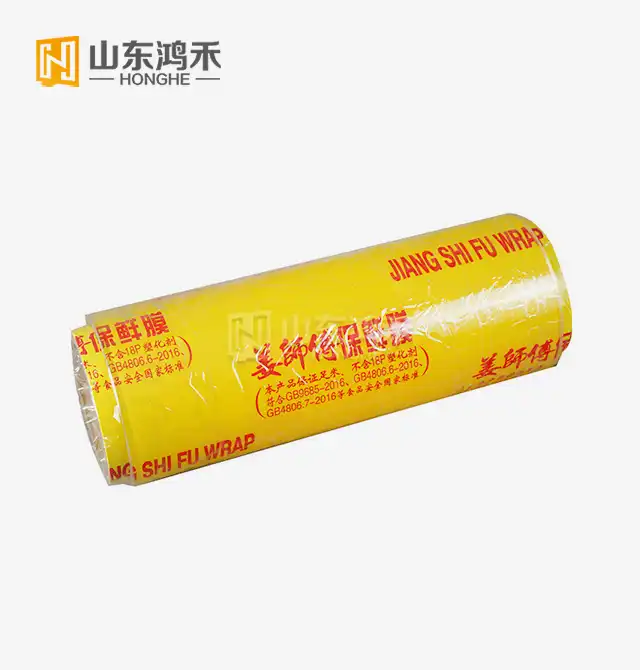
Household PVC Cling Film is a special kind of flexible packaging made from polyvinyl chloride resin mixed with food-safe plasticizers like DOTP or epoxidized soybean oil. Unlike regular industrial PVC, this version goes through a lot of tests to make sure it can safely come into touch with food and meets FDA and EU rules about Specific Migration Limits. The material does more than just wrap things; it forms a preservation system that keeps things fresh while still letting air pass through.
Chemical Composition and Engineering
Controlled permeability patterns are at the heart of the technology system. Modern versions use adipates or citrate-based plasticizers instead of older substances, which makes sure they meet international standards for food safety. For home and business use, the normal width runs from 8 to 15 microns, but it still has a tensile strength of more than 15 MPa in the machine direction. This engineering lets the film stretch up to 400% before it breaks, but it still has memory qualities that let it form tight rings around odd shapes.
Distinguishing Performance Characteristics
When compared to plastic options, Household PVC Cling Film is clearer to the eye, with gloss levels above 130% and haze levels below 1.5%. This makes it easier to see the products, which is very important at meat and deli stands where customers decide right away if they want to buy something. The material is meant to have an Oxygen Transmission Rate of about 15,000 to 25,000 cc/m²/24h. This rate allows enough gas exchange to keep fresh food and meat from going bad without oxygen while also keeping them from drying out too much.
Food-Grade Certifications and Compliance
Industrial buyers put a high value on goods that meet well-known safety standards. Manufacturers of good products show proof that they follow FDA 21 CFR 177.1210 for food contact substances and EU Regulation 10/2011. These approvals show that the migration of the plasticizer stays within safe limits when it is used as designed. When looking for materials for jobs that involve fatty foods or long touch times, procurement teams should ask for Specific Migration Limit testing results. When a supplier has production facilities that are ISO 9001-certified, it shows that they are committed to consistent quality control methods, which are necessary to keep legal compliance across shipment batches.
Benefits of Using PVC Cling Film for Food Storage
Household PVC Cling Film has strategic benefits that go beyond simple control. They also solve practical problems that hurt the bottom line in many industries. When purchasing managers look at different package options, they know that the choice of material affects how well workers do their jobs, how much product is lost, and how satisfied customers are.
Superior Barrier Protection
Household PVC Cling Film is great at making microenvironments that make food last longer. Because the material has a proper permeability, respiring things like mushrooms and cut fruits can keep their cell activity up without dangerous ethylene gas levels building up. The film also stops the loss of wetness that leads to wilting and weight loss, which is a big problem for businesses that sell by the unit. Tests show that properly wrapped fruit stays fresh for two to three days longer than open versions, which directly lowers the cost of shrinkage.
Enhanced Visual Presentation
In retail settings, packing needs to protect without being too obvious. The high clarity of good Household PVC Cling Film shows off the color and freshness of the product. This is especially important for expensive meat cuts where the ability to see the marbling affects how much they are worth. The high gloss finish of the material makes it shine nicely under display lighting, and anti-fogging agents keep drops of condensation from forming when goods go from being stored in the fridge to being at room temperature. These optical qualities help with marketing tactics that show goods as high-end options.
Operational Efficiency and Versatility
Because the film sticks to itself, you don't need to use heat binding tools in many situations. This saves money on equipment and energy. Kitchen staff and people who work on the packing line like how the material can be shaped to fit different types of containers, like ceramic bowls, stainless steel trays, and plastic containers, without the need for multiple specialized goods. This flexibility makes managing supplies easier and cuts down on the amount of training needed for operations with multiple sites. The stretchy memory makes sure that seals stay tight during transport and handling, which lowers the number of callbacks for spills or contamination.
Cost Efficiency Through Bulk Procurement
When you buy in bulk, the cost per unit goes down by a lot. This is especially helpful for businesses that use thousands of square meters every month. Suppliers that have been around for a while offer tiered pricing systems that reward customers who make regular purchases. They also offer customization options that make brands stand out through printed packages. Food service wholesalers and supermarket groups can private-label goods through OEM programs. This lets them make money while making sure they have a steady supply at competitive prices. Household PVC Cling Film is a good choice for businesses that want to save money while still getting good quality because the material works well and there are many ways to get it.
Safe and Effective Use of PVC Cling Film
To get the most out of a product, you need to know its application factors and best practices for operation. Teaching end users the right way to handle materials in a way that keeps them safe and extends their life is good for procurement teams.
Application Guidelines for Different Food Types
Household PVC Cling Film works best with certain types of food. This material is great for wrapping cheese, cold meats, fresh fruit, and ready-made meals that need to be chilled for a short to medium amount of time. The breathability shape works well for breathing goods, and the moisture layer keeps cooked items from drying out on the outside. When foods are heated in a microwave, the film shouldn't come into direct touch with high-fat foods. This is because high temperatures and lipids can speed up the movement of plasticizers beyond what is safe.
Microwave Safety Protocols
Modern food-grade Household PVC Cling Film is tested in controlled environments to see if they can be used in microwaves. Safe ways to warm food include making vents to let steam pressure out and keeping air gaps between the film and the food. When the material is used as a splash guard instead of a protected covering during heating cycles, it works consistently. If operations regularly reheat prepared meals, procurement specs should clearly ask for products approved for microwave use. This is to make sure that operations follow the safety standards and recommendations made by device manufacturers.
Environmental Considerations and Responsible Disposal
Supply chain managers are looking at packing materials more and more through the lens of ecology. Household PVC Cling Film has a lot of natural impacts that need to be carefully considered. The long-lasting and safe qualities of the cloth cut down on food waste, which is good for the environment because rotting food releases methane into the air when it goes to landfills. However, there isn't as much infrastructure for recycling PVC as there is for reusing polyethylene. Forward-thinking suppliers now offer formulas with bio-based plasticizers and take part in take-back programs, which solves the problem of dumping while keeping the performance characteristics. When making decisions about what to buy, people should look at the whole lifecycle effect, including both the benefits of making more materials and reducing waste.
Comparison: PVC Cling Film vs. Other Packaging Solutions
To do effective procurement, you need to compare the different options that are out there, looking at things like success measures, cost structures, and how well they fit your needs. Each type of material has its own unique benefits that are best used in certain situations.
PVC vs. Polyethylene Films
Polyethylene wraps are good for businesses that want to keep chemicals simple because they don't contain any plasticizers. However, PE films don't stick as well, so you need to use mechanical pressure or heat closing to keep the containers stuck together. The material isn't very clear and can't stretch as much, so it can't be used in places where product sight and conformability are important. Polyethylene is cheaper per pound, but Household PVC Cling Film often has the same total cost as polyethylene because it covers more surface area per unit weight because it is thinner without losing strength. Even though the material costs a little more, Household PVC Cling Film is easier to work with and requires less labor for tasks like packing irregular forms or needing to be able to seal itself.
PVC vs. Aluminum Foil
Aluminum foil is great for long-term storage and freezing because it completely blocks light and air. The invisibility of the material keeps light-sensitive items from breaking down, and its thermal conductivity makes it easy to cool things down quickly. But foil doesn't bend well around complicated shapes, and it tears easily at stress points, making ways for germs to get in. The material is much more expensive per use than Household PVC Cling Film, and it can't be used in microwaves, which limits its uses. Operations that need the best barrier protection for frozen goods or ingredients that are sensitive to light may be able to afford foil's higher price. On the other hand, applications that need to keep things cool or at room temperature prefer Household PVC Cling Film's balance of protection and usefulness.
Budget-Friendly vs. Premium Product Tiers
There are different quality levels in the packaging film market, which is due to different production norms and material inputs. Some low-cost products may use reclaimed PVC resins and cheap plasticizers that make the product less clear and less able to stretch. Premium products from well-known brands use new resins, advanced binder packages that keep the color from running, and carefully controlled thickness profiles that make sure the unwind properties stay the same. Purchasing teams have to weigh the initial cost savings against the practical effects. For example, inferior films cause more waste because they tear easily, make workers unhappy because they are hard to handle, and could be in violation of regulations if the plasticizer formulas don't have the right paperwork. Reliable providers offer detailed technical data sheets and compliance certificates that make up for small price increases by lowering the total cost of ownership.
Procurement Guide for Household PVC Cling Film
To do strategic buying, you need to know how markets work, what suppliers can do, and how to negotiate in a way that gets you the best value. Systematic evaluation systems that take into account both short-term goals and the possibility of a long-term partnership are helpful for purchasing managers.
Bulk Purchasing Benefits and MOQ Considerations
When you commit to a certain amount of goods, you can get better prices, specialized production runs that guarantee stable quality, and priority allocation when supplies are low. Suppliers usually base their minimum order numbers on the economics of a container load, which is usually between 5,000 and 10,000 kilograms for foreign shipping. Quarterly or semi-annual purchasing deals get the best prices per unit for businesses with enough storage space and predictable usage trends. Small businesses that don't have storage space can look into vendor-managed inventory programs. In these programs, sellers keep stock at regional distribution centers and make regular deliveries based on blanket purchase orders.
Customization and OEM Opportunities
Private labeling turns plain packages into unique items that help businesses stand out in the market. Some ways to customize are to put business names on the package, make your own dispenser boxes, and make sure the roll sizes fit the needs of your equipment. OEM relationships are especially helpful for grocery store chains that are making their own lines of store-brand products and food service companies that are making their own packaging systems. Suppliers with low minimum print runs (500 to 1,000 boxes) let you test the market without having to commit to too much inventory. Technical customization includes changes to the formulation, such as better adhesion, different thickness standards, or custom plasticizer packages that meet the needs of a particular application.
Evaluating Supplier Reliability and Quality Benchmarks
Manufacturing skills, quality testing methods, and the resilience of the supply chain should be at the top of the list when choosing a supplier. Site trips are helpful for procurement teams because they let them check the state of production equipment, make sure it meets cleanliness standards, and test the lab's abilities. Companies that have ISO 9001 quality management certifications show that they have organized process controls that lower the differences from batch to batch. Ask for samples of the goods you're interested in along with technical data sheets that list the tensile strength, elongation rates, and migration test results. Check how responsive a seller is by looking at how long it takes to get quotes and whether they are ready to send free samples for testing. For relationships to last, deliveries must always be made on time, orders must be able to be changed easily, and communication must be clear during supply delays.
Today's Household PVC Cling Films are made from high-quality PVC and can be fully customized to meet the needs of each customer through OEM programs. Reputable makers offer free samples for testing, which lets buying teams confirm claims about performance before committing to large orders. The flexibility of these materials makes them a good addition to a wide range of package portfolios. They are used in food packaging, cold chain transport networks, catering businesses, and home settings.
Conclusion
For procurement managers who put food safety, cost savings, and supply stability first, Household PVC Cling Film provides quantifiable operating benefits. The material's designed balance of breathability, cling strength, and visual clarity solves preservation problems in a wide range of fields, from meat counters in stores that need longer show life to catering businesses that need flexible wrapping options. When making strategic sourcing choices, it's important to look at both performance characteristics and the total cost of ownership. This is because relationships with suppliers that go beyond transactional prices build long-term competitive benefits. Purchasing pros find package solutions that protect the integrity of their products and help the company reach its larger goals by looking at certifications, customization options, and quality stability.
FAQ
What distinguishes PVC cling film from polyethylene alternatives?
Household PVC Cling Film sticks to themselves better than polyethylene films, so you don't need heat sealing tools to use them. The material is very clear and has a gloss level above 130%, which makes it easier to see products in stores. Also, Household PVC Cling Film's controlled oxygen permeability helps fresh meats keep their bright red color by allowing oxymyoglobin bloom, while PE's lower breathability speeds up the browning that happens when there isn't enough oxygen.
Can this material safely contact all food types?
FDA and EU rules say that food-grade Household PVC Cling Film is safe for most types of food when stored normally in the fridge. Be careful coming into close touch with high-fat foods while they are being heated in the microwave, because the high temperatures and lipids may speed up the migration of plasticizers. When operations ask suppliers for paperwork, they should be clear about what they want to use the recipes for so that they meet the safety standards for that group.
How does proper usage minimize environmental impact?
Less food waste is good for the earth because rotting food releases a lot of gas into the air when it goes into landfills. Household PVC Cling Film keeps food from going bad because it extends its shelf life by two to three days compared to open storage. Responsible usage includes using the right amount of material and taking part in take-back programs from suppliers when they are available. Progressive buyers are asking for formulas that use bio-based plasticizers more and more, which means that efficiency and environmental concerns need to be balanced.
Partner with Shandong Honghe Plastics Co., Ltd. for Reliable Packaging Solutions
As a certified producer that has been providing high-quality Household PVC Cling Film options since 2017, Shandong Honghe Plastics Co., Ltd. is ready to help you reach your purchasing goals. Our factory close to the port of Qingdao has modern production tools and is certified by ISO, CE, and FDA. This makes sure that every package meets the highest quality standards around the world. We offer reasonable bulk pricing, fully customizable specs that are made to fit your business needs, and free sample packages that let you fully evaluate the product. Our expert team is ready to help you find the right solutions for your unique preservation problems, whether you need standard home rolls or OEM configurations made just for cold chain logistics and catering. To talk about business prices, get samples, or look into private labeling options, email tony@sdhhsl.com.
References
1. Smith, J.R., & Anderson, K.L. (2021). Food Packaging Materials: Performance Characteristics and Safety Standards. Industrial Press.
2. European Food Safety Authority. (2020). Guidance on Food Contact Materials: Plasticizers and Migration Testing. EFSA Journal, 18(4), 6037.
3. Thompson, M.P. (2019). Flexible Packaging Solutions for Commercial Food Service Operations. Packaging Technology International.
4. United States Food and Drug Administration. (2022). CFR - Code of Federal Regulations Title 21: Food Contact Substances. Government Publishing Office.
5. Chen, H., & Williams, S.D. (2023). Comparative Analysis of Barrier Properties in Flexible Food Wraps. Journal of Food Protection Technology, 45(2), 112-128.
6. Martinez, R.A. (2020). Procurement Strategies for Sustainable Packaging Materials in Industrial Food Processing. Supply Chain Management Review, 24(3), 34-41.