



PVC vs PE Film: Which Works Better for Freezing?
Most of the time, PE cling film is the best choice for long-term frozen storage because it doesn't absorb water, stays flexible in the freezer, and's easy to handle rough handling. As long as the recipe and temperature range work, a PVC cling film rollhttps://www.sdhhsl.com/pvc-cling-film/pvc-cling-film-roll can still be used for frozen foods, store displays, short-term chilling, and trays that go in the fridge. What kind of food, how long it needs to be frozen, how thick the film needs to be, how much it sticks, the tools you have, and the rules about food contact all affect the best choice. You should look at more than just the name of the polymer or the price per unit. You should also look at the test results and the total cost of packaging.
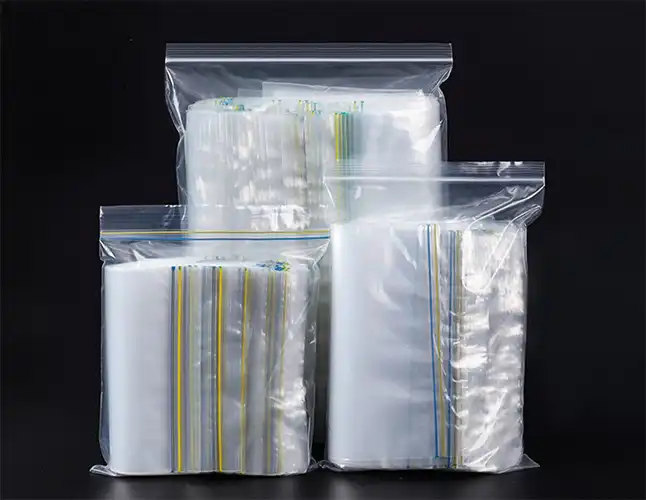
PVC and PE Cling Film Basics for Freezer Use
What Are PVC and PE Cling Film Rolls Made Of?
A PVC cling film roll is mostly made up of polyvinyl chloride resin. Plasticizers and other things are added to it to make it soft, stretchy, and stick together. Most of the time, people choose it because it's clear, stays clean on surfaces, tears easily, and sticks well. How thick it is, how it was extruded, what kind of plasticizer was used, and how the surface was treated all affect what it does. It must also be food-grade for the market it's going to, in this case the U.S. market, which means it has to follow FDA rules about food contact.
PE cling film is made from different types of polyethylene, such as LDPE and LLDPE. Most of the time, these films are more bendable when it's cold outside and better at keeping out water, stretching, and breaking. Still, two polymer films might not perform in the same way. I always tell buyers to ask for technical data sheets, formulation guidance, and application test results before they sign off on a specification.
PVC vs PE Cling Film: Freezing Performance Comparison
It's not just the name of the polymer that changes how well it freezes. The USDA says that food that is kept at -18°F (0°C) is always safe. When air dries out food on the surface, this is called freezer burn. It doesn't change the quality of food, but it does make it less safe. So, the film has to keep air out of the food and stop it from drying out during the whole time it is being stored.
There are temperatures much lower than those in a freezer below which polyethylene turns into glass. This means that it stays flexible and doesn't break. This depends on the system that softens the PVC and whether it can harden in cold weather. PVC wrap can only be bent up to about -30°C, according to technical sources. For harsher conditions, you need specs that are freezer-grade. Most of the time, PVC looks better and sticks better, while PE is better at stretching and not getting holes in it. Moving and rules papers are also needed for foods that are oily, sour, salty, or wet.
PVC vs PE Film for Different Freezing Applications
The food, how it's served, and the business goal all have an impact on which movie is the best. PE is good for frozen meat, poultry, and seafood with bones, shells, or sharp edges that need to be tough against punctures and bendy when it's cold. It's also good for bulk-frozen fruits, vegetables, and ready-to-eat meals that need to be kept moist for a long time.
If you need something clear and sticky, a PVC cling film roll is still a good choice for meat trays that need to stay cold, fresh food, bakery goods, and retail packs. Mancini and Hunt did a study on meat color in 2005 and found that fresh red meat that is left out in the open air stays bright red. This is one reason why PVC wrap is often found in meat cases at stores. If your business serves or caters food, you should decide how often your staff will handle and replace the film and whether it will mostly cover cold, frozen, or room-temperature food.
How to Choose the Right Cling Film Roll for Freezing?
Thickness, Sizes, and Equipment Compatibility
Along with the thickness, you should look at the tensile strength, elongation, tear resistance, puncture resistance, cling force, and temperature range. There may be less waste and less cost to ship a thinner film, but it may tear more often and make more trash. Though a thicker film might protect better, it doesn't always mean it's a better deal.
It doesn't matter what size something is. It's important to check that the roll's width, length, core diameter, outer diameter, winding consistency, and net weight all work with your cutter boxes, production lines, dispensers, and rolls. Sizes can be changed for people who buy PVC and PE cling film. There are people who need hand rolls, people who need industrial bulk rolls or machine-format rolls, and people who still need industrial bulk rolls. When you ask for a quote, it's best to include all of these details so that the supplier can quickly understand what roll you need.
How to Choose Between PVC and PE Film for Freezing
I do these three things before I give freezer film the all-clear:
- Define the conditions. Record the real freezer temperature, storage period, humidity, transport route, and any freeze-thaw cycles. A warehouse held at 0°F (-18°C) for two weeks asks for different film performance than a blast freezer or a long export route, so write these numbers down carefully before you request any quote.
- Match the film to the food. Meat, seafood, produce, bakery items, and prepared meals behave differently. Consider fat content, acidity, moisture, odor, and sharp edges, then set measurable targets for cling, stretch, clarity, tear behavior, puncture resistance, flexibility, and moisture protection. Bone-in cuts usually need a tougher film than baked rolls.
- Compare total cost and test samples. Add up usable area, labor, waste, freight, palletization, and import expenses instead of only the roll price. Then run samples on your actual equipment and products through freezing, transport, thawing, and reopening, and record how the film tears, clings, and unwinds in each trial run.
These checks keep people from having to deal with film that tears or cracks. They also make it easier to compare quotes.
Common Mistakes to Avoid
It's not enough that the PE film sticks well to itself; some films aren't made to be frozen very, very long. You also can't just compare rolls by how thick they are, because strength depends on the type of resin used, the formulation, the tensile properties, the elongation, the tear resistance, and how consistently the rolls are made.
Migration and food-contact rules need to be checked for each market and type of food. Buyers should keep records that can be used to keep track of each rule. Finally, even if the wholesale price is the lowest, the total cost may go up if the cling isn't stable, the cartons are broken, the line stops, or the delivery is late. Buyers are less likely to be surprised on the production floor if they look at price along with other things like how reliable the supplier is, how well they help with technical issues, and how good the quality of repeat batches is.
Procurement and Supplier Evaluation for Cling Film Rolls
PVC Cling Film Roll vs PE Cling Film Roll: Procurement Checklist
A good way to buy something looks at both the item and the business that makes it. If you want to know more about the materials, their size and shape tolerances, temperature recommendations, food-contact statements, migration results (if any), certificates of analysis, details about the packaging, and quality control procedures, ask for a specification sheet for the PVC cling film roll.
The compliance papers need to spell out the exact type of product and the market it's meant for. They can't be used instead of a regular company certificate. The FDA gets its rules from Title 21 of the Code of Federal Regulations. It says what materials can and cannot be used with food in the US. EU Regulation No. 10/2011 tells plastics that are sold in Europe how to get from one country to another. Check how the material is extruded, slit, rewound, controlled in thickness, tested for cling and tensile strength, stored, and packed for export during factory audits. Also, see how each batch can be tracked. In your RFQ, you should include a minimum order quantity (MOQ), samples, custom sizes, private labeling, lead time, payment terms, shipping terms, and a rough idea of the volume.
Recommended Decision Guide: When to Choose PVC or PE
A PVC cling film roll will stick well, let you see the product clearly, be easy to wrap by hand, look good on a fridge tray, and keep food safe for a short time. PE cling film is the best choice when you need its flexibility at low temperatures, toughness, resistance to punctures, protection against moisture, or long-term frozen storage, especially for things with sharp edges.
People who work with, sell, or distribute food can see both movies. PE is used for cold-chain or frozen packaging, while PVC is used for displays in stores that keep things cold. This two-film method makes the most of the strengths of both films. Your purchasing team will not have to deal with as many vendors if they offer materials in consistent sizes, private-label packaging, and control over repeat orders. This will save time on things like approvals and follow-up.
How a Supplier Can Support B2B Buyers
Manufacturers of film who have been in business for a long time can help customers choose the polymer, thickness, cling level, roll size, core size, cutter-box format, carton design, and private-label packaging. Stores that sell food, companies that process food, catering groups, distributors, and OEM clients all use different types of equipment. This tip saves time because it avoids making mistakes.
For quality assurance, you should check the materials that come in, the thickness as they're being made, the finished product, be able to keep track of each batch, and for larger orders, do a written pre-shipment inspection. Also, being able to export is important. This means being able to load pallets and containers, make shipping documents, and plan deliveries. When you buy a lot of PVC and PE rolls or for a long time, factory-direct support can give you more choices. Shandong Honghe Plastics Co.,Ltd. is in Liuguanzhuang Town, Shandong Province, close to Qingdao Port. It's now simple to send things to other countries.
Shandong Honghe PVC Cling Film Roll: Product Details
Premium-Grade PVC and Quality Control
Since 2017, Honghe Plastics Co.,Ltd. has made PE and PVC cling film, disposable TPE, CPE, and PE gloves, and stretch film. While our PVC cling film roll is made in a normal workshop with modern tools, we only use high-quality PVC. Our goods are approved by ISO, CE, and FDA, and they meet standards around the world. The business is also certified by BSCI and WCA.
When buyers look at things like how smoothly the film unwinds, how clear it is, and how thick it is, quality is the most important thing. We keep a lot of these points in stock to make sure orders ship on time and that quality control is strict. Clients should ask for the papers that match the specifics they've chosen because certificates have to match the exact model.
Customization and Free Samples
Every cold-chain job needs a different set of tools, so we can change to meet the needs of every client. We can make rolls with different widths and lengths, cores of different sizes, cutter-box formats, carton designs, and private-label packaging as part of our ODM and OEM services.
People who are smart about what they buy look at samples first, and we agree with them. Your team can test the cling, stretch, clarity, and unwinding on your own line and in your own freezer before you place a bulk order if you ask for a free sample. You tell us how much you think you will need, and then we plan production and shipping based on that. If you need help after the delivery, our team is here for you 24 hours a day, seven days a week.
Applications: Food Packaging, Cold Storage, Catering, and Household Use
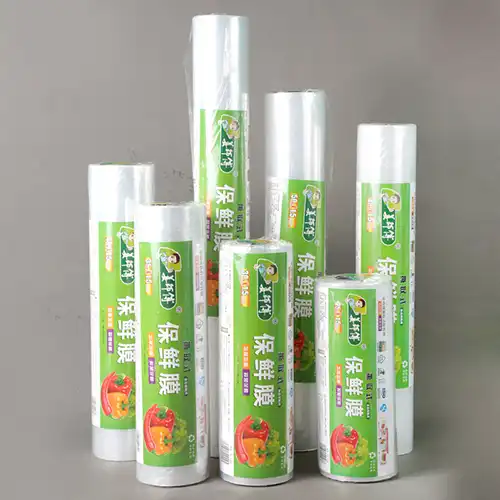
There are four main things we do with our PVC cling film roll. Fruit and vegetable trays, baked goods, and meat trays are wrapped up in a way that makes them easy to see in stores and food processors. Inside cold rooms, the film keeps food safe and helps chill it for a short time. We offer both a validated formulation and a PE option for longer deep-freeze jobs. Food service kitchens cover pans, bowls, and dishes that are already made with it. Inside homes, it's used to cover leftovers and close jars.
If the job needs PE instead of PVC, tell us about the food, how cold it is, and how long it will be kept. Then we'll suggest the best material instead of pushing just one.
Conclusion
PE cling film is usually the best choice for long-term freezing because it stays flexible, doesn't soak up water, and can handle rough edges. A PVC cling film roll is better for short-term chilling, retail displays, and refrigerated trays that need to stick to things and be clear. If air gets to the food's surface, it will freeze burn. For this reason, the right thickness, tight wrapping, and storage time are just as important as the polymer. You should look at the thickness, roll size, and how well it fits your tools all at the same time. Also, documents that touch food must be right for the product and market. When things go wrong, waste, and tears happen, the lowest price often ends up costing more in the end. PVC is used for cold displays and PE is used for frozen goods in a two-film plan. Each material is matched to its strength, and the choice is proven by tests on real products.
FAQ
Can I freeze food in PVC cling film?
Yes, most of the time. As low as -18°C (0°F), which is the temperature of a freezer, food-grade PVC cling film rolls won't break. If you want to store something for a long time or freeze it, PE is usually the better material to start with, so make some test samples first.
Which film works better for frozen meat?
PE is better at protecting against bones and sharp edges because it doesn't get soft when it gets cold. It still matters how the package is designed and how tightly it is wrapped, so test the film on real cuts.
Is freezer burn a safety problem?
Fridge burn dries out the food's surface and lowers its quality, but the FDA says it's still safe to eat. It goes down in a tight, low-air envelope.
What should an RFQ include?
That way, the first time they give you a quote, it will be right. You should tell them the type of material, the food, the temperature, how long it will be stored, the width and length of the roll, the core size, the packaging format, the volume, the destination, the certifications, and the date of delivery.
Do you offer samples?
Yes. Lanzhou Honghe Plastics Co., Ltd. will send you free samples if you ask. You can try them out in different sizes and packaging.
Request a PVC Cling Film Roll Quote from Shandong Honghe Plastics Co.,Ltd.
It is close to Qingdao Port and makes PVC cling film rolls. You can get free samples when you ask for them, a wide range of high-quality PVC products, and after-sales service 24 hours a day, seven days a week. Send an email to tony@sdhhsl.com with the type of food, freezer temperature, roll size, and volume, and our team will send you a quote. sdhhsl.com is another place to learn more about the item.
References
1. USDA Food Safety and Inspection Service, Freezing and Food Safety, 2013
2. U.S. Food and Drug Administration, Code of Federal Regulations Title 21, Part 177: Indirect Food Additives: Polymers, 2024
3. European Commission, Regulation (EU) No 10/2011 on Plastic Materials and Articles Intended to Come into Contact with Food, 2011
4. Mancini, R.A. and Hunt, M.C., Current Research in Meat Color, Meat Science, 2005
5. Robertson, G.L., Food Packaging: Principles and Practice, Third Edition, CRC Press, 2012
6. Gilbert, M. (Ed.), Brydson's Plastics Materials, Eighth Edition, Butterworth-Heinemann, 2017