



Why Choose PVC Cling Film Roll for Fresh Food Packaging?
Fresh food businesses choose PVC cling film roll https://www.sdhhsl.com/pvc-cling-film/pvc-cling-film-rollbecause it clings tightly, stays clear, and stretches over trays, bowls, and uneven cuts of food. Buyers can see the product, scan the label, and check quality without opening the package. At Shandong Honghe Plastics Co.,Ltd., we hear the same priorities from kitchens, supermarkets, and cold rooms: safe materials, steady supply, and fair cost. PVC film also lets oxygen pass through, which helps fresh red meat keep its bright color. This guide covers benefits, uses, film comparisons, safety checks, and buying steps, so you can pick the right wrap with confidence.
Why Fresh Food Businesses Need the Right Cling Film Roll?
Commercial Rolls Differ from Household Wrap
You can buy PVC cling film rolls and use plastic wrap around the house. They look alike, but they're not the same. Most home wrap comes in short rolls that you can use once in a while. Most rolls sold in stores are longer, wider, and have bigger cores. Most of the time, they can make cuts or wrapping stations work by putting them on the wall. Every shift at restaurants and shopping shops, people wrap pots and pans. Tools can take film and process it. The width and ease of use should always be the same. The whole line moves more slowly when a roll gets stuck or tears. Before you decide, look at the roll's width, thickness, length, core size, and the tools that will hold it. That's more important than the name of the box.
Core Benefits: Cling, Clarity, and Stretch
Every day, the fresh food teams use PVC film because it can be used in three different ways. For pottery, glass, and stainless steel, the wrap doesn't need glue to stick. It stays in place around bowls and trays. Also, it's see-through, so both customers and workers can see the food and bars can be read through it. Third, it changes shape and then returns to its original form. This keeps the wrap tight around food that has bones or other lumps. When the item is being kept or shown for a short time, the film also keeps dust around it. The food, the weather, and how clean it is are still things that matter. The FDA Food Code says that food must be kept cold at 41°F (5°C) or less. A PVC film can't take the place of that control.
Look at Total Operating Cost, Not Only Price per Roll
People who just want to save money often compare rolls based on cost alone. Take a look at the bigger picture. A cheap roll that tears up film and work is a waste. Cutting a roll always saves time. Record how much film is used on each tray, how long it takes to switch rolls, how much waste there is, how much storage space is needed, and how much the film costs. Longer rolls will save you money on changes if your dispenser can hold them. Also, think about how much it costs to handle problems or packages that are turned down. To get better, wrap real trays for a whole shift. Not how much each roll costs, but how much each wrapped item costs. That number tells you how much you really pay and lets you compare prices from different brands.
PVC Cling Film Roll Applications Across the Fresh Food Industry
Meat, Poultry, and Seafood
PVC film is often used in meat counters because it lets air flow. A study about the color of meat was put out by Meat Science. Oxygen was found to help myoglobin change color to the bright red that makes people think of freshness. The meat might not look dark because there isn't enough oxygen in the air, even if it's safe to eat. To keep things cool, you can also stick clear PVC film to wooden or foam trays. The material must stick to itself and not tear when it comes to uses with meat and seafood. It also needs to be able to handle cold storage and be safe to touch food. If the food is high in fat, be extra careful. Also, make sure that the method works for your product and the temperature where it will be kept.
Produce, Bakery, and Prepared Meals
When putting fruits and vegetables in boxes, people need to be more careful. Why does it matter what kind of film you use and how cold you store it? Because food needs to be able to breathe, and water can gather inside the wrap. Before a full start, you should test any film on your own things. It is easier to deal with meals and baked goods that are already made. Trays are safe, you can see what's on them, and dust stays out thanks to clear film. It's also important that the film is easy to cut without shredding in commercial kitchens. Bigger buyers may need standard sizes, long rolls, batch records, and private-label cartons to make sure that all of their locations get the same product. Every shop or kitchen can order the same roll every time if everything is clear.
Cold Storage, Catering, and Household Use
People at home and in the catering business use our PVC cling film roll to keep things cold and handle food. A walk-in cooler with a lid keeps cooked foods fresh and prevents surfaces from drying out. Things that are being catered are wrapped up before they are moved. People in homes use smaller rolls for food that they have left over. Because each user has different needs, specs like width, length, and thickness change for each use. Narrow rolls work best for bowls and home kitchens. Wide rolls work best for pans and tables. It's important to have film that doesn't get stiff in cold rooms. Make sure the seller knows what temperatures their film can handle before you place your order. It's clear after a quick test in your own cooler.
Comparing PVC Cling Film Roll with Other Films and Choosing Specifications
PVC Film Compared with PE Film
There are two kinds of cling film: PVC and PE. They can both wrap food well, but they do it in different ways. The clear, stick-well, and bend-easy PVC is good for making trays and other odd forms most of the time. People often choose PE film when they want a material that doesn't have PVC in it. How it's made and what's put into it change how well it works. Since Shandong Honghe makes both PE film and PVC film, I can say that either one is a good choice. Your food, your tools, and the rules your customers set are what make it work. Check the range of temperatures it can cover, the amount of air it can let through, its shine, its stretch, and its cling. You should run each film on its own line if you can. Then, it will tell you what to do.
Biodegradable and Compostable Alternatives
Some people who buy the wrap want to know if it can be composted or broken down. Before you decide that these things can help you reach your environmental goals, read through all of their claims. The FTC Green Guides say that businesses shouldn't make environmental claims. And a "compostable" sign will only help if your trash company takes it. You should be given proof of certification, told how to get rid of it, and told how well it works with cling and clarity. After that, check out how good the film is and how you finished it. That's the paper they should ask for if they want approved paper that can be reused. PVC film might be better if you want something that wraps well and doesn't cost a lot. Pick based on your written rules for buying, not on a catchy word.
Thickness, Width, and Roll Size
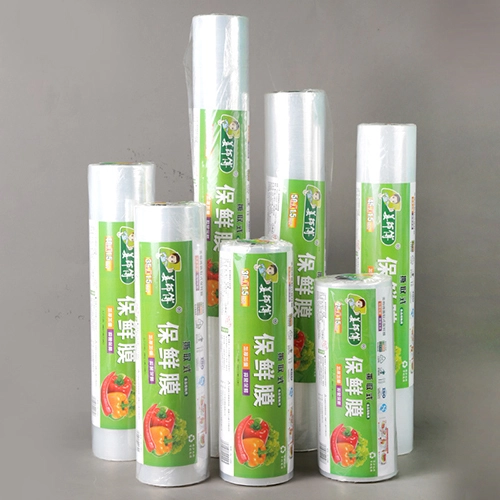
Sizes like thickness, width, length, and core size for a PVC cling film roll can change how much something costs and how well it works. It is easier to stretch thinner film and it takes up less space, but it might not be as strong against holes. You can handle being rough and having sharp edges better on a thicker film. A lot of kitchens use 45 cm rolls for bigger pans, trays, and meat packs. 30 cm rolls can be used to make bowls, small trays, and baked goods. Before you place your order, make sure that the core diameter, the outer diameter, and the dispenser all fit. It's not worth your time to get a roll that doesn't fit your tool. An even, tight wind makes it easy to unroll, so it's also important that it's well wound. Get samples in the sizes you want to see how well they stick, stretch, cut, and last.
Food Safety, Quality Control, and Manufacturing
Documentation for Food-Contact Safety
The term "food grade" should come from facts, not a sales pitch. Things in the United States that touch food must follow the rules set by the FDA. Title 21 of the Code of Federal Regulations has these rules. You should be able to see test results, a compliance statement, and a list of all the batches of the goods you want to buy. You should also ask for a list of the ingredients if you want to use plasticizers in your PVC film that can touch food. We need to make changes to how we cook fatty foods, heat food, and keep food in the fridge for a long time. ISO, CE, and FDA have all given their approval to Shandong Honghe Plastics Co.,Ltd. You can find us on BSCI and WCA as well. Our group gives papers to each other when asked.
Temperature and Microwave Limits
Some types of PVC film don't work well with heat. Before you put a roll in the microwave, read the label to make sure it's safe to do so. If you cover food, it shouldn't touch the heat, and the steam needs a way to escape. Don't think that one film will protect all foods that are high in fat and sugar. If you want to store the film in a freezer or cooler, have the seller tell you how cold it needs to be for it to still work. Also, keep the rolls out of direct sunlight and heat sources. People who work for you and your customers are safe if you do what the maker says in writing.
Production Steps and Quality Checks
The factory is where good films are made. It is part of the process to choose the raw materials, mix them, make a film, let it cool, control its thickness, split it, rewind it, inspect it, and pack it. The conditions of work and the amount of winding strain determine how clear, sticky, thick, and simple it is to unwind the roll. When the lots come in, check the cartons' state, length, width, cling, stretch, and gauge consistency. Even though Shandong Honghe works in a normal workshop with high-tech tools, we keep a close eye on quality. That set-up works for both OEM and ODM projects, as well as for repeat orders and orders with different widths and lengths. It also helps our team quickly fix application problems after a customer tells us about them.
Buying Guide: How to Choose a PVC Cling Film Roll Supplier?
Define Your Application First
Start with the job, not the shop for a PVC cling film roll. This is a list of the types of food that will be wrapped, how they will be wrapped, how wide they will be, how many sizes they will come in, how cold they will be stored, where they will be sold, and any private-label needs. Send that list with your price request so the seller can help you find a standard that works. Compare quotes based on the total cost of landing, which includes the price of film, freight, taxes, waste, and any claims that may be made. It is important to look at their policy samples, wait time, and compliance papers. Shandong Honghe is in Liuguanzhuang town, Shandong Province. Because it's close to the port of Qingdao, it's easy to send things abroad.
Mistakes to Avoid
These three mistakes are ones that people who are buying things do a lot of the time.
- Buying on unit price alone. Rolls with the same name might be different in length, thickness, raw materials, and how they are packed if all you care about is the price per unit. If some rolls of film are thinner or shorter, the price per folded tray might go up. Don't forget to write down the details and compare the prices per wrapped item.
- Assuming every roll fits your equipment or food. Just make sure that each roll fits your food or gear by making sure that they all have the same outer diameter, width, core size, and winding direction. You should also look at the product's compliance papers because not all PVC film is safe to touch food. Before you buy it, test it on trays with rough edges, greasy foods, and shapes that aren't round.
- Overlooking logistics. Not fretting over the details. What makes the difference in how rolls get to their destination without getting damaged is the export cartons, how the pallets are laid out, the moisture protection, the labels, and how the containers are loaded. Talk to the seller about these things and find out how they pack for long trips across the ocean before you ship. This way, you won't have to deal with broken or crushed parts or boxes at your warehouse. Knowing the exact sizes of the boxes and pallets makes it easier to plan for customs and the warehouse.
Claims and lost orders won't happen if you don't do these things wrong.
Why Buyers Choose Honghe?
Shandong Honghe Plastics Co., Ltd. has been in business since 2017. They make stretch film, TPE, CPE, and PE gloves that you throw away, and PE film and PVC film. Our PVC cling film roll is made from the best PVC. You can change things like size and packaging if you need to. Through OEM and ODM, we can help you do that. You can try the cling, sharpness, undoing, and cutting before you buy a lot of it. We'll send you some for free. People can buy from our factory right away, quickly, and for a good price. They can call us at any time after the sale for help. When people buy something, they worry most about price, safety, and a steady supply. That's the reason these things are significant.
Conclusion
PVC cling film roll is good for packing fresh food because it stays clear, sticks to itself, and can be stretched over bowls, trays, and other uneven surfaces. Besides that, it lets air in, which helps red meat stay red. It's used in home kitchens, restaurants, fridges, and stores that sell meat. There is a best film for every kind of food, tool, thickness, width, and temperature range. There are different steps people need to take to buy PE films or recyclable films. Safety records, such as compliance notes and records of activities, are very important. You can use a microwave as long as you first ask the person who made it. To find out how much different covered items cost, it's best to try out samples. The safest time to buy is when the quality is stable, the specs are clear, and the packaging is ready to ship.
FAQ
Q1: Is PVC cling film roll safe for food contact?
A: Safety depends on the exact formulation, intended use, and destination-market rules. Before you buy the specific PVC cling film roll, make sure you get a statement of compliance, test results, and a number for each batch.
Q2: What is the difference between 30 cm and 45 cm rolls?
A: Bowls, small trays, and baked goods can all fit on a 30 cm roll. Trays, pans, and meat or fish packs can all fit on a 45 cm roll. Make sure that both sizes will fit your dispenser before you order them.
Q3: Can I microwave PVC cling film?
A: Only if the maker says it's okay. Leave space for steam; don't cover the food with the PVC film. You shouldn't think one film can make everything hot.
Q4: Do you offer samples and customization?
A: We can make changes to meet your needs, like for OEM and ODM projects. If you ask, Shandong Honghe Plastics Co.,Ltd. will also send you free samples.
Request PVC Cling Film Roll Samples from Shandong Honghe Plastics Co.,Ltd.
Do you want to buy PVC cling film rolls from a company that gives you free trials, sells good PVC, and can make rolls in any size? You can talk to Shandong Honghe Plastics Co.,Ltd. about them. You can email tony@sdhhsl.com with what kind of food you want to use, how long, wide, and thick the roll is, and a rough idea of how much you need. Then, our group will make a plan that works for you. After that, put our samples on your own trays to see how they work before you buy a lot of them.
References
1. U.S. Food and Drug Administration, Code of Federal Regulations, Title 21: Food and Drugs, 2024.
2. Mancini, R. A., and Hunt, M. C., "Current Research in Meat Color," Meat Science, 2005.
3. Robertson, G. L., Food Packaging: Principles and Practice, CRC Press, 2012.
4. U.S. Food and Drug Administration, Food Code, 2022.
5. Federal Trade Commission, Guides for the Use of Environmental Marketing Claims (Green Guides), 2012.
6. Kerry, J. P., O'Grady, M. N., and Hogan, S. A., "Past, Current and Potential Utilisation of Active and Intelligent Packaging Systems for Meat and Muscle-Based Products: A Review," Meat Science, 2006.