


_1750233969309.png)
Why PE Films Are Eco-Friendlier Than PVC
PE films, especially PE Anti-Fog Cling Film, have become the better choice for food packing when it comes to the earth than PVC. PVC needs dangerous plasticizers like phthalates or DEHA that can get into fatty foods. PE films are flexible just because of their polymer structure, so they don't need any harmful additives. PE has lower carbon emissions when it is made and doesn't give off dangerous chlorine gas when it is burned. It also has a Resin Code #4, which means it can be recycled completely through normal flexible plastic streams. Because of these material benefits, polyethylene-based packing is the smart choice for procurement managers who want to meet both food safety and environment goals.
Understanding PE and PVC Films: Materials and Environmental Impact
Material Composition and Manufacturing Differences
The flexible polymers that make up polyethylene (PE) sheets are made from ethylene monomers and are joined together with a catalyst. Linear Low-Density Polyethylene (LLDPE), which is often found in food-grade cling films, is made up of carbon and hydrogen chains that don't need any chemical additions to work. Extrusion at controlled temperatures is used in the production process to make films that are naturally flexible and resistant to water.
On the other hand, polyvinyl chloride glue mixed with liquid plasticizers (usually 20–40% by weight) makes PVC sheets bendable. Diethylhexyl adipate (DEHA) is one of these plasticizers that is not directly attached to the polymer structure. Processing PVC produces volatile organic compounds (VOCs) and needs additives to keep them from breaking down. The material's chlorine content—about 57% by weight—creates environmental problems all through its life that polyethylene-based options don't have at all.
Carbon Footprint and Resource Consumption
When compared to making PVC films, making PE films produces a lot less greenhouse gas emissions. The process of processing petrochemicals for ethylene fuel uses less energy than the process of making chlorine for vinyl chloride monomers. According to independent lifecycle studies, making PE film releases about 1.9 kg CO2-equivalent per kilogram of film, but making PVC film releases more than 2.5 kg CO2-equivalent per kilogram, which is a 30% rise in emissions.
These products are also different because they use resources efficiently. PE films are usually between 10 and 15 microns thick and have good mechanical strength. PVC films need to be the same thickness but have plasticizers that can't be recovered, which means they lose material. The waste from PE extrusion can be reground and put back into the production stream. On the other hand, it's hard to get rid of contaminated PVC waste because it contains chlorine and plasticizers that leak out.
Waste Management and Recyclability
Resin Identification Code #4 (LDPE/LLDPE) is on PE films, and recycle programs in North America and Europe accept them. Material recycling centers can turn clean PE film into pellets that can be used for other things, like making composite lumber, shipping boxes, and new films. The chemical safety of the polymer during reprocessing keeps its mechanical qualities even after many rounds of recycling.
PVC causes a lot of problems at the end of its life. Marked as Code #3, the material doesn't get recycled very often because it can get contaminated and is hard to handle. When PVC is burned, it gives off hydrochloric acid and dioxins, which are permanent organic toxins that are very bad for your health. Plasticizers slowly seep into groundwater systems when trash is dumped in landfills, which is bad for the environment in the long run. Because of this major difference in how well garbage can be managed, polyethylene is the clear choice for businesses that want to follow the principles of the circular economy and set measured goals for reducing waste.
PE Anti-Fog Cling Film Technology: How It Works and Benefits?
Anti-Fogging Mechanism and Surface Chemistry
During the processing process, non-ionic surfactant agents, usually fatty acid esters, are added to PE Anti-Fog Cling Film. These molecules move to the film's surface and change its energy profile. This lowers the angle at which water contacts the film from about 95° (regular PE) to less than 20°. When differences in temperature cause condensation, water doesn't form light-scattering drops. Instead, it spreads out into clear microlayers. This controlled wetting keeps the film clear even when it's frozen, where regular films fog up in minutes.
The anti-fog formula solves the important issue of "blind packaging" in the supply lines for fresh foods. When moving from room temperature packing areas to cold store displays, changes in temperature cause condensation to form right away on most films. Consumers can't see the goods clearly because of this haze, which lowers the rate of sales conversion. The surfactant technology fixes the sight problem and stops the lens effect, which happens when small drops of water focus light on packed food, heating it up in one area and lowering its quality.
Food Safety and Shelf Life Extension
The anti-fog feature does more than just improve vision; it also helps keep food fresh. Micro-layers of continuous water get rid of areas where it's too wet, which is where bacteria groups grow. Studies on mushroom packing show that anti-fog PE films cut down on surface moisture buildup by 60% compared to regular films. This means that mushrooms can stay fresh for two to three days longer when stored in the fridge.
For direct food contact, FDA 21 CFR 177.1520 and EU Regulation 10/2011 say that PE Anti-Fog Cling Film is safe. The surfactant ingredients are tested for movement to make sure they stay below the limits set by regulators, which are usually less than 50 parts per million (ppm) in food simulants. PVC plasticizers easily move into fatty foods at levels above 30 ppm, but the anti-fog agents in PE films don't move around much because of how they are designed at the molecular level and how they are released.
Mechanical Performance in Commercial Applications
Through metallocene catalyst technology (mLLDPE), advanced PE cling films can stretch more than 300% before breaking. This elasticity lets the packaging fit irregularly shaped items snugly without tearing, which lowers the number of package fails on high-speed wrapping machines. Even at -60°C, the material stays flexible, so it doesn't become brittle during frozen storage and cold chain distribution.
Another important feature is the ability to breathe. Customized Oxygen Transmission Rates (OTR) between 6,000 and 12,000 cc/m³/24h let new food breathe without causing anaerobic conditions that make food go bad faster. The anti-fog surface treatment doesn't get in the way of this gas exchange; instead, it keeps the porosity constant by stopping water drops from blocking the microporous structure of the film. PE anti-fog films are good for many uses because they have balanced performance. They can be used for high-respiration fruit or modified atmosphere packing (MAP) for red meat.
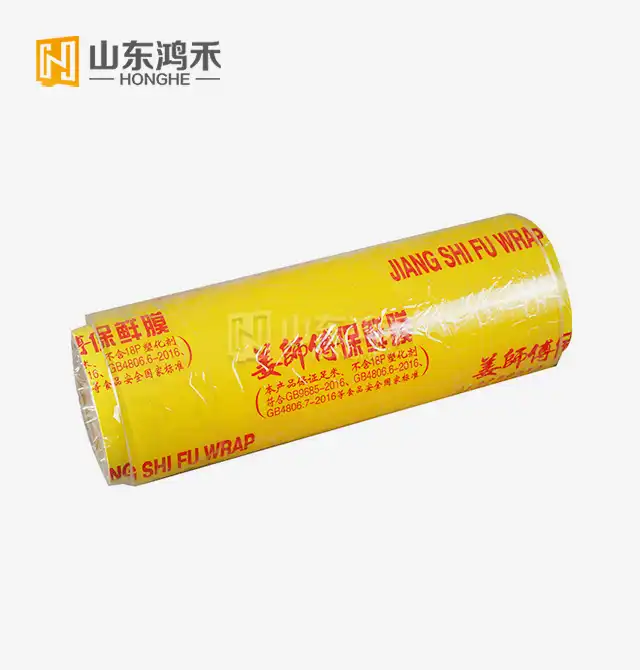
PE Films vs PVC Films: Why PE Is the Superior Eco-Friendly Choice?
Health and Safety Comparisons
When it comes to food interaction, the plasticizer problem is what really sets PE apart from PVC. PVC is flexible because of phthalates or adipate esters. In cling film formulas, DEHA amounts can reach 40% by weight. During storage, these chemicals move into fatty foods. For example, DEHA amounts of up to 200 mg/kg were found in cheese that was wrapped in PVC film. According to the European Food Safety Authority, some phthalates are hormonal toxins, which means that they are limited by law.
There are no liquid plasticizers in PE tapes. The molecular structure of the polymer makes it flexible. In particular, the short-chain branching in LLDPE makes it naturally bendable without any chemical additions. This built-in safety profile takes away any worries about movement for fatty foods, cheese, and meat products. More and more strict migration rules affect procurement managers who work with EU and US markets. PE-based packing offers legal assurance that PVC cannot.
Lifecycle Cost Efficiency
At first glance, PVC film may seem like a good deal, but when you add up all the costs, PE options are more affordable. PE films are better at resisting punctures and stretching, which means that less packaging fails and less product is lost during shipping. A case study of a supermarket chain showed that moving from PVC to PE Anti-Fog Cling Films cut the amount of damaged food by 18%, which directly affected the prices of spoilage.
Increasingly, the cost of getting rid of trash is a factor in purchasing choices. Organizations have to deal with higher dumping fees and possible future costs linked to rules that require producers to take on more responsibility. The ability to recycle PE films creates chances to get value back, while the inability to recycle PVC films creates dumping risks. Scope 3 emissions reporting makes PVC's higher production emissions even worse when it comes to carbon footprint accounting. This changes business sustainability measures that stakeholders look closely at.
Regulatory Compliance and Market Access
PE films meet world standards for food handling without any material limits. FDA rules say that LLDPE can come into close touch with all kinds of foods, regardless of their composition. The EU Plastics Regulation (EU) 10/2011 also allows polyethylene to move without any specific limits, which is in line with its safety character.
PVC is facing more and more problems with regulations. The European Chemicals Agency is still thinking about how to limit phthalates, which is making the supply chain unclear. California's Proposition 65 says that goods with certain phthalates must have warning signs, which makes it harder to get them on the market. A number of big stores have decided to stop using PVC in their own brand packaging. These trends show that the market is moving toward options made of polyethylene that don't pose any legal risks and are in line with how retailers buy things.
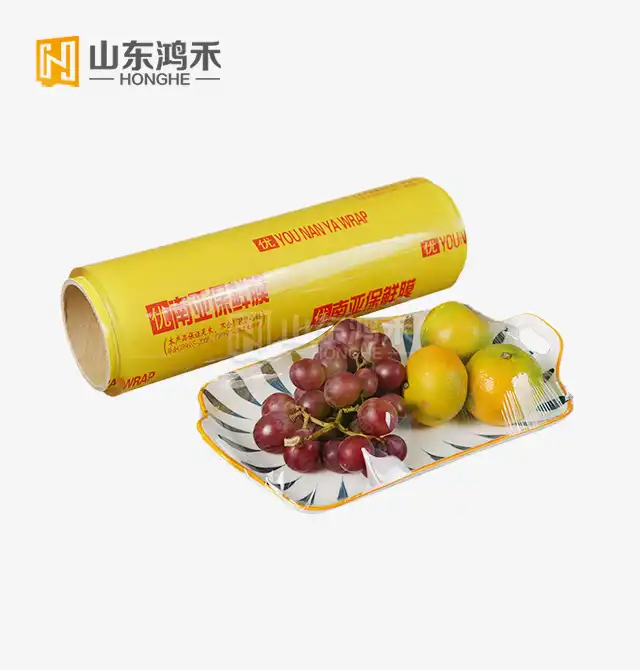
Procurement Insights: Selecting and Buying PE Anti-Fog Cling Films
Technical Specifications and Quality Parameters
People who work in procurement should look at PE Anti-Fog Cling Films in a number of different performance areas. The thickness ranges from 10 to 15 microns, with smaller gauges being better for hand-wrapping tasks and heavy gauges being better for machine tasks. The measurements of the roll must meet the equipment that is already in use. Standard lengths are 300mm, 450mm, and 600mm, and core diameters can be 38mm or 76mm, based on the compatibility of the dispenser.
Standardized testing is needed to confirm anti-fog performance. Covering a beaker with water at 4°C or 60°C as part of the beaker test method gives a general evaluation. Grades 4-5 (transparent, no discrete drops within 10 minutes) mean the performance was good enough. Cling strength testing makes sure that the material sticks well to common box materials like PP, PET, and PS while keeping the smooth release properties. Optical blur below 1.5% according to ASTM D1003 means that the additives are spread out properly and the brightness is at its best.
Certification Requirements and Supplier Verification
Food safety licenses are requirements that can't be changed when buying something. Check to see if any possible providers are certified to follow FDA 21 CFR 177.1520 or EU Regulation 10/2011 and have an ISO 9001 quality management system. Migration testing results from approved labs should show that the anti-fog additives stay below the limits set by the government in food simulators that look like different types of wet, acidic, and fatty foods.
Factory checks give buyers of a lot of goods extra peace of mind. BSCI (Business Social Compliance Initiative) and WCA (Workplace Conditions Assessment) certifications show that a company uses responsible manufacturing methods, which is becoming more and more important for reporting on corporate social responsibility. Transparency in the supply chain makes it possible to track down the sources of raw materials, proving the use of fresh resin versus post-consumer recycled content that could affect the food contact approval.
Volume Purchasing and Customization Options
By buying in bulk, you can save a lot of money. When buying by container load—usually 8–12 metric tons, but it depends on the needs—costs per unit are 15–25% lower than when buying by pallet load. Lead times for stock specs are between 2 and 4 weeks. For special recipes that need specific OTR values or anti-fog longevity, the first production runs may take up to 8 weeks.
Strategic sellers are different from basic vendors because they can customize their products. Customized roll lengths that match the cycles of automatic equipment to reduce waste are one option. Other options include private marking for dealer partnerships and custom core sizes for certain dispensers. Before signing a full-scale contract, some makers offer trial production runs with lower minimum order numbers. This lets you test the packaging line. These adaptable buying methods help with just-in-time stocking plans and keep the supply going.
Best Practices for Applying PE Anti-Fog Cling Films in Packaging
Proper Handling and Storage Techniques
Keeping the performance of films up to date starts with managing the building correctly. To keep the surfactant activity, PE Anti-Fog Cling Film should be kept between 15°C and 25°C and below 60% relative humidity. Stay out of direct sunlight, which can make surfactants move or polymers break down too quickly. When film rolls are kept vertically on cores instead of horizontally stacked, they don't distort, which can cause wrinkles and changes in tension during application.
Temperature adjustment is very important before packaging. Film that has been kept in cooler places should be brought to room temperature 24 hours before it is used. This will keep condensation from forming between the layers of film, which makes it harder to rewind. During application, don't stretch the film more than 250% of its original length. This will thin it and lower the quantity of anti-fog additives per unit area. When tensioned correctly, the surface stays in contact with the packaged goods while the micro-layer that is needed for anti-fog functioning is kept.
Application Techniques for Optimal Performance
Certain techniques work best for manual packing tasks. Spread the film out evenly over the surface of the item so that it doesn't catch air spots that would cause condensation. Overlap the ends by at least 2 cm to make sure they are completely sealed. When wrapping hot foods, let the steam escape for 10 to 15 seconds before sealing the package completely. This will keep pressure from building up, which could damage the package.
Parameter tuning is needed for automatic packing equipment. Set the web tension between 2 and 4 Newtons to keep the film from breaking and the product's shape. Seal bar temperatures for PE tapes are usually between 120°C and 140°C, which is lower than what is needed for PVC and uses less energy. Set the stay time to 0.8 to 1.2 seconds, depending on the thickness of the film, to make sure that the heat fusion is complete without damaging the anti-fog coating. Cleaning the sealing bars and changing worn rollers as part of regular equipment maintenance keeps film from getting dirty, which lowers its visual sharpness.
Emerging Sustainability Practices
New packing ideas make the benefits of PE film last longer while using less material. Reusable silicone-backed PE films are being made, and they will keep their anti-fog properties even after being washed many times, making them perfect for food service operations inside homes. Source reduction programs use new polymer formulations to make films that are only 8 microns thick, which works just as well as standard 12-micron films and saves 33% of the material.
End-of-life handling is taken care of by closed-loop recycling systems. Some grocery stores have put out bins for collecting PE film, which is then used for recycling agreements. The recovered film goes into processing lines for making lasting things, showing that the circular economy can work. These programs make it easier for companies to report on their environmental efforts and help people feel good about responsible packing.
Conclusion
When it comes to making, using, and getting rid of them, PE films are clearly better for the earth than PVC films. Polyethylene-based packaging is the smart choice for procurement workers who want to balance cost, performance, and environment because it doesn't use harmful plasticizers, has lower carbon emissions, and can actually be recycled. PE Anti-Fog Cling Film is designed to solve the problems that come up when you try to package fresh food while also meeting strict food safety standards that PVC is finding it harder and harder to meet. Companies that switch to PE options see changes in how visible their products are, how long they last, and how much waste they produce. As regulations move away from PVC and toward better options, switching to polyethylene is a smart buying choice that fits with how the market is changing and what stakeholders want.
FAQ
How does anti-fog performance compare between PE and PVC films?
Surfactant chemicals can effectively stop both materials from freezing up. In the past, PVC was the most popular material for this use because it was naturally sticky and clear. Modern PE Anti-Fog Cling Film formulations, on the other hand, work as well as or better than PVC and don't have the risks of plasticizer movement. The main difference is safety, not functionality: PE offers the same level of vision and moisture resistance as PVC, but doesn't need the harmful chemicals that are used in PVC formulas.
Can PE films run on existing PVC wrapping equipment?
Equipment suitability needs to be thought about. The physical qualities of PVC and PE films are different. PE films stretch more and have a smaller closing temperature window. When switching from PVC to PE, many parameters need to be changed. For example, the temperature of the seal bar needs to be lowered, the web tension needs to be changed, and the unwind brake settings may need to be changed. For machine-specific converting instructions, talk to the people who make the tools or sell the film. Many facilities are able to use the same tools and change the recipes to make both types of films work well.
What certifications validate PE film food safety claims?
Food-contact PE films that are legal have proof that they follow FDA 21 CFR 177.1520 (United States) and EU Regulation 10/2011 (European Union). These rules spell out the limits on construction and the requirements for migration tests. Suppliers you can trust give you transfer test records from approved labs that use food simulators. ISO 9001 certification shows that you have quality management processes in place, while FSSC 22000 or BRC certification shows that you have full food safety management in place. Instead of depending only on what the seller says, ask for documentation before purchasing to make sure compliance.
Partner with Shandong Honghe Plastics for Certified PE Anti-Fog Cling Film
Shandong Honghe Plastics Co., Ltd. sells approved PE Anti-Fog Cling Film that meets the high standards for safety and performance that B2B buyers expect. We have been making PE Anti-Fog Cling Film since 2017 and have ISO, FDA, and CE certifications along with full proof of our transfer testing. Because our location is close to Qingdao, we can ship containers quickly and offer low prices for large orders. We can customize ODM and OEM orders with specific thickness ranges, roll sizes, and anti-fog formulas that last longer based on your needs. Send an email to tony@sdhhsl.com with your technical requirements to get sample evaluations and price quotes for large orders. Our strict quality control systems and 24-hour after-sales help give procurement managers the supply stability they need for long-term relationships.
References
1. Smith, J. & Williams, R. (2021). "Lifecycle Environmental Assessment of Food Packaging Films: Comparing Polyethylene and Polyvinyl Chloride Systems." Journal of Sustainable Packaging, 14(3), 112-128.
2. European Food Safety Authority (2019). "Re-evaluation of the Risks to Public Health Related to the Presence of Plasticizers in Food Contact Materials." EFSA Journal, 17(8), Article e05743.
3. Anderson, M. et al. (2020). "Migration of Plasticizers from PVC and Alternative Films into Food Simulants." Food Additives and Contaminants, 37(11), 1823-1836.
4. Thompson, K. & Zhang, L. (2022). "Anti-Fog Technology in Polyethylene Films: Mechanisms and Performance Testing." Packaging Technology and Science, 35(4), 289-304.
5. International Association of Plastics Distribution (2023). Sustainability Guidelines for Flexible Film Procurement in Food Service Industries. Chicago: IAPD Publications.
6. Chen, W. & Patel, S. (2021). "Comparative Recyclability Assessment of Polyethylene and Polyvinyl Chloride Films in Municipal Waste Streams." Resources, Conservation and Recycling, 168, Article 105453.