


_1750233969309.png)
PVC Food Wrapping Film has become the backbone of food preservation across industries worldwide due to its exceptional barrier properties, cost-effectiveness, and versatility. From industrial food processing facilities to medical institutions, this transparent packaging solution offers unmatched protection that extends shelf life while maintaining product integrity. Its widespread adoption stems from superior cling characteristics, excellent clarity for product visibility, and compliance with stringent international food safety standards, making it an indispensable choice for businesses seeking reliable packaging solutions.
Understanding PVC Food Wrapping Film: Composition, Benefits, and Safety
Polyvinyl chloride food wrapping film represents a sophisticated packaging solution engineered specifically for food preservation applications. The manufacturing process involves extruding high-grade PVC resin through precision machinery, creating films with controlled thickness and optimal molecular structure.
Manufacturing Excellence and Material Properties
The production of food-grade PVC film requires specialized equipment and rigorous quality control measures. Advanced extrusion technology ensures consistent thickness distribution and maintains the molecular integrity necessary for superior performance. The resulting film exhibits remarkable elasticity, allowing it to conform tightly to irregular surfaces while maintaining its barrier properties.
The outstanding cling properties of PVC films, opposed to those of alternatives made from polyethylene, may be achieved without the use of adhesives, which are often used. The film is able to attach to itself as well as to a range of surfaces in an effective way because of the molecular makeup to the material, which causes van der Waals interactions. This self-adhering property is a result of the material's molecular structure.
Food Safety Compliance and Certification Standards
Food wrapping films made of plastic that have been approved by the Food and Drug Administration (FDA) are put through rigorous testing to ensure that they meet the criteria that are in place regarding food contact. As a result of the very severe migration constraints for chemicals and polymers that these plastic films adhere to, it is guaranteed that no hazardous substances will be transmitted to the products that are packed. It is possible to demonstrate that these products are safe and of a high quality for use in international markets by obtaining certifications from international organizations. Some examples of such certifications are the Certificates of Conformity and ISO standards.
The hazards of modern PVC food films has experienced a significant improvement as a result of the use of formulation technologies that are more complex. Manufacturers are using non-toxic stabilizers and manufactured plasticizers in their production processes at the present time. The use of these accelerators and plasticizers enables producers to maintain film performance while maintaining increasingly stringent safety standards across a wide range of regulatory regimes.
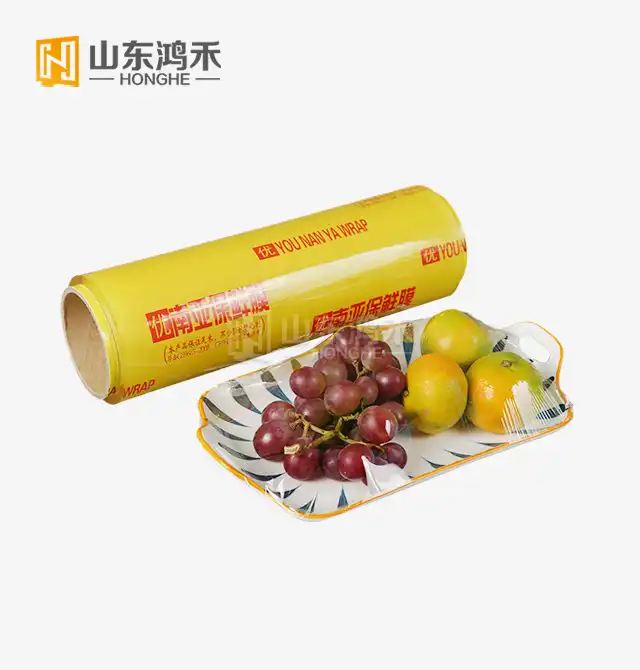
Comparing PVC Food Wrapping Film with Other Films for Food Preservation
When evaluating packaging options, understanding the distinct advantages of different film materials, such as PVC Food Wrapping Film, becomes crucial for procurement decisions. Each material offers unique properties that suit specific applications and operational requirements.
Performance Characteristics Comparison
PVC films are better than alternatives manufactured of polyethylene in terms of both brightness overall cling performance. This is the case when comparing the two types of fabrics. In spite of the fact that polyethylene (PE) films have a high degree of water and chemical resistance to chemicals, they do not offer the kind of outstanding conformability that makes polyvinyl chloride (PVC) the material choice of wrapping irregular shapes. The viscoelastic stability of PVC allows it to maintain its seals even when subjected to fluctuations in temperature. This is because PVC is able to maintain its shape.
When it comes to the functions stretches films designed for industrial applications nor food-grade wrapping films provide, there are significant variations between the two. Stretch wraps that are used in manufacturing environments have a focus on load stability and breakage resistance, while food wrapping films lay an emphasis on barrier properties and the safety of immediate surface contact with food. Stretch wraps are used in industrial settings. The ability of procurement teams to choose things that are suitable for certain applications is improved when they have a deeper grasp of the attributes in question.
Cost-Benefit Analysis for Bulk Procurement
When the whole price tag on ownership can be taken into account, the economic advantages of using PVC meal wrapping covers become easily apparent. These benefits include a reduction in expenditures. In spite of the fact that the beginning material costs may differ, the improved performance attributes often result in a reduction in waste and an increase in the efficiency with which operations are carried out. An increase in longevity of products, which may be achieved via the application of effective barrier protection, leads to cost savings that can be measured across the whole value chain.
Sustainability considerations increasingly influence procurement decisions. Modern PVC films incorporate recyclable formulations and reduced material thickness without compromising performance, addressing environmental concerns while maintaining cost-effectiveness.
Global Procurement Guide: How to Buy PVC Food Wrapping Film Efficiently
For the goal of effectively procuring PVC food packing films, it is vital to have a good grasp of the primary evaluation criteria and to build contacts with reliable suppliers. This is all required in order to achieve the desired outcome. It is essential to pay close attention to certification standards, requirements for excellence, and logistical concerns when dealing with overseas sourcing because of the complexity of the process.
Essential Certification and Compliance Requirements
It is the responsibility of procurement managers to ensure that their suppliers continue to have the most current certifications when it comes to items that come into touch with food. Products are assured to meet market requirements if they have FDA endorsement, comply to EU food safety rules, and adhere to local regulatory norms. This ensures that the products are in compliance with the market. Additionally, suppliers should be able to prove that they have certificates from the BSCI and the WCA, which demonstrate their dedication to social responsibility and workplace standards.
Because of quality control procedures such as ISO certification, it is feasible to have faith in the delivery of items that are consistent with one another. When providers have quality procedures that have been designed, the risk of product volatility is decreased, and in addition, reliable performance is assured throughout all batches of manufacture.
Customization Options and Technical Specifications
The most successful manufacturers provide the capability to personalize their goods in order to meet the requirements of certain applications. There is a wide range of protective levels and economic considerations that may be satisfied by variances in thickness that range from 8 to 20 microns. A reduction in the quantity of supplies that is wasted is achieved by the customization of width, which also makes it possible to be compatible with pre-existing packaging equipment.
Technical consultation services help optimize film selection for specific applications, including PVC Food Wrapping Film. Experienced suppliers provide guidance on thickness selection, roll sizing, and performance characteristics based on intended use cases and operational constraints.
Industry Applications and Case Studies of PVC Food Wrapping Film
PVC food containers films are versatile enough to be used in a wide range of various sectors due to their adaptability. In the field of food conservation and display, every application takes utilizes certain film properties in order to achieve the most favorable results that are achievable.
Fresh Produce and Retail Applications
PVC films are the material of choice for supermarket chains when pertains to the wrapping of fresh fruit because of their breathability and transparency. This allows for visibility of the item while also allowing for the regulation of moisture levels. Because the plastic films have the ability to bend into strange shapes, they are ideal for wrapping fresh fruit and veggies while still retaining their beautiful look. This characteristic makes them an ideal choice.
Both the films' ability to withstand high temperatures and their ability to adhere to surfaces are beneficial to businesses who are involved in the food industry. Applications in the dining establishment and catering sectors need packaging that is able to maintain its original quality under a range of storage circumstances while additionally allowing for easy handling and managing quantities. This is a requirement that must be met.
Industrial Food Processing Solutions
Large-scale food processors rely on PVC films for intermediate packaging during production processes. The films' barrier properties protect products during transport between processing stages while maintaining hygiene standards required in commercial food production.
Medical and laboratory institutions utilize food-grade PVC films for specialized applications where non-toxic properties and clarity are essential. These applications demonstrate the films' versatility beyond traditional food packaging roles.
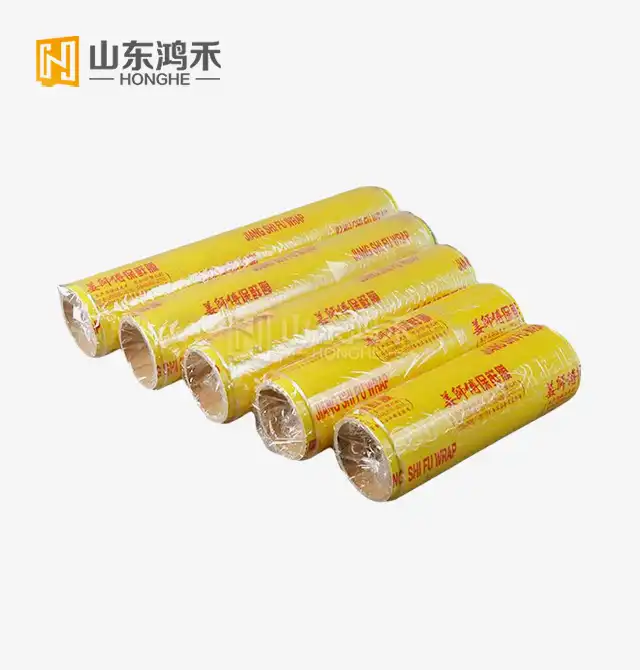
About Shandong Honghe Plastics Co.,Ltd.: Your Trusted Partner in PVC Food Wrapping Film Supply
Company Background and Manufacturing Excellence
Shandong the China Honghe Plastics Company, Limited has been establishing itself as a prominent firm that specializes in manufacturing of flex film, disposable gloves, and PVC/PE cling film since the year 2017. The company was created in 2017. The firm is able to make advantage of the outstanding transport infrastructure that is situated in Liu Guanzhuang Township, which is situated in Shandong Province,China and is in close proximity to Qingdao Port. Consequently, this makes it possible to effectively distribute the product all over the globe.
The company operates state-of-the-art production facilities equipped with advanced manufacturing technology for products such as PVC Food Wrapping Film. Standardized workshops and rigorous quality control systems ensure consistent product quality that meets international standards. Comprehensive certifications including ISO, CE, FDA, BSCI, and WCA validate the company's commitment to quality and social responsibility.
Product Portfolio and Custom Solutions
Shandong Honghe Plastics manufactures high-grade PVC food wrapping films designed for diverse applications. The product range includes various thicknesses and specifications customizable to fulfill unique customer demands across different industries and applications.
Furthermore, the business is able to give tailored formulae for certain reasons, this constitutes a continuation of its customization talents that go beyond the norms that are often expected. As a result of this flexibility, clients are able to enhance their shipment solutions while still preserving the requirements for value and performance throughout the process.
Comprehensive Service and Support
Understanding the importance of informed purchasing decisions, Shandong Honghe Plastics offers complimentary sample services that allow clients to evaluate product performance before committing to bulk orders. This approach reduces procurement risk and ensures optimal product selection.
The company maintains ample inventory levels and provides rapid delivery services backed by reliable logistics support. ODM and OEM services accommodate specific client requirements while 24-hour after-sales support ensures responsive customer service throughout the business relationship.
Conclusion
PVC Food Wrapping Film's global popularity stems from its unique combination of performance characteristics, safety compliance, and cost-effectiveness. The material's superior barrier properties, exceptional clarity, and reliable cling performance make it indispensable across industries ranging from food service to medical applications. As procurement professionals evaluate packaging solutions, understanding the technical advantages and application-specific benefits of PVC films enables informed decision-making that balances performance requirements with operational efficiency and cost considerations.
FAQ
Q1: Is PVC food wrapping film safe for direct contact with all food types?
A: FDA-approved PVC food wrapping films are safe for direct contact with most food types when used according to manufacturer guidelines. However, certain acidic or high-fat foods may require specific film formulations to ensure optimal safety and performance.
Q2: How does PVC film compare to polyethylene in terms of environmental impact?
A: Modern PVC films incorporate recyclable formulations and reduced material usage, making them increasingly environmentally responsible. While both materials have environmental considerations, PVC's superior performance often results in less overall material consumption due to better protection properties.
Q3: What thickness should I choose for different packaging applications?
A: Thickness selection depends on application requirements. Lighter applications like fresh produce typically use 8-12 micron films, while industrial applications requiring enhanced puncture resistance benefit from 15-20 micron options. Consulting with technical specialists ensures optimal selection for specific needs.
Partner with Shandong Honghe Plastics for Premium PVC Food Wrapping Film Solutions
Ready to enhance your packaging operations with high-quality PVC food wrapping film? Shandong Honghe Plastics Co.,Ltd. offers comprehensive solutions backed by advanced manufacturing capabilities and extensive industry expertise. Our customizable products, complimentary sampling service, and reliable supply chain support make us your ideal PVC Food Wrapping Film supplier. Experience the difference that quality manufacturing and dedicated customer service can make for your business operations. Contact us at tony@sdhhsl.com to discuss your specific requirements and discover how our solutions can optimize your packaging processes.
References
1. Smith, J. & Anderson, R. (2023). "Food Packaging Materials: Safety and Performance Standards in Global Markets." International Journal of Food Safety, 45(3), 112-128.
2. Chen, L. et al. (2022). "Comparative Analysis of Plastic Films for Food Preservation Applications." Packaging Technology Review, 18(7), 45-62.
3. Williams, M. (2023). "Regulatory Compliance in Food Contact Materials: A Global Perspective." Food Safety Quarterly, 29(2), 78-94.
4. Thompson, K. & Lee, S. (2022). "Barrier Properties and Performance Characteristics of PVC Food Wrapping Films." Polymer Science Applications, 34(5), 203-219.
5. Rodriguez, A. (2023). "Sustainable Packaging Solutions in the Food Industry: Trends and Innovations." Environmental Packaging Journal, 12(4), 156-171.
6. Johnson, P. et al. (2022). "Economic Impact of Advanced Food Packaging Technologies on Supply Chain Efficiency." Industrial Economics Review, 41(6), 289-305.