


_1750233969309.png)
Benefits of Using Point Break Cling Film in Food Packing
Commercial food packing businesses can benefit greatly from PVC Point Break Cling Film because it makes processes more efficient and protects products better. Compared to standard continuous rolls, this advanced film has pre-perforated tear lines that remove the need for cutting tools while keeping uniform portion control. This cuts film waste by up to 20%. The high-clarity material keeps the product's visibility while acting as a shield against wetness and other contaminants. This keeps wrapped foods fresh longer when kept in the fridge. This solution fixes important B2B problems like worker safety, cost optimization, and consistent package presentation in high-volume production settings. It does this by letting you change the lengths of the segments and getting food-grade compliance certifications.
Understanding PVC Point Break Cling Film
What Makes Point Break Technology Different?
PVC Point Break Cling Film is a big step forward in the way commercial food packing materials are made. Standard rolls of cling film need to be cut with serrated cutters or slide mechanisms. This special film, on the other hand, has perforation lines that are automatically designed to appear at set intervals. During production, rotating perforation blades are used to make carefully placed tear spots that are strengthened by micro-bridges of uncut film. When delivering, these bridges keep their roll stability, but as soon as a human separation force is applied, they give way. This makes a pull-and-tear method that gives you uniform sheet sizes without the need for extra tools.
The work that went into making these hole lines strikes a balance between accuracy and usefulness. The cut-to-tie ratio is adjusted by manufacturers based on the roll width and film thickness, which is usually between 9 and 14 microns. This calibration makes sure that the perforation tensile strength doesn't break too soon when the roll is unrolled, but it does split neatly when users add force to the rotating part. Dynamometers are used in testing methods to make sure that the tear force stays within acceptable limits. This keeps the edges from getting jagged, which would damage the integrity of the seal.
Material Composition and Performance Characteristics
This packaging option is made from high-quality polyvinyl chloride that is strengthened with food-grade plasticizers like dioctyl adipate (DOA) to give it great viscoelastic qualities. The recipe gives an extension at break of more than 200%, which lets the film stretch and fit around oddly shaped food without tearing. This extra stickiness makes it stick right away to the sides of containers and between layers of film, making tight seals without using heat.
The material has controlled oxygen transfer rates that make it good for packing fresh food. This lets air pass through, which stops anaerobic bacteria from growing and lets fruits and veggies release ethylene gas, which naturally extends their shelf life. Anti-fogging additives keep the clarity of optics when kept in a refrigerator at 4°C. This makes sure that boxed goods look good while they are being stored and displayed. The amounts of transparency and gloss meet ASTM D1003 standards, which is important for store displays where customers can see products and decide to buy them.
The safety profile of properly made PVC Point Break Cling Films is confirmed by their compliance with international food contact laws. Plasticizer migration into foods is still below the safety levels set by GB 4806.7, FDA 21 CFR 175.300, and EU Regulation 10/2011, as shown by strict migration tests. These certificates show that the packaging material meets the rules for direct food contact in many places, giving buying managers written proof of that.
Major Benefits of PVC Point Break Cling Film in Food Packaging
Enhanced Operational Efficiency and Safety
There is always pressure on commercial kitchens, central food preparation facilities, and public catering operations to get more work done while keeping workers safe. Using sharp cutting blades for traditional film dispensing methods can hurt workers, especially in fast-paced places where they have to do the same packing jobs over and over again to meet deadlines. PVC Point Break Cling Film gets rid of this risk completely by taking away the need for cutting tools.
When compared to slide-cutter systems, the pull-and-tear device greatly speeds up the packing process. Standard containers can be wrapped quickly without having to line the cutters or cut off extra material. Time-motion studies in commercial flight catering facilities, where metal cutters have to follow safety rules in small galleys, show that using PVC Point Break Cling Film increases efficiency by 15 to 30 percent. This productivity directly leads to lower labor costs and higher output during times of high production.
When section lengths are standardized, workers don't have to "over-pull," which is what happens with continuous rolls when they put out more film than is needed to cover the area. By matching hole intervals to specific container sizes, like the 30cm x 45cm Gastronorm pan size, facilities get rid of the need to guess and use less material. This portion control saves businesses that wrap hundreds or thousands of things every day a measured amount of money over the course of a fiscal year.
Superior Food Protection and Shelf Life Extension
The main job of any food packing material is to keep the food inside safe from things in the surroundings that make it go bad faster. PVC Point Break Cling Film forms a complete defense against water getting in, air getting in, and microbes getting in. The film can be shaped to fit tightly around food surfaces, getting rid of air spaces that are common places for germs to grow and condensation to form. This close touch is especially helpful for things that need to stay cool, since changes in temperature can make humidity a problem.
This material is different from others that are opaque because it lets oxygen pass through it. To keep their quality, fresh-cut fruits and vegetables and ready-made salads need controlled gas exchange. Places that are fully shut off trap ethylene and speed up the deterioration process. Specialized mixtures have regulated permeability that lets things breathe while stopping them from drying out, which perfectly balances the need to preserve. When supermarket fresh food stores use this film on veggie trays and fruit bowls, the food stays fresh for an extra one to three days longer than when standard polyethylene wraps are used.
Tear resistance and puncture strength make sure that the package stays together while it is being handled and shipped. There are many places in the distribution chain where boxed goods are touched and their conditions change, including stacking pressure, temperature changes, and physical movement. Because PVC Point Break Cling Film is more durable, it can handle these loads without breaking seals or letting contaminants in. Logistics companies that deal with wrapped food items like this reliability because broken packages cost a lot of money and make customers unhappy.
Cost Optimization Through Waste Reduction
Packaging material prices are a big part of the costs of running food processing businesses and service businesses. Pre-measured opening intervals cut down on waste by giving out the right amount of tape for each job. On continuous rolls, people cut sheets that are too long "just to be safe," but PVC Point Break Cling Films are cut to fit specific container sizes, so there is no extra material that is usually thrown away.
Buying PVC Point Break Cling Film in bulk gives you even more savings of scale. Manufacturers offer affordable bulk pricing that rewards steady demand, which is especially appealing to supply chain managers who are making contracts that last a year. When you combine less waste per use with good bulk rates, you save even more money. Businesses that handle a lot of film find that moving to PVC Point Break Cling Film cuts their annual film costs by 10–18% while also making the regularity of their packaging better.
Getting rid of cutting tools takes away another cost from budgets for buying things. Wear and tear means that slide cuts and serrated blade carriers need to be replaced from time to time, which adds to the costs of continuous roll systems. PVC Point Break Cling Film gets rid of the costs of these extra pieces of equipment and keep cutting supplies in one place instead of having to keep track of them in multiple locations.
Comparing PVC Point Break Cling Film with Other Packaging Films
Performance Advantages Over Standard PVC and PE Films
The basics of material science show why PVC Point Break Cling Film works better in business settings than polyethylene substitutes. Its "memory" is better than other materials because it keeps its elasticity after being stretched and sticks to objects naturally through electrostatic attraction and van der Waals forces. This natural stickiness makes safe seals right away upon touch, without the need for heat or sticky strips.
Polyethylene cling films don't stick to themselves like this, so mechanical stretch wrappers or heat-sealing tools are often needed to make the close as secure. Because they require a large initial investment and use a lot of energy, heat-sealing devices are not ideal for hand wrapping tasks. PE films are also less optically clear than PVC, which makes it harder to see the product. This is an important thing to think about for store displays where appearance is key to making a sale.
Standard continuous PVC rolls without holes have similar qualities to the material, but they are less safe and less efficient to use. Cutting tools are needed, which increases the risk of injuries at work and slows down the wrapping process. When workers guess cut lengths instead of using pre-measured pieces, they make more waste. PVC Point Break Cling Film configurations are a better deal for high-volume business users when looking at the total cost of ownership, which includes waste materials, labor time, equipment costs, and safety concerns.
Application Suitability Across Commercial Environments
Choosing the right material for food packaging is a smart choice for procurement workers because different situations call for different film properties. Customizable perforation intervals are very helpful for hotels and public food businesses that need to wrap buffet trays and Gastronorm pans. Standardizing on 30cm, 45cm, or 60cm pieces makes sure that every wrap fits perfectly without having to be trimmed, and the high clarity shows off the food preparation while it's being served.
Fresh food sections in supermarkets have to find a way to make food look good while also extending its shelf life. Controlled oxygen transfer in properly made PVC Point Break Cling Film keeps food fresh, and anti-fog additives keep the packaging clear when it's in the fridge. Different worker shifts can all use the same perforation system to make sure that the package looks the same. This creates visual uniformity that improves how people think of the brand and lowers customer complaints about how products are presented differently.
Central kitchens and business flight catering facilities have to follow strict safety rules that say they can't have or limit the use of sharp items. PVC Point Break Cling Film is the only high-clarity packing choice that works and stays sealed during shipping while following all regulations. This technology is essential in places that care about safety and process thousands of meals every day because it can be used without tools and closes securely.
How to Choose and Apply PVC Point Break Cling Film for Your Business?
Critical Selection Criteria for Procurement Managers
When choosing PVC Point Break Cling Films, the first thing that you should do is look at the film thickness. Gauges that are 9 to 11 microns thin save money on materials and work well for smaller uses like fruit bowls and sandwich wraps. When it comes to things with sharp edges or bone pieces, thicker films (12–14 microns) make them less likely to puncture, which makes the extra cost worth it because fewer packages fail. Matching thickness to specific uses saves money and makes sure there is enough security.
When talking with suppliers, you should pay close attention to how you can customize the perforation spacing. Generic 30cm pieces might work for some container stocks, but they waste time and materials when wrapped in sizes that aren't standard. Companies like Shandong Honghe Plastics Co., Ltd. can customize their products so that the space between the tear lines matches the size of your container. Giving suppliers detailed information about the things you usually wrap lets them come up with the best perforation patterns that will cut down on material waste across your entire business.
Before choosing a provider, all certification paperwork should be carefully looked over. Ask for copies of food contact compliance certificates that cover the rules that apply to the markets you want to reach, such as FDA approval for sales in the U.S., EU 10/2011 for markets in Europe, or GB standards for operations in Asia. Make sure that the test results talk about the limits of plasticizer migration, as this is the main safety issue with PVC food packing materials. Reliable providers easily offer complete certification packages that show they follow the rules.
The size of the rolls affects both how they are stored and how they are used. Standard widths of 30 cm, 45 cm, and 60 cm work for most business uses, but custom widths make the best use of material for unique requirements. Usually, the lengths for each roll are between 300 and 1500 meters. Larger rolls mean less frequent changes, but they take up more room and might be hard for workers to handle. How you balance ease and efficiency will depend on how your building is set up and how much it is used.
Best Practices for Application and Storage
Keeping PVC Point Break Cling Films in the right way keeps their performance and makes them last longer. To keep temperatures between 15°C and 25°C and relative humidity below 60%, warehouses should keep plasticizers from moving and tackiness from breaking down. Keep rolls in their original packaging until you need them. Keep them out of direct sunlight and heat sources that make them age faster. Using first-in, first-out inventory movement makes sure that older stock is used up before new orders arrive, which keeps materials from breaking down.
The cling qualities of PVC Point Break Cling Film are best used when the wrapping method is done correctly. As you move closer to the container, pull the film section taut to let electrostatic forces make touch with the surface. Firmly press the edges against the sides of the container to make them stick, then fold the following edge over the starting point by at least 3–5 cm to make sure the seal covers the whole thing. The film's flexibility lets it fit into odd shapes. To avoid stress points that could cause it to tear, stretch it slowly instead of pushing it.
Training programs that teach the right way to handle things cut down on waste and make packing more consistent. Show the best pull angle and tension level that will separate the segments cleanly at the hole lines without warping the segments next to them. Show your employees that a small amount of spinning force makes it easier to tear instead of straight pulling, which can lead to sides that aren't smooth. Standardized training makes sure that the results are the same no matter which worker does the packing, which keeps quality control high across shifts.
Top Brands and Trusted Suppliers of PVC Point Break Cling Film
Evaluating Manufacturer Credentials and Capabilities
There's more to choosing a factory partner than just checking prices. Manufacturers who have been around for a while show that they care about quality by getting licenses that cover both product standards and manufacturing methods. Systematic quality management is proven by ISO 9001 certification. Food safety management systems are proven by ISO 22000 or FSSC 22000 certification. These credentials show that the maker has written processes for inspecting raw materials, keeping an eye on the production process, and checking the finished product.
Supply stability is directly affected by production capacity, which is an important thing to think about for businesses that need to consistently produce a lot of goods. If you can, visit the factories of potential providers to get a sense of how advanced their equipment is and how much they can produce. Basic equipment doesn't make PVC Point Break Cling Films that are as consistent as advanced equipment that has automatic thickness tracking and tension control systems. Keep an eye on how many finished goods are in stock. If there are enough, it means the source can fill pressing orders without having to wait for long lead times.
Premium makers are different from commodity providers because they can offer more customization options. Businesses that need containers with specific sizes or performance needs need partners who can build custom solutions. Find out how many you have to order in order to get custom perforation intervals, special formulas, or branded packages. Manufacturers with acceptable minimums—usually 500–1000 kg for special specifications—make their products available to mid-sized businesses as well as large businesses.
Why Shandong Honghe Plastics Stands Out?
Since its start in 2017, Shandong Honghe Plastics Co., Ltd. has made a strong name by putting an emphasis on quality, compliance, and customer service. The site is in Shandong Province, close to Qingdao Port. It has great transportation connections that make exports run smoothly. International customers, especially those in North America and Europe who count on stable container shipping routes, can save time and money on shipping because of the location's strategic importance.
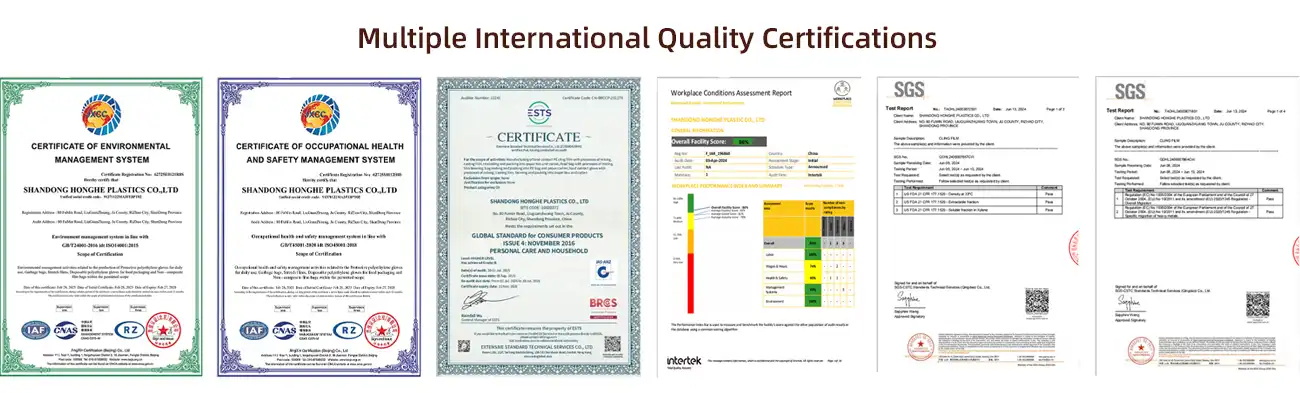
The company's list of certifications shows that it is fully committed to meeting foreign standards. Product safety for global markets is confirmed by ISO, CE, and FDA certifications. Ethical manufacturing methods and working standards are confirmed by BSCI and WCA certifications. This level of certification gives purchasing managers peace of mind that their seller meets the high standards for both product quality and business responsibility that retail chains and institutional buyers are demanding more and more.
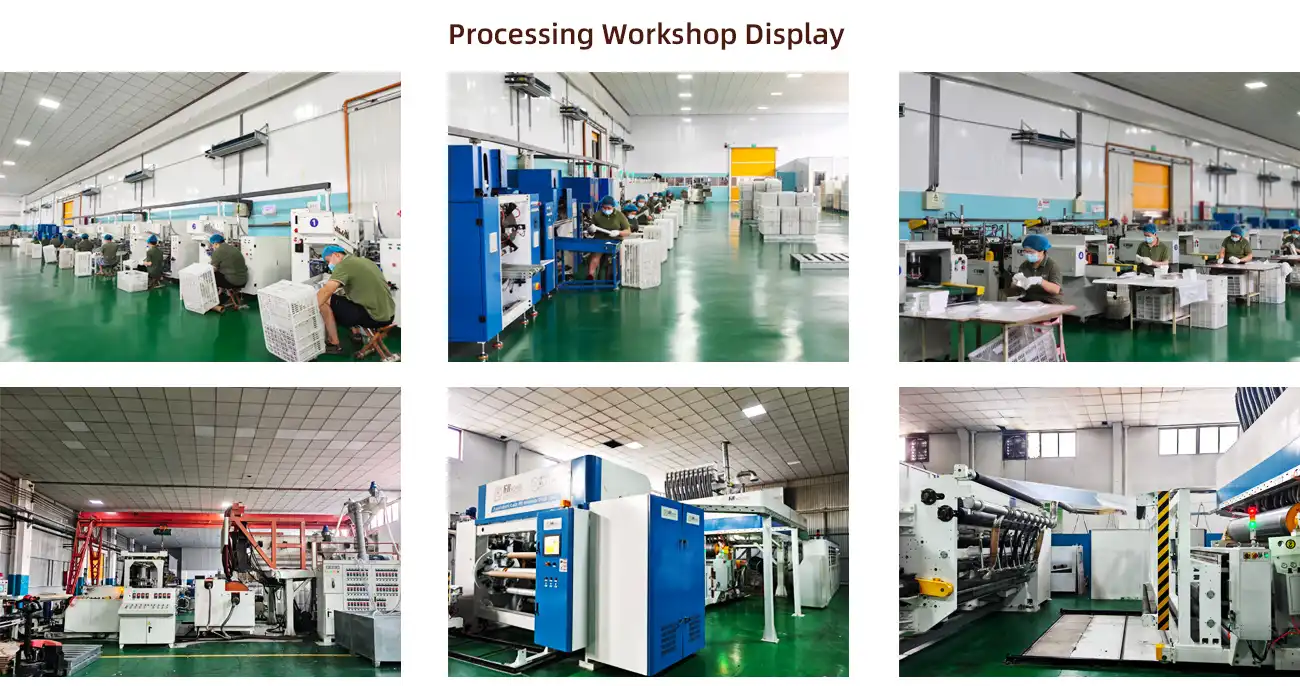
Shandong Honghe has high-tech production tools that makes it possible for accurate perforation engineering and uniform film quality. During production runs, automated quality control systems check the material's tensile properties, regular thickness, and placement of the holes. When compared to providers who rely on manual checking methods, this investment in technology means lower defect rates and more regular performance traits. Tough testing rules find problems with goods before they reach customers, keeping your business safe from PVC Point Break Cling Film fails.
Just-in-time supply chain models depend on being able to quickly fill orders when inventory is available. Shandong Honghe can ship orders within 24 to 48 hours of confirmation because they keep standard specs in stock. This keeps your operating capital from being tied up in inventory. Having both ready-to-ship items for instant needs and the ability to make unique items for specific needs gives suppliers the freedom to meet both regular replenishment needs and emergency situations.
Conclusion
PVC Point Break Cling Film technology solves the problems that commercial food packing businesses have with operations, safety, and costs. The pre-perforated design gets rid of the dangers of cutting tools while increasing wrapping speeds and lowering material waste by controlling portions. Better barrier properties keep food fresh longer, keeping your goods safe during storage and shipping. When looking for these options, give more weight to providers who can show they are great at making things by having the right certifications, the ability to make things, and helpful customer service. If you buy good film, you'll have fewer problems with packing, lower costs, and better food safety, which is good for both your image and your bottom line.
FAQ
Is PVC Point Break Cling Film Safe for Direct Food Contact?
When made correctly, PVC Point Break Cling Film follows food contact rules like FDA 21 CFR 175.300 and EU Regulation 10/2011. Plasticizer movement testing shows that the amounts of additives that get into foods are still below the levels that are considered safe. The film works consistently in both cold and room temperature situations. When warming covered foods, the temperature shouldn't go above 100–110°C, and high-fat or high-sugar foods should not come into direct contact with the film because that will speed up migration. Venting is suggested when warming in the microwave so that the steam can escape.
Can Perforation Intervals Be Customized to Match Our Container Sizes?
Manufacturers often change the spacing between the holes to fit the measurements of a particular container ordered by a client. Standard intervals are 30 cm, 45 cm, and 60 cm, but the rotating blade can be adjusted to any length. By giving providers detailed information about the products you use the most, you can help them come up with the best patterns to reduce waste. For custom holes, the minimum order quantity is usually between 500 kg and 1000 kg. This means that even medium-sized businesses can make changes.
How Does Point Break Film Compare to PE Alternatives?
When it comes to cling and sealing, PVC Point Break Cling Film works better than plastic. Because it is naturally sticky, it sticks right away without needing to be heated up, while PE usually needs mechanical stretch wrapping. PVC stays clearer to the eye, which improves the way a product looks. The perforation technology works better with PVC because it has better elastic memory qualities. This is because PE has a different molecular structure that doesn't allow for the same clean breaking characteristics at perforation lines.
Partner with Shandong Honghe Plastics Co., Ltd. for Premium Film Solutions
Purchasing managers looking for a trusted PVC Point Break Cling Film maker will find great value at Shandong Honghe Plastics Co., Ltd. Our production plant near Qingdao Port is FDA, ISO, and CE approved. It uses cutting edge technology and strict quality control to make sure that every roll meets the highest standards. We keep a lot of stock on hand so that we can send quickly, and we can also fully customize the perforation intervals, widths, and roll sizes. Whether you need samples to test or are ready to place large orders, our team is available 24 hours a day to help you through the whole process. Email us at tony@sdhhsl.com to talk about your unique needs and find out how our low prices, flexible ODM/OEM options, and solid supply chain support can help you run your food packaging business more efficiently.
References
1. Robertson, G. L. (2016). Food Packaging: Principles and Practice (3rd ed.). CRC Press, Boca Raton, FL.
2. Marsh, K. & Bugusu, B. (2007). Food Packaging—Roles, Materials, and Environmental Issues. Journal of Food Science, 72(3), R39-R55.
3. Yam, K. L. (Ed.). (2009). The Wiley Encyclopedia of Packaging Technology (3rd ed.). John Wiley & Sons, Hoboken, NJ.
4. Selke, S. E., Culter, J. D., & Hernandez, R. J. (2004). Plastics Packaging: Properties, Processing, Applications, and Regulations (2nd ed.). Hanser Publications, Munich.
5. Piringer, O. G. & Baner, A. L. (Eds.). (2008). Plastic Packaging: Interactions with Food and Pharmaceuticals (2nd ed.). Wiley-VCH, Weinheim.
6. Coles, R., McDowell, D., & Kirwan, M. J. (Eds.). (2003). Food Packaging Technology. Blackwell Publishing, Oxford.