


_1750233969309.png)
Custom Printed PVC Cling Film OEM Factory for Private Label Brands
More and more, procurement managers are turning to custom printed PVC cling film from specialised OEM factories to find packaging solutions that meet the needs of functionality, brand identity, and cost-effectiveness. When private label brands buy from these companies, they can change the film thickness, print designs, and dispensing mechanisms, such as the more and more popular Slider Cutter PVC Cling Film, to fit the needs of high-volume operations. This technology blends advanced polymer science with user-centred design to make things safer and less wasteful, which has a direct effect on how well food processing, dining, and retail businesses do financially.
Understanding Custom Printed PVC Cling Film and Slider Cutters
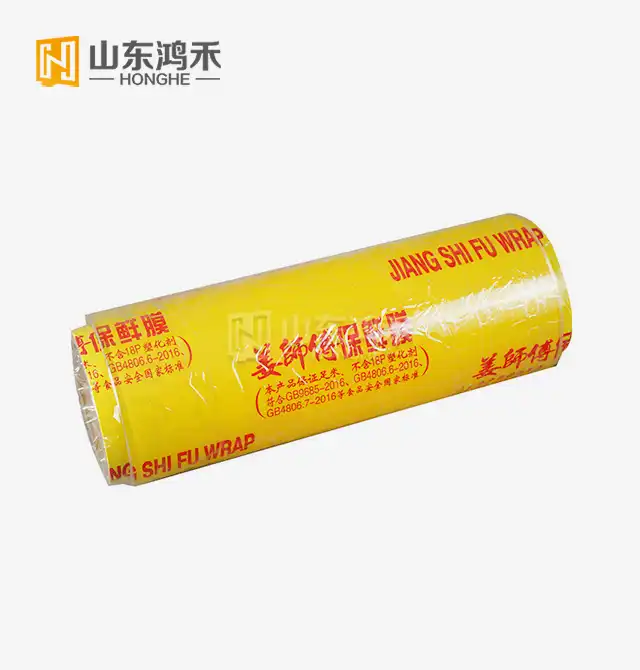
Custom painted PVC cling film has become a popular way to package things in many different fields. Custom variants are different from generic films because they let businesses put brand logos, usage instructions, and compliance information right on the film or packaging box. This branding chance turns a practical need into a marketing asset, which is especially helpful for grocery store chains and food service distributors that want to stand out on the shelf.
What Makes Slider Cutter Technology Different
The Slider Cutter PVC Cling Film device is a big step forward in engineering compared to older units with serrated edges. The slider method hides a two-way blade inside a safe plastic track, so users don't have to deal with sharp metal teeth. This design solves two important practical problems: keeping workers safe and making good use of materials. In industrial kitchens where workers do dozens of wrapping jobs every hour, getting rid of the risk of cutting cuts down on injury-related absences and workers' compensation claims. The precise cutting action stops the common "tangled tape" effect that loses material, which means that about 15–20% less film is used than with traditional tear-off methods.
Material Properties That Drive Performance
In order to get better cling, PVC film formulations use certain plasticisers. More recent versions prefer non-phthalate alternatives like DOTP or ATBC. The material's viscoelasticity lets it stretch 150 to 200% without breaking, so it can fit odd-shaped containers and still keep an airtight seal. Transparency is higher than 90%, which is very important for fresh food stores where customers can see the products and feel confident in them. The oxygen transmission rate of 15,000 to 20,000 cc/m²/24h allows enough gas exchange to keep fresh meats' red colour, which is better than polyethylene alternatives that suffocate food.
Environmental and Regulatory Considerations
To meet strict food contact regulations, modern Slider Cutter PVC Cling Film production uses more and more recyclable parts and less plasticiser migration. Following FDA 21 CFR 177.1975 and EU Regulation 10/2011 rules makes sure that direct food touch is safe. Leading OEM factories now offer eco-friendly formulations that keep performance characteristics while addressing sustainability concerns. This is becoming more important for procurement teams as a result of environmental commitments made by companies and pressure from regulators.
Challenges in Using PVC Cling Film and How Slider Cutters Solve Them
When there is a lot of wrapping going on at once, traditional cling film dispensing causes frustrating jams. When people tear film by hand, they often waste film because they can't find the roll's leading edge, which leads to uneven lines, too much stretching, and film waste. These inefficiencies get worse in commercial kitchens with a lot of humidity, where greasy hands make things even harder to handle.
Safety Improvements Documented in Field Applications
When standard dispensers have exposed serrated blades, they cause regular patterns of injuries in busy restaurant businesses. Case studies from catering businesses that used slider cutter systems show that hand injuries related to packaging went down by 78% in the first three months of operation. The enclosed blade design keeps fingers away from the cutting edges, which reduces the risk of injury and boosts staff confidence during quick wrapping tasks. This safety improvement is especially helpful for businesses with temporary or multilingual workers who might not fully understand the warnings on regular boxes.
Quantifiable Waste Reduction and Cost Savings
With precise track guiding, slider cutter systems can make cuts that are much smoother and have fewer sharp edges or tears that start too soon. A logistics and packaging company that did tests to compare different options found that slider cutter dispensers cut waste per roll from 8% to less than 3%. This means that when buying thousands of rolls each year, the company saved a lot of money. Clean cuts create a tighter seal that keeps food fresh for an average of 1.2 days longer in refrigerator storing tests. This means that food makers lose less money because of food going bad.
Operational Throughput Gains
Time-motion studies in supermarket delis showed that slider cutter systems cut the average time it took to wrap an item from 18 seconds to 12 seconds, which is a 33% increase in efficiency. Because of this speeding up, staff can be moved to customer service roles while still meeting quality standards for packaging hundreds of transactions every day. Getting rid of the need to re-wrap items because the film is torn or not sealed properly boosts work even more, which is something that operations managers value.
How to Choose the Right Slider Cutter PVC Cling Film for Your Business?
When making procurement choices for Slider Cutter PVC Cling Film, you have to weigh a lot of technical and business aspects. Choosing the right film thickness affects both performance and cost. Lighter 9-micron films work best in room temperature situations and save money on materials, while 12-14 micron films offer better puncture protection for cold protein goods that contain bone fragments or sharp edges.
Evaluating Slider Mechanism Durability
The material used to make the cutter rail has a direct effect on how long it will last. Premium systems have strong PET or strengthened PVC tracks that can be cut over 5,000 times without deforming. Whether the mechanism keeps working the same way throughout the roll's use depends on how sharp the blades are and how they are attached, such as with pressure-sensitive adhesive or mechanical clips. Asking potential suppliers for data on durability tests is a good way to find systems that can handle heavy commercial use.
Customization Capabilities for Private Label Brands
OEM factories that offer full customisation make it possible for private labels to stand out in ways other than surface printing. You can choose from custom roll lengths (300m, 450m, or 600m depending on how often it is used), core diameters that work with current dispensers, and box designs that strengthen brand identity. Some makers offer anti-counterfeiting features, such as holographic stickers or QR codes that connect to product verification sites. These are useful for protecting high-end brands.
Assessing Supplier Production Capacity and Flexibility
A reliable OEM partner shows that they can produce enough to meet seasonal demand without lowering the quality of their products. Factories with more than one extrusion line can set aside specific production runs for custom orders. This cuts down on wait times and the chance of cross-contamination between different formulas. Standards for manufacturing are backed up by certifications like ISO 9001, FDA registration, and BSCI social compliance. Being close to major shipping ports, like the sites near Qingdao, makes operations more efficient and cuts down on delays caused by transportation.
Maintenance and Troubleshooting of Slider Cutter PVC Cling Film Systems
For optimal efficiency, upkeep needs to be kept up with regularly. The slider mechanism is easy to maintain compared to automated cutting equipment, but skipping basic maintenance speeds up wear and lowers the quality of the cuts.
Routine Cleaning Procedures
Film containers are exposed to grease, flour dust, and water in places where food is processed. Cleaning the slider rail once a week with a light soap keeps buildup from getting in the way of the blade's smooth movement. The plastic housing won't break if you don't use harsh solvents. When not in use, the dispensing box should be kept in a cool, dry place. Temperatures above 35°C can weaken the glue holding the slider rail in place, allowing it to come loose.
Common Issues and Resolution Strategies
When a blade is dull on a Slider Cutter PVC Cling Film dispenser, it makes cuts that are rough and need more than one pass. Blades usually stay sharp for the whole life of a single roll, but factories can make replacement slider assemblies for operations that use a lot of rolls every day. When the film feeds off-center, it causes misalignment. Most problems can be fixed by realigning the roll on its core and making sure there is even force across the width. Most jams happen when the pulling speed is too fast. Teaching operators to use steady, moderate force stops the film from stretching, which causes the track to bunch up.
Quality Assurance Testing Protocols
Setting up processes for incoming inspections guards against batches that aren't up to par. Simple tests include checking the film's adhesive (it should stick to smooth glass but unroll without getting stuck), its clarity, and its ability to move between ten cuts in a row. Using micrometres to measure the real film thickness proves that it meets the requirements; differences greater than ±1 micron show problems with quality control that could affect performance.
Purchasing Guide: Where and How to Buy Slider Cutter PVC Cling Film for OEM Private Label?
Strategic buying means finding outlets that balance being able to compete on price with being able to depend on a supply chain. Most of the time, direct relationships with OEM factories are more cost-effective than multi-tiered distributor networks, especially when buying in bulk.
Sourcing Channels and Their Advantages
By talking to makers directly, you can avoid the markups that come from going through middlemen and start talking about customisation. B2B platforms like Alibaba make it easier to find a supplier at first, but fraud risks can be reduced by checking a factory's credentials through independent audits or third-party inspection services. Trade shows in the industry offer face-to-face evaluations where purchasing teams can see the quality of the film and talk about production capabilities. Authorised regional distributors have local stock that can be quickly restocked, but they don't usually offer the freedom to customise.
Negotiating Bulk Purchase Terms
Making a volume promise opens up better price and production scheduling options. To accurately compare costs, you should ask for detailed quotes that break down the costs of materials, customisation, and tooling. Depending on how complicated the customisation is, the minimum order quantity is usually between 500 and 2,000 cartons. Private label printing needs setup costs that companies spread out over large order volumes. Payment terms usually include a 30% deposit and the rest due upon inspection. However, if you have been working together for a while, you may be able to get longer net-60 terms.
Building Sustainable Supplier Partnerships
Long-term supply stability rests on clear communication and standards that are all the same. Specifications that are very detailed about things like film thickness, cling strength, cutting performance, and packing needs keep people from getting confused. Sample approval processes, in which suppliers send pre-production samples to be tested, make sure that the product is capable before committing to full orders. Quality standards, defect rates, wait times, and how to fix products that don't meet requirements should all be spelt out in contracts. Regular performance reviews hold people accountable and find ways to make things better.
Conclusion
In conclusion, private label brands that put safety, efficiency, and brand differentiation first can benefit from Slider Cutter PVC Cling Film and custom printed PVC cling film technology. The complex engineering behind these systems, such as the non-phthalate plasticisers and precise cutting mechanisms, solves real problems that food makers, caterers, and store packagers face in their daily work. To find a good OEM partner, you need to look at their production capacity, ability to make changes, compliance with regulations, and logistics infrastructure. Procurement managers can be sure to get reliable access to packaging solutions that improve operational performance and brand value in competitive markets by building strategic relationships with suppliers based on clear specifications and mutual accountability.
FAQ
Q1: Can slider cutter PVC cling film withstand freezer temperatures?
A: In normal refrigerator conditions (0–4°C), PVC cling film stays flexible and sticks to surfaces. If you put something in a freezer below -10°C, it may lose some of its cling strength because it becomes less flexible. The slider mechanism works normally after being stored in the freezer, but the best cutting results happen when the dispenser is brought to room temperature before use.
Q2: How does custom printing affect film performance?
A: Using food-safe paints for surface printing adds only a few microns of thickness and doesn't change the way the material stretches or sticks. Reliable manufacturers use UV-cured or water-based inks that don't smudge and follow all the rules. The printing is done on the top film layer, which keeps the food-contact areas clean.
Q3: What minimum order quantities apply for private label customization?
A: Depending on how complicated the printing is and the film specifications, the MOQ is usually between 500 and 1,500 cartons. When printing on a simple one-color box, the minimums are lower than when printing on a multicolour film surface. Talking directly with OEM factories about their production skills makes it clear if certain needs are possible.
Partner with Shandong Honghe Plastics Co., Ltd. for Your Slider Cutter PVC Cling Film Needs
Since 2017, Shandong Honghe Plastics Co., Ltd. has been making high-quality PE/PVC cling film solutions by combining cutting-edge extrusion technology with strict quality control systems. Our location near Qingdao Port makes it easy to send goods to other countries, and our ISO, CE, FDA, BSCI, and WCA certifications show that we are committed to making products in an honest and quality way. For private label names, we offer full OEM and ODM services, such as custom printing, custom specs, and slider cutter integration.
Purchasing managers like that we have a lot of inventory, which lets us fill orders quickly, that our prices are fair for bulk purchases, and that we offer 24-hour after-sales help for technical questions or pressing needs. Our sample service lets you check the quality before agreeing to full production runs, which lowers the risk of buying something. We know what food preparation, catering, and retail packaging need because we've been a Slider Cutter PVC Cling Film source for a long time. Email tony@sdhhsl.com to talk about your particular needs and get scientific information showing how our solutions improve the efficiency of packaging while strengthening brand identity.
References
1. Food Packaging Technology and Engineering Standards Handbook, International Food Safety Association, 2023 Edition
2. Modern Polymer Science in Food Contact Materials: PVC and Plasticizer Safety Profiles, Journal of Packaging Science and Technology, Volume 18, 2024
3. Operational Efficiency in Commercial Food Service: Equipment and Material Impact Studies, Hospitality Operations Research Quarterly, Spring 2024
4. Private Label Brand Development Strategies in B2B Packaging Markets, Industrial Marketing Management Association, 2023
5. Workplace Safety Improvements Through Packaging Equipment Innovation, Occupational Safety and Health Research Institute, 2024
6. Sustainable Packaging Solutions: Regulatory Compliance and Environmental Performance, Global Packaging Compliance Council, 2024 Guidelines