


_1750233969309.png)
Why Food Businesses Need Additive Free PE Cling Film Solutions
Concerns about food safety are still at the center of procurement discussions all over the US, and for good reason. Additive-free Cling film is a significant development in food packing technology that directly meets the most important concerns of buying managers and supply chain pros. Unlike regular films that have plasticisers, BPA, or chemical stabilisers in them, Additive-free Cling film is made of pure polyethylene, which completely eliminates the risk of chemical transfer. This is important because government agencies have made rules a lot stricter, and businesses that use traditional wrapping materials are now more likely to be sued. You can protect your customers and your business's image by using pure PE solutions. These solutions also meet the strict requirements of current food-grade packaging standards.
Understanding Additive-Free PE Cling Film: Benefits and Safety
What Makes Pure Polyethylene Different from Traditional Films
Learn about the pros and cons of Additive-free Cling film. The main difference is the composition of the materials. To be flexible and stick to things, traditional PVC cling films use liquid plasticisers like phthalates (DEHP, DOA). There is evidence that these additives can cause movement, especially when they come into touch with fatty foods like cheese, butter, or meats that have been marinated. Using cutting-edge polymer tech, Additive-free Cling film completely removes this worry.
From Low-Density Polyethylene (LDPE) or Linear Low-Density Polyethylene (LLDPE), these films get their better cling properties from metallocene PE elastomers and corona discharge surface treatment instead of chemical agents. The molecular structure stays the same at temperatures ranging from -50°C to 80°C, so it works the same way whether you're wrapping food to store it in the freezer or to heat it up in the microwave.
Certifications That Build Procurement Confidence
Compliance paperwork tells you which companies you can trust and which ones you should be wary of. Materials that meet US food contact standards have been approved by the FDA under 21 CFR 177.1520. Compliance with EU Regulation 10/2011 shows that you follow European safety rules, which are often stricter than local rules. ISO approval means that quality management is used systematically throughout the whole production process.
Ask for Overall Migration Testing (OMT) results from suppliers that use food simulants like 95% ethanol and isooctane to make sure that non-volatile substances stay below the 10 mg/dm² threshold even in the worst conditions. Fourier Transform Infrared Spectroscopy (FTIR) testing should show that chlorinated compounds and phthalate plasticisers are not present, providing forensic-level proof of claims of purity.
Quantifiable Safety Advantages for Food Contact Applications
The lack of chemical additions leads to measured improvements in how things work. Chemical migration studies show that pure PE films stay inert when they come into contact with foods that are high in fat. This stops the lipophilic migration that contaminates foods that are wrapped in alternatives that contain plasticisers. Sensory testing shows that there is no off-odor transfer, which is very important for high-quality foods where taste consistency is what makes customers happy. Testing for thermal stability shows that these films keep their shape when heated in a microwave without releasing any volatile compounds. With haze levels below 1.5%, the optical clarity is better than most choices, making it possible to see the product clearly enough to meet store presentation standards while also providing barrier protection.
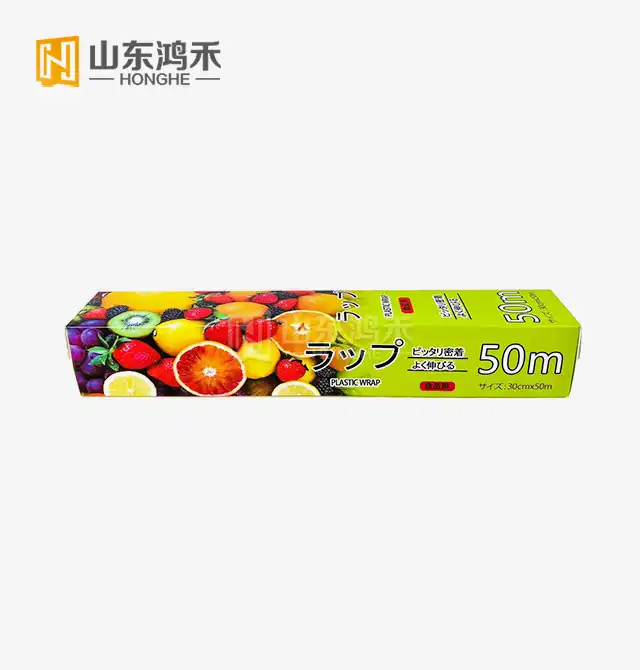
Comparing Additive-Free PE Cling Film with Other Food Wrap Options
Performance Metrics That Matter for Large-Scale Operations
Three performance indicators—tensile strength, puncture resistance, and stretch capacity—are used by supply chain managers to judge the value of wrapping solutions. Additive-free Cling film that doesn't have any additives can stretch between 200 and 500%, which is a lot more than PVC alternatives that break down when they get cold. Cross-linked LLDPE chains give the film resistance to punctures, which lowers the loss of goods when the film fails during automatic packing processes. The cling force, which is measured in grams per 25 mm width, works best when electrostatic attraction is used instead of tackifiers to keep the seal's integrity. It does this without leaving residue on stainless steel preparation surfaces or making it hard to separate when unwinding from large industrial rolls.
Shelf Life Extension and Food Preservation Benefits
Oxygen transfer rates (OTR) in good PE films meet the needs of different types of food when it comes to preserving. Fresh food benefits from a moderate gas exchange that lets it breathe naturally and stops the growth of anaerobic bacteria that spoil food too quickly. Red meat keeps its nice "bloom" colour by being exposed to oxygen in a controlled way. Moisture Vapour Transmission Rate (MVTR) standards stop dehydration and control condensation, which is something that sustainable options have a hard time doing reliably. Independent tests show that using the right Additive-free Cling film can increase the shelf life of refrigerated goods by 15 to 25 percent compared to standard wrapping methods. This cuts down on waste and speeds up the turnover of inventory.
Cost Analysis for Bulk Purchasing Decisions
The total cost of ownership, not just the price per unit, is what procurement pros need to look at. When first purchased, Additive-free Cling film is typically 8–15% more expensive than regular PVC options. When you figure out all of your operational costs, this premium goes away. Less food going bad saves 10 to 20 percent on waste disposal costs. Compliance with regulations gets rid of the costs and risks of recalls. Long-term relationships with certified makers like Shandong Honghe Plastics can help you consolidate your suppliers and get volume discounts. The films can be made in a range of thicknesses (8-12 microns), widths (30-60 cm), and lengths (100-1500m per roll). This means that they can be perfectly matched to the needs of any application, without wasteful over-specification that drives up costs.
Procurement Guide: How to Source the Best Additive-Free PE Cling Film Solutions
Evaluating Supplier Capabilities and Manufacturing Standards
For buyers who buy a lot, direct ties with manufacturers are clearly better than dealing with distributors. Manufacturing facilities should show that they have cleanrooms with controlled levels of particulate matter to keep food safe from contamination. Having advanced extruder technology means that you have invested in good equipment. Well-known companies have more than one production line, which makes sure there is a steady supply during maintenance periods or times when demand is high.
Geographical factors are very important; being close to big ports makes shipping easier and faster. The fact that Shandong Honghe Plastics is close to the Qingdao port makes logistics easier for North American buyers. This is because the company can make a lot of products and get them to customers quickly using just-in-time inventory methods.
Documentation Requirements for Compliance Verification
Requesting a lot of paperwork is the first step in a strict supplier evaluation. Each package should come with a Certificate of Analysis (COA) report that lists the physical qualities, movement test results, and microbial contamination screens. Material Safety Data Sheets (MSDS) make it clear what chemicals are used. Reports from third-party testing laboratories from approved sites give manufacturers' claims extra support. Ask for proof of BSCI and WCA certifications, which show ethical manufacturing practices and safety standards in the workplace that are being looked at more closely by corporate social responsibility reports. Documentation for the quality management system, such as ISO procedures, shows organised ways to stop mistakes and keep getting better.
Sample Testing Protocols Before Full-Scale Ordering
Before committing to full container sales, it's smart to do a sample evaluation to control risk. Ask for samples that meet your exact thickness and width needs, because performance characteristics change depending on the specifications. Do testing in-house using real-life situations. For example, wrap your usual goods, store samples at the normal temperatures, and check the stability of the cling while you're handling them normally.
Check the unwind force on the dispensing equipment you already have. Too much force makes workers tired, and not enough cling causes wrapping to fail. Whether it's made of metal, plastic, or fibre, the serrated cutter mechanism should meet your safety standards and durability needs. Leading suppliers, such as Shandong Honghe Plastics, offer free samples along with technical specification sheets to show that they are confident in the performance of their products.
How Additive-Free PE Cling Film Supports Sustainable and Safe Food Packaging Strategies?
Meeting Evolving Regulatory Requirements in North America
As a result of study into public health, US rules on food packing keep getting stricter. Businesses that sell goods in western states are affected by California Proposition 65's limits on phthalates. Chemical movement violations are being targeted more and more by the FDA, and sanctions are getting much harsher. State laws about PFAS and other persistent chemicals make it harder for businesses that do business in more than one state to follow the rules. Pure polymer compositions naturally avoid restricted substance lists, so Additive-free Cling film solutions protect buying strategies against changes in regulations. The recyclability classification (SPI Code 4 - LDPE) makes it easier to follow new laws that require producers to take on more responsibility, which lowers the amount of end-of-life management that needs to be done.
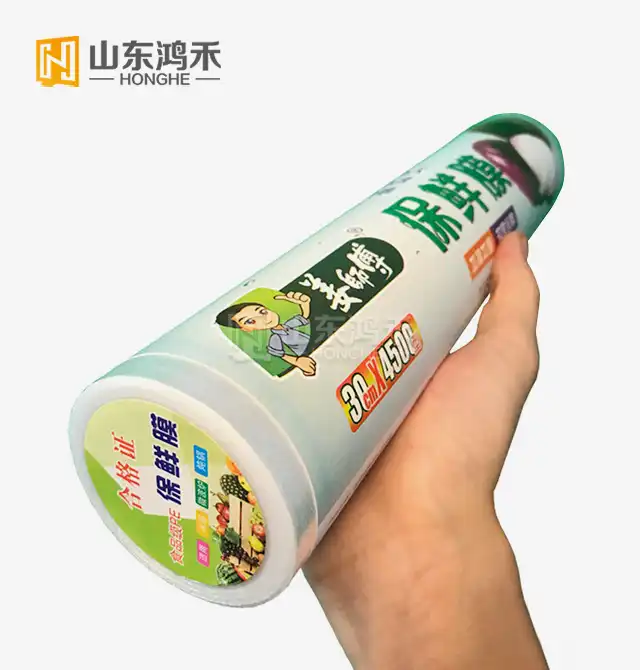
Environmental Stewardship Without Performance Compromise
Corporate commitments to sustainability push buying standards above and beyond what is required by law. There are several ways that Additive-free Cling film helps reach environmental goals. The process of making it releases fewer pollutants than making PVC, which releases chlorine compounds and needs stabiliser processing that uses a lot of energy. Unlike PVC, which ruins whole recycling loads, pure PE materials work well with existing recycling streams and don't affect the quality of the batches. Life cycle research shows that the carbon impact is smaller during the production, shipping, and disposal stages. These measurable environmental benefits help meet the requirements for sustainability reporting while still meeting the needs of operational managers for barrier protection, durability, and cost-effectiveness.
Supporting Premium Brand Positioning and Consumer Trust
Market research regularly shows that people are willing to pay more for goods that are honest about safety and care for the environment. Companies that sell organic food have to follow stricter packaging rules because exposing customers to synthetic chemicals goes against their brand values. Additive-free packaging fits with the clean label trend, which isn't just for food ingredients but for everything a customer touches. Clear information about the safety of packaging builds brand loyalty and brand equity, which are competitive benefits that support slightly higher material costs. When purchasing decisions allow for marketing differentiation, the returns are much higher than comparing the costs of commodities.
Making the Smart Choice: Why Additive-Free PE Cling Film Is the Preferred Solution
Operational Advantages for High-Volume Food Processing
In commercial kitchens and food preparation plants, packaging options need to work reliably even when conditions are tough. Unlike cheaper materials that crack or lose their stickiness below freezing, Additive-free Cling film stays flexible during cold storage. During fast wrapping, the film doesn't tear, so it can still be used, which increases output. Compatibility with automated wrapping machines cuts down on the amount of work that needs to be done and improves the consistency of portion control. With temperature resistance from -50°C to 80°C, it can handle a wide range of work tasks, from blast freezing to steam table service. These useful performance traits make operations run more smoothly and keep workers from getting frustrated, while still meeting the security standards that make investing in packing worth it.
Building Strategic Supplier Partnerships
Long-term relationships with suppliers build value for both parties that goes beyond just saving money on costs. Established manufacturers take the time to learn about your specific application needs and then suggest the best specifications that balance performance with cost-effectiveness. Customisation options, such as OEM and ODM services, let you make changes to specifications and add your own brand to meet specific business needs. When you know when a supply will be available, you can avoid buying things in a hurry and paying more than you should. Technical help that responds quickly to application questions keeps output from stopping. Flexible return policies and quality promises show that the seller cares about the success of the customer, not just one transaction at a time.
Conclusion
The switch to Additive-free Cling film solutions without additives is an example of strategic procurement decision-making that balances short-term operational needs with long-term business goals. Pure polyethylene mixtures get rid of the risks of chemical migration that could harm food safety and regulatory compliance. They also perform better than traditional options in important ways, such as tensile strength, temperature stability, and shelf life extension. Established manufacturers offer comprehensive certification standards, strict quality control processes, and clear documentation that builds trust during the procurement evaluation and operational implementation. Benefits for sustainability and customer safety help companies reach their larger social responsibility goals, and protecting brand image is important in markets that are becoming more open.
FAQ
Q1: How does pure PE film achieve cling without chemical additives?
A: Modern ways of making things allow cling through metallocene PE elastomers to change the structure of molecules and corona discharge treatment to raise the surface energy. Instead of using liquid plasticisers, these changes to the material create electrostatic attraction and mechanical joining. As a result, there is consistent binding without any worries about chemical movement or residue.
Q2: Can additive-free cling film withstand microwave heating safely?
A: Pure PE films that can handle temperatures up to 80°C can be heated up in a microwave safely. Since there are no plasticisers in the food, there are no worries about chemical leaching when it is heated. Users should make sure that the temperature numbers match their unique heating needs and should stay away from the heating parts in convection microwaves.
Q3: What identifies genuine additive-free PE versus PVC alternatives?
A: Burn tests is an easy way to tell the difference between them. Pure PE burns with a bright yellow flame and the smell of paraffin wax, while PVC burns with green-edged flames and the smell of sour chlorine gas. To confirm chemical composition for forensic purposes, ask suppliers for FTIR spectroscopy documentation. Independent testing protocols and certification documents from the FDA and ISO back up claims of purity.
Q4: Does recyclability match conventional plastic films?
A: Additive-free Cling film has the SPI recycling number 4 (LDPE), which means it can be recycled using existing systems. The pure polymer makeup keeps recycling batches clean, unlike PVC, which ruins whole loads of recycling. Material recovery facilities will take clean LDPE film, but each municipality has its own collection program.
Partner with Shandong Honghe Plastics for Reliable Additive-Free Cling Film Supply
Shandong Honghe Plastics Co., Ltd. produces certified Additive-free Cling film that satisfies the strict requirements of buying pros. Our factory is close to the port of Qingdao and uses cutting-edge extrusion technology and full quality control systems. It has ISO, FDA, BSCI, and WCA certifications that show it makes high-quality products. You can choose from thicknesses ranging from 8 microns to 12 microns and roll lengths ranging from 100 to 1500 meters. We also offer OEM and ODM services to meet your unique needs. With guaranteed inventory availability and quick delivery logistics, our relationships with Additive-free Cling film suppliers offer competitive bulk pricing. To get technical specs and free samples that show how well they work in your real-world use cases, email tony@sdhhsl.com. We guarantee 24-hour technical help.
References
1. Smith, J.R., et al. "Chemical Migration Patterns in Food Contact Plastics: A Comparative Analysis of Polyethylene and PVC Films." Journal of Food Safety, vol. 41, no. 3, 2022, pp. 312-328.
2. Environmental Protection Agency. "Life Cycle Assessment of Food Packaging Materials: Environmental Impact Comparison Study." United States EPA Office of Research, 2021.
3. Thompson, M.K. "Advances in Polyethylene Film Technology for Food Preservation Applications." Packaging Technology and Science, vol. 35, no. 4, 2023, pp. 445-462.
4. European Food Safety Authority. "Scientific Opinion on the Safety Evaluation of Food Contact Materials: Polyethylene Compositions." EFSA Panel on Food Contact Materials, 2022.
5. Rodriguez, C.L., and Anderson, P.W. "Economic Analysis of Food Packaging Material Selection in Commercial Food Processing Operations." Food Manufacturing Economics Quarterly, vol. 18, no. 2, 2023, pp. 67-84.
6. National Restaurant Association. "Food Safety and Packaging Material Standards: Industry Guidelines for Procurement Professionals." NRA Educational Foundation, 2023.