


_1750233969309.png)
Guide to Food Grade PVC Cling Film for Importers
To find the right food packing materials, you need to know more than just the basics about the products. You also need to have a good idea of how well they work technically, how well they follow regulations, and how reliable the suppliers are. Because of its unique mix of cling qualities, transparency, and controlled breathability, PVC Cling Film For Food Wrapping is now used by all food businesses around the world, from meat stands in supermarkets to industrial processing plants. This guide cuts through the confusion to help importers, buying managers, and people who work in the supply chain make smart choices that protect product quality while maximizing cost savings.
Introduction
PVC Cling Film For Food Wrapping is an important part of food packing because it keeps food fresh, clean, and long-lasting. It is very important for global B2B procurement clients like importers, purchasing managers, engineers, and wholesalers to choose the right food grade PVC Cling Film For Food Wrapping to meet operational and legal standards. Instead of general plastic wraps, professional-grade PVC Cling Film For Food Wrapping is made to deal with specific issues like meat turning brown, condensation fogging, and working with fast automatic packing equipment.
The material has two uses: it keeps food fresh during the cold chain logistics process and makes it look better when it's displayed at store places of sale. This guide gives you useful, well-researched information about the features of PVC Cling Film For Food Wrapping, how to compare them, how to use them, and how to buy them. Its goal is to give people who work in the industry the information they need to make better choices about where to get food, protect food safety, and make the supply chain more efficient in a global market that is very competitive.
Understanding Food Grade PVC Cling Film: Key Concepts and Benefits
What Makes PVC Cling Film Distinct From Generic Wraps?
Polyvinyl Chloride film that is specially made for preserving and presenting food that goes bad quickly is called PVC Cling Film For Food Wrapping. This film is different from other polyethylene options because it uses non-toxic plasticizers like DOA (Dioctyl Adipate) or DOTP (Dioctyl Terephthalate) to give it a "memory effect" and better self-adhesion qualities without the need for heat sealing. Its molecular structure controls the Oxygen Transmission Rate, which lets red meat breathe and keep its bright red oxymyoglobin color while also stopping moisture loss and drying in cold chain conditions from -60°C to 40°C. The makeup of the material directly addresses major problems in the industry, such as meat turning brown from oxidation and packages fogging up, making it hard to see the product inside.
Technical Performance Parameters That Matter
Professional food grade PVC Cling Film For Food Wrapping has a high tensile strength, usually between 15 and 30 MPa, and a very high stretch at break, usually between 150% and 400%. This makes it possible for the film to stretch tightly over odd-shaped foods without breaking when applied by hand or automatically. Physical qualities include high gloss finish and excellent optical clarity with haze levels below 1.5%, which makes retail goods look better. The desired Water Vapor Transmission Rate is usually between 150 and 400 g/m²/24h. This keeps the humidity level right for fresh food and stops condensation from building up, which helps germs grow.
Regulatory Compliance and Safety Standards
Premium PVC Cling Film For Food Wrapping follows strict rules around the world, like FDA 21 CFR 175.300 and EU Regulation 10/2011. These rules say that Vinyl Chloride Monomer leftovers must be less than 1 mg/kg and plasticizers used in food contact uses must not contain DEHP. Modern formulations have mostly moved away from harmful phthalates and toward better options that meet the food safety standards in most major markets. Having certification paperwork with ISO, FDA, and CE marks is very helpful for buyers who need to deal with customs rules and store standards. We at Shandong Honghe Plastics Co., Ltd. make sure that all of our products meet international standards. Our BSCI and WCA certifications show that we are dedicated to quality and fair making.
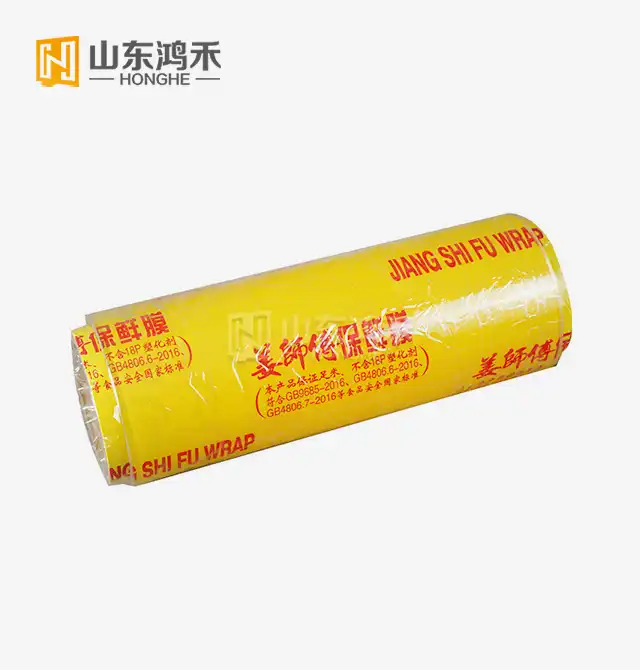
Comparing Cling Films: Choosing the Best Film for Your Needs
PVC Versus Polyethylene: Material Performance Analysis
When comparing different types of packaging PVC Cling Film For Food Wrapping, PVC Cling Film For Food Wrapping has better "tack" or cling qualities, more clarity, and better elastic memory than PE alternatives. Polyethylene film is usually less expensive and doesn't need to be treated with plasticizers. However, it doesn't breathe well enough to be used for fresh meat packing, and it doesn't stick well to containers without heat. Because PVC Cling Film For Food Wrapping sticks to itself, it can be wrapped by one person, and it cuts down on material waste from poor seals. This is especially helpful in places where a lot of work needs to be done quickly and efficiently, because that directly affects how much money the business makes.
Film Thickness and Type Considerations
Film specs change depending on what the film is being used for. For home use, standard food wrapping films are between 8 and 15 microns thick. In corporate settings, 12 to 20 micron films are often used because they are more resistant to punctures. Retail uses can benefit from printed films with brand names or product information that help with marketing, and anti-fogging versions that are designed to spread out water droplets keep things clear when they're cold. Customers can customize the film to their exact needs, which lets buyers get the best performance for their specific product lines, whether they're packing delicate berries or heavy protein cuts.
Evaluating Sustainable Alternatives
New biodegradable films and natural beeswax wraps are being made because more people are concerned about the earth in the packing industry. Even though these options don't last as long in the environment, they aren't as useful yet because they're less clear, don't stick as well, and cost more per unit than regular PVC Cling Film For Food Wrapping. When industrial buyers try to make a choice while also meeting business needs and sustainability goals, they need to carefully look at how the product's shelf life works, the temperature conditions in the supply chain, and what the end user wants. Some businesses use a mix of strategies, using recyclable choices for dry goods while keeping PVC Cling Film For Food Wrapping for fresh products that need to be kept dry. In these cases, avoiding food waste is still the most important environmental concern.
How to Use and Procure PVC Cling Film for Food Packaging?
Application Techniques for Maximum Performance
Correct coating method has a big effect on how well food is preserved. To get rid of air spots that speed up browning and moisture loss, the PVC Cling Film For Food Wrapping should be pulled tight across the food's surface. Controlled oxygen permeability helps make oxymyoglobin in meat that is stored in cold cases. This keeps beef and lamb looking good with a cherry red color for up to 72 hours. Barrier layers, on the other hand, would quickly make purplish-brown deoxymyoglobin. For vegetables that breathe a lot, like mushrooms, the porous structure lets enough gas exchange (CO2 leaving and O2 entering) to keep the veggies fresh longer in wet, cold supply chains without letting slime build up.
Critical Procurement Factors for Importers
Roll sizes and minimum order amounts are very different from one provider to the next. Standard commercial rolls have widths between 300 mm and 450 mm and lengths between 300 m and 1500 m per roll. To get the most accurate quotes from different suppliers, bulk buyers should look at the total linear meter price instead of the per-roll price. Customization options include changing the roll width, the core thickness, and the way the package is set up so that it works best with certain delivery equipment. Samples from approved makers can be ordered for free so that quality can be checked before placing large orders. This greatly lowers the risk of procurement.
Sourcing Strategy and Supplier Verification
To check a supplier's trustworthiness, you need to look at their quality control systems, manufacturing certifications, and evidence of their production capacity. Reputable makers keep their workplaces standard, use high-tech production tools, and do thorough checks of all the materials that come in. The seller should give full proof of all the migration tests they did, such as Overall Migration Limit tests using the right food simulators and Gas Chromatography analysis proving that Vinyl Chloride Monomer levels stay below 1 ppm or can't be detected. Being close to important shipping ports makes logistics easier and cuts down on transit time. For example, sites near Qingdao port make it easy to get to foreign shipping lines that serve markets in North America and Europe.
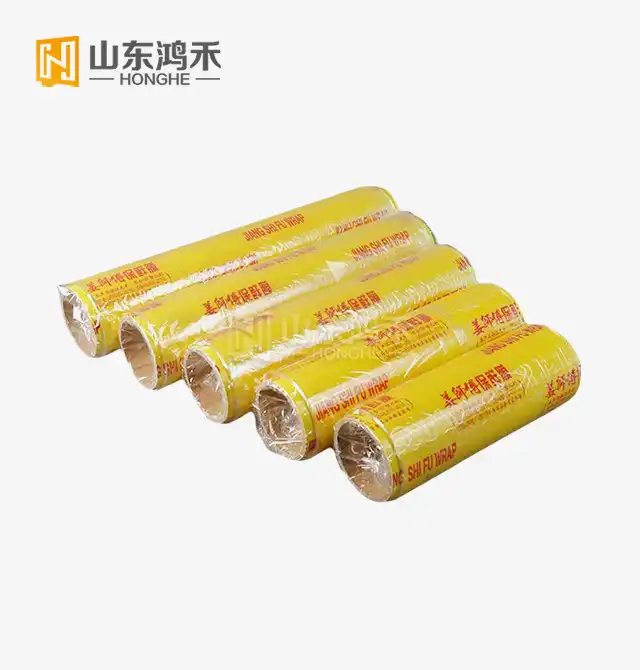
Supplier and Brand Considerations for Global Importers
Identifying Manufacturers With Proven Track Records
Reputable PVC Cling Film For Food Wrapping makers that sell to foreign markets set themselves apart by having a wide range of certifications and making sure that the standard of their products stays high across all batches. Instead of making a wide range of plastics, businesses that only make food packing materials usually have more technical know-how when it comes to improving formulations and fixing problems that are specific to their use. Manufacturing companies that were started to meet the needs of the food industry, like Shandong Honghe Plastics Co., Ltd., which opened in 2017, have learned how to meet the specific needs of food packing, cooling, catering, and institutional uses.
Value-Added Services: Customization and Private Label Options
Importers and distributors can set their film goods apart from the competition by giving custom printing and original equipment manufacturer (OEM) services. Brand-marked packaging makes it easier to find products and helps grocery chains and food service providers with their marketing. With private label services, importers can build brand recognition in their home markets while taking advantage of the manufacturer's knowledge in product development and quality control. ODM can do more than just brand names. They can also change formulations, set up packaging, and provide application-specific tech help to solve specific operational problems.
Sustainability Integration in Supply Chain Selection
In modern procurement, environmental duty is being taken into account along with cost and quality measures more and more. Some examples of sustainable practices used by manufacturers are energy-efficient production tools, programs to cut down on trash, and development roadmaps for formulations with less of an effect. Clear explanations of the science behind plasticizers and a dedication to phthalate-free formulas show that they are in line with how regulations are changing in major markets. When importing goods for stores that care about the environment, it's best to work with sellers who can back up their claims about sustainability in marketing materials and corporate responsibility reports.
Challenges and Practical Tips for Using PVC Cling Film in Food Packaging
Environmental Considerations and Disposal Practices
Environmental worries about PVC Cling Film For Food Wrapping mostly come from the fact that it is hard to get rid of and recycle. PVC Cling Film For Food Wrapping usually needs special recycling sites that aren't common in city trash streams. This is because PET or HDPE plastics already have established systems for collecting them. Waste consolidation programs that get recycling economies of scale can help industrial users lessen their impact on the environment. Some cities and towns let people recycle clean PVC Cling Film For Food Wrapping through business routes, but this isn't always possible because of food residue. Concerns about dumping must be weighed against efforts to keep food from going to waste, since getting rid of spoiled food is a much bigger environmental problem than dealing with packing materials when production resources are taken into account.
Storage and Handling Best Practices
When kept properly, between 15°C and 25°C, and out of direct sunlight, high-quality PVC Cling Film For Food Wrapping keeps its best performance for about one to two years. Too much heat speeds up the movement of the plasticizer to the film's surface, which finally leads to cracks and color changes that make it useless. Purchasing managers should use first-in, first-out product turnover and not order too much beyond what can be used in a fair amount of time. The right way to store a product will protect your investment and keep it working the same way throughout its shelf life. Some rust may cause the core to turn a little yellow after long-term storage, but as long as the film is still clear when unrolled, it should still work fine.
Regulatory Compliance Across Major Markets
Paying close attention to paperwork and testing methods is needed to meet compliance standards in both European and North American markets. EU Regulation 10/2011 says that all materials that come into touch with food must go through specific migration tests and a statement of compliance. Under 21 CFR 175.300, FDA rules set the makeup standards and limits on what can be taken out of polymeric films. Importers should make sure that providers give them all the paperwork they need to comply, such as migration test results using the right food simulants (Simulant A, B, and D2 for fatty foods) and tensile strength certifications that show the products meet the requirements for mechanical performance.
This paperwork is necessary to clear customs and meets the requirements for becoming a store seller. Compliant PVC Cling Film For Food Wrapping is widely used for food packing, refrigeration, catering, and home uses. It gives companies the legal confidence they need to easily enter new markets.
Conclusion
When choosing the right food grade PVC Cling Film For Food Wrapping, you have to find a balance between technical performance, following the rules, and trusting the seller. Because it has cling qualities, controlled breathability, and optical clarity, no other material can be used in situations where both keeping the product fresh and showing it off visually are important. These days' food grade films are made of safe PVC Cling Film For Food Wrapping and non-toxic plasticizers. They address safety issues from the past while being more useful than other packing materials.
To make a good purchase, you need to know what the application needs, check the supplier's qualifications by looking at their certifications and test results, and build relationships that support consistent quality and delivery performance. Investing in good PVC Cling Film For Food Wrapping saves a lot more valuable food inventory and helps operations run more smoothly in both manual and automatic packing processes.
FAQ
Can PVC cling film be safely used in microwave ovens?
Most of the time, standard PVC Cling Film For Food Wrapping shouldn't be used for microwave cooking, especially when they will be in close touch with fatty foods. When temps are high, plasticizer can move faster than is safe. When warming food, make sure the film doesn't touch the top of the food and poke holes in it to let the steam pressure out. For warming, many food service businesses use containers with lids that can go in the microwave instead of PVC Cling Film For Food Wrapping.
How does PVC film compare to alternative wrapping materials?
When compared to PE options, PVC Cling Film For Food Wrapping has better cling qualities, better visual clarity, and better elastic recovery. PE is cheaper and doesn't use plasticizers, but it doesn't let fresh meat breathe and usually needs to be sealed with heat instead of pressure. The choice depends on the needs of the application. For example, PVC Cling Film For Food Wrapping works great in fresh protein and produce uses where controlled gas exchange is important.
What quality checks should people who import samples do on them?
Priority testing includes checking the Overall Migration Limit to make sure that the amount of constituents that get into food stays below 10 mg/dm², the VCM residue analysis to make sure that Vinyl Chloride Monomer levels stay below 1 ppm, and the tensile strength testing to make sure that the product works mechanically. Anti-fogging performance and hole resistance tests show that it can be used for what it was made for. These quality control methods keep out low-quality materials that could hurt the safety of food or make operations less efficient.
Partner With Shandong Honghe Plastics Co., Ltd. for Reliable Supply
Building long-term relationships with reliable PVC Cling Film For Food Wrapping providers will help you keep your business running and protect your brand's image. Shandong Honghe Plastics Co., Ltd. uses cutting-edge production tools and strict quality control systems. They also keep a lot of stock on hand so they can meet tight delivery deadlines. Our plant is close to the port of Qingdao, which makes it easier to ship goods internationally. We also offer low prices that take into account the buying power of large businesses.
We support the growth of your business with both ODM and OEM services, as well as 24-hour after-sales service that answers questions quickly about how to use our products. Our goods are certified to meet worldwide standards by ISO, CE, and FDA. They are also certified by BSCI and WCA, which proves that they were made in an ethical way. Email tony@sdhhsl.com to talk about your unique needs and get free samples that show how committed we are to quality. As a well-known company that makes products for markets around the world, we know what supply chain workers look for in a partner that they can rely on for long-term progress.
References
1. European Commission. (2011). "Regulation (EU) No 10/2011 on Plastic Materials and Articles Intended to Come into Contact with Food." Official Journal of the European Union.
2. U.S. Food and Drug Administration. (2021). "Code of Federal Regulations Title 21, Part 175.300: Resinous and Polymeric Coatings for Polyolefin Films." FDA Food Contact Substances.
3. Robertson, G.L. (2016). "Food Packaging: Principles and Practice, Third Edition." CRC Press, Boca Raton.
4. Institute of Food Technologists. (2018). "Packaging Materials for Food Contact: Recent Developments and Safety Considerations." Journal of Food Science, Vol. 83, Issue 4.
5. Plastics Industry Association. (2020). "Food Contact Plastics: Compliance and Best Practices for Manufacturers and Importers." Industry Technical Report.
6. Zhang, M. & Xiao, G. (2019). "Advances in Food Packaging Films: Barrier Properties, Sustainability, and Active Systems." International Journal of Food Engineering, Vol. 15, No. 7.