



Household PVC Cling Film vs Commercial Cling Film Differences
Laws don't make a difference between commercial and household PVC cling film. https://www.sdhhsl.com/pvc-cling-film/household-pvc-cling-filmThey are different because of how they are set up and how much work they have to do. Household PVC cling film is available in shorter, lighter rolls for light use in the kitchen. It comes in longer rolls and bigger cutter boxes for restaurants, grocery stores, and food plants that wrap all day. Both can be made from PVC that is safe for food, so the thickness, cling, roll length, and compliance of the paper are more important than the label. This guide was made to help teams that buy things use facts to compare the two options before they order samples.
Household PVC Cling Film and Commercial Cling Film: What Is the Difference?
Core Definitions in Plain Terms
Every time I talk to a buyer, I start by explaining the terms because they are hard to understand. The purpose of household PVC cling film is to cover bowls, wrap food, and keep leftovers safe in the fridge. Cling film for business use is found in supermarkets, restaurants, caterers, institutional kitchens, and food processors. When these people buy something, they want longer rolls, steady dispensing, and the same results from the first meter to the last. They use more film every day. These two words don't belong to any legal group. What regulators look at is the material and how well it works with food, not what's written on the box. It doesn't matter if the label is commercial or household; it doesn't mean the quality is better or worse.
Roll Length, Width, and Workload
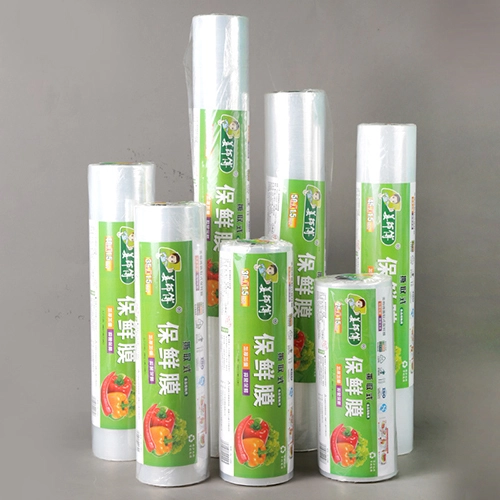
They are most different when it comes to workload. Someone at home could use a roll for months, so a small roll is helpful. In a prep kitchen, a roll of tape might have to be changed a lot during a shift because it is too short. This wastes time and energy. Most commercial formats are made to be used over and over again. They have longer rolls, wider widths, and cutter boxes that are wide. It is also important to look at the roll weight and core size. The roll will get stuck in the dispenser if it doesn't fit. This will waste paper. You should first write down all the things you need to wrap every day. Then, you can match the roll format to that list. If you want to compare products, don't just look at their names. Measured specs are more accurate.
Where Each Type Is Used?
People can use household PVC cling film to store plates, bowls, fruit, vegetables, and containers in their fridge. Film is put on ingredient trays, prep containers, and meals that are already divided up for business use. It's also used at grocery store meat and deli counters. People who work with food packaging say that PVC film lets more oxygen through than a lot of other wrap films. This is one reason why fresh red meat is often covered with it. Cold chain teams also use film to store cool items. PVC cling film is made by Shandong Honghe Plastics Co.,Ltd. and is used in home use, cold chain logistics, catering, and moving food. In other words, the same factory can handle orders from both businesses and people.
Household PVC Cling Film vs Commercial Cling Film: Material and Performance Comparison
Resin, Plasticizers, and Additives
How the PVC film is made changes how well it works. The resin, the plasticizer system, the additives, and the process control are what make the film stretch, stick, and bounce back. I tell people who buy our film that the quality of the raw materials is clear and consistent across a whole pallet. The film is made from high-quality PVC. A label can't show this by itself. Find out from the supplier how the mixture was made, what the thickness range is, and where the batch records are kept. Plasticizers and additives must follow different rules in each market. Make sure the formula follows the rules of the country where the food will be packed. In the US, that means following FDA rules about touching food.
Thickness, Cling, and Clarity
Thickness changes how the material is used, how clear it is, how well it resists punctures, and how much it costs. When there are sharp edges, like the ends of bones or the corners of trays, you should use thicker film. However, it may be harder to stretch and cost more per meter. It takes up less room and sticks well to smooth bowls, but it might tear on rough surfaces. The cling should keep the film shut without making it hard to take off. It's important for staff to be able to quickly see what's inside in places like stores and kitchens. An easy way to compare how thin plastic sheets can be pulled apart is with ASTM D882. Look at all of these traits at the same time. It is less expensive to use film that is a little thinner but cuts smoothly than film that sticks well but tears at the cutter edge.
Temperature Limits and Food-Contact Compliance
In hot weather, mistakes are bound to happen. The fridge and cold storage are fine to use, but you need written permission from the supplier before you microwave or heat up hot or oily food. The US Food Safety and Inspection Service (USDA) says to use microwave-safe wrap and keep it away from the food. The general rules for things in the European Union that come into contact with food are set by Regulation (EC) No 1935/2004. EU Regulation No. 10/2011 says that plastic can move from one surface to another but not more than 10 mg. People in the U.S. should only buy materials that have been approved by the FDA. Honghe has ISO, CE, and FDA certifications. I think you should ask for the documents that meet your needs exactly.
Household PVC Cling Film vs Commercial Cling Film: Packaging and Dispensing Differences
Cutter Boxes and Dispenser Formats
It might not seem important, but a cutter box changes the way work is done every day. The machine has a built-in person who can help the staff tear film cleanly, keep the roll steady, and keep the edge from folding back on itself. You can put boxes for household cutters on top of things or in drawers. These boxes are made to be pulled over and over again in busy kitchens, so they are bigger and stronger. When the blade is weak or the end of the roll is loose, tangles can happen. Test the cutter with the roll. The roll should be safe while it's being shipped as well. Any damage to the core or edge ruins the first few meters of film and makes the operator mad.
Bulk Rolls and Cost per Usable Meter
Sometimes the price per roll doesn't tell you everything you need to know. Figure out the price per usable meter first, then the price per wrapped container, that's what I tell people who want to buy. Cut up trash, fix broken rolls and film, and repackage are all things that need to be done. Rolls can be shipped for less money and in less time if the core and weight are right for the dispenser. How many meters can fit in a container depends on the size and shape of the boxes and pallets, so the amount of shipping is also important. For big orders, the cost of freight per meter can go down if the cardboard box is small and stable. Make sure that all of the quotes you look at use the same set of data.
OEM Packaging and Labeling
A lot of business-to-business buyers want their own brand on the box. The cutter boxes, cartons, and printed packaging that Shandong Honghe Plastics Co.,Ltd. makes can be changed in width, length, and thickness to fit the needs of each customer. They do both OEM and ODM work. Private-label programs usually need the artwork to be approved and a minimum order quantity to be met. Before production starts, I make sure of these two things. Often, distributors and supermarkets add to their list barcode labels and cartons that are ready to put on the shelf. If you change the artwork at the last minute, delivery could be late. So send us your target market and label rules early. After that, every order is based on a sample that was approved and artwork that was signed.
How to Choose the Right Household or Commercial PVC Cling Film?
Define Your Use Case and Volume
First, write down what you want to wrap, where, and how often. A store brand might need small rolls of household PVC cling film and nice-looking boxes. In a central kitchen, you need long household PVC cling film rolls that are hard to tear. A logistics team might care more about cling-on cartons and chilled goods when goods are being stored. Give it a monthly amount, a market to target, and a style of packaging. When you give them that list, they won't have to guess which roll to quote. One more thing I ask buyers is how the film is stored, since a warm or damp warehouse can change how the film unfolds. If your brief is clear, you don't need as many sample rounds.
Test Samples Before You Approve
If you want to settle an argument, samples are better than data sheets. We offer free samples that your team can use to test before deciding to place a bulk order. It's simple: just put bowls, containers, fruit, vegetables, and something oily in the fridge for a day. Look at how well it sticks, cuts, and tears, as well as how it smells and how clear it is. Note the results, keep the approved roll as a "golden sample," and use it to check every new shipment against. Along with the sample, you should also ask for the technical data sheet and compliance papers. As long as a sample works in your own kitchen or warehouse, you have proof, not promises.
PVC Compared with PE Film, Foil, and Reusable Wraps
The application should tell you what kind of material to use. PVC is clear, sticks well to bowls and trays, and is simple to seal. For programs that don't want to use PVC, PE film works well. However, it might not stick as well to rigid containers. Alum foil hides food and blocks light when put on top of it. Sometimes, reusable wraps help cut down on trash that is only used once. However, they need to be cleaned and sanitized more often, which is more work. Colored film can help keep things in order if the dyes are safe for food. You don't have to choose between PE and PVC cling film when we talk about your needs. Honghe makes both.
Working with a Household PVC Cling Film Manufacturer or Supplier
What to Check Before You Request a Quote?
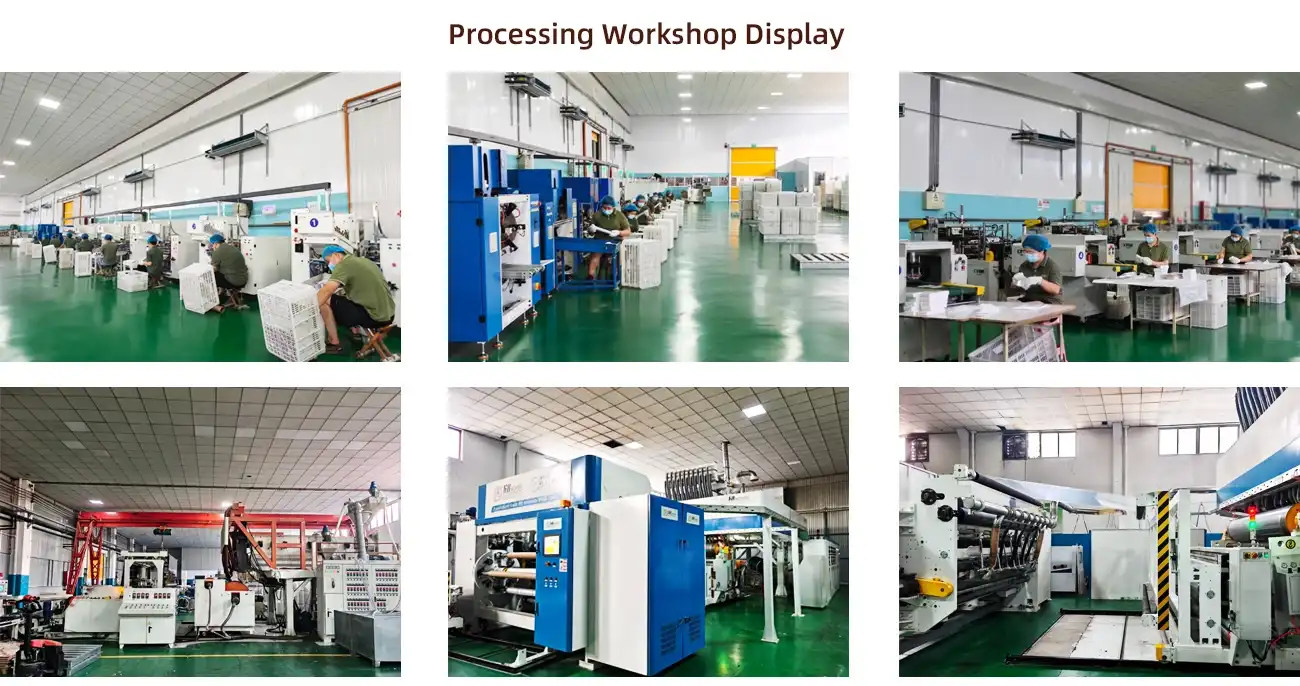
First, find out whether the company is a direct manufacturer, a trading company, or an integrated exporter. Next, find out what the supplier's minimum order quantity (MOQ), lead times, and policy is for handling goods that don't work for you. Need the technical data sheet and other documents that are right for your market? Ask for them. Shandong Honghe Plastics Co.,Ltd. has been making household PVC cling film, PE cling film, wipe-off TPE, CPE, and PE gloves, and stretch film since it opened in 2017. Our workshop is standard and has high-tech tools for making things. We also have strict quality control. We are certified by ISO, CE, FDA, BSCI, and WCA.
Supply Stability and Logistics
Your production schedule is safe as long as you have a steady supply. Shandong Province is home to our factory, which is in Liu Guanzhuang Town. There is a port close by that makes it easy to send things to the US. We have a lot of stock on hand, and with the help of logistics, we can get it to you quickly. Buyers who know there will be steady demand can let us know what they think will happen so we can plan ahead for materials and production. If a shipment goes wrong, our after-sales service is available 24 hours a day, 7 days a week. A low quote isn't as important as clear inventory plans and lead times. This is because a packing line stops when there isn't enough stock, and it costs a lot more than a small price difference.
Building a Long-Term Partnership
Long-term supply works best when everyone agrees on the rules. Give your approval to a written specification, keep a "golden sample," decide on an inspection standard, and then lock up the artwork. Share your predictions of demand often, and as a group, talk about how your complaints turned out. I talk to buyers a lot, and most of the time, they say that price comes after quality and delivery. As long as the buyer's needs don't change, we can better plan production and make sure that each order gets the same product. Buyers don't have to test each shipment again because of this.
Conclusion
Commercial cling film and household PVC cling film are mostly different in how they are dispensed, how much work they require, and the size of the rolls they come in. How thick, clear, and clingy the PVC is, as well as its temperature limits, affect both. Quality isn't promised by either label. If you need to wrap things every day, commercial rolls and dispenser boxes are best. For one-time use, smaller rolls are better. It's better to compare prices by cost per usable meter instead of cost per roll because it takes into account waste and freight.
Documents about food contact, sample testing, and clear instructions can all help lower the risk. The way that PVC film, foil, and reusable wraps are used should be used to compare them. Customers are more likely to buy from the same supplier again if they keep their stock stable, can do OEM work, and communicate well. Make sure you choose movies based on how well they work and how well they follow the rules.
FAQ
Is commercial cling film always thicker than household film?
No, the item itself, not the label, tells you how thick it is. An office roll might be wider or longer than a home roll, but the gage may be the same. Check out each film's thickness, tolerance, and test results. Then, choose the one you want to buy based on how well it works on your containers.
Can I use PVC cling film in the microwave?
If the seller says in writing that the item can be used in a microwave, then yes. Even then, make sure there is a vent and don't let the film touch the food or the heating elements. Sticky cling film should never be put in the oven or near direct heat.
What documents should I request before ordering?
Ask for the technical data sheet and food-contact compliance documents that are right for your market. Next, smell, see how clear it is, how well it sticks, and how it cuts. We offer free samples so you can try these things out before you buy a lot of them.
Request Household PVC Cling Film Samples from Shandong Honghe Plastics Co.,Ltd.
Want to find a business that produces household PVC cling film and can take orders from both consumers and businesses? Shandong Honghe Plastics Co.,Ltd. offers premium PVC film, free samples, a large inventory, and after-sales service 24 hours a day, seven days a week. To get your width, thickness, roll length, and volume email tony@sdhhsl.com. We'll give you a quote and a sample plan when we get back to you.
References
1. European Commission, Commission Regulation (EU) No 10/2011 on plastic materials and articles intended to come into contact with food, 2011.
2. European Parliament and Council, Regulation (EC) No 1935/2004 on materials and articles intended to come into contact with food, 2004.
3. U.S. Food and Drug Administration, Code of Federal Regulations Title 21, Part 177: Indirect Food Additives, Polymers, 2023.
4. Marsh, K. and Bugusu, B., "Food Packaging—Roles, Materials, and Environmental Issues," Journal of Food Science, 2007.
5. Robertson, G. L., Food Packaging: Principles and Practice, CRC Press, 2012.
6. ASTM International, ASTM D882: Standard Test Method for Tensile Properties of Thin Plastic Sheeting, 2018.