



How Does Multifunctional Plastic Wrap Compare With Standard Wrap?
The main thing that makes multifunctional plastic wraphttps://www.sdhhsl.com/pvc-cling-film/multifunctional-plastic-wrap different from regular wrap is that it can be used for many different things. Everyday wrap goes over bowls and food portions to keep dust and moisture out. The material and thickness of multifunctional plastic wrap affect how well it sticks, how well it covers odd shapes, and whether it is used for cold or freezer storage. Shandong Honghe Plastics Co.,Ltd. makes PVC versions that can be used to package food, keep it cold, in food service, and at home. This guide was written for groups that buy things and run businesses. Before you order samples, you can find out how much they cost, how safe they are, and how well they fit your workflow and then make your choice.
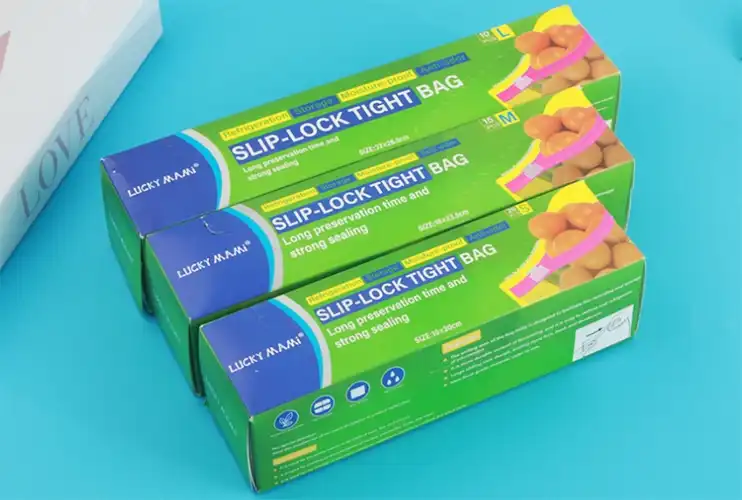
Standard Plastic Wrap vs. Multifunctional Plastic Wrap: What Is the Difference?
What Standard Wrap Does Well?
Standard wrap can be used for simple jobs like covering things. When you stretch it over a bowl, a tray, or a cut piece of food, it keeps the food moist and keeps dust, smells, and splashes out. Most of the time, that's enough for a home kitchen or a small deli. There are only so many rolls you can use in a month. Food can be frozen for weeks at a time or wrapped in heavy or odd-shaped items. The edges of thin film tear, it doesn't stick to cold surfaces, and it makes more wraps that don't work. When the kitchen is busy, things that go wrong add up.
Where Multifunctional Plastic Wrap Goes Further?
Multifunctional plastic wrap has a wide range of applications, including food preparation, odd-shaped items, cold or freezer storage, and commercial packaging lines. Read the spec sheet instead of just looking at the label. Check the temperature range, how easily it tears, how well it sticks, how thick it is, and whether it can be used with food. It's possible for a film to not work well for other things, like freezing raw meat, when it's being used for those other things. If you want to compare two suppliers, you should use clear numbers instead of what they say in their ads.
PVC and PE: Material Differences
PVC and PE are the main materials used to make food wrap. Kitchen staff and meat counters often use PVC film because it sticks well and lets light through. PE film doesn't need to be squishy, and you can buy rolls of it in stores or use it at home. PVC is used to make this wrap, and we can change the width, length, thickness, roll format, and packaging to suit your needs. You should also ask for cutter boxes and dispensing formats, since these things change every day how things are done. If you want to sell something to people who eat it, make sure it has the right paperwork so that people can do that.
How Multifunctional Plastic Wrap Performs in Common Use Cases
Household and Retail Kitchens
When you're at home, you want film that doesn't move around on bowls, sandwiches, fruit, and leftovers. This is because PVC cling film sticks to smooth things like steel, ceramic, glass, and ceramic. This helps keep the water inside. In 2010, the USDA Economic Research Service found that stores and consumers in the U.S. lost about 31% of the food supply. This proves that covering tightly does work. It should say on the package if the film can go in the microwave or not. It might not be, because some movies should only be kept in the fridge.
Foodservice, Catering, and Food Processing
Whole food stores, restaurants, and caterers wrap ready-made meals, baked goods, fruits and vegetables, and ingredients all day long. The length of the roll, how fast it comes out, and whether it works with cutters are all just as important in this case as the film itself. Because it doesn't need to be changed as often, a wide, long commercial roll saves time. Just make sure it fits your dispenser and is easy for your staff to lift. Staff can also see what's on a shelf without having to open packages because PVC film is clear. For a week, write down all the wraps that didn't work. After that, you'll know how much film you throw away.
Refrigeration, Freezer, and Microwave Limits
Putting things in the fridge is one of the main uses for PVC cling film. Check the material, thickness, and supplier specs to see how well it works in the freezer instead of guessing. If air gets to the food's surface, the USDA says it will freeze burn. It makes the food taste worse but doesn't make it less safe, so it's best to wrap it tightly so that not too much air gets trapped. When you use a microwave, you need to be extra careful. And keep the wrap away from the food, says the USDA. Only use wrap that says it can go in the microwave. Before your staff puts any film in the microwave, they should ask the supplier what the highest and lowest temperatures are and how the film can be vented.
Comparing Performance: Multifunctional Plastic Wrap vs. Standard Wrap
Cling, Seal Consistency, and Stretch
How well a wrap stays in place is shown by its cling. When the cling is stronger, the film sticks better to itself and the container's edges, so you don't have to re-wrap it as often. Also, the film needs to stretch out evenly so that it can fit over a big pan without getting too thin around the edges. Too much cling does cost something, though. Getting film that sticks to itself off the roll takes a lot of time and work. Simple wrap works well on small bowls most of the time. Multifunctional plastic wrap can handle larger trays and odd shapes, as a quick test will demonstrate.
Thickness, Tear Resistance, and Puncture Protection
There aren't as many tears or holes in the film when bone-in cuts, bread crusts, or sharp tray corners hit it. It's not always better to be thicker, though. Heavy film might not stick as well, feel stiffer, and cost more per roll. Make sure you have the right gage for the job. A lot of the time, ASTM D882 is used to test tensile strength and ASTM D1709 is used to test impact resistance. Find out from suppliers what methods they use. Our PVC film can be any thickness you need, and we can change it after you try a piece.
Dispensing: Hand Tear, Cutter Boxes, and Commercial Dispensers
How fast and how much is wasted depend on how the dispenser is set up. Small amounts of film can be torn by hand, but the edges get rough and the film is wasted. A roll cutter and a slide cutter keep the edge clean and protect the roll. These tools are good for small kitchens and travel packs. These machines can handle a lot of big rolls, but they need cores that are all the same width and length. When it comes to cleanliness, disposable film doesn't need to be wiped down, handled, or stored like reusable covers do. This is helpful in places where a lot of people are eating. How many wraps does your team do in a shift? Choose the format that works best for them.
Multifunctional Plastic Wrap vs. Aluminum Foil and Other Alternatives
Aluminum Foil
Foil is a good choice because it can handle higher oven temperatures and blocks light, making it perfect for roasting food or keeping foods that are sensitive to light safe. You can also keep the shape. But you can't see what's inside, and foil shouldn't be in a regular microwave since metal can spark. Plastic wrap helps you see what you're looking at and fits better around odd shapes. A lot of kitchens keep both foil and cling film on hand so they can be used for different things. Look at the cost per use instead of the cost per roll to really see the difference.
Silicone Covers, Paper, and Compostable Films
Standard containers work well with reusable silicone lids, which cuts down on single-use waste. However, these lids need to be washed, dried, and stored, and they don't work with containers that aren't the standard shape. Paper does not really keep water out, but it does keep light and splatter out. There are different claims about how compostable films can help with sustainability goals. Find out if there are composting sites near you and ask to see test results and any certifications they have. When you need to quickly wrap something or it's an odd shape, film is still often the best option. For uniform containers, lids or covers may work better.
Sustainability and Disposal Claims
A lot of buyers care about this, so the facts need to be carefully looked over. A lot of curbside programs in the U.S. don't take plastic film, but you can drop it off at some stores. Not many things can be used again to make PVC film. No matter what kind of material you pick, don't just trust a green label. Instead, get written proof from your supplier. Also, make sure that the option for end-of-life works with the technology in your area. Food waste can be cut down by using a well-sealed wrap to keep food fresh. This is an important part of being eco-friendly.
How to Choose the Best Multifunctional Plastic Wrap for Wholesale and OEM Procurement?
Define the Application and Compliance Needs
First, say what it will be used for: selling in a home or restaurant, making food, distributing it, or private-label packaging. Then, for the market you want to sell to, ask for proof of food contact and migration test reports for multifunctional plastic wrap. Our goods are approved by ISO, CE, and FDA, and they meet standards around the world. The business is also certified by BSCI and WCA. How thick is it? How wide is it? How long is the roll? How big is the core? What kind of cutter do you need? What temperature range do you need? How strong is the tear? Putting these down on paper will help keep most problems from happening after delivery.
Calculate Total Cost of Ownership
The price per roll doesn't always show what's going on. Figure out how much it costs to ship, store, replace film, make changes, pay workers, and get a minimum order size. It might cost a little more, but each wrapped tray might be cheaper if the roll doesn't tear as easily. There won't be as many changes with bigger rolls, but they need dispensers that can handle them. Liuguanzhuang Town, which is close to Qingdao Port, is where Shandong Honghe Plastics Co.,Ltd. has been making things since 2017. When you buy in bulk, we offer good prices that depend on how much you need.
What to Include in Your RFQ
When there are no more requests for quotes, everyone saves time. Outline the type of material, its dimensions, thickness, roll weight, core size, cling needs, storage conditions, cutter needs, packaging design, target market, annual volume, and any private-label needs. For OEM and ODM projects, you can add custom sizes, printed packaging, cutter boxes, retail cartons, and the ability to set up pallets in different ways. Then, rate suppliers based on how easy it is to find them, how well they keep quality under control, how many samples they offer, how long their lead times are, and how likely they are to do business with you again. We have a lot of stock in our factory, so we can deliver quickly. We also offer customer service 24 hours a day, seven days a week.
Testing Multifunctional Plastic Wrap Before You Decide
Set Goals and Run Handling Trials
Figure out what "success" means to you: keeping food in the freezer, quickly wrapping it, keeping smells away, how the product looks, or how stable it is during transport. Then see how well you can handle things with your own staff. Check how long it takes to cut, how many wraps fail, how much film breaks, how well the dispenser works, and ask the operators for feedback. Do the same test on your current standard wrap to set a standard. You can get more from a spec sheet than from a real kitchen or packing line for one week.
Storage Tests and Record Keeping
Like at room temperature, in the fridge, or the freezer, you should test the film where you will use it. If necessary, you should test it with foods that are wet, oily, or acidic. Check the record for movement, cracks, residue, odor transfer, and record cling every so often. To be fair, make sure that all of the samples have the same foods and take pictures of them. You'll know before you place a bulk order if a film cracks or leaves a mark in the freezer, not after. Keep the notes for your approval file.
Is Multifunctional Plastic Wrap Better Than Standard Wrap?
It is different for each person. Standard wrap stays are good for covering things that don't change often or at all, or when price is the most important thing at the start. With multifunctional plastic wrap, you can make it stickier, cover odd shapes, freeze it, roll it up for sale, or make your own packaging. You can also choose from different thicknesses. List the things that matter (compliance, performance, temperature suitability, efficiency, total cost, and sustainability) and give each one a weight. Following that, let the test data decide. Before you buy our PVC film, you can try it out for free.
Conclusion
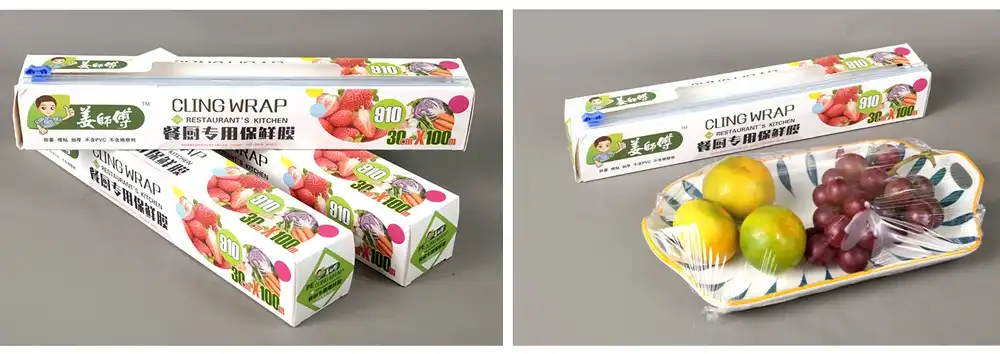
Both standard wrap and multifunctional plastic wrap can be used to cover food, but they do different things. Multifunctional film can be used to cover irregular shapes, store things in the fridge or freezer, and pack a lot of items at once if its specifications allow it. Standard wrap is good for simple, one-time covering. PVC is clear and sticks well, and PE is an alternative that doesn't need plasticizers. It's not the label that tells you how well something works; it's things that can be measured, like cling, thickness, tear resistance, temperature range, and dispensing format. There are times when paper, silicone covers, foil, and compostable films all work better than others. Green claims need to be backed up with evidence. The final choice should be based on how well it works with food, how much it costs, and the results of the tests. Because how well it works in your own workflow is more important than any claim.
FAQ
Is multifunctional plastic wrap safe for freezer and microwave use?
What the product is made of, how thick it is, and what it's meant to be used for determine whether it's safe to eat, freezer-safe, or microwave-safe. Check with the supplier for temperature limits and proof that they are followed. Ask for a datasheet before you agree to make a new movie. Don't put film on food; only use film that says it's safe for microwaves.
Is thicker film always better?
This film isn't easy to tear, but it does cost more, feel stiffer, and might not stick as well. When film is heavier, it adds to the shipping weight. The thickness should match the food and the way it will be wrapped. After that, test it to make sure it works. We can change the format of the roll, its width, length, thickness, packaging, and the labeling that goes on it.
How do I choose a commercial supplier?
Ask about their food-contact declarations, migration reports, quality system certificates, experience working with OEMs, production capacity, and ability to send goods abroad. To begin, test some samples. Next, make sure that orders that come back are the same. Our goods are approved by ISO, CE, FDA, BSCI, and WCA, and you can get free samples of them.
Can I get samples before a bulk order?
Yes. Our PVC cling film is free for you to try out. You can email tony@sdhhsl.com with your use, size, and volume. Test the film in real life before you buy a lot of it.
Request Free Samples of Multifunctional Plastic Wrap from Shandong Honghe Plastics Co.,Ltd.
You can find a producer of multifunctional plastic wrap in China. Shaanxi Honghe Plastics Co., Ltd. makes PVC cling film that can be cut to any size. You can get free samples, ISO, CE, and FDA certifications, a large selection, and customer service 24 hours a day after the sale from this company. It is easy to ship things when you are close to Qingdao Port. Email tony@sdhhsl.com with your application, size, and annual rate.
References
1. USDA Economic Research Service, The Estimated Amount, Value, and Calories of Postharvest Food Losses at the Retail and Consumer Levels in the United States, 2014
2. USDA Food Safety and Inspection Service, Freezing and Food Safety, 2013
3. USDA Food Safety and Inspection Service, Cooking Safely in the Microwave Oven, 2013
4. ASTM International, ASTM D882 Standard Test Method for Tensile Properties of Thin Plastic Sheeting, 2018
5. ASTM International, ASTM D1709 Standard Test Methods for Impact Resistance of Plastic Film by the Free-Falling Dart Method, 2016
6. U.S. Food and Drug Administration, Code of Federal Regulations Title 21, Part 177: Indirect Food Additives, Polymers, 2023