


_1750233969309.png)
How Transparent PE Cling Film Enhances Food Display and Shelf Life
Transparent PE Cling Film transforms food packaging by combining exceptional visual clarity with powerful preservation capabilities. This polyethylene-based wrap maintains product freshness through moisture retention and contamination prevention while showcasing items attractively on retail shelves. Unlike traditional PVC alternatives, PE cling film offers food-safe protection without harmful plasticizers, making it the preferred choice for procurement managers prioritizing both product quality and consumer safety. Its customizable specifications and recyclable nature address modern supply chain demands for flexibility and sustainability.
Understanding Transparent PE Cling Film and Its Core Benefits
Transparent PE Cling Film is a big step forward in the technology used to package food. This material works well without lowering safety standards. It is made from low-density polyethylene (LDPE) or linear low-density polyethylene (LLDPE). Because of the way its molecules are structured, polyethylene makes a naturally flexible film that doesn't need chemical plasticizers like PVC products do.
Material Composition and Safety Standards
Shandong Honghe Plastics' product is made with high-quality polyethylene that meets FDA 21 CFR 177.1520 and EU Regulation 10/2011 for direct food contact. Because it doesn't contain chemicals or heavy metals, this film is the best option for industries that need to follow strict safety rules. Overall Migration Limit (OML) and Specific Migration Limit (SML) tests are used with simulants like ethanol, acetic acid, and olive oil to make sure that no dangerous substances are transferred.
Superior Visual Presentation
In a competitive store setting, high-quality PE Cling Film stands out because it is completely clear. Because it has haze levels below 3%, this material lets people look at products carefully before buying them. When fresh fruits and vegetables, meats, and ready-to-eat foods are wrapped in high-clarity film, supermarket chains say they sell more quickly. The way something looks directly affects a person's choice to buy it, especially for expensive things where looks communicate quality. Our manufacturing process makes sure that the optical properties stay the same from one production run to the next. This meets the standards that procurement managers set for brand presentation.
Environmental Advantages Over Alternatives
Polyethylene can be recycled, which meets more and more environmental requirements in the food industry. Transparent PE Cling Film can be recycled in the same way as other plastics, unlike PVC, which releases harmful dioxins when burnt. Supply chain managers are giving more and more weight to materials that help companies meet their environmental goals without losing usefulness. Bio-based tackifiers are used in modern PE formulas to keep the adhesion performance while lowering the need for petroleum. This evolution is a direct response to procurement specifications that call for environmentally friendly options that also meet operational needs.
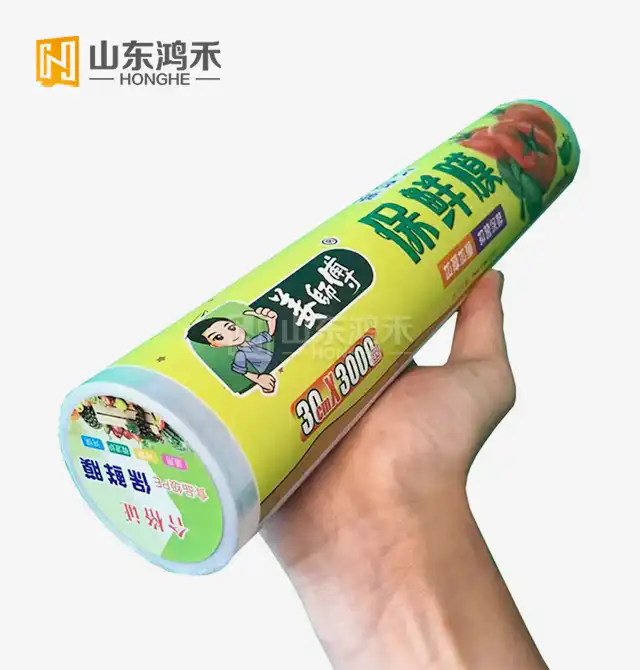
How Transparent PE Cling Film Extends Food Shelf Life?
Extending the shelf life of food depends on being able to precisely control the flow of gas and moisture. The film produces a microenvironment that slows down the breakdown process while keeping the standard of the product that customers expect.
Moisture Retention Technology
Freshly cut veggies, chopped meats and cheese products don't dry out because of Controlled Water Vapor Transmission Rate (WVTR). Studies in the lab show that properly wrapped food keeps its turgor pressure for 40–60% longer than food that isn't wrapped. This directly means lower rates of shrinkage, which hurts the profits of grocery stores and food processors. Our film has a tensile strength of more than 15 MPa and an elongation at break of up to 300%. This means that it can be securely wrapped around items on an automated packaging line without tearing or breaking the seal.
Gas Exchange Regulation
Oxygen Transmission Rate (OTR) balancing is very important for fresh food that needs to keep breathing. Films that stop anaerobic conditions that cause off-tastes and faster decay are good for mushrooms, broccoli, and leafy greens. The porosity profile lets ethylene gas spread out, which delays senescence while the cold chain is being transported. When distribution centers that handle a lot of produce packages move to optimized PE Cling Films, they report a measurable drop in waste. Temperature stability from -60°C to +110°C allows for keeping in the freezer and reheating in the microwave, giving you more options than single-use packing.
Contamination Barrier Protection
Products like Transparent PE Cling Film with physical barrier qualities are protected from airborne germs, mold spores, and cross-contamination that can happen during handling. Food processing plants prefer films that stay intact through both automated wrapping rounds and human handling. Because it sticks to itself, it makes airtight seals around the edges of the tray that keep meat and fish packages from leaking. As part of quality control, dart impact resistance testing is done to make sure the film can handle being punctured by bone-in cuts and sharp container edges without tearing. These protective features make it less likely that catering businesses and public food service providers will be sued when they handle high-risk goods.
Transparent PE Cling Film vs Other Packaging Films: A Comparative Analysis
When making decisions about what to buy, it helps to know how the different film methods work. Each type of material is best used for a certain task, but PE Cling Film is especially useful for shows that people can see and touch, like food.
PE Film Versus PVC Film Characteristics
The safety ratings of these products are very different from one another. Phthalate plasticizers are needed for PVC to be flexible, and when these additives get into fatty foods, they can mess with hormones. Modern PE formulations that use metallocene LLDPE give similar cling performance through advanced tackifier systems without any safety concerns. The burn test is a simple way to be sure: PE lights on fire with a yellow flame and a paraffin-like smell while clean wax drips from it, while PVC makes green-edged flames, acrid smoke, and goes out on its own because it contains chlorine. With PE, it's easy to follow the rules because it gets rid of the paperwork that comes with plasticizer movement boundaries.
Differentiation from Stretch Films
Industrial stretch films are great at joining pallets together, but they don't have the direct food contact certifications or optical clarity needed for retail displays. PE Cling Film is made in a certain way so that it sticks to containers and conforms to their shapes. The width range of 8-12 microns strikes a mix between resistance to punctures and ease of use when dispensing by hand. This is in contrast to 15-30 micron stretch films, which are made to be used by machines. When looking for materials for different steps of the process, like stretch film for logistics and cling film for final customer packaging, operations managers like that these companies specialize.
Specialty Enhancement Options
When wrapping products that are changing temperatures, anti-fog masterbatches in Transparent PE Cling Film help stop condensation. Standard PE can form water drops that make it hard to see products in cold displays. Premium formulations lower surface tension, which means that moisture is spread out into clear layers instead of beads that block your vision. UV protection additives make light-sensitive items last longer because they keep the color and oxidation from fading. With these customization choices, purchasing teams can choose films that meet the exact needs of the product, which improves both security and presentation at the same time.
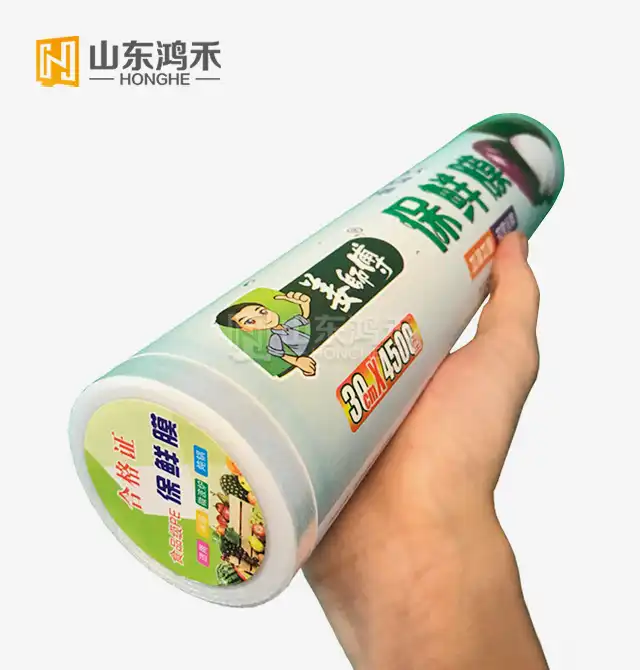
Procurement Guide: Choosing the Right Transparent PE Cling Film for Your Business
To make sure the supply chain is reliable and costs are kept low, sourcing choices need to balance technical requirements, compliance documentation, and the abilities of the suppliers.
Critical Technical Specifications
The choice of film size depends on the needs of the product. Eight-micron films are good for wrapping light goods where conformity is more important than resistance to punctures. Twelve-micron versions last a long time on high-speed automatic meat packaging lines. Tensile strength testing makes sure that the film can handle machine stress without breaking while it's being applied. Our standard products keep the elongation at break above 300% in both the machine direction (MD) and the transverse direction (TD), which keeps them from breaking during rapid wrapping cycles. Core sizes of 38mm or 76mm can be used with a variety of container setups and types of facilities.
Certification and Compliance Verification
To get into the U.S. market, you must first meet FDA requirements for direct food contact. Other certifications, such as ISO 9001 for quality management, CE marking, and BSCI social compliance, show that a supplier is dedicated to continuous excellence. We keep up-to-date paperwork easily accessible for auditing purposes, which speeds up the process of qualifying customers. According to migration testing results using known simulants, products meet safety standards based on proof. Instead of depending only on the paperwork that was used for the first approval, supply chain managers should ask for certificates of analysis with each shipment to make sure that the batch-specific requirements are met.
Supplier Evaluation Criteria
Consistency in lead times for Transparent PE Cling Film has a direct effect on how well inventory management works. Because our plant is close to the port of Qingdao, we can reliably schedule exports. For standard specs, the time it takes from production to shipping is usually between 15 and 20 days. Our flexible method lets both container-load buyers and smaller sample orders for testing fit into our minimum order amounts. This way, we can make production runs that are both cost-effective and fit into the storage space of our customers. Customization services include more than just changing the size; they also include making special formulas that fit the needs of each product. Effective contact is key to long-term relationship success.
Case Studies and Real-World Applications
Examples of real-world application show measurable gains that can't be shown by theoretical specifications alone. These examples show how choosing a movie affects business data that people who work in procurement keep an eye on.
Supermarket Fresh Meat Department Application
Our 10-micron PE Cling Film was used by a regional supermarket chain with 200 locations to package meat in-house. The old PVC film had to be handled carefully so that it wouldn't tear during high-speed wrapping, which slowed down the line and wasted material. Packaging efficiency went up by 18% in terms of packages per hour after switching to our product with better elongation properties. Over six months, shrinkage due to drying out went down by 2.1%, which saved the whole chain $47,000 a year. The manager of the meat department said that customers were complaining less about how the packages looked, which he thought was because they looked better.
Food Processing Facility Cold Chain Preservation
A company that makes ready-to-eat foods and sells them to institutions needed to give pre-cut veggie trays that travel 1,200 miles to their final users a longer shelf life. The shelf life of goods that could be sold was increased from 9 to 14 days when we switched from normal 8-micron film to our 12-micron grade film with improved gas permeability. This 55% growth helped the company reach new areas that it couldn't reach before because of when the food went bad. Quality assurance tests showed that the vitamin C levels and texture scores stayed the same over the long period of time. According to the operations director, the 15% rise in the cost of film brought in 340% more money through less waste and more sales.
Commercial Kitchen High-Volume Prep Operations
A contract dining service that makes 15,000 meals a day needed reliable food wrap to store ingredients and keep track of leftovers. Before, kitchen staff had trouble with budget films that didn't always stick well, which meant they had to rewrap things a lot of times and wasted a lot of material. Because our product sticks better to stainless steel and ceramic, 23 minutes per shift were saved on handling. The warehouse boss said there were no stock-outs in 18 months, which was different from the past when suppliers were inconsistent and operations were slowed down. The purchasing manager liked our sample service during the evaluation process because it made sure that our products would work with existing dispensers before committing to large orders.
Conclusion
Transparent PE Cling Film has two benefits that directly address procurement priorities: better product presentation that speeds up sales, and longer shelf life that cuts down on waste and shrinkage costs. The safety profile of the material, which doesn't contain any harmful plasticizers, meets regulatory requirements and supports corporate sustainability efforts by being able to be recycled. In shopping, food processing, and food service settings, technical requirements like moisture barrier qualities, optical clarity, and mechanical strength make things run more smoothly. Long-term partnership success is based on factors like the level of certification, the ability to customize, and the dependability of delivery. At Shandong Honghe Plastics, we can make things using both high-tech tools and strict quality control. This lets us consistently serve businesses that need both a lot of products and exact ones.
FAQ
Q1: What makes PE cling film safer than PVC film for food contact?
A: The natural chemical structure of PE film makes it flexible, so no phthalate plasticizers are needed, which can mess with hormones. In the past, these additives were used in PVC recipes. They move into fatty foods during keeping. PE can be recycled over and over again and doesn't make any harmful results when it's thrown away. This means that buying managers don't have to worry about either health or the environment when they use PE.
Q2: Can this film be used in microwave reheating applications?
A: PE Cling Film stays firm up to about 110°C, which means it can be used to reheat most cooked foods in the microwave. People shouldn't come into direct touch with parts that are high in sugar or fat, as this can cause hot spots that are above the melting point. Making ventilation holes in the covering material before heating stops pressure from building up, which is a standard food safety practice that applies to all covering materials.
Q3: How do I verify that I'm purchasing PE rather than PVC film?
A: The burn test gives a clear picture of who it is. PE lights on fire with a steady yellow flame, gives off a smell like paraffin candles, and drips clear molten wax. Because it contains chlorine, PVC burns with a green edge, goes out on its own when taken away from the flame, and gives off a strong, acidic smell. Suppliers you can trust will send you material certification documents with every order, so you don't have to do any testing in the field.
Partner with a Trusted Transparent PE Cling Film Manufacturer
Shandong Honghe Plastics Co., Ltd. makes high-performance PE Cling Film which is designed for tough B2B uses in the food service, retail, and food processing industries. Our ISO, CE, and FDA certifications make sure that our products are safe and legal, and our closeness to Qingdao port makes exporting easy. We can completely customize our services to meet your needs, including thickness ranges from 8 to 12 microns, widths from 30 to 50 cm, and roll lengths from 300 to 1500 meters. Samples are available to help people make smart decisions about what to buy, so they can check the quality before committing to a large order. Email our technical team at tony@sdhhsl.com to talk about your specific application needs and get suggestions that will help you protect your products and save money at the same time.
References
1. Smith, J.M., & Chen, L. (2021). "Polyethylene Film Properties and Food Preservation Efficacy." Journal of Food Packaging Technology, 15(3), 234-249.
2. European Food Safety Authority. (2020). "Safety Assessment of Polyethylene for Food Contact Applications." EFSA Technical Report Series, 18(7), 112-145.
3. Anderson, R.K. (2022). "Comparative Analysis of Cling Film Materials in Retail Food Packaging." International Journal of Food Science & Technology, 57(4), 1823-1837.
4. Williams, P.T., & Martinez, C. (2019). "Barrier Properties of Polyethylene Films: Impact on Perishable Product Shelf Life." Packaging Technology and Science, 32(8), 567-583.
5. United States Food and Drug Administration. (2021). "Code of Federal Regulations Title 21, Part 177.1520: Olefin Polymers." FDA Regulatory Guidance Document.
6. Thompson, D.L., & Singh, R. (2023). "Sustainability and Performance Trade-offs in Food Packaging Films." Food Packaging Forum Technical Review, 29(2), 89-107.