



PVC Cling Film for Supermarket Fresh Food Display
The clear, thin PVC cling film used to show off fresh food in supermarkets sticks to trays, bowls, and cut fruit and vegetables. So the item doesn't dry out or touch anything outside the package, the wrap keeps it safe. With PVC cling film for food wrapping, https://www.sdhhsl.com/pvc-cling-film/pvc-cling-film-for-food-wrapping it sticks without heat, can be bent into odd shapes, and lets enough air through to keep the bright color of fresh red meat. This book tells people what to look for in terms of supply, price, safety, thickness, roll size, and price. This also proves that Shandong Honghe Plastics Co.,Ltd. can take care of both big and small orders.
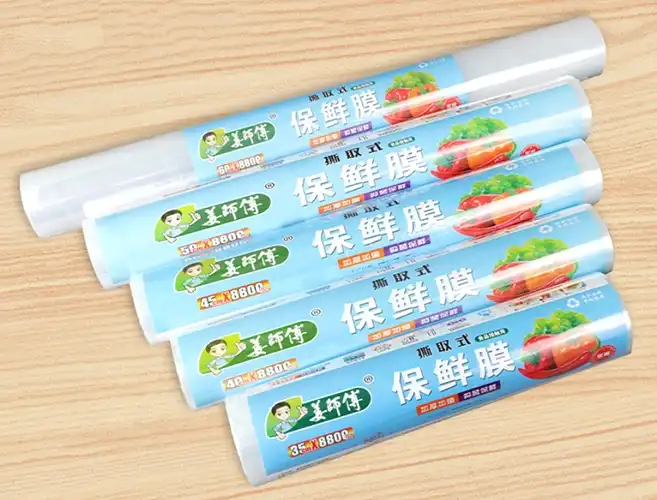
What Is PVC Cling Film for Food Wrapping, and Why Do Supermarkets Use It?
Material and Cling Behavior
The first thing that makes up our film is PVC resin. We mix it with plasticizers and other things to make it soft and easy to bend. This makes the film stick, so one layer can stick to the tray edge and to another layer without having to be heated to seal. The film also has "memory" because it pulls back and stays tight after a light stretch. PVC cling film is made by Shandong Honghe Plastics Co.,Ltd. with good PVC. We make PE cling film too, so we can talk about how it's different from making regular movies. This means that trays, bowls, and other odd-shaped items will have clear covers that fit right on top of them.
Where It Works in Fresh Food Display?
Fresh meat and seafood, cut fruit, deli foods, cheese, and baked goods are all put on trays in stores with PVC food wrap. To cover ready-made meals and back-of-house storage in restaurants and central kitchens, people use this. A lot of people keep a roll at home for leftovers. Our film can be used for home use, food packaging, keeping food cold, and catering. This means that a single family of products can be used for more than one thing. Marsh and Bugusu (2007) say that the main purposes of packaging are to hold, protect, communicate, and make things easier to use. Clear film does all four things in a display case: shoppers can tell by looking how fresh something is, and the cover keeps things from getting dusty, opened, or dried out.
Why Film Choice Affects Meat Color?
People want to buy meat because of the color. Mancini and Hunt's research from 2005 in Meat Science shows that myoglobin changes into oxymyoglobin, which is bright red, when oxygen reaches the surface. It changes to purple deoxymyoglobin when oxygen levels drop and to brown metmyoglobin when oxygen levels rise. It lets fresh red meat bloom, which is one reason why PVC cling film for food wrapping is still often used at service counters. To find out more about an item you want to buy, ask any seller. Different types of PVC cling film for food wrapping formulations let oxygen through. Show cases should always be at the right temperature so that film stays cold.
Is PVC Cling Film Safe? Compliance and Temperature Limits
Documents to Request
People who want to buy film in the US should check that it meets the food-contact requirements set by the FDA in Title 21 of the Code of Federal Regulations. For Regulation (EC) No 1935/2004 and Regulation (EU) No 10/2011, people who buy things and send them to Europe may need to keep records. You can keep track of each batch and get a food-contact declaration, test reports, and a technical data sheet. That's because the words "food grade" don't always mean what they say. Each piece of paper should be the right size, thickness, and type of food for the item it will be used for. This company has ISO, CE, FDA, BSCI, and WCA certifications. We can talk about which ones your item needs.
Plasticizers and Migration
You can change how food reacts with plasticizers by what kind you use. EU Regulation 10/2011 says that 10 mg per square decimeter of surface area is the most that can move from plastics that come into contact with food. There are also different limits for each substance in the rule. Some PVC doesn't allow DEHP as much as it used to, so many food wraps use other plasticizers, such as adipates. More people move when there is heat, fat, and a lot of contact time. So, an oily deli tray is a tougher test than dry vegetables. Ask the supplier what kind of plasticizer system is used in the film and for reports on migration for the foods you wrap.
Freezer, Refrigerator, and Microwave Limits
For cold displays, the PVC cling film works well. It depends on the film that you put in the freezer. Sometimes it makes them stiffer and less sticky. Test a sample over your real storage time before you sign off on it. To heat something in a microwave, you need a film with the right labels and test support. If not, don't heat the food in the microwave and don't put the wrap on it. It's more likely that things will move when they are in contact with fatty, salty, or acidic foods for a long time. Test it in the real world and write down the results for strange uses. Please let us know what temperature you want before you place your order. We will let you know if it is correct.
How to Use and Choose PVC Cling Film for Fresh Food Counters?
Wrapping Steps That Cut Waste
A good method helps you save time and film. Start with clean, cold trays and food that has already been chilled, since water on the edge weakens the stickiness of PVC cling film for food wrapping. Take out just the right amount of PVC cling film for food wrapping to cover the tray plus a little extra. Then, spread it out evenly and press it all the way around the edges to make sure there are no holes. There shouldn't be any big air pockets, but thin spots shouldn't be stretched too far over bone or sharp edges, either. That's how holes form. Wrapped packages should be kept in the temperature range that is written on them. Any labels that are needed should also be added. A lot of people use cutter boxes or other dispensing equipment in stores with a lot of customers. In central kitchens, jumbo rolls cut down on the number of times rolls need to be changed.
Specifications to Compare
It's not enough to just compare prices per roll; you should also compare specs. The film's thickness, tensile strength, elongation, cling, resistance to punctures, and clarity determine how it acts at the counter. Thick film can handle rough edges, but it costs more per square meter. Thick film takes up less room on flat trays. You need to make sure that the roll's width, length, core size, and outer diameter all match the sizes of your trays, dispensers, or wrapping machines. Test samples should be used on real products in real display conditions, like when they are wet and being handled. It takes less time to unwind and tear film that is easy to tear, and the time you spend on work should be factored into your cost comparison.
PVC Versus PE and Other Wraps
It's possible to use both PVC and PE cling film. Most of the time, PVC is clearer, sticks better, and recovers its shape more easily. Because it lets air through, it's good for fresh red meat. Buyers who recycle a lot or like certain formulations may find PE to be a good choice. Biodegradable wraps are interesting, but any claim about the environment needs to be backed up by proof from a third party. Price, shelf life, disposal systems, and how well the barrier works are all important factors. Spread out this kind of stretch film between pallets to keep them together. It's not meant to touch food. We make both PE and PVC cling film, so we can give you prices for either one.
Wholesale Buying and Quality Control Checklist
Writing a Clear RFQ
When you ask for quotes in great detail, you get accurate quotes that are similar. You need to list the type of material, how it will be used for food, its thickness, width, length, packaging format, market destination, compliance documents, annual volume, delivery schedule, and any Incoterms like "FOB." For PVC cling film for food wrapping private-label programs, you also need to list artwork, carton markings, barcodes, and pallet needs. Also, you need to approve a sample of PVC cling film for food wrapping before the real thing is made. When you give clear inputs, it takes less time to quote and there is less chance that the quote and delivery will not match. We at Shandong Honghe Plastics Co.,Ltd. read every request and give you a quote that fits the situation.
Testing Samples and Batches
Making sure the quality is good starts with the resin and ends with the finished roll. Look at how the thickness, clarity, wrinkles, gels, cling, tensile strength, elongation, resistance to punctures, and unwinding are all the same. Look at the records of production and the batch numbers. Then, to see if your own trays will work, wrap them, put them in the fridge, move them, and put them on display. How many times do labels stick, films are used, and records tear in a pack? Do the same thing with a second batch to be sure. Before you decide to buy a lot, you can finish this step with our free samples.
Comparing Total Cost
It's not always clear what the cost per roll means. Check out the costs per square meter, per kilogram, or per package that has been wrapped. Then add up how much it costs to ship, clear customs, store, test, package, and get certified. The total cost can go down even if the film costs a little more. This is because it wastes less, tears less, and wraps faster. Late shipments leave cases unwrapped or force people to buy things on the spot, so it's also important to have a steady supply. Find out how the company handles complaints, how much stock they have, how long it takes to get your order, and anything else you can think of before you sign. We have a lot of stock, sell in bulk, and are close to Qingdao Port, which makes it easy to send things overseas.
How Shandong Honghe Plastics Supports Supermarket Buyers?
Product Features and Customization
We sell rolls of PVC cling film that can be used on counters, in kitchens, and around the house. The PVC we use is of high quality. If the customer wants, we can change things like the size of the rolls and how they are packed. We can also do OEM and ODM work for private-label programs. Before placing an order, buyers can use free samples to check the cling, clarity, and tear. The film can be used at home, for catering, to package food, and to keep food cold. In 2017, we started our business. We also make PE cling film, disposable TPE, CPE, and PE gloves, and stretch film, so people can order more than one line at the same time.
Certifications and Logistics
In Shandong Province, in the town of Liuguanzhuang, we have our factory. It's close to Qingdao Port, which makes it simple to send things to other countries. All of our workshops are equipped with high-tech tools, and quality is checked at every stage of the process. ISO, CE, FDA, BSCI, and WCA have all given the company their trust. We have lots of stock on hand so that we can get it to you quickly. We also help with shipping and logistics, and within 24 hours, we answer any questions you have about the product. People who buy things worry most about three things: compliance, delivery dates, and lead time.
Matching Film to Your Scenario
Pick the right film for the job. Meat and seafood counters need to be able to stick well, be clear, and not tear easily when handling wet, sharp foods. It's important for produce displays to have enough light and low humidity so that heavy condensation doesn't form. Large rolls that can be used quickly and with little waste are needed by restaurants and central kitchens. Private-label sellers and buyers need steady supply, custom packaging, the right paperwork, and the ability to plan based on predictions. Let us know what's going on, how many trays you need, and how much you need each month, and we'll make a plan for samples to test.
Conclusion
Supermarkets can use clear PVC cling film for food wrapping that sticks itself to food to keep it safe and easy to see. Red meat stays brightly colored even when it's frozen because it lets air pass through. It can stick to bowls, trays, and other odd-shaped items by stretching it. When people want to export food, the FDA and the EU say they need documents that match the food type, temperature, and contact time. This is to make sure the food is safe. Each product needs to be checked to make sure it can be used in the freezer and microwave. Regarding performance and rules, sound selection compares PVC to PE based on how thick, strong, clear, and big the roll is. It is important to have a clear RFQ, sample trials, batch checks, and know how much each wrapped pack costs all together. Also, there must be a steady supply.
FAQ
Is PVC cling film safe for direct food contact?
It might happen after the film is finished and tried with the food it's meant for. Get the right test reports and a food-contact declaration for your item.
Can I use it in the freezer or microwave?
It's often used in the fridge. It relies on the recipe to say if it can be frozen or not, so try a little first. Labels and tests must be done before food can go in the microwave. If they aren't, don't put the film on hot food.
How does PVC differ from PE cling film?
Fresh meat needs more oxygen, and PVC tends to stick better, look better, and let more of it in. PE might be good for some kinds of recycling or making things.
Do you offer free samples and custom orders?
Yes. As a customer, you can get free samples, and we can also do OEM and ODM work for you.
Request Free Samples of PVC Cling Film for Supermarket Fresh Food Display
You need to find a company that lets you try their PVC cling film for food wrapping before you buy it. If you need free samples, OEM and ODM service, a large inventory, fast delivery, and after-sales support 24 hours a day, 7 days a week, Shandong Honghe Plastics Co.,Ltd. has it all. Email tony@sdhhsl.com with the type of food, tray size, and amount. sdhhsl.com is another place where you can learn more about our goods. Let us know what you want and we'll give you a price for the whole thing.
References
1. Meat Science, 2005 – Mancini, R.A. and Hunt, M.C., "Current research in meat color."
2. Journal of Food Science, 2007 – Marsh, K. and Bugusu, B., "Food Packaging—Roles, Materials, and Environmental Issues."
3. Food Packaging: Principles and Practice (CRC Press), 2012 – Robertson, G.L.
4. Official Journal of the European Union, 2011 – Commission Regulation (EU) No 10/2011 on plastic materials and articles intended to come into contact with food.
5. Official Journal of the European Union, 2004 – Regulation (EC) No 1935/2004 on materials and articles intended to come into contact with food.
6. Code of Federal Regulations, Title 21, Food and Drugs (U.S. Food and Drug Administration), 2023.